

How to determine the laser cutting point during sheet metal processing? – Zhongyilong Hardware
In sheet metal processing, if the laser cutting points cannot be determined correctly, the cut parts will directly become scraps, and the cost of rework is much higher than spending an extra ten minutes debugging parameters.
Many operators mistakenly believe that they can just leave the starting cutting point to the software to generate it at will. However, in fact, the path direction of the laser beam and the angle at which it cuts are the most important key factors that ultimately determine the processing accuracy.
How puncture points are formed
The laser beam shines on the metal plate, first burning a pit, and then the auxiliary gas blows away the molten metal, and the first through hole of the material is opened. This hole is the puncture point, and the entire contour cutting will start from here. Whether the location is selected accurately will directly affect the size of the entire part.
The depth of puncture is directly linked to the thickness of the plate and the power setting. For example, cutting three millimeter thick stainless steel requires 25 to 30% more power than cutting aluminum plates of the same thickness. Otherwise, the hole will not penetrate and will have to be burned repeatedly. As a result, the rhythm of the entire production line will be slowed down.
Starting direction and tangent relationship
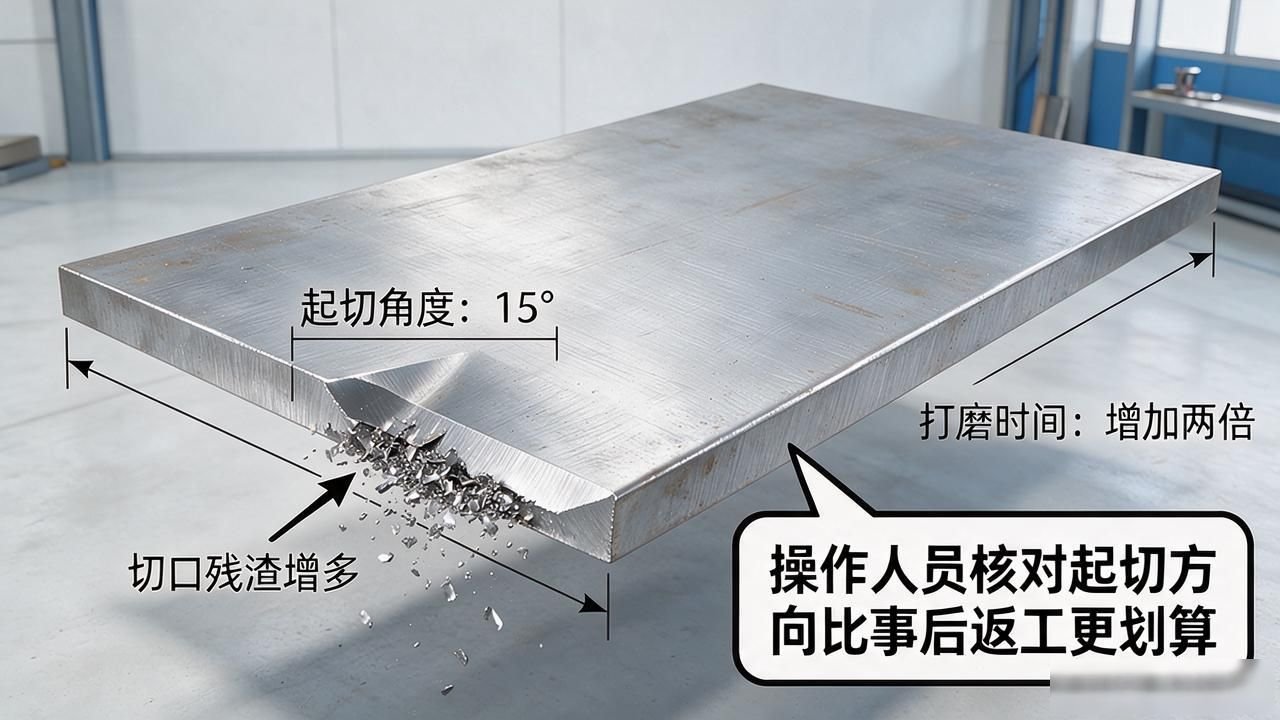
The core principle of selecting the processing position is to ensure that the forward direction of the laser beam forms a perpendicular relationship with the tangent line of the contour at that point. In layman's terms, it requires the laser to cut sheet metal processing laser cutting programming from the outside front of the outline, rather than performing a sliding cutting operation along the direction of the edge. Once there is a deviation in the direction, slag and burrs will appear at the incision, which will directly cause the subsequent grinding process to increase a lot of working time.

Taking a five-millimeter-thick Q235 steel plate as an actual case for analysis, if it is found that the starting angle deviates by fifteen degrees, then the amount of residue hanging at the incision position will be observed to increase significantly, and the grinding time required for each part will increase by as much as two times. The operator must carefully check the starting direction during the programming process. This method is much more cost-effective than rework afterwards.
The direction of the beam should be continuous
Programming paths must be connected end to end and this cannot be ignored. You can't jump directly from one corner to the opposite corner. When the manual point jump command is issued, the beam will move along the shortest straight line. Although this section of the road does not cut objects, there is still a trace amount of energy output. The result will be shallow pits on the surface of the board. More serious damage can even occur when micro-cracks are left on the surface of the board.
On Zhongyilong's production line, before each cutting path is executed, the system automatically checks whether it is continuous. If there is a disconnection in the middle, an alarm signal will be sent out immediately to remind the staff to rearrange the order of cutting materials.
In 2025, the newly modified layout software added some thermal simulation functions. This new function can mark in advance the extent to which jumping cutting sections will affect other nearby parts.
The hidden dangers of skip cutting
When arranging multiple parts on a piece of raw material , sheet metal processing laser cutting programming , although those jumping movement paths are not considered a formal cutting process, but there will still be energy leakage on the path of the laser beam, which will cause some shallow pits to be left on the surface of the plate.
When bending or welding operations are performed later, the location of stress concentration will be exactly where these pits are located. As a result, parts may crack after a short period of use, leading to an increase in customer complaints.
The actual solution is to stagger the starting and cutting points of adjacent parts during nesting by one step, so that the jumping section is in the cut scrap area, and the damage is controlled in the scrap area. The cost is almost zero, and the layout engineer only needs to spend ten more minutes planning.
Automatic positioning of software parameters
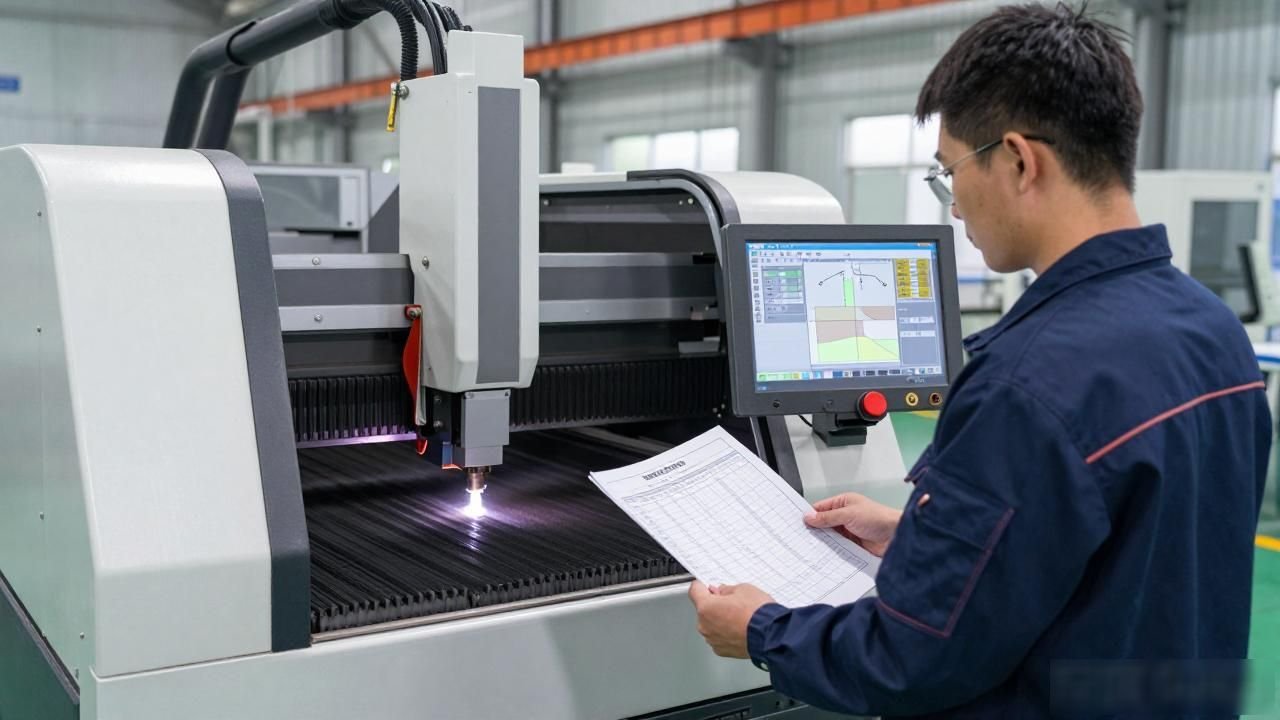
Nowadays, mainstream cutting machines are equipped with software called CAM. The operator first imports the drawings, and then sets the parameters such as the material, thickness and power of the plate. The software will automatically calculate where the puncture point is and the optimal starting direction. Finally, the operator only needs to confirm and then perform the operation. Because the parameters are displayed visually on the human-computer interaction page, even novices can quickly get started.
New models launched since 2024 can simulate the complete cutting path, and display the thermal deformation area and warping risk in advance. By fine-tuning the parameters at one time, it saves the trial and error time of wasting a sheet of material after cutting every time. This has significantly improved the material utilization rate.
The gap between accuracy and manual labor
The incision deviation of manual gas cutting is usually plus or minus one millimeter. Laser cutting can control the error within plus or minus 0.1 mm. When shipping in batches, the difference of a few tenths of a millimeter can directly determine whether the customer can pass the one-time acceptance. In this way, the repair rate will differ by an order of magnitude.
The premise is to ensure that all programming points are accurate and that the plate does not shift during clamping.
Zhongyilong Hardware's SOP document requires that when the first product is produced in each shift, three key points must be checked using calipers. Once the measured deviation exceeds 0.15 mm, the machine must be stopped immediately to troubleshoot problems with the fixture and focusing lens, thereby blocking all possible hidden dangers before mass production.
During the laser cutting programming work in your factory, do the operators use manual methods to mark points, or does this work completely rely on software to automatically arrange it? Please share the pitfalls you have encountered during the actual operation in the comment area. If you think this answer is useful, then click the like button and forward it to colleagues in your factory.





暂无评论内容