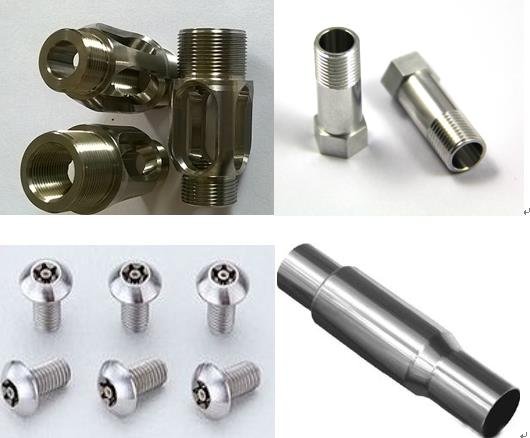


What is the best processing method for processing titanium alloy?
Titanium alloy is a material with very high strength and relatively low density. However, once it is put on a lathe for processing, the phenomenon of tool sticking and edge chipping will occur. Therefore, many processing masters in factories are tortured by this difficulty and finally choose to give up. Today, we are going to explain clearly at once the difficulty of cutting it and the heat treatment process.
What is titanium alloy
Titanium alloy is a material that uses pure titanium as its base. Then aluminum, vanadium, and molybdenum are added into it. The thing made in this way is called alloy. Its density only accounts for six times that of steel. Its strength is about the same as steel. Its ability to resist corrosion far exceeds that of stainless steel. That's the fundamental reason why it's so expensive.
In the 1950s, the Boeing 707 model in the United States was used in large quantities for the first time. They used titanium alloy to make the fuselage frame. Until the 2020s, the proportion of titanium alloy used in our country's C919 passenger aircraft has exceeded 9%. It has been applied to military fighter aircraft to a deeper extent, and the usage ratio has exceeded 40%, and this trend is still growing.
Both civilian and military use are vying for it
On the civilian side, C919 and A350 wide-body passenger aircraft use a large number of α+β titanium alloys for wing structures and engine blades. In the military field, the titanium alloy structural parts of the F-35 fighter jet account for more than 40%, and the consumption of a single aircraft is about 20 tons.
In hospitals, when driving nails into bones or performing replacement surgeries, most of the implants used by doctors are made of pure titanium or Ti-6Al-4V.
Looking at the automotive industry, the people who make turbocharger casings and the teams that make F1 racing chassis have also begun to use titanium alloys, mainly to make the car lighter and reduce weight. According to the forecast figures, by 2025, the worldwide consumption of titanium alloys is expected to exceed 250,000 tons.
Heat treatment determines final performance

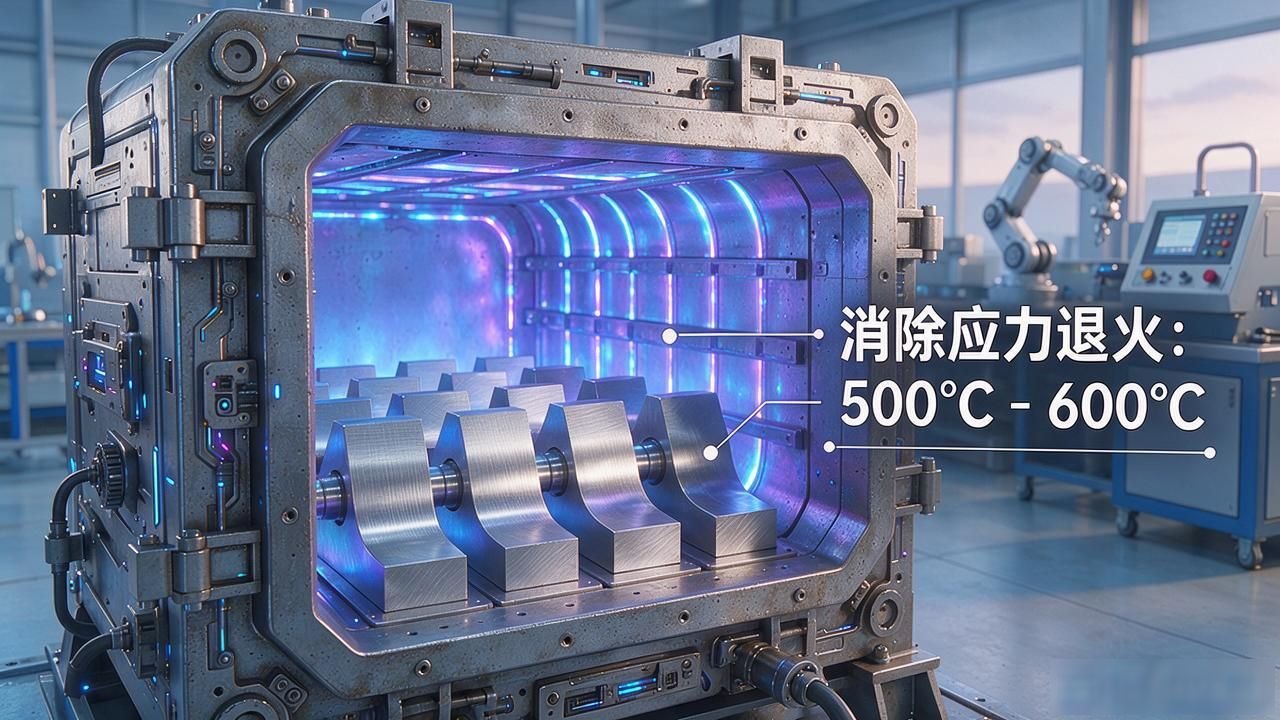
There are three types of heat treatment methods most commonly encountered in titanium alloys, namely stress relief annealing, complete annealing, and solid solution aging. Stress relief annealing should be performed at a temperature 120 to 200 degrees below the α plus β phase transition point. Its main purpose is to dissipate some of the residual stress left during the forging and machining processes to prevent corrosion or deformation later.
The purpose of complete annealing treatment is mainly to obtain the required toughness and good dimensional stability of the material. This process is suitable for arranging heat treatment operations again after the completion of the mechanical processing process.
Solid solution aging is a treatment method aimed at strengthening material properties. For alloy products that contain both alpha and beta phases, the specific operation steps are to implement the quenching process in an environment that is 40 to 100 degrees below the critical temperature of the phase transition, and then place it in a temperature range of 450 to 550 degrees for aging treatment. The chemical and physical mechanism of this is to promote the decomposition of the metastable internal phase structure, thereby precipitating small second phase particles. Ultimately, the strength level of the material is further improved and enhanced.
Cutting temperatures are ridiculously high
Because the thermal conductivity of titanium alloy is only one-fifth to one-seventh of that of No. 45 steel, the iron chips cut during processing cannot dissipate heat. All the heat is accumulated in the cutting area. Therefore, under the same parameters, the cutting temperature will be twice as high as that of cutting steel, and the cutting edge of the tool will easily exceed 800 degrees.
The deformation coefficient is close to 1, which means that the chip is almost not curled, and it slides close to the rake face. In this way, the friction distance is lengthened by as much as three or four times. The tool does not cut a few times, and the wear becomes very serious, and the tool is directly worn out. This is what masters often say, once a cut is made, the tool is useless.
Sticky knife chipping and cold crust
When the temperature exceeds 600 degrees, titanium will react with oxygen and nitrogen, thereby forming a layer of hard but fragile oxide on its surface. After forging or hot rolling, a layer of hard skin with cold work hardening characteristics will be formed on the surface of these blanks, and its hardness value can reach HB350 or above.
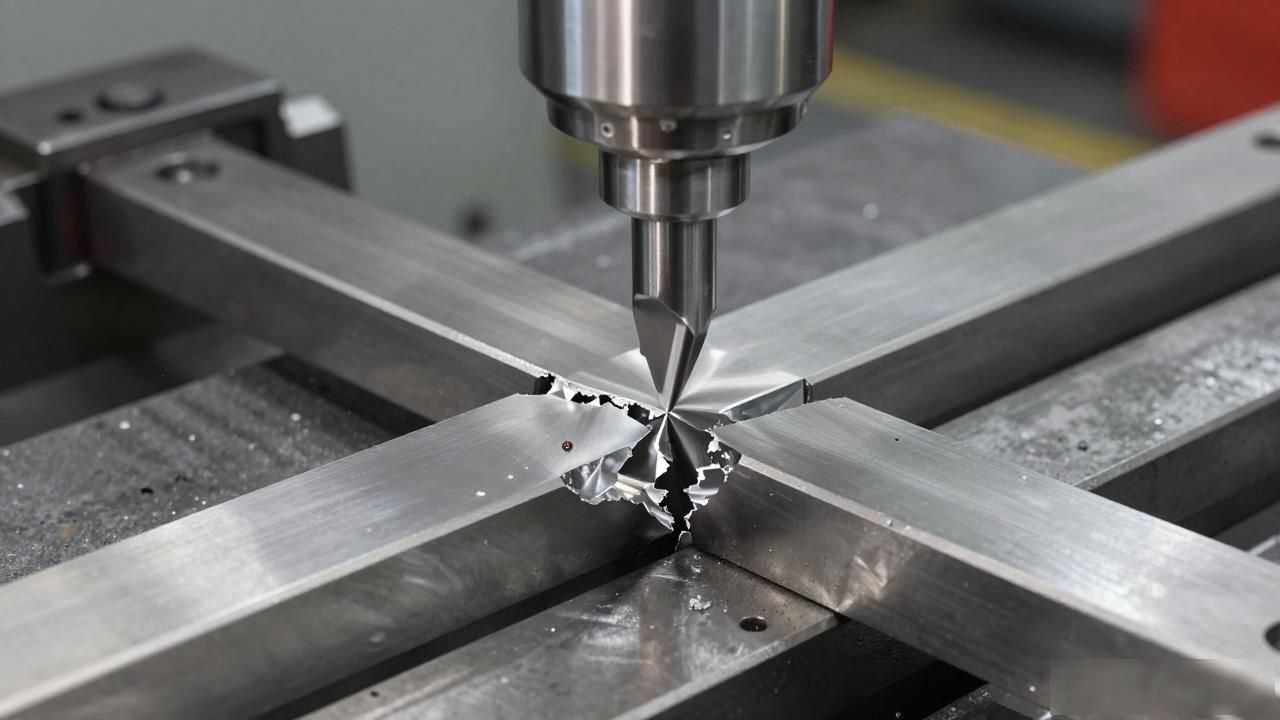
Because of this, the impact force generated when the tool cuts into the material will be amplified to the extreme, making the phenomenon of tool chipping almost inevitable.
When the hardness is lower than HB300, the titanium alloy will become too sticky, and the chips will be wrapped around the tool tip and pulled continuously, causing the wear of the flank surface to accelerate. Therefore, the wear of the rake surface is more serious than the flank surface when turning the outer circle. When the feed rate reaches 0.2 mm per revolution, an obvious wear band appears on the rake surface.
Rigidity and tool saving
In the process of cutting titanium alloy, due to the existence of radial force, the workpiece is relatively prone to bending and vibration. This is mainly because the rigidity of the process system itself is not enough. In this case, the tool life will be directly cut in half.
Therefore, one suggestion for practical operation is to use shorter and thicker tools, and at the same time reduce the overhang length. In addition, the spindle speed should be reduced to a few hundred revolutions per minute, and the feed amount should be controlled within a value range of 0.1 to 0.2 millimeters per revolution.
When selecting a tool, you can choose solid carbide material or coated ceramic material. These options are actually feasible. However, regarding the type of coating, you must use a PVD type process. If a CVD type coating is used, peeling will easily occur when processing titanium alloy materials.
Regarding the use of coolant, it is recommended that you use high-concentration emulsion, or use dry cutting and then use compressed air to blow away the chips. In any case, do not use wet cutting. This is because when the temperature of titanium metal exceeds 800 degrees Celsius, it will oxidize once it encounters water and may cause a fire.
When cutting titanium alloy metal in your factory, which specific production and processing process do you think the edge chipping is the most serious and obvious? Everyone is welcome to share some of your practical experience in the comment area. If you think this information is really useful, then please be sure to like it and forward it to your colleagues in the workshop.





暂无评论内容