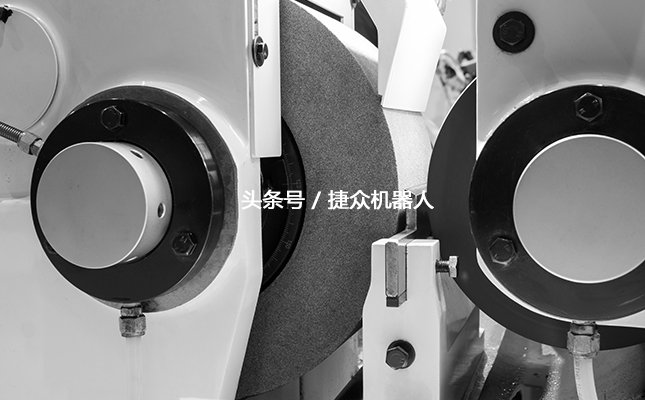


Things to note when replacing the grinding wheel on a centerless grinder
As long as the grinding wheel wears, the accuracy of the outer circle of the workpiece will directly have very serious problems. Many people mistakenly believe that replacing a new grinding wheel can solve the problem, but in the actual replacement process, the situation is much more complicated than people imagine.
Why grinding wheel wear directly reduces accuracy
In the processing technology of centerless grinding, the grinding wheel is the most core grinding element. Because if the abrasive grains are used for a long time, they will become passivated, causing the diameter of the grinding wheel to slowly shrink, and the distribution of the grinding force will also change accordingly, so that the cylindrical roughness of the workpiece can directly soar from Ra0.8 to Ra3.2. At the same time, the dimensional deviation is also getting larger and larger.

In 2024, an auto parts manufacturer had a production line with a centerless grinder. Because the grinding wheel discs were not replaced for three consecutive weeks, the size of the outer circle continued to exceed the allowable error range. The rate of scrap products suddenly surged from the original 1.2% to the current 11%, causing this production line to scrap more than two hundred products every day.
Correct order for disassembling old grinding wheels
First, turn off the power, then shake the feed handle to make the grinding wheel frame return to the last position, and then open the relevant protective cover to clean the surrounding area. Next, loosen the spindle nut about two to three turns but do not remove it. Then you need to use a puller to squeeze out the flange, and finally remove the nut.
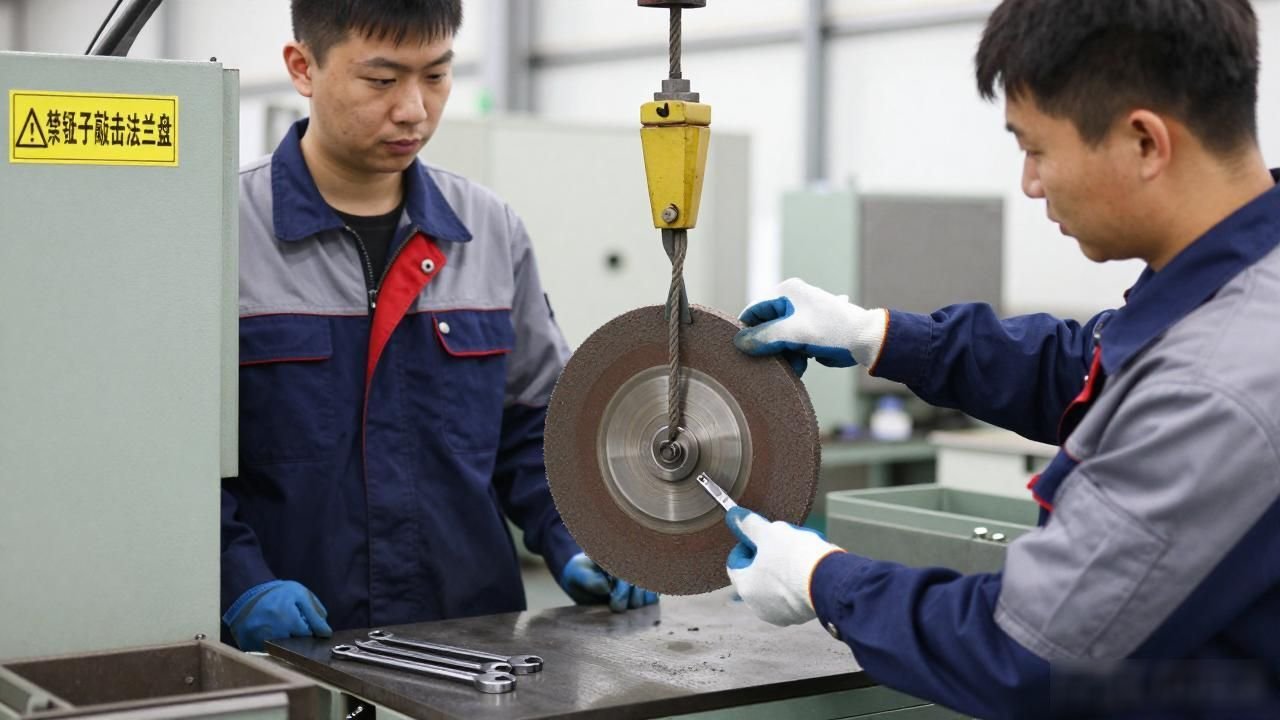
Generally speaking, the weight of the grinding wheel is between thirty kilograms and fifty kilograms, so two people must be arranged to cooperate with each other and rely on the help of ropes and small cranes to perform the unloading operation. During this process, it is absolutely forbidden to use a hammer to hit the flange part, because the cast iron material is prone to deformation once it is hit, so special tools should be used and the fixed screws should be loosened diagonally several times.
Three inspections before installing a new grinding wheel
Before proceeding with the installation operation, everyone needs to check three aspects in sequence. First, check whether there are cracks or missing corners on the grinding wheel body. Second, check whether the pressing surface of the flange plate is flat and clean. Finally, check whether the thickness of the flexible lining material meets the standard. The standard thickness must be at least one millimeter thick, and more than two millimeters should be exposed at the outer edge.
The outer diameter of the flange must not be less than one-third of the outer diameter of the grinding wheel. If this ratio is not reached, the clamping force will not be stable enough, and the grinding wheel will be thrown out during high-speed rotation. Any grinding wheel that is damp or stained with water must be thoroughly dried before it can be installed on the machine for use.
Tightening in diagonal steps is an iron rule
Screws and nuts must be tightened in stages and in a diagonal order, and a certain point must not be completely locked in one go. First, tighten all the screws to a tightness that can be felt by hand, then perform the first round of diagonal tightening operation, and then perform the second round of diagonal tightening operation, and so on until it is ensured that the flange can drive the grinding wheel to rotate without slipping.
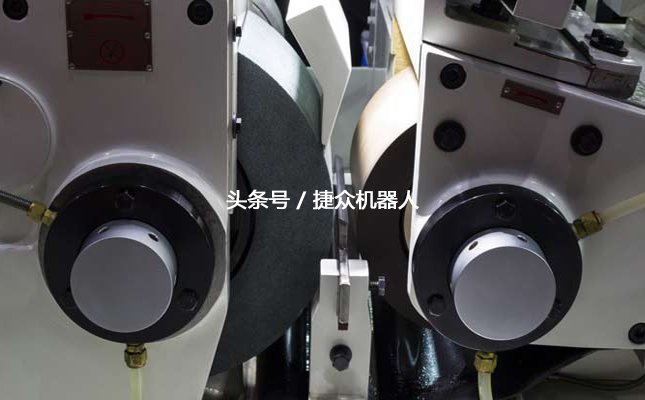
During this period of March 2025, an accident occurred in a certain machine shop. The workers at that time adopted the method of tightening all the screws on one side at once. This operation directly leads to the deviation of the installation position of the grinding wheel.
When the machine first started to rotate the spindle, the spindle suddenly cracked. In the end, the spindle was directly scrapped. Including various losses caused by subsequent downtime, the total amount exceeded 80,000 yuan.
Static balance cannot be omitted
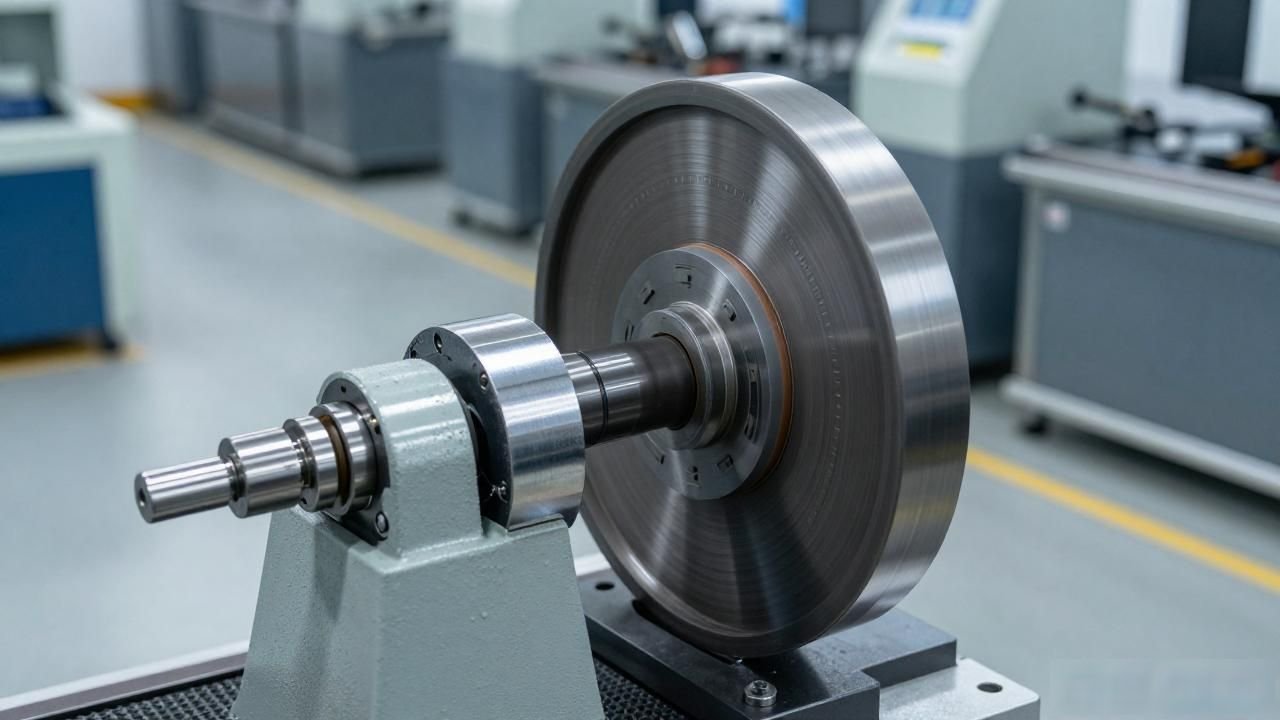
When the new grinding wheel is installed behind the chuck, the static balancing test step must not be skipped. Although the value of the eccentricity seems very small, only 0.1 grams, due to the high-speed rotation of 3000 revolutions per minute, the centrifugal force generated can still reach a large value of tens of Newtons.
This force will cause the grinder to vibrate strongly, causing the vibration value of the equipment to directly exceed the specified standard range. Eventually, the accuracy of the processed products will not be guaranteed at all.
The balance adjustment must be completed when the grinding wheel leaves the machine tool in a static state. The specific method is to use a static balancer to determine the position of the side with excessive weight, and then add a counterweight block to the other side that is symmetrical from the center of gravity for correction. Continue to adjust until the bubble pointer on the instrument panel moves to the center scale. In this process, you must not directly install the grinding wheel on the grinder for trial operation to save trouble or quickly verify.
Details of hoisting and commissioning
The operator needs to use ropes and crane equipment to slowly align the grinding wheel with the spindle, and then slowly place the grinding wheel down. The purpose is to avoid damaging the edge of the grinding wheel and the flange. This part of the spindle itself must maintain a straight shape and smooth texture, and must have no burrs. Otherwise, if it is installed, it will also appear to be biased to one side.
After turning on the machine, you need to let it idle for a while and observe it for three minutes. During this period, check whether the outer end surface of the grinding wheel is flush with the outer end surface of the guide wheel. After confirming this situation, turn on the dresser so that it can repair the grinding wheel. At this final stage, start at a slower speed and gradually increase it to the normal operating speed. And during this process, a workpiece was trial cut for confirmation.
When replacing the grinding wheel in your factory, do you usually choose to skip the step called static balancing? Welcome to the comment area to chat about your own opinions. If you think such content is helpful to you, like it and forward it to your colleagues in the workshop.






暂无评论内容