

What is turn-milling combined processing?
Turning and milling combined processing is definitely not as simple as installing an additional cutting tool. In the traditional process mode, three different machines are required to complete the task. With this technology, all tasks can be completed with only one clamping installation. As for the specific differences in accuracy performance, production cycle length and actual cost control, many workers in the on-site workshop cannot tell clearly.
Structurally, is it one unit or two units?
The essential attribute of the turning-milling combined process is actually a combined version of the two equipments, the CNC lathe and the machining center. In the standard configuration items, it will definitely include the C-axis rotation control function and the power tool turret. If it is a relatively high-end model, additional components such as B-axis structure and Y-axis structure will be added. In this way, four-axis linkage or five-axis linkage processing can finally be achieved.
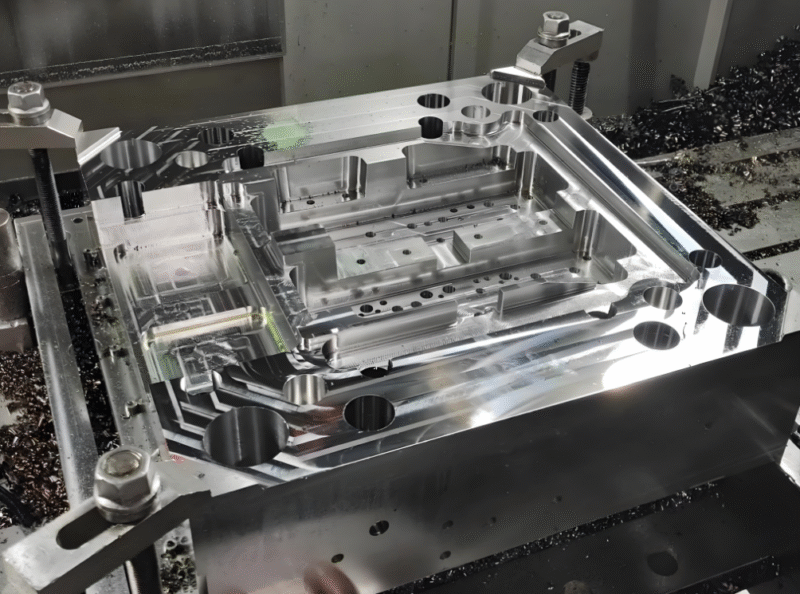
When the workpiece only needs to be clamped once, all steps such as turning the outer circle, boring the inner hole, milling the keyway, drilling the radial hole, milling the plane, and turning the curved surface are all completed in sequence on the same machine. The entire process does not require moving the workpiece to the second device for operation.

The traditional type of lathe only has the action of chuck rotation, and the other action of tool feeding, which means that it only has two degrees of freedom . The difference between turn-milling combined machining and traditional turn-milling. The difference between turn-milling combined machining and traditional turn-milling. What is the difference between turn-milling combined machining and traditional turn-milling? What is turn-milling combined machining? , so it cannot perform milling operations. The turning-milling machine tool combines the rotational motion of the milling cutter with the rotational motion of the workpiece, so that a synthetic cutting process can be completed.
And for the milling cutter installed on the power turret, it can be used as both a turning tool and a milling cutter. From a structural perspective, this is a very fundamental difference.
The only difference in accuracy is that the benchmark has not been changed.
The machining process of traditional shaft parts must be transferred between different types of equipment such as lathes, milling machines, and drilling machines. Whenever switching to the next machine, the workpiece must be clamped and aligned again, and the tool setting must also be adjusted.
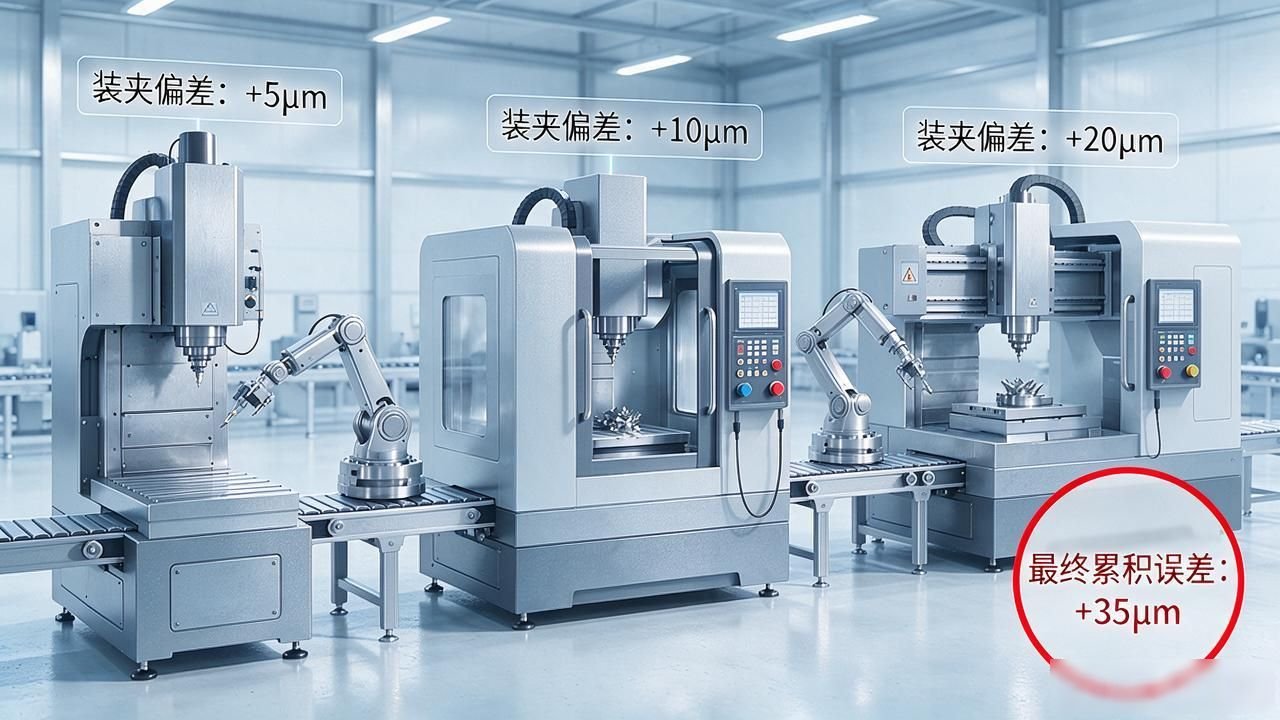
Every clamping action performed inevitably introduces a positioning deviation of several microns. When these three main pieces of equipment are connected in series to complete the entire processing process, the accumulated errors can easily reach tens of microns. Therefore, it is very difficult to obtain a reliable guarantee on the consistency index of product dimensions.
In the case of turning and milling combined with one clamping, the error source of reference conversion is directly eliminated. At the same time, in conjunction with the on-machine measurement system, when a surface is processed, it will be measured to compensate for the deviation in real time and maintain the accuracy of key dimensions stably at the IT5 level. In this process route with multiple machine tools, it is almost impossible to do this.
What is omitted from the cycle is hidden time
Many people now mistakenly believe that the difference between production cycles is mainly reflected in the actual cutting time, but this view is actually wrong.
In the traditional manufacturing process, the waiting time for clamping to complete the positioning and fixation of workpieces, the time required to replace different tooling fixtures, and the transportation time required to transfer materials between various equipment are all auxiliary work time-consuming, and their cumulative total can often account for 30% to 40% of the total time-consuming of the entire process. When three machines need to be queued to wait for work, the overall production rhythm cannot effectively widen the gap.
It eliminates the waiting for clamping, the exchange of tooling, and all the links of logistics between equipment, so that the workpiece does not fall to the ground and does not change hands. In this way, the single-piece processing cycle is shortened by more than 50%. The bottleneck has also changed from the original state of three machines waiting in line to a problem of how to arrange the beat of a single machine. The production line throughput is completely different.
The cost account cannot only look at the purchase price
The selling price of a five-axis turning and milling compound equipment is often tens of thousands or even millions of yuan, and its initial investment is about two to three times the sum of three single-function equipment. Therefore, many workshop directors will choose to shrink back when simply calculating the purchase price, and then believe that it is more stable and reliable to follow the traditional practice in the past. However, this understanding is actually only focused on the cost expenditure in the first year.
Let’s do the math over the entire life cycle. Because it takes up two less workshop areas, deploys two fewer operators, and maintains a batch of tooling fixtures, plus the scrap cost saved after the yield rate is improved. The money saved in one year can cover the price difference of the equipment within two or three years. The larger the amount, the faster the return on investment will be.
What items are essential?
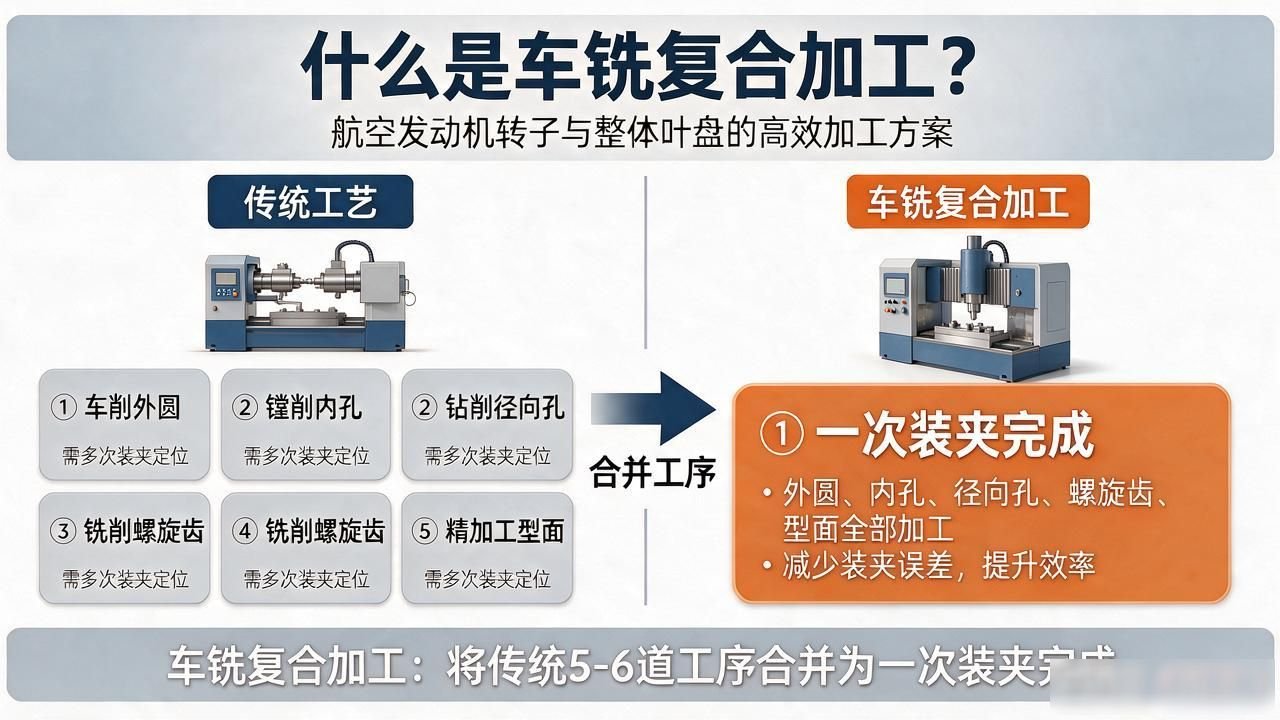
For parts such as aero-engine rotors and blisks, their outer circles, inner holes, radial holes, spiral teeth and profiles need to be machined. In traditional processes, this processing is divided into five or six processes to complete.
Another example is the part used for artificial hip joints in the field of medical equipment. The ball head, handle and threaded surface need to be all manufactured in one clamping operation, and the accuracy requirements are very high.
In the precision mold industry, multi-faceted cavity parts and structures with complex tapered holes such as high-speed electric spindles are all considered as multi-feature integrated parts. Traditional craftsmanship relies on the relay of multiple machine tools. Each time the processing is handed over, the accuracy must be lowered by a level. If turning and milling combined processing is used and all the work is done with one-time clamping, this is indeed the most reliable solution for parts with high added value and small batch production.
The trend is towards intelligent integration
Today's turning-milling combined processing technology not only has the two functions of turning and milling, it is developing in the direction of intelligence and high integration. Functions such as installing laser measurement probes on machine tools, online monitoring of tool wear, and adaptive compensation of cutting parameters have become very common standard configurations in high-end models.
During the specific processing process, the machine can observe the status and make adjustments by itself, without the need for people to focus on those parameters.
Starting in 2025, newly launched machine models will generally be equipped with AI cutting force monitoring systems. When the tool is about to wear out, the system will automatically reduce the operating speed or switch to a spare tool for work.
As a result, the downtime of the entire production line due to tool replacement was reduced by several hours compared to before. This is the real generational gap between them and the old mill-turn machines. This is definitely more than just an extra knife.
In your workshop now, what parts are still being tossed back and forth between the lathe and the milling machine? If they are replaced by clamping once, then the most troublesome problem for everyone is the alignment problem during clamping, or the sequence arrangement of the processes?
Welcome everyone to come to the comment area to communicate and discuss. If you think this kind of content is of some use to you, just like it or forward it to your colleagues working in the workshop.




暂无评论内容