

Chapter 7 Mechanical Design Courseware Riveting, Welding, Gluing and Interference Connection.ppt
Which one, friction welding or blind rivet, can withstand the force and is stronger? Many people are often hesitant when choosing the type of mechanical manufacturing-related engineers, and the duration may even reach about two to three days. The core focus of this matter can only be summarized in three Chinese characters, which is to observe the current specific use environment.
How riveting is classified determines how much force it can withstand
The so-called riveting is actually to put the rivets through the holes that have been prepared in the two parts, and then rivet them firmly and fix them in place. If classified according to the specific form of the joint, it can be divided into two types: lap joints and butt joints, and butt joints can also be subdivided into butt joints using a single type of cover plate and butt joints using double types of cover plates.
If divided according to its performance, strong, strong and tight are divided into three grades. Among them, strong only depends on its strength, while strong and dense must have sufficient strength and at the same time be able to ensure the sealing effect.
Because the load that a single row of rivets can bear is limited, using multiple rows of rivets can spread the load. In actual engineering projects, aircraft skins use multi-row riveting, and boilers and pressure vessels use tight rivets to prevent air leakage. Therefore, the specific selection of rows and how to arrange and combine them directly determines the stiffness of the overall structure.
Blind rivets are a flexible option in riveting

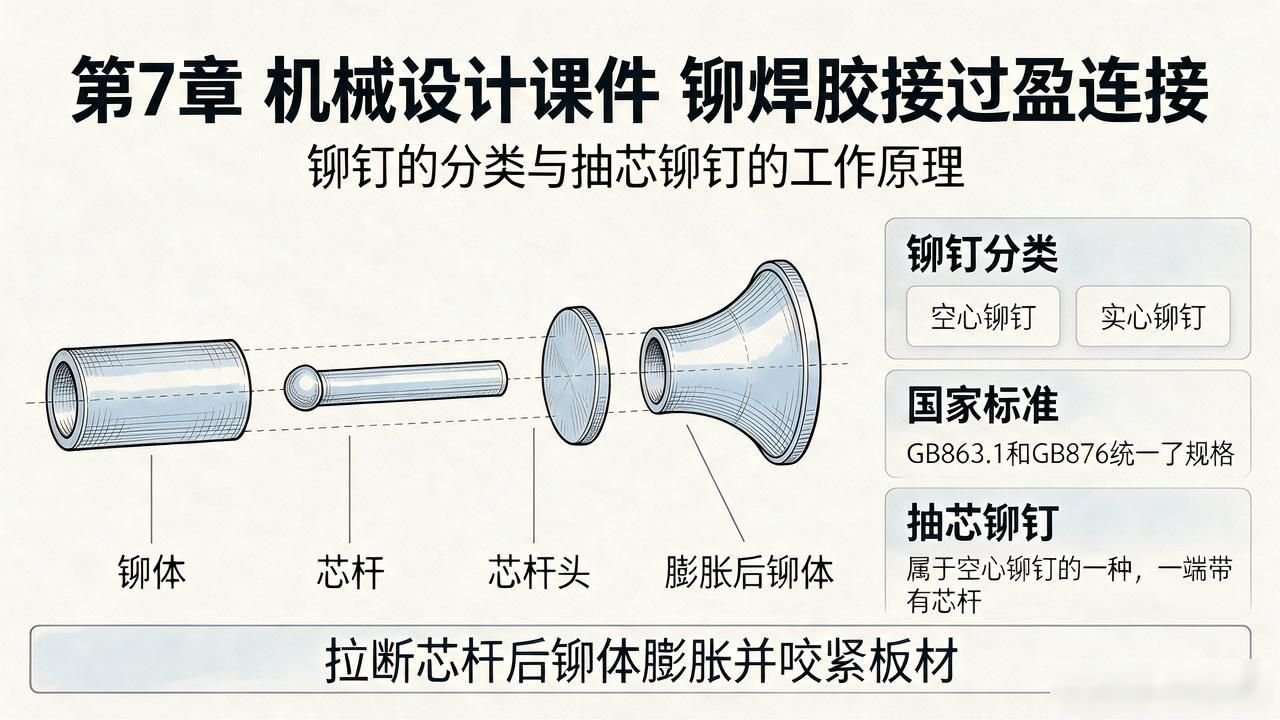
Rivets are divided into two categories: hollow rivets and solid rivets. The two national standards, GB863.1 and GB876, have unified their specifications. Among them, the blind rivet is a type of hollow rivet. It has a core rod at one end. When you pull off the core rod, its rivet body will expand. So as to bite the board tightly.
A very prominent core advantage it has is that it can be operated on one side. For the inner wall of the pipe and the back of the box, which are places that cannot be reached by human hands, no matter whether traditional welding or riveting methods are used, it is completely powerless. However, with the help of blind rivet tools and a simple and practical equipment such as a rivet gun, the relevant tasks can be successfully completed.
Why is friction welding considered a high-strength connection?
High-strength friction welding mainly relies on the process of pressurizing the end faces of two workpieces and rotating and frictionally generating heat. After the temperature of the material reaches the plastic state, the rotation will be stopped and the upsetting force will be increased to complete the solid-phase connection operation. There is no melting phenomenon in the whole process, and of course there is no brittle phase in the weld.
Typical actual data shows that among shaft parts made of materials such as 45 steel and 40Cr, after friction welding, the strength of the resulting joint can reach 90% or even higher of the strength of the base metal, and the fatigue life is also very close to the level of the base metal itself. Therefore, transmission shafts in the aviation and aerospace fields use this process a lot of times.
Working conditions that friction welding cannot do
Friction welding technology has extremely high requirements for the material compatibility and thickness difference of the two mating surfaces. It must be ensured that the two are compatible with each other and have similar thicknesses. Repair welding cannot be used for adjustment in the on-site environment, and it can only be welded and formed in one go. If there is a welding deviation or the geometric dimensions exceed the allowable range during the operation, the workpiece will be directly judged as a scrap piece, and the resulting rework cost will be extremely high.
For thin plate parts, combinations of dissimilar materials, or structures that need to be disassembled for maintenance later, friction welding is basically not suitable. In addition, the investment cost of equipment is relatively high, and when faced with small and medium-volume production tasks, the economic benefits appear to be relatively poor.
The true performance of blind rivets in high-intensity scenes
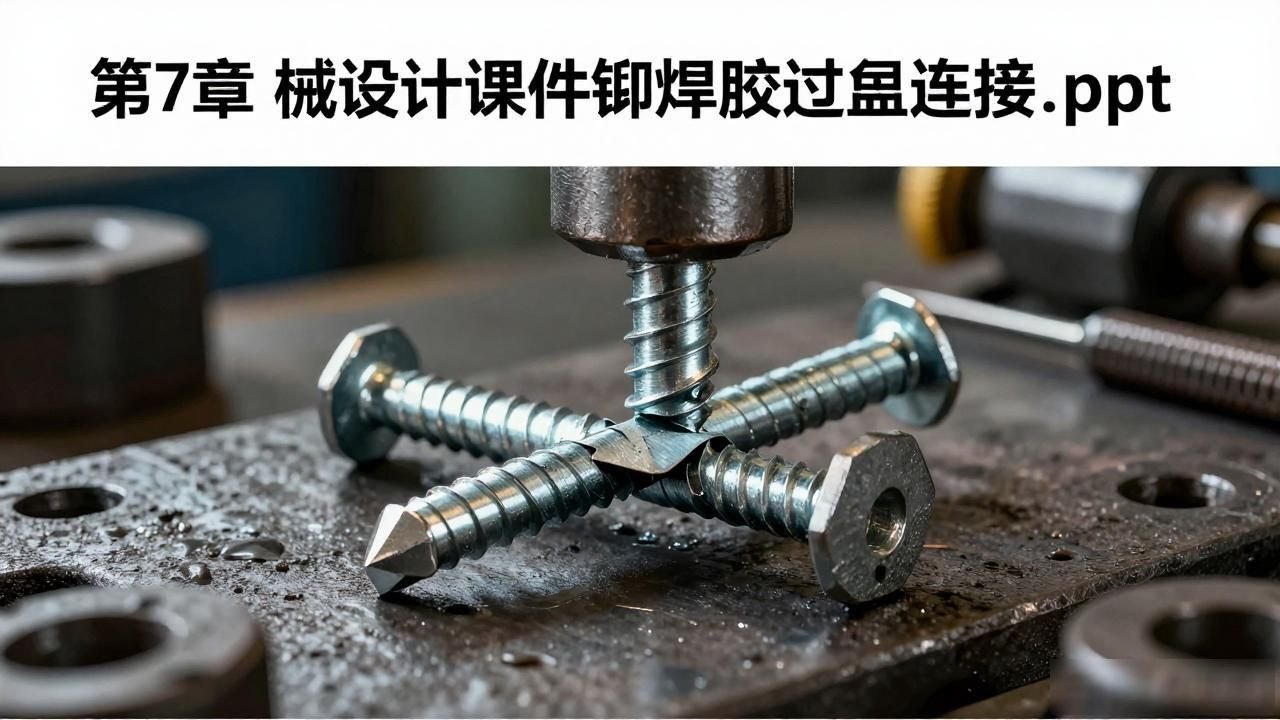
We are talking about aviation blind rivets, which include the MS20426 series, and they are used together with 7075 aluminum alloy. In this way, the shear bearing capacity of each rivet can reach more than 3,000 N. In places like fuselage frame beam nodes, the connection method formed by mixing bolts and rivets is a very common phenomenon.
However, the essence of blind rivets lies in mechanical engagement. It does not form a metallurgical bond, so its ability to resist fatigue and vibration loosening is not as strong as friction welding. Therefore, in those situations where high-frequency vibration exists, anti-loosening measures must be added.
Don’t worry about choosing a model in three steps
The first step is to look at the load type. If it is a static large shear situation, choose friction welding or solid riveting. If it is a dynamic fatigue load, friction welding is preferred. The second step depends on accessibility. If it is open on both sides, use solid rivets or welding. If it is closed on one side, use blind rivets.
The third step is to look at the batch size. If it is a large batch of standardized parts, welding or riveting can be used to dilute the cost. If it is a small batch and there are many varieties, use blind rivets to achieve quick assembly. If you go through all three steps, you will basically not make the wrong choice.
In the actual operation of your project, have you encountered the kind of difficult situation where it is difficult to perform welding operations and riveting processes? Everyone is welcome to leave a message in the comment area for discussion, and through likes and shares, so that more peers in related fields can learn about this topic.






暂无评论内容