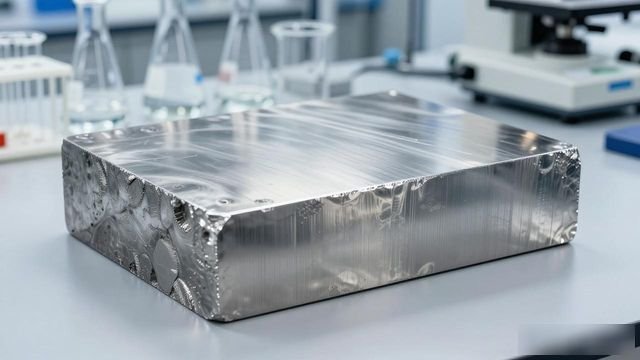


ferritic stainless steel
What is duplex stainless steel? The core lies in organizational mixing
One type of steel is called duplex stainless steel. Its microstructure is composed of two different crystal structures. In one case, it is martensite plus ferrite, or austenite plus ferrite as the structural form. The purpose of such a specific design is to synthesize the performance advantages of the two phase structures, and then make up for the shortcomings of a single structure. For example, there is a kind of martensitic stainless steel, which has high hardness but poor toughness, and another kind of ferritic stainless steel, which has good toughness but low strength. By mixing the two, the material can have the advantages of both types of structures at the same time. This type of material is widely used in chemical industry, marine engineering, petroleum equipment and other fields. The reason is that actual working conditions often have many requirements for the material, which requires corrosion resistance, fatigue resistance and easy processing.
Taking martensitic-ferritic duplex stainless steel as an example, its corrosion resistance is relatively close to that of ordinary martensitic stainless steel, but its hardness and brittleness are significantly reduced, and its plasticity and toughness are significantly improved. At the same time, it has better performance in welding and is not as prone to cracking as pure martensitic steel. This shows that when processing this type of steel, preheating and post-heat treatment can be reduced, thereby saving time and costs. It is a practical alternative for stainless steel processing companies.
Cost and performance balance of austenitic-ferritic dual-phase steels
There is an austenitic-ferritic duplex stainless steel, which is divided according to the chromium content and can be divided into categories such as Cr18, Cr21, and Cr25. The higher the chromium content, the stronger its corrosion resistance and oxidation resistance. This kind of steel has outstanding characteristics. Its strength is high, which is about 30% to 50% higher than that of pure austenitic stainless steel. However, its expansion coefficient is only about half that of austenitic steel, and its thermal conductivity is larger. This means that it will be more stable in high-temperature environments and environments with drastic temperature changes, and will not be prone to deformation or cracking.
This type of steel has another key advantage, which is its strong resistance to intergranular corrosion, outstanding resistance to stress corrosion, strong resistance to corrosion fatigue, and its ability to resist pitting corrosion and crevice corrosion is also extremely significant. At the same time, its nickel content is low, and nickel is a precious metal. Based on this, its cost is 10 to 20 percent lower than austenitic stainless steel of the same grade. It is precisely because of these characteristics that austenitic-ferritic duplex stainless steel has been rapidly popularized in many industries such as seawater desalination, chemical equipment, and papermaking machinery. Many factories will give it priority when replacing old equipment.

Precipitation hardened stainless steel is the choice for ultra-high strength
In the multiphase stainless steel family, in addition to duplex stainless steel, there is a type of precipitation hardening stainless steel. Adding appropriate amounts of alloying elements such as copper, aluminum, titanium, etc., combined with a specialized heat treatment process, is its core goal. In the martensite or austenite matrix, a small hardening phase is precipitated, and the strength is greatly increased. The tensile strength of this type of steel can usually reach 1200 MPa or even higher, which is much higher than that of ordinary stainless steel.
The processing technology of precipitation hardened stainless steel is very particular. It is necessary to accurately control the solution treatment, the cooling rate, and the aging temperature. Otherwise, the precipitation phase will not be able to precipitate evenly, and the strength will be greatly reduced. However, once the process matures, it is extremely suitable for the aviation field, the aerospace field, the high-end mold field, and medical equipment and other projects that have extremely high requirements for strength. For stainless steel processing companies, mastering the heat treatment technology of such materials will be able to accept more orders with high added value, thereby improving the technical barriers of the brand.
Typical application scenarios of different duplex stainless steels
In actual engineering projects, martensitic-ferritic duplex stainless steel is often used to manufacture valves, pump bodies, pipe connectors and other components. These components require a certain degree of corrosion resistance but must be easy to weld. Like oil pipeline flanges in the petrochemical industry, when martensitic stainless steel was used in the past, cracks were easily produced at the welds. After switching to duplex materials, the rework rate dropped significantly. According to data from a stainless steel processing plant, after switching materials, the welding qualification rate increased from 82% to 96%, and the production efficiency increased by about 15%.
The material known as austenitic-ferritic duplex stainless steel is widely used in highly corrosive environments such as seawater cooling systems, desulfurization towers, papermaking digesters, etc. For Cr25 type duplex stainless steel, its pitting corrosion potential in seawater in an environment containing chloride ions is about 200 millivolts higher than that of the mentioned 304 stainless steel, and its service life is extended by 2 to 3 times. In many coastal power plants, the condenser tube sheets have been completely replaced with this type of material. Although the unit price will be higher, the full life cycle cost will be lower.
The relationship between material selection and brand promotion of processing enterprises
For stainless steel processing brands, choosing the right materials is not only related to product quality, but also directly affects customer reputation and market positioning. If you can clearly explain the applicable scenarios of duplex stainless steel and precipitation hardened steel to customers, and at the same time demonstrate the corresponding processing capabilities, such as welding procedure qualification certificates, heat treatment equipment parameters, test reports, etc., customers will trust your professionalism more. There is a processing plant in Suzhou that regards the duplex stainless steel product line as its main selling point. It carefully compared the performance data of several steel types on its official website. As a result, the number of inquiries increased by 40% in the past three months.
When promoting, you need to pay attention to using language that customers can understand, such as directly listing clear brands, such as S32205, S32750, and indicating the corresponding pressure level, temperature range and corrosion resistance indicators. At the same time, paired with photos of actual cases, customer feedback, and screenshots of test reports, it can impress purchasers more than just talking about technical theories. Users who search for terms such as "duplex stainless steel processing" and "precipitation hardening steel heat treatment" on Baidu or the 1688 platform are usually professional buyers who already have a certain technical foundation. Targeting them with targeted promotion will have better results.
Industry trends and future material development directions
In recent years, due to increasingly stringent environmental regulations and rising resource costs, the research and development process and application speed of low-nickel duplex stainless steel have accelerated significantly. For example, the nickel content of Cr21 duplex stainless steel can be controlled between 2% and 4%. Compared with traditional austenitic steel, it can save about half of the nickel, and its performance can still meet the needs of most chemical and marine working conditions. At the same time, precipitation hardening stainless steel has also begun to be improved in the direction of high toughness, such as adding trace amounts of boron or rare earth elements to improve impact resistance without reducing strength.
For stainless steel processing companies, they must keep up with material trends and reserve parameters for heat treatment and welding processes in advance, so as to gain a leading position in the competition. Suggestions are given to regularly participate in industry exhibitions, pay attention to the updates of ISO and ASTM standards, and maintain technical exchanges with steel mills. In the next few years, the demand for duplex stainless steel in new energy equipment, hydrogen energy storage and transportation, deep-sea mining and other fields is likely to rapidly increase and expand. Preliminary layout planning of related processing technologies is equivalent to paving an additional way forward for one's own brand.
Finally, I want to ask you a question. Among the projects you have been exposed to, is duplex stainless steel more difficult to process than precipitation hardened steel, or is precipitation hardening steel more difficult to process than duplex stainless steel, or are the two processes equally difficult? You are welcome to leave a message in the comment area, share your practical experience, and like and forward this article, so that more peers can communicate together and make common progress.



暂无评论内容