

Youxiang precision special materials
The core value of the toughness king of austenitic stainless steel
304 stainless steel is known to many people, but not many people really understand why it is called "austenitic". Austenitic stainless steel has super corrosion resistance and processing plasticity due to the ratio of chromium and nickel. It has no magnetism and does not become brittle at low temperatures. It is the first choice for food equipment and medical devices. When supplying 304 and 316L, Xiang specifically emphasizes the uniformity of the structure, which can effectively avoid the "ear-making" defect that occurs during deep drawing. This has a direct impact on the yield and surface quality of drawn parts.
For practical applications, 316L contains molybdenum, so it has the ability to resist chloride ion corrosion, and its performance is remarkable in marine engineering and chemical equipment. The 321 grade adds titanium. This grade is specially designed for use in high temperature environments of 400°C to 900°C. Its ability to resist intergranular corrosion is very strong. If you are engaged in manufacturing precision drawn parts, then choose austenitic strips with high quality, which can reduce the scrap during processing, thus improving the overall production efficiency.
Ferritic stainless steel is a cost-effective and practical player
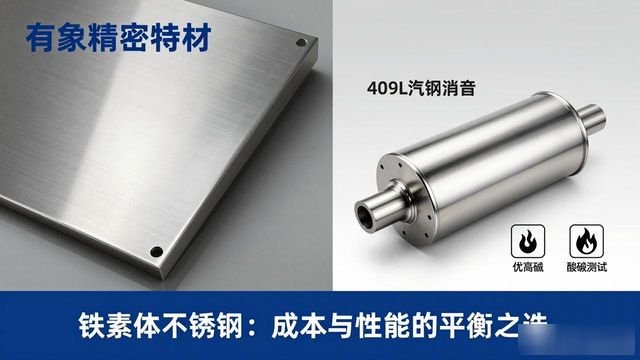
The 400 series includes ferritic stainless steel, which is mainly high-chromium and nickel-free. The cost advantage is particularly obvious. Its thermal conductivity is better than that of austenite, and its thermal expansion coefficient is low. In addition, its ability to resist stress corrosion cracking is also stronger. Many automobile exhaust systems and home appliance inner cylinders use this series. For example, when supplying 409L and 430, the precision cold rolling process is used to ensure that the 430 strip has excellent surface gloss. Especially suitable for high-end decorative parts.

Taking 430 as an example, it is widely used in home appliance panels and kitchen decorations. Its BA surface texture after surface treatment is comparable to that of a mirror surface. As for 409L, it is standard equipment for automobile mufflers and has high temperature resistance and corrosion resistance. Grade 444 is used in highly corrosion-resistant water tanks and is more rust-resistant than ordinary ferrite. If you are pursuing a balance between cost and performance, ferritic stainless steel is a pragmatic choice and is likely to provide stable surface quality and dimensional accuracy.
Martensitic stainless steel is the ultimate choice of hardness tools
The mechanical properties can be greatly changed by heat treatment, which is a characteristic of martensitic stainless steel. It has a high carbon content and a high chromium content. After quenching, its hardness is extremely high, but its toughness is relatively weak. As far as precision cutting tools and bearings are concerned, their requirements for hardness uniformity are extremely high. If the carbides are unevenly distributed, local soft spots will appear after heat treatment, which will directly affect the cutting edge and affect the durability of the cutting edge. The 420 and 440C supplied can ensure that carbides are dispersed and distributed, thereby avoiding such problems.
The following rewritten sentence: Among those specific applications, 410 is generally used for structural parts, 420j2 is the material used in scalpels and high-end tools, and 440c is used for precision bearings and high-wear molds. If you have parts that require high hardness and high wear resistance, then martensite is the first choice. Similar to the precision cold rolling process, the hardness bandwidth is controlled, making the performance after heat treatment more stable and reducing processing variables.
The double guarantee of strength and toughness of duplex stainless steel
The proportions of austenite and ferrite in duplex stainless steel are approximately half each, achieving the effect of strength and toughness, that is, the sum of the two is greater than the sum of their double separate effects. Its yield strength is twice that of ordinary austenite , and its ability to resist pitting corrosion and stress corrosion is particularly strong and outstanding. In applications such as marine engineering or high-pressure vessels, if grade 2205 is used, thinner designs can be made, thereby reducing weight and cost. As mentioned, the thickness difference of the duplex steel strips provided is precisely locked within the range of ±0.005 mm, which ensures that large equipment can be lightweight without sacrificing safety performance.
A typical grade is 2507, which is a super duplex steel. This steel is suitable for extremely harsh corrosive environments, such as seawater desalination equipment, chemical reactors, etc. If you are faced with the challenges of high strength and corrosion resistance, then duplex stainless steel can greatly increase the life of the equipment. Existing micron-level tolerance control enables thinner designs, helping customers achieve performance improvements.
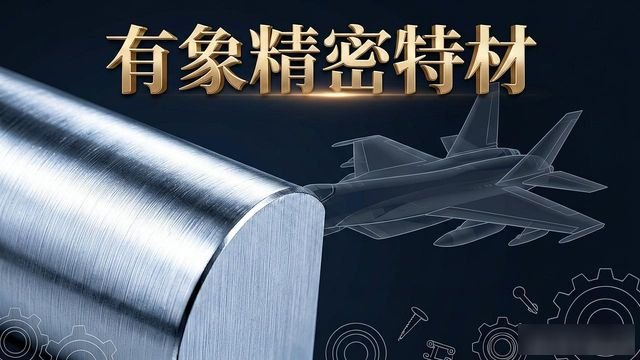
The pinnacle of high performance in precipitation hardened stainless steel aerospace grade
Precipitation-hardened stainless steel with added elements such as copper, aluminum, niobium, etc. undergoes aging treatment to precipitate the strengthening phase, thereby obtaining ultra-high strength and good corrosion resistance. Because it has a high strength-to-weight ratio, it has become the core material of aviation and precision instruments. 17-4PH is widely used in valves and structural parts. 17-7PH is used for stainless steel processing of precision springs and aviation diaphragms. It is possible to achieve a limit tolerance control of ±0.002 mm on this type of material. This ensures the linearity of the elastic element in the instrument.
If you are engaged in manufacturing pressure sensors or landing gear components, the reliability of precipitation hardened stainless steel will directly play a decisive role in product performance. Youxiang's core products are 17-4PH and 17-7PH. With the help of customized heat treatment solutions, the material can maximize its potential. The cost of this material is relatively high, but for high-end precision manufacturing , its value is much greater than ordinary stainless steel.
Choosing the right classification is just the beginning of controlling tolerances, which is the key
It is the classification status of stainless steel that determines the upper limit of the functions that the material can possess, but the accuracy of precision machining determines the lower limit of quality performance. Many people only focus on the grade, but miss the impact of cold rolling compression ratio, hardness bandwidth and micron tolerance on the final product. Youxiang has always been committed to maximizing the hidden physical potential of these five categories of materials. Youxiang precision special materials, from 304 to 17-4PH, each roll of strip has undergone very strict control. There is only one purpose to achieve in this way: to promote precision manufacturing to achieve a leap forward in performance with better performance.
In the automotive field, in the medical field, in the aviation field, in high-end fields such as chemical industry, tolerance control directly determines whether parts are qualified or not. If you are worried about selecting materials, or if you are at a loss for processing accuracy, you may wish to get in touch with Youxiang's technical team to obtain a full range of stainless steel material selection manuals and sample support. Finally, I want to ask: What is the link in your product that has the strictest tolerance requirements? You are welcome to share it in the comment area, and you are welcome to like and forward it so that more people can see the truth of precision manufacturing.



暂无评论内容