
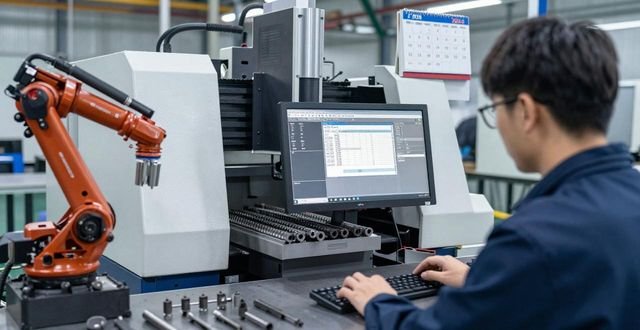
CNC small batch processing
Are you frustrated that you can't find a processing factory willing to accept small orders? CNC small batch processing is an effective tool to resolve this pain point. It makes mechanical parts processing no longer restricted by "minimum order quantity". Even small orders of 10 or 20 can be quickly arranged on the machine for production. For the research and development of trial production and customized products, this undoubtedly opens a new door.
What is going on with small batch processing?
Using computer-controlled precision machine tools to produce a small number of parts is called CNC small batch processing. Traditional processing plants are not willing to take on small orders because it takes more time to adjust the machines than to actually do the work. Today, with the help of CNC programming, the same machine tool can quickly switch between different products. For example, there is a precision machinery company in Shenzhen that will rely on this method in 2025! Within three days, 50 aluminum alloy brackets that were urgently needed by the customer were completed.
This kind of processing method is particularly suitable for sample trial production during the product development period. In the past, making samples had to wait for scheduling, but now you can start the operation directly after making changes through CNC programming. A medical device company in Shanghai developed new equipment in early 2026. It used this method to obtain 20 sets of functional prototypes within two weeks. Small batches no longer pose a problem, but become a tool for rapid iteration.
Efficiency is not as high as small orders
Many people think that small orders will not be profitable because the machine has just been debugged and has already completed the work. However, contemporary CNC machining centers are equipped with rapid clamping systems and tool magazines, and the time required for job change has been reduced from several hours to less than half an hour. Data provided by a factory engaged in auto parts production in Suzhou shows that as of the fourth quarter of 2025, the cost of a single piece of small orders with a quantity of less than 100 was only about 15% higher than that of mass production.

What's more critical is that the CNC system can store all processing programs. The next time the same order is accepted, the program can be directly called up to start production, thus saving the time spent on repeated programming and trial cutting. A company engaged in robot manufacturing repurchased previously trial-produced parts in January 2026, and the manufacturer completed delivery in just two days. This accumulation makes small batch processing more smoothly.
Product quality is unequivocal
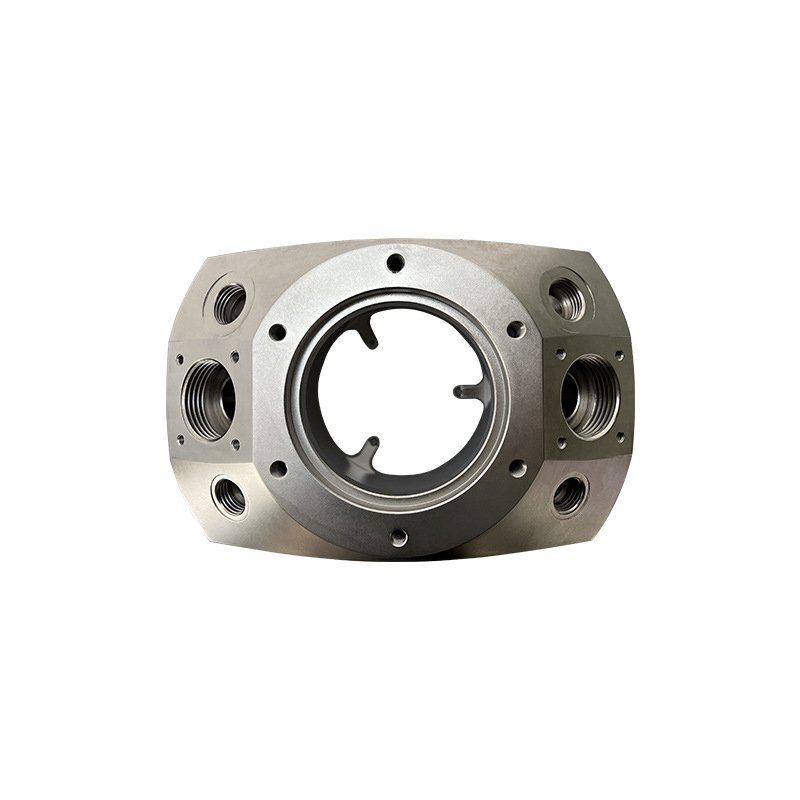
Some people are worried that the quality will be unstable in small batches. However, the fact is completely opposite. The accuracy of CNC machine tools is mainly guaranteed by the equipment itself and the program. This has nothing to do with the quantity. There is a business in Beijing that supplies aerospace parts. In 2025, 8 high-precision turbine disks were manufactured for customers, and the dimensional tolerance of each turbine disk was stably controlled within the extremely small range of 0.005 mm. In the case of small batch production, the operator can have more energy to pay attention to each part.
Each part can be inspected individually, and if a problem occurs, the program can be adjusted at any time to compensate. This is different from mass production, where if something goes wrong, hundreds of scraps are likely to be produced. There is a precision mold factory in Dongguan. In February 2026, it received an urgent replenishment order request from a customer. Only three parts were involved. Even so, they still used three-dimensional coordinate measuring machines to strictly control each one. Small batch processing actually takes quality control to its peak.
Respond flexibly to market changes
The current market demand changes very quickly, and a product that is popular today may be obsolete next month. The risk of large-scale production and small-batch machining and flexible production is too great. Small-batch processing is exactly in line with this rhythm. There is an intelligent hardware company in Guangzhou. For the new product to be launched in 2025, only 200 sets of casings were produced in the early stage to test the market's reaction. As a result, it was discovered that there was a problem with the design, and an improved version was completed within two weeks. If we followed traditional methods, we would have to hold down inventory for at least three months.
What allows the same production line to mix and process different parts is flexible production. There is an equipment factory in Hangzhou. In March 2026, it accepted orders from four customers at the same time, and each customer's order quantity did not exceed 100 pieces. They switched production in sequence on the five-axis machining center, and the equipment utilization rate reached 85% . Small batch machining flexible production , it is this flexibility that allows the factory to undertake various small orders, thereby making the source of income more dispersed and more stable.
Personalization is no longer expensive
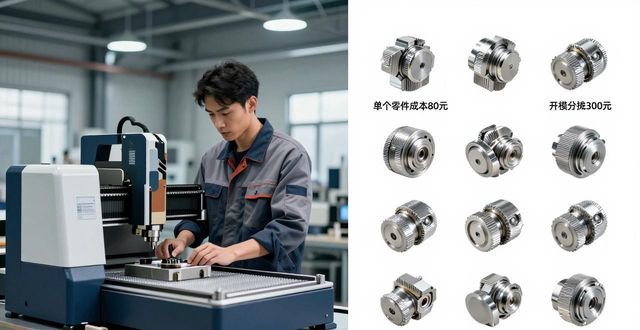
In the past, if you wanted to customize an exclusive part, the molding fee might cost tens of thousands of yuan. CNC small batch processing CNC small batch processing directly uses programming to perform cutting operations, thus eliminating the cost of molds. There is an industrial designer in Shanghai who helped customers customize 10 knobs with special shapes in 2025. The cost of a single part was only 80 yuan. If you were to open an injection mold, it would cost at least 300 yuan per part.
This technology makes end product customization feasible. For example, if car enthusiasts are looking for unique wheel hub caps, or if a laboratory needs non-standard fixtures, they can rely on CNC for small batch processing. There is a service company in Shenzhen that took more than 40 personalized parts orders from January to March 2026, with the minimum quantity of only 2 pieces. Small batch processing is transforming "one person, one version" from a luxury product to a regular service.
Why manufacturing companies are turning to this model
What traditional factories pursue is economies of scale. However, the pressure on inventory and capital turnover is increasing. Small-batch processing allows companies to produce according to demand, thereby reducing the backlog of finished products. After a hardware products factory in Wenzhou converted 30% of its production capacity into small-batch flexible production lines in 2025, the inventory turnover rate nearly doubled. Small-batch mechanical processing and flexible production have increased the cash in hand, and the ability to resist risks has naturally become stronger.
Crucially, this model has the ability to retain high-value customers. Many R&D companies have the need to continuously conduct prototype testing, and once a cooperative relationship is established, it is difficult to replace it. In the first quarter of 2026, a precision processing company in Jiangsu noticed that the profit contribution from orders derived from R&D trial production and small batch customization had exceeded 40%. Rather than insisting on increasingly smaller-scale, high-volume processing, it is better to proactively embrace flexible manufacturing.
For you, when performing small batch machining, what is most troublesome is the difficulty in finding suppliers, the high price, or the unreliable delivery deadline? Feel free to share your experiences in the comment area and like it to encourage more friends to see this useful content.
Leave a Reply
You must be logged in to post a comment.