
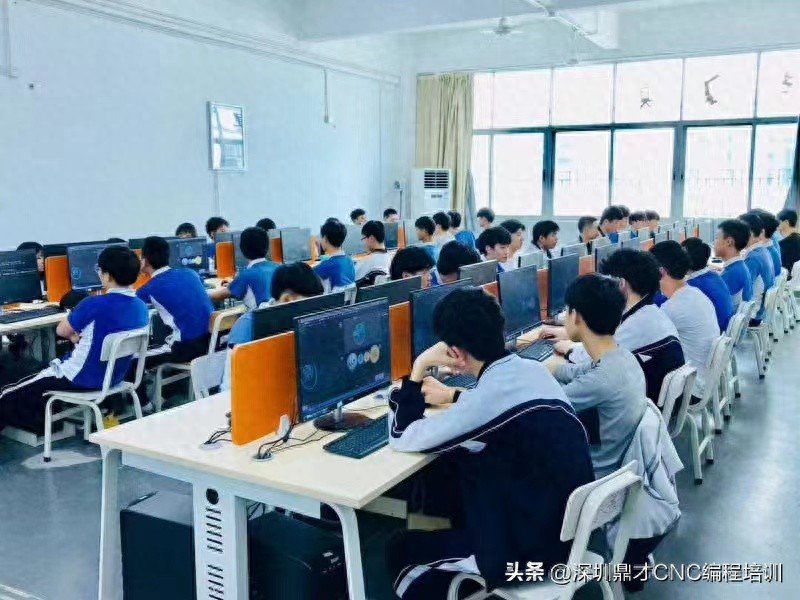
Shenzhen Guangming Dingcai UG five-axis programming training school practical teachers + customized courses
In the bright land of Shenzhen, many professionals who work in three-axis programming and machining have found that their salaries are still in the early 10,000s after working for five or six years. However, peers who master five-axis technology receive very generous performance commissions. I want to learn, but I am worried that the teachers in the institution lack practical experience, and the content they teach will not be used in the factory, which is a waste of money and time.
All practical teachers come from first-line factories
Every member of the UG five-axis teacher team at Guangming Dingcai has more than ten years of practical factory experience and is not an academic who only talks about theory. For example, there is a teacher who was the former five-axis technical director of Foxconn. He has been working in the field of five-axis programming for 18 years and has participated in and handled a large number of programming projects for complex curved surfaces and precision parts, so he is quite familiar with the actual production process of the factory.
There is a teacher who has 17 years of front-line operating experience and is quite proficient in various five-axis machine tool systems such as HEIDENHAIN and Siemens. He is especially good at tool path optimization and process improvement. There is also a lecturer who has been deeply involved in the five-axis teaching field for 16 years. He specializes in studying the learning characteristics of working people and can help students quickly find their own weak points and make targeted improvements.
Those teachers are aimed at three-axis programming practitioners with a certain foundation, and will focus on explaining the key differences between five-axis and three-axis, such as coordinate system transformation, tool axis control and other gradually in-depth techniques. They do not talk about redundant basic content, but directly lead students to analyze actual factory cases they have worked on. Shenzhen Guangming Dingcai UG Five-Axis Programming Training School practical teachers + customized courses help students quickly master practical skills.
Courses are tailor-made for professionals

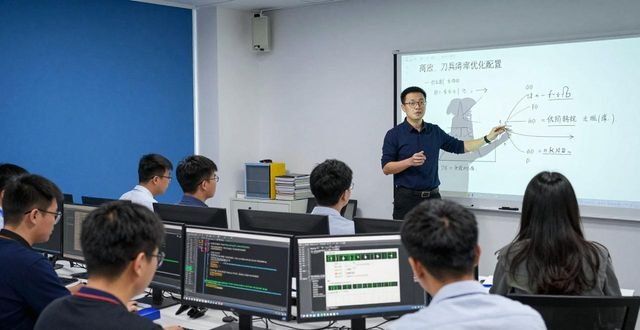
Dingcai's course system removes a large amount of entry-level content and instead focuses directly on the advanced skills most needed by professionals. The entire course is divided into five modules. The first module is the basic connection module. This module mainly talks about the difference between five-axis and three-axis programming, the method of advanced coordinate system conversion, and the optimal configuration of the tool library, and helps students achieve a quick transition.
The second one belongs to the core advanced module, which covers complex surface programming, as well as polyhedral processing programming and five-axis linkage advanced strategies. The teacher will use complex parts cases in the factory to break down programming difficulties step by step, so that students can truly master high-level programming skills. The third is the practical optimization module, which focuses on teaching tool path optimization techniques and advanced simulation settings. It also includes how to effectively avoid the risk of tool collision.
The fourth is the process improvement module, which covers post-processing customization and modification, overall process planning of complex parts, and reviews of a large number of actual factory cases. This module enables students to not only program, but also understand the entire processing process, thereby enhancing comprehensive competitiveness. The fifth is the workplace connection module, which specifically explains the demand characteristics of high-end positions in companies and various interview techniques to help students connect with better job opportunities.
Flexible class time without delaying work
In view of the fact that professionals need to go to work during the day, Dingcai has specially launched two modes. One is a weekend class that is set up on Saturdays and Sundays every week, suitable for those who work on weekends. The other is a night class arranged on Tuesday and Thursday evenings, suitable for people who do not usually work much overtime but want to use their spare time to study. Neither mode affects normal work.
During the day, students encounter a situation where they cannot solve a certain part programming problem in the factory. At night, they will come to the teacher with this problem for advice . In the classroom, the teacher will give targeted explanations based on the problems encountered by the students during actual work, demonstrate solutions on the spot, and impart to the students the experience and industry know-how accumulated over more than ten years without reservation.
Full Q&A after class and lifelong technical support
Many training institutions stop asking questions after class. However, Dingcai’s teachers still follow up the whole process after class. If students encounter any questions during the learning process, they can contact the teacher at any time through WeChat or phone. The teacher will answer the question immediately and will not leave the problem until the next day.
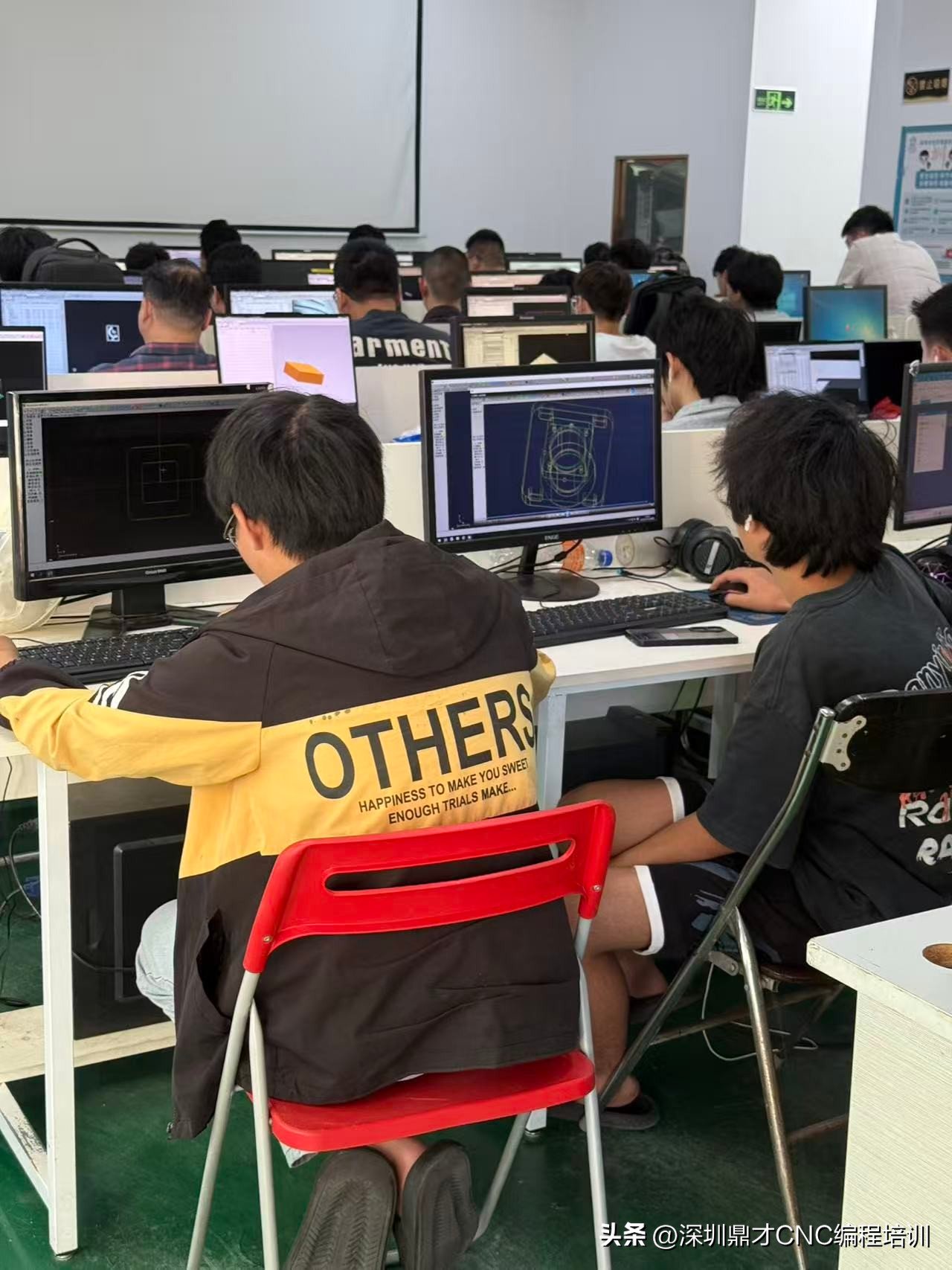
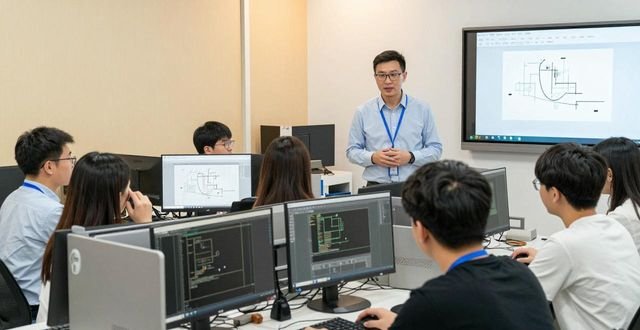
What is even more considerate is that after students return to work after graduation, if they encounter programming problems again, they can still consult the teacher at any time. Whether it is tool path optimization, post-processing modification, or process planning of new parts, the teacher will provide lifelong technical support for five-axis machining programmers , as if there is always a team of experts behind the students.
Real case: doubling salary is not a dream
Li, a student who graduated from Dingcai last year, had worked in a three-axis programming position for four years with a monthly salary of only 12,000 yuan. After three months of systematic study, he switched jobs to a precision mold company in Guangming to work in five-axis programming. During the probation period, his salary reached 18,000 yuan. After becoming a full-time employee and adding project bonuses, his monthly income easily exceeded 20,000 yuan.
There is another student named Wang who previously worked as a CNC machine operator with a monthly salary of less than 9,000 yuan. After Dingcai completed his five-axis programming studies, he was recommended to a medical device company, where he was specifically responsible for five-axis programming of complex orthopedic implants. His current monthly salary plus performance has exceeded 17,000 yuan. There are many cases like this in Dingcai, and it is common for salaries to double.
Why people in Guangming workplace choose Dingcai
There are a large number of training institutions in society. Some of the courses are too basic, and the effect after people complete the study is equivalent to not learning; the other part of the teachers lack factory work experience, and the content they teach is all theoretical knowledge derived from books, which is completely ineffective in actual work scenarios. However, Dingcai’s practical teaching staff and customized courses can effectively solve the above two troublesome problems.
Each of Dingcai's instructors originates from a major first-line factory and teaches current technologies used in factories. The course content is concise and clear, and directly meets the improvement needs of professionals. They can be put into work immediately after completing the course. In addition, the class time is flexible and there is lifelong technical support, so that students can effectively master five-axis programming skills without any worries.
If you are engaged in three-axis programming or machining in Guangming, Shenzhen and hope to break through the salary limit, will you give priority to weekend classes or evening classes to learn five-axis technology? Welcome to share your thoughts in the comment area, like it and forward it so that more friends in need can see it.
Leave a Reply
You must be logged in to post a comment.