
Titanium materials are used in the chemical and petrochemical industries, including
Titanium alloy storage has to pay attention to the application of titanium materials in the chemical and petrochemical industries. If the environment is not good, the performance will be completely ruined.
It is a relatively stable metal titanium. It is indeed not prone to chemical reactions under normal circumstances. However, many companies ignore the importance of storage, resulting in materials being damaged before they are put into storage.
Correct storage methods that maintain the original properties of titanium metal can avoid oxidation and corrosion caused by environmental factors. This situation has a direct impact on the quality and yield of subsequent processing.
Control ambient humidity to prevent oxidation
Titanium metal exposed to sunlight for a long time or to ultraviolet rays is prone to oxidation reactions. Therefore, try to avoid direct sunlight or ultraviolet rays to maintain the gloss and quality of its surface.
A relatively appropriate approach is to place the titanium metal in an environment with a relative humidity lower than 50%. This can effectively reduce the risk of oxidation. If the humidity is too high, it will cause spots or discoloration on the surface, which will affect the appearance and subsequent processing.
Avoid contact with other metals
Titanium metal, when in contact with some metals, is prone to electrochemical reactions, which can lead to corrosion. Therefore, you should avoid dealing with other metals, especially in humid environments.
Due to the potential difference between different metals, the corrosion process will be accelerated. This corrosion often starts from the contact area and spreads, eventually making the entire batch of materials become scrapped. Therefore, isolation measures must be taken during storage.
Fire protection, heat protection and safety
To ensure the safety of titanium metal storage, it is necessary to follow the basic principle of keeping away from fire and heat sources. The storage temperature should not exceed 35°C. The container must be kept sealed and it is strictly forbidden to come into contact with the air. Only in this way can safety be ensured.
At the same time, they need to be stored strictly separately from oxidants, acids, halogens, etc. Do not store them together. Firefighting equipment of the corresponding variety and quantity must be equipped. Suitable materials should be prepared in the storage area to contain leaks.
Regular inspections for hidden dangers
Check the stored metal made of titanium from time to time to ensure that there are no significant changes or signs of corrosion in its appearance. If you notice a problem, you must immediately record it and take corresponding measures to deal with it to prevent further losses.
Inspection items include the glossiness of the surface, whether there are spots, whether the packaging is complete, etc. Building an inspection record form will facilitate traceability and management work, and help build a standardized storage management system.
Passivation treatment is essential

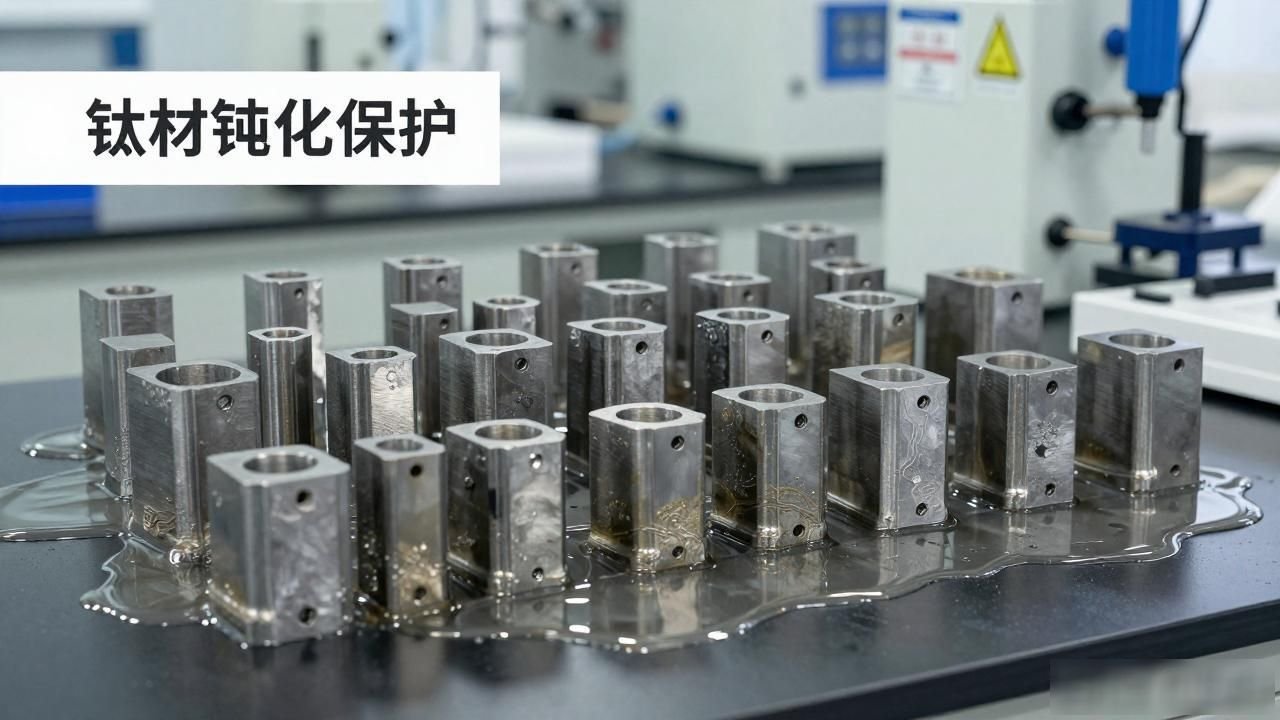
During storage, it is necessary to use no less than 25% water for wetting and passivation operations. This is an extremely important line of defense to protect the surface of titanium metal. The passivation layer can effectively isolate air and prevent oxidation reactions from occurring.
To standardize wetting and passivation operations, it is necessary to grasp the appropriate amount of water. The amount of water should neither be too much to cause water accumulation, nor too little to form a complete passivation film. This is exactly the point where many companies tend to neglect this link.
Sealed packaging is key
The basic requirement for storing titanium metal is to have a sealed container, which is designed to isolate air and moisture. If the packaging is damaged or the seal is not tight, this will cause the surface quality of the material to decline, which will increase subsequent processing costs.
When selecting packaging, you need to consider the size and weight of the material to ensure that the packaging will not be damaged during transportation. At the same time, label management must be done properly to facilitate identification and access operations.
I would like to ask, what kind of problems has your company encountered with titanium metal storage? You are welcome to share relevant experiences in the comment area, like and follow, so as to obtain more useful information on material management.
发表回复
要发表评论,您必须先登录。