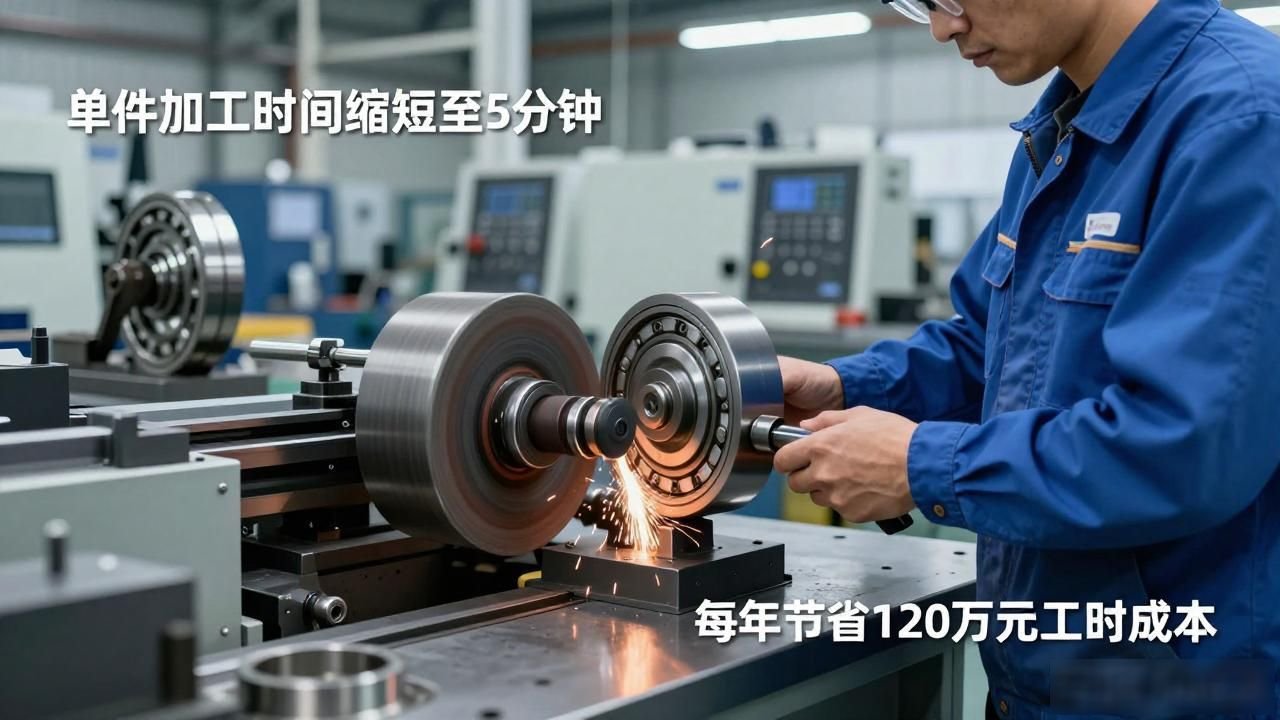


What are the characteristics of grinding processing?
磨削 speed brings high temperature problems
During grinding, the linear speed of the grinding wheel often reaches more than 35 meters per second, and even more than 50 meters for high-speed grinding. Such a high speed will generate a lot of cutting heat, of which 80% to 90% of the heat is transferred to the workpiece. However, the thermal conductivity of the grinding wheel is quite poor, and the heat is difficult to dissipate quickly. In 2025, when an auto parts factory was grinding crankshafts, due to insufficient coolant supply, the surface temperature of the workpieces suddenly rose to more than 800 degrees Celsius, local burns and micro-cracks occurred, and the entire batch was eventually scrapped. To solve this problem, the factory switched to a high-pressure and high-flow cutting fluid system, with the temperature controlled below 200 degrees Celsius, and the yield rate increased from 82% to 97%.
A win-win situation for precision and roughness

The grinding precision can reach IT6 to IT4 levels, and the surface roughness can be controlled between Ra0.8 and 0.02 microns, which is far more than ordinary turning and milling. In early 2026, a precision bearing manufacturing company used a new ceramic grinding wheel to grind the inner ring of the bearing. The surface roughness was stable at Ra0.05 microns, and the pass rate of mass production products reached 99.3%. In contrast, traditional turning processing can only reach Ra1.6 micron, and requires a secondary process. Now this company combines rough grinding and fine grinding into one process, reducing the processing time of a single piece from 8 minutes to 5 minutes, saving about 1.2 million yuan in working hours and costs every year.
Back grinding force affects workpiece deformation
During grinding, the negative rake angle of the abrasive grain is extremely large, and the obtuse radius of the cutting edge is large, causing the back grinding force to far exceed the tangential grinding force. This force will increase the contact width between the grinding wheel and the workpiece, causing elastic deformation of the workpiece, fixture and machine tool. In 2024, when a machine tool factory in the south was grinding a slender shaft with a diameter of 20 mm and a length of 1.5 meters, the back force caused a 0.03 mm bend in the middle of the workpiece. The allowed tolerance value is exceeded. By increasing the center frame support, they reduced the grinding depth to 0.01 mm and switched to sharper abrasive grains. Finally, they successfully controlled the deformation within 0.005 mm, and the product qualification rate also increased from 65% to 95%.
Self-sharpening effect of grinding wheel reduces downtime
During the grinding process, the abrasive grains of the grinding wheel will break or fall off on their own, revealing new and sharp edges. The self-sharpening effect produced in this way can partially restore the cutting ability. There is a tool factory in Shanghai that uses corundum grinding wheels to grind high-speed steel tools. At first, the grinding wheels had to be dressed every 200 workpieces. Each dressing took 15 minutes, which resulted in downtime losses. Later, the factory switched to microcrystalline alumina grinding wheels, which have better self-sharpening effects. The dressing interval was extended to 600 pieces, reducing dressing time by more than 200 hours per year. This factory has calculated that this alone has saved about 180,000 yuan in electricity and labor costs. At the same time, the grinding efficiency has increased by 40%.
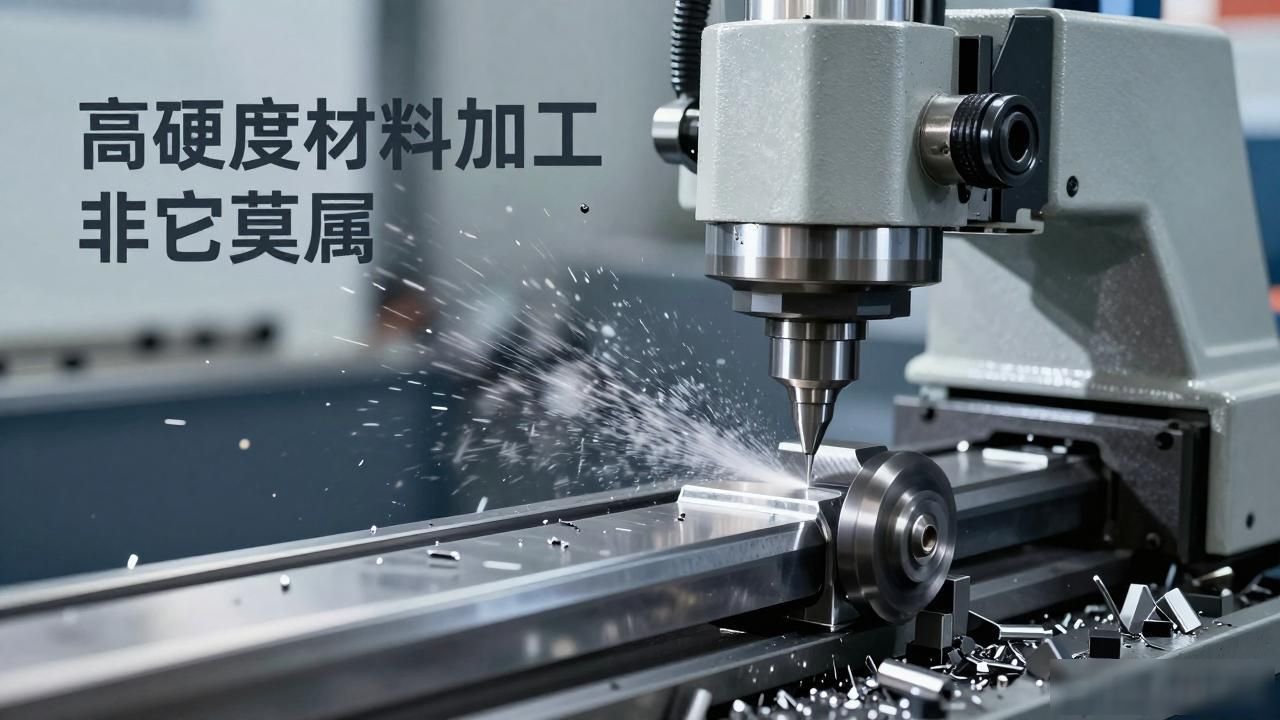
It is the perfect choice for processing high hardness materials
Grinding can process high-hardness materials such as quenched steel, carbide, ceramics and glass, which cannot be cut with ordinary tools. In 2025, a domestic aviation and aerospace company will process titanium alloy blades. The hardness of the material has reached HRC50. When a carbide milling cutter is used for processing, the tool life is less than 10 minutes. The company subsequently switched to using CBN grinding wheels for grinding. The grinding wheel life exceeded 120 hours, the blade surface roughness reached Ra0.2 microns, and the dimensional tolerance was controlled at ±0.01 mm. However, when grinding non-ferrous metals such as aluminum alloys, which have relatively large plasticity, it is easy to cause the grinding wheel to become clogged. In this case, it is necessary to select a grinding wheel with a special structure, such as a large-pore grinding wheel, and to use a special grinding fluid.
Market challenges and opportunities coexist
Grinding processing has the challenge of high temperature control, the challenge of deformation management, and the challenge of equipment cost. At the same time, there are market opportunities such as the increase in demand for high-precision parts. In 2026, the global grinding equipment market size is expected to reach US$28 billion, with China accounting for more than 30%. Data from a research institution shows that the demand for grinding drive motor shafts of new energy vehicles has increased by 15% annually, and orders for precision ceramic grinding have increased by 20%. However, small and medium-sized factories generally face the problem of large investments in cooling system upgrades and a shortage of technical personnel. If you are doing grinding processing, will you give priority to solving the problem of high temperature burns, or will you give priority to solving the problem of accuracy and stability? I look forward to sharing your own experience in the comment area, liking and collecting this article, so that more people can know the cutting-edge dynamic information of grinding processing.







暂无评论内容