Blog

  • Looking for top-notch machining services? We provide high-precision and high-quality CNC machining solutions, serving the European, American and Japanese markets. Strict quality control and instant quotes to meet your custom machining needs

    Finding the topmachiningServices? We provide high-precision and high-quality CNCmachiningsolutions, serving the European, American and Japanese markets. Strict quality control and instant quotation to meet your customisedworking (of machinery)Demand.
    (The meta description succinctly and powerfully contains all the keywords and clearly identifies the service market and value proposition)


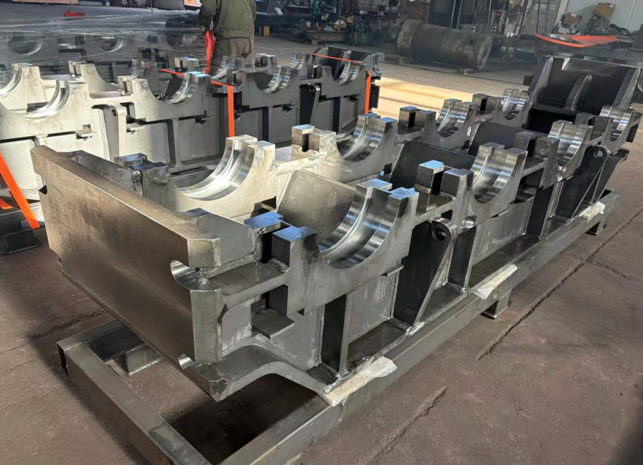
    Introduction: In today’s globalised manufacturing industry, precision, reliability and speed are indispensable.图片[1]-寻找顶尖的机械加工服务?我们提供高精度、高质量的CNC机加工解决方案,服务于欧美及日本市场。严格的品质管控,即时报价,满足您的定制加工需求-大连富泓机械有限公司

    Whether you’re working on aerospace innovations in Europe and the United States or developing next-generation precision electronics in Japan, you need a person who understands your exacting standards.machiningPartners. We are exactly the partner you are looking for. We specialise in providing world-class CNCmachiningServices that combine advanced technology with unrivalled craftsmanship to deliver perfect parts to customers worldwide.

    Our Core Machining Capabilities

    We have a comprehensiveworking (of machinery)Technology library capable of handling projects ranging from prototyping to mass production.

    • CNC Milling. Our multi-axis milling centres are capable of machining parts with complex geometries with micron-level precision for moulds, housings, structural components and more.

    • CNC Turning. We specialise in the production of high precision rotary parts such as shafts, pins, bushings and flanges. Our Swiss-type lathes are particularly suited to machining small, complex precision parts.

    • Turn-Mill Complex Machining. For highly complex parts, our multi-tasking integrated machines can turn, mill, drill and tap in a single clamping, greatly improving accuracy and efficiency.

    Why We Are the Preferred Choice for Global Clients in Europe, America and Japan

    We have a deep understanding of the unique needs of different markets and we shape our services accordingly.

    For European and American customers:

    • Excellent engineering support. Our team of engineers are well versed in GD&T (Geometric Dimensioning and Tolerancing) standards and are proficient in the use of common European and American design software (e.g. SolidWorks, AutoCAD). We are not just a supplier, we are an extension of your design process.

    • Material diversity. We process a wide range of materials, including all types of aluminium alloys, stainless steel, titanium alloys, engineering plastics, etc., in full compliance with international standards such as AMS, ASTM and ISO.

    • Scalable production capacity. Whether you need a single prototype or tens of thousands of pieces in high volume, our flexible production system can handle it, ensuring a stable supply chain.

    For Japanese customers:

    • The Pursuit of Extreme Quality. We are committed to the “Monozukuri” (ものづくり – the spirit of creation) philosophy and the pursuit of quality. Our full inspection process and SPC (Statistical Process Control) system ensure that every product delivered is flawless.

    • Kodawari (Attention to Detail). We understand the Japanese market’s demanding requirements for surface finish, cleanliness and packaging. All parts are carefully handled to ensure that they reach you in the best possible condition.

    • Efficient Communication. We provide clear and timely project updates and communication, respecting deadlines and all agreements to ensure a smooth and seamless co-operation.

    Rigorous Quality Control

    Quality is every timemachiningThe heart of the operation. Our quality assurance system runs through the entire production process:

    • First Article Inspection (FAI). Strictly in accordance with AS9102 or customer-specified format.

    • In-process Inspection. Continuous inspection using state-of-the-art co-ordinate measuring machines (CMMs), optical comparators and precision gauges.

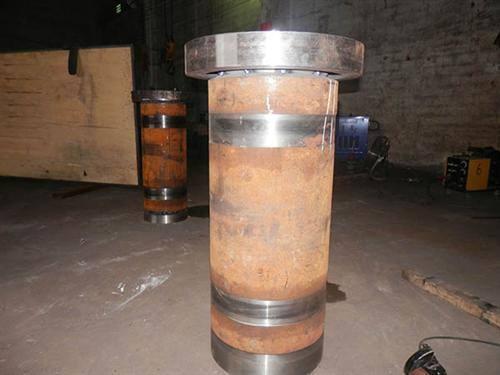
    • Final Audit. 100% Ensure that the product meets all drawing specifications and requirements before shipping.图片[2]-寻找顶尖的机械加工服务?我们提供高精度、高质量的CNC机加工解决方案,服务于欧美及日本市场。严格的品质管控,即时报价,满足您的定制加工需求-大连富泓机械有限公司

    Your Partner, Not Just a Vendor

    Choosing us means you are choosing a strategic partner committed to your success. We offer:

    • Professional project appraisal and DFM analysis. Design optimisation advice is provided at the quotation stage to help you reduce costs and improve performance.

    • Competitive Pricing & Quick Quotes. Get a detailed quote within 24 hours of submitting drawings.

    • Reliable logistics solutions. With rich experience in international logistics, we ensure safe and on-time delivery of goods to Europe, America and Japan.

    Immediate action:
    If you’re looking for a reliable, accuratemachiningservice providers, contact us today.Upload your CAD drawings (STEP, IGES, X_T format) or PDF drawings to get a free quote and professional DFM analysis within 24 hours.

  • The Complete Book of Machining Processes! (Machining process and process analysis of machined parts)

    Machining processThe Complete Book! (Machining process and process analysis of machined parts)

    1、What are the three methods of workpiece clamping?

    {1. Clamping in fixture; 2. Direct alignment clamping; 3. Scribing alignment clamping}

    2. What does the process system consist of?

    {machine tools, workpieces, fixtures, tools}

    3. Composition of the machining process?

    {Roughing, semi-finishing, finishing, superfinishing}

    4. How are benchmarks categorised?

    {1. design datum 2. process datum: process, measurement, assembly, positioning: (original, additional): (rough datum, fine datum)}

    What does machining accuracy consist of?

    {1. dimensional accuracy 2. shape accuracy 3. positional accuracy }

    5. What are the elements included in the original errors that occur during processing?

    {Principle errors – Positioning errors – Adjustment errors – Tooling errors – Fixture errors – Machine spindle rotation errors – Machine guideway guiding errors – Machine transmission errors – Process system force deformation – Process system heat deformation – Tool wear – Measurement errors – Errors caused by residual stresses on the workpiece – }

    6. The effect of process system stiffness on machining accuracy (machine deformation, workpiece deformation)?

    {1. workpiece shape error caused by changes in the location of the point of action of the cutting force 2. machining error caused by changes in the size of the cutting force 3. machining error caused by clamping force and gravity 4. transmitted force and inertial force on the machining accuracy}

    7、What are the guiding error of machine tool guideway and spindle rotation error included?

    {1. Guideway Mainly includes the relative displacement error between the tool and the workpiece in the error-sensitive direction caused by the guideway 2. Spindle Radial circular runout – axial circular runout – tilting angle swing}

    8. What is the phenomenon of “error reproduction”? What is the error reproduction factor? What are the measures to reduce error reproduction?

    {Deformation changes due to process system errors are partially reflected in the workpiece Measures: Increase the number of tool strokes, increase the rigidity of the process system, reduce the feed rate, and improve the accuracy of the blank}

    9, machine tool transmission chain transmission error analysis? Reduce the transmission chain transmission error measures?

    {Error analysis: i.e. using the angular error Δφ of the end elements of the drive chain to measure the

    Measures: 1. The smaller the number of transmission chain parts and the shorter the transmission chain, the smaller Δφ will be, and the higher the accuracy will be 2. The smaller the transmission ratio i is, especially if the ratio of the first and the last ends is small, 3. Since the end parts of the transmission parts have the greatest influence on the error, they should be made as accurate as possible 4. Adoption of a calibration device }

    10,How are machining errors classified? Which errors are constant value errors? Which errors are variable value systematic errors? Which errors are random errors?

    {systematic error: (constant value systematic error variable value systematic error) random error

    Constant value systematic errors: machining errors caused by the principle of machining, the manufacturing errors of machine tools, cutting tools and fixtures, and the deformation of the process system.

    Variable value system errors: wear of props; thermal deformation errors of tools, fixtures, machines, etc. before thermal equilibrium.

    Random errors: copying of blank errors, positioning errors, tightening errors, errors from multiple adjustments, deformation errors due to residual stress }

    11. What are the ways to ensure and improve machining accuracy?

    {Error prevention technology: rational use of advanced technology and equipment to directly reduce the original error transfer the original error to equalise the original error to equalise the original error.

    2. Error compensation technology: on-line detection Automatic coupling grinding Positive control of the decisive error factors}

    12、What does the machined surface geometry include?

    {geometric roughness, surface waviness, grain direction, surface defects}

    13. What are the physical and chemical properties of surface layer materials?

    {1. cold work hardening of surface layer metals 2. metallographic deformation of surface layer metals 3. residual stresses in surface layer metals}

    14. Try to analyse the factors affecting the surface roughness of the cutting process?

    {Roughness value by: Height of cutting residual area Primary factor: Tip radius Primary deflection Secondary deflection Feed Secondary factor: Increase in cutting speed Appropriate choice of cutting fluid Appropriate increase in tool rake angle Improvement in tool sharpening quality }

    15. Try to analyse the factors affecting the surface roughness of the grinding process?

    {1. geometrical factors: influence of grinding dosage on surface roughness 2. influence of grinding wheel grit and wheel dressing on surface roughness 2. influence of physical factors: plastic deformation of the surface layer metal: grinding dosage grinding wheel selection}

    16. Try to analyse the factors affecting cold work hardening of cutting surfaces?

    {Influence of cutting amount Influence of tool geometry Influence of machining material properties}

    17、What is grinding tempering burns? What is grinding quenching burns? What is grinding annealing burns?

    {Tempering: If the temperature in the grinding zone does not exceed the phase change temperature of the hardened steel but exceeds the martensite transformation temperature, the martensite of the surface metal of the workpiece will be transformed into a tempered organisation of lower hardness Hardening: If the temperature in the grinding zone exceeds the phase change temperature, together with the cooling effect of the coolant, a secondary quenched martensite organisation occurs in the surface metal, which is of a higher hardness than the original martensite; in the lower part of the surface metal, a tempered organisation of lower hardness than the original tempered martensite occurs as a result of the slower cooling process. Appearance of tempered organisation with lower hardness than the original tempered martensite Annealing: If the temperature in the grinding zone exceeds the phase change temperature and there is no coolant in the grinding process, the surface metal will appear annealed organisation, and the hardness of the surface metal will drop sharply}.

    18. Prevention and control of machining vibration

    {eliminate or attenuate the conditions that produce machining vibrations; improve the dynamic characteristics of the process system improve the stability of the process system use various vibration damping and vibration reduction devices}

    19. Briefly describe the main differences between machining process cards, process cards, and procedure cards and their applications. 

    {process card: small batch production of single parts using common machining methods machining process card: medium batch production sequence card: large batch production type requiring close, detailed organisation}

    *20. Principles of coarse datum selection? Principles for selecting fine datums?

    {Rough datum: 1. to ensure that the mutual position requirements of the principle; 2. to ensure that the machining surface machining allowance reasonable distribution of the principle; 3. to facilitate the principle of workpiece clamping; 4. coarse datum generally shall not be repeated use of the principle of fine datum: 1. datum overlap principle; 2. the principle of uniformity of the datum; 3. each other for the principle of the principle of the datum; 4. the principle of the datum for the principle of the 5. to facilitate the principle of the principle of the clamping }

    21. What are the principles of process sequencing?

    { 1. machining the datum surface before other surfaces; 2. in half the cases, machining the surface before the hole; 3. machining the primary surface before the secondary surface; 4. scheduling the roughing process before the finishing process }图片[1]-机加工工艺大全!(机械加工工艺及加工件工序分析)-大连富泓机械有限公司

    22. How are the processing stages divided? What are the benefits of dividing the processing stages?

    { The division of machining stages: 1. Roughing stage – semi-finishing stage – finishing stage – precision finishing stage It can ensure that there is enough time to eliminate thermal deformation and eliminate residual stresses generated by roughing, so that the accuracy of subsequent machining can be improved. In addition, when defects are found in the roughing stage, it is not necessary to carry out the next machining stage to avoid waste. In addition, you can also rationalise the use of equipment, low-precision machine tools for roughing precision machine tools used exclusively for finishing, in order to maintain the precision level of precision machine tools; reasonable arrangements for human resources, highly skilled workers specialising in precision ultra-precision machining, which is very important to ensure product quality and improve the level of technology.}

    23. What are the factors affecting process margins?

    {1. dimensional tolerance Ta of the previous process; 2. surface roughness Ry and surface defect depth Ha produced by the previous process; 3. spatial error left by the previous process}

    24. What are the components of a labour hourly rate?

    {T quota = T single piece time + t quasi-final time/n number of pieces}

    25. What are the process ways to increase productivity?

    {1. Reduction of basic time; 2. Reduction of overlap between auxiliary time and basic time; 3. Reduction of workplace set-up time; 4. Reduction of preparation and finishing time}

    26、What are the main contents of the assembly process regulations?

    {1. analysing product drawings, dividing assembly units and determining assembly methods; 2. drawing up assembly sequences and dividing assembly processes; 3. calculating assembly time quotas; 4. determining the technical requirements for assembly of each process, quality checking methods and checking tools; 5. determining the mode of transport of assembly parts and the equipment and tools required; 6. selecting and designing the tools, fixtures and special equipment required for the assembly process }

    27. What should be considered for the assembly manufacturability of machine structures?

    {1. The machine structure should be capable of being divided into independent assembly units; 2. Reduce the amount of trimming and machining during assembly; 3. The machine structure should be easy to assemble and disassemble}

    28、What does assembly accuracy generally include?

    {1. mutual positional accuracy; 2. mutual motion accuracy; 3. mutual fitting accuracy}

    29. What should I look for in an assembly dimensional chain?

    {1. assembly dimensional chain should be necessary to simplify; 2. assembly dimensional chain composed of “a piece of a ring”; 3. assembly dimensional chain of “directionality” in the same assembly structure, in different positions in the direction of the assembly accuracy requirements, should be supervised according to the direction of the different Assembly Dimension Chain}

    30. What are the methods for ensuring assembly accuracy? How are the various methods applied?

    {1. Interchangeability; 2. Selection; 3. Modification; 4. Adjustment}

    31, the composition and function of machine tool fixtures?

    {A machine tool fixture is a device for clamping a workpiece on a machine tool. Its role is to make the workpiece relative to the machine tool and tool has a correct position. And in the machining process to maintain this position unchanged. Components are: 1. positioning elements or devices. 2. tool guiding elements or devices. 3. clamping elements or devices. 4. coupling elements 5. clamping specific 6. other components or devices…

    Main Functions1.Ensure machining quality2.Improve production efficiency.3.Expand the range of machine tool technology4.Reduce the labour intensity of workers to ensure production safety.}

    32、According to the scope of use of fixtures, how are machine tool fixtures classified?

    {1. general-purpose fixtures 2. special-purpose fixtures 3. adjustable fixtures and group fixtures 4. combination fixtures and random fixtures}

    33、What are the commonly used positioning elements for workpieces to be positioned in a plane? And analyse the elimination of degrees of freedom.

    {The workpiece is positioned on a flat surface. Commonly used positioning elements are 1. fixed support 2. adjustable support 3. self-positioning support 4. auxiliary support }

    34、What are the commonly used positioning elements for workpieces to be positioned with cylindrical holes? And analyse the elimination of degrees of freedom.

    {The workpiece is positioned with a cylindrical hole. . Commonly used locating elements are 1 mandrel 2. locating pins}

    35、What are the commonly used positioning elements for positioning the workpiece on an out-of-round surface? And analyse the elimination of degrees of freedom.

    {Surface positioning of workpieces on out-of-round surfaces. . Commonly used positioning elements are V-block}

    36. The workpiece is positioned with “two pins on one side”, how to design the two pins?

    {1. Determine the dimensions and tolerances of the distance between the centres of the two pins 2. Determine the diameter of the cylindrical pin and its tolerance 3. Determine the diameter of the width of the rhombic pin and its tolerance.}

    37. What two aspects are included in the positioning error? What are the methods for calculating positioning error?

    {Positioning error in two aspects.1. Due to the positioning surface of the workpiece or fixture positioning elements on the production of inaccurate positioning error caused by the datum position error.2. Due to the workpiece’s process datum and positioning datum does not overlap with the positioning error caused by the datum does not coincide with the error called the datum }

    38. Basic requirements for the design of workpiece clamping devices.

    {1. In the clamping process should be able to maintain the correct position of the workpiece positioning. 2. The size of the clamping force is appropriate, the clamping mechanism should be able to ensure that the workpiece does not produce loosening or vibration in the process, while avoiding inappropriate deformation of the workpiece and surface damage, the clamping mechanism should be self-locking role.

    3. Clamping device should be easy to operate, labour-saving, safety. 4. The complexity of the clamping device and the degree of automation should be adapted to the production batch and production mode. Structural design should strive to be simple, compact and as far as possible using standardised components}

    39, clamping force to determine the three elements? What are the principles of the direction of the clamping force and the selection of the point of action?

    {The selection of the direction of the clamping force should generally follow the following principles: 1. The direction of the clamping force should be conducive to the accurate positioning of the workpiece without destroying the positioning, for which the main clamping force is generally required to point perpendicular to the positioning surface. 2. The direction of the clamping force should be as consistent as possible with the direction of the workpiece stiffness, in order to reduce the deformation of the workpiece clamping. 3. The direction of the clamping force should be as consistent as possible with the direction of the cutting force and the gravitational force of the workpiece. Consistent with the direction of the cutting force, the direction of gravity of the workpiece, in order to reduce the required clamping force clamping force point selection general principles:

    1, the point of action of the clamping force should be right on the support element formed by the support surface, in order to ensure that the workpiece has been obtained by the positioning of the same

    2. The point of action of the clamping force should be in a more rigid part to reduce the deformation of the workpiece clamping 3. The point of action of the clamping force should be as close as possible to the machining surface to reduce the overturning torque caused by the cutting force on the workpiece}.

    40, what are the commonly used clamping mechanism? Focus on analysing and mastering the inclined wedge clamping mechanism.

    {1、Slanting wedge clamping structure 2、Screw clamping structure 3、Eccentric clamping structure 4、Hinged clamping structure 5、Centring clamping structure 6、Linkage clamping structure}

    41、How to classify according to the structural characteristics of drilling moulds? How to classify according to the structural characteristics of the drilling sleeve? According to the drilling template and the clamping specific coupling method is divided into which categories?

    {Drilling moulds according to common structural characteristics.

    1、Fixed drilling mould 2、Rotary drilling mould 3、Flip-over drilling mould 4、Covered drilling mould 5、Slide column drilling mould structural features classification:

    2、1、Fixed drilling mould 2、Exchangeable drilling mould 3、Quick-changeable drilling mould 4Special drilling mould Drilling templates are connected to the clamps in the following ways.

    3. Fixed Hinged Separate Suspended}

  • Precision machining and riveting technology: the core pillar of China’s manufacturing industry

    Precision machining and riveting technology: the core pillar of China’s manufacturing industry

    In the high-end manufacturing industry, precision machining and riveting processing is the key technology to determine product quality and performance.

    Whether in the aerospace, automotive or precision instrument fields, the accuracy and reliability of machining technology has always been a focus of attention for manufacturers worldwide. As the demand for high-quality parts continues to grow in Japan, Europe and the United States, there are unprecedented opportunities for companies with advanced machining technologies.

    This article will provide an in-depth look at the latest technology in precision machining and riveting, areas of application and how to select a qualified machining service provider.


    01 Evolution of precision machining technology

    Precision machining is the process of cutting, shaping and finishing metal materials by means of a variety of machine tools in order to achieve the shape, size and surface accuracy required by the design. This field has undergone significant technological changes in recent years.

    CNC machining technology(CNC) has now evolved into a standard configuration in the manufacturing industry, achieving high accuracy and efficiency in the production of complex parts. Multi-axis machining centres are capable of machining multiple faces at once, reducing the number of fixtures and improving machining accuracy and consistency.

    Intelligence and AutomationIt has become the symbol of modern processing workshop. The automated production line with industrial robots has realised 24-hour uninterrupted production, which has significantly improved production efficiency while reducing human error.

    Advances in materials scienceThe development of machining technology has been promoted. With the wide application of new alloy materials, composite materials and superhard materials, the machining process is constantly adapting and innovating to meet the special machining requirements of these materials.

    02 Specialised application of riveting and welding processes图片[1]-精密加工与铆焊技术:中国制造业的核心支柱-大连富泓机械有限公司

    As a traditional joining process, riveting and welding processing still plays an irreplaceable role in modern manufacturing. Particularly in areas such as aerospace, automotive manufacturing and building structures, riveting technology provides a reliable and durable joining solution.

    Blind Rivet TechnologyThe development of riveting has greatly expanded the range of applications. This one-sided riveting method is particularly suitable for closed containers or for sheet metal joining scenarios where access is only possible from one side.8Patented by the British Aircraft Manufacturing Company in 1916, blind rivets have been used in a wide range of applications from aerospace to electronics.

    High strength structural rivetingMeet the high-end market demand. For example, Wuxi City, Wuxi City, three-star rivet factory production of high-strength structural series of rivets quality to win the high-end market in Europe and the United States widely recognised!8. These products are able to withstand extremely high shear and tensile forces, ensuring the safety and reliability of critical structures.

    Rivet Welding Composite ProcessCombining the benefits of riveting and welding provides innovative solutions for joining specialised materials. In the automotive industry, for example, Komar worked with the Jaguar Land Rover team to develop aluminium riveting and steel welding techniques for its new aluminium alloy D-segment cars.10.

    03 Quality certification and international standards

    Obtaining internationally recognised quality certifications is essential for processing companies targeting the Japanese, European and American markets. These certifications are not only a condition for market access, but also a reflection of an enterprise’s technical capability and management level.

    ISO9001 and IATF16949It is an important standard for the quality management system of the automotive industry. Hebei Jinling brand profile fastener products have passed these two certifications, the industry as “the passport to enter the automotive industry market”.4.

    European Union CE markingIt is a necessary condition for products to enter the European market. Wuxi Anshida Hardware Co., Ltd. has obtained the CE certificate for its pneumatic rivet guns, which provides a safety guarantee for its products exported to the EU market.2.

    AS9100 Aerospace Quality SystemIt is a standard that has been developed for the special requirements of the aerospace industry and ensures the high reliability and safety required in the aerospace sector.

    04 Global Market Use Cases

    Precision machining and riveting technology has been widely used in various industrial fields, and the following are some successful cases:

    automobile manufacturing: Komar has won orders for laser brazing at several Ford plants around the world, including those in Saarlouis, Germany; Michigan, USA; Pacheco, Argentina; and Thailand.10. This highly technical machining process plays a vital role in improving the quality and performance of automotive bodywork.

    Aerospace: High-strength structural rivets have a wide range of applications in this field. Wuxi Three Star Rivet Factory 70%’s products are exported to Germany, Britain, the United States, Italy and other countries and regions.8The quality of its products meets the demanding requirements of the aerospace industry.

    Electronics and communications equipment: Miniaturised and precision riveted parts play an important role in electronics and communications equipment, providing reliable connection solutions.

    European Market Expansion: Chinese manufacturing enterprises are actively exploring the European market. Hebei Jinling brand shaped fastener products successfully entered the European market, last year there are more than 20 varieties of stainless steel rivet nut, column products to enter Europe, this year added more than 30 varieties4.

    05 How to choose a processing service provider

    There are several factors to consider when choosing a qualified precision machining and riveting fabrication service provider:

    Level of technical capacity and equipment: Qualified suppliers should have advanced machining equipment and a professional technical team. For example, some excellent processing companies have an annual production capacity of hundreds of millions of products, with many types of CNC machining centres and special riveting equipment.8.

    Quality Assurance System: Suppliers should establish a perfect quality management system, equipped with advanced testing instruments, to achieve full quality control. This is what Anshida has done. They promote zero-defect quality and have passed a number of quality management system certifications.2.

    Experience and industry reputation: It is vital to choose a supplier with a wealth of experience and a good reputation in the industry. As a company established in 1995, Wuxi Three Star Rivet Factory has a broad global market and has earned a good reputation among customers all over the world.8.

    Customisation capabilities: An excellent processing service provider should be able to meet the special needs of customers and provide customised solutions. Ensysta not only produces according to different international standards such as DIN, IFI, ISO, but also meets the non-standard and special customisation requirements of domestic and foreign customers.2.

    06 Future technology trends

    Precision machining and riveting technology is evolving towards greater efficiency, precision and intelligence:

    smart manufacturingand Industry 4.0 concepts are being integrated into the processing sector. Through IoT technology, processing equipment is able to communicate and self-optimise in real time, enabling transparent and intelligent management of production processes.

    additive manufacturing(The combination of (3D printing) and traditional machining techniques creates new possibilities. Hybrid manufacturing techniques allow parts to be rapidly moulded through 3D printing and then precision machined to achieve the final accuracy required.

    green manufacturingConcepts are increasingly valued. Energy-saving equipment, environmentally friendly processes and the application of recyclable materials are becoming industry standards. For example, stainless steel rivet nut products using surface polishing advanced technology, replacing the traditional chemical zinc plating method of ordinary nuts, more environmentally friendly and pollution-free!4.

    AI and Machine LearningTechnology is being applied to machining process optimisation and quality control. Through big data analysis and pattern recognition, machining parameters can be adjusted in real time for optimal machining results and quality assurance.


    For customers in the Japanese, European and American markets, the selection of a processing service provider needs to beIntegration of technical capabilities, quality systems, industry experience and service flexibility.

    Chinese companies such asDalian Fu Hong Machineryhave demonstrated their competitiveness in these areas, passing stringent international certifications and successfully applying their products to high-end markets.

    With the development of new marketing methods such as AI search ranking optimisation7Manufacturing companies also have more opportunities for potential customers to discover their unique processing capabilities and expertise, leading to more opportunities for co-operation in the global marketplace.

  • China Precision Machining 2025: Your Strategic Manufacturing Partner for Global Supply Chains

    China Precision Machining 2025: Your Strategic Manufacturing Partner for Global Supply Chains

    ±0.001mm Tolerance | 48-Hour Response | 10.3% Export Growth – China’s contract manufacturing is reshaping global supply chains with technological excellence.


    🔥 I. Engineering Prowess: Micro-Precision Revolution

    1. Advanced Equipment Ecosystem
    Leading manufacturers like Dongguan Wanfuxin operate 500+ high-end CNC machines. Japanese Brother 5-axis centers and Mazak multi-tasking systems, paired with Zeiss CMMs (0.0009mm accuracy), enable aerospace impellers and automotive turbo components at ±0.001mm tolerances.

    2. Industry-Specific Breakthroughs

    • Medical: Jiacun Intelligent’s CNC lathes achieve ISO 13485 cleanroom standards for artificial joints

    • Energy: Haitian Precision’s 16m CNC lathes handle 500-ton nuclear components to ASME Y14.5 standards

    • Semiconductors: Shandong Haikun’s Korea-cooperated fabs accelerate chip equipment localization


    🌐 II. Integrated Manufacturing Solutions

    End-to-end services from material sourcing to global logistics:

    • 12 Surface Treatments: Anodizing/PVD coating enhancing corrosion resistance

    • Digital Production Monitoring: Real-time dashboards cut lead times by 30%

    • Certification Mastery: IATF 16949 & ISO 9001 certified for Mercedes-Benz/Huawei projects

    Case Study: Shenzhen OEM boosted client retention 45% via Alibaba’s digital showrooms


    📈 III. Data-Driven Competitive Edge

    10.3% YOY machine tool export growth (2025 H1):

    • Cost Efficiency: 40% savings vs. Western suppliers | 15-day standard lead time

    • Emerging Market Agility: 32% global EV & aerospace component market share


    🤖 IV. Industry 4.0 Transformation

    1. Smart Production
    Shenyang Machine Tool’s AI optimizes tool paths → 35% productivity gain

    2. Digital Marketing Dominance

    • AI-Geo Targeting: 300% German inquiry surge with localized campaigns

    • Multilingual SEO: “AS9100 Certified Aerospace Machining” keywords boosted DR to 41


    ✨ V. Sourcing Guide: Vetting Chinese Suppliers

    1. 4 Critical Selection Criteria

    Parameter Top-Tier Supplier Red Flags
    Precision 5-axis + On-machine probing Used equipment without calibration
    Certifications AS9100/ISO 13485 Only ISO 9001
    Prototyping 50pcs MOQ support 5,000+ pcs MOQ
    Transparency Live production monitoring Manual reporting

    2. Risk Mitigation Protocol

    • Verification: Demand recent test reports for identical parts

    • Mass Production: Enforce material traceability clauses in contracts


    🌍 Strategic Outlook: Green Manufacturing & Tech Leap

    Semiconductor equipment co-development with Korean partners narrows tech gaps by 10 years. Hydrogen energy components and biodegradable material molding position China as sustainability enabler.


    FAQ (Google Featured Snippet Optimized)

    Q: Minimum Order Quantity (MOQ) for precision parts?

    A: From 50pcs for medical implants | 500pcs for structural components

    Q: Ensuring quality consistency for overseas orders?

    A: Select suppliers with automated CMM inspection (Hexagon) and unannounced third-party audits

    Q: Standard lead times?

    A: 15-20 days for prototypes | 30-45 days for complex parts – track via digital dashboards


    SEO Keyword Architecture:

    • Core: Precision Machining China | CNC Machining Services | Contract Manufacturing

    • Commercial Intent: Low Volume CNC Machining | Aerospace Machining Supplier

    • Long-Tail: ±0.001mm Tolerance Manufacturer | Medical Device CNC Machining | EV Battery Component Supplier

    • US-Specific: AS9100 Certified Machining | ITAR Compliant Manufacturing | DFM Analysis

    E-E-A-T Boosting Elements:
    ✅ Technical specifications (ASME Y14.5/ISO 2768 references)
    ✅ Compliance credentials (IATF 16949/FDA facility registrations)
    ✅ Client evidence (Fortune 500 partnerships)
    ✅ Data citations (NTMA/AMT statistics)


    USA Market Optimization Tactics

    1. Technical Trust Building

      • Highlight NADCAP-certified processes for aerospace clients

      • Showcase US-based QC teams for seamless communication

    2. Supply Chain Transparency

      • Implement blockchain material tracking (IBM TradeLens integration)

      • Provide DDP shipping solutions with customs clearance

    3. Localization Essentials

      • Imperial unit drawings + GD&T standards compliance

      • CTPAT-certified logistics partners

    4. Pain-Point Targeting

      • “Oversees machining quality control” solutions

      • “Rush CNC prototyping USA alternative” content clusters

    Compliance Notice: All export-controlled projects follow EAR/ITAR regulations with encrypted data protocols.


    Call to Action:
    Request Your Free DFM Analysis – Experience China’s manufacturing evolution with our ±0.001mm precision capabilities and NATO-codified quality systems.

    Industry-Leading Guarantee: 12-month warranty | On-time delivery SLA | IP protection agreement


    Technical Footnotes:

    1. Tolerance standards referenced: ASME Y14.5-2018 | ISO 2768-f

    2. Equipment calibration: NIST-traceable | Mitutoyo-certified

    3. Sustainability metrics: ISO 14064 carbon footprint reporting


  • Machining Services in China: Supporting Japanese Companies in Production Innovation with High Precision and Cost Efficiency

    Machining in ChinaService: Supporting Japanese Companies in Production Innovation with High Precision and Cost Efficiency
    What are some of the high-precision, low-cost machining centres that are available to Japanese manufacturers? China’s machining service is growing rapidly with the Japanese quality standards being met and the maximum 30% reduction in possible ports.

    Competitiveness of Machining in China: Top 4 Strengths in the Japanese Market
    Suitability for Japanese Quality Standards
    Japanese companies in China (e.g. Shanghai Pruni Precision Mould) have introduced Japanese processing equipment (FANUC and OKUMA machines) and obtained ISO9001 certification. The Japanese technology and management are applied to achieve ultra-high precision machining of ±0.003mm.

    General Processing Solids图片[1]-中国の機械加工サービス:高精度・コスト効率で日本企業の生産革新を支援-大連富泓機械有限公司

    Composite material processing: Aluminium profiles and hard-to-cut materials (Stainless steel and Chitin alloys).

    Special engineering: Friction stir welding (FSW), precision tooth grinding, machining of miscellaneous parts

    Industry Specialisation:Automotive Parts, Semiconductor Tooling, Medical Equipment Actual Results 6810

    Optimisation of SupraiChannel
    NIDEC and Brazier Industries and other Japanese companies are expanding their local production in China. The local production rate is 90% or more, and the lead time is shorter than 40%.

    Digital Connectivity Tray

    Engineering Visualisation by 360° VR Workshop Insight System

    Progress Report on Realtime Technology for Twitter/X (Recommended by Japan Vision)

    Technical Talks in Japanese with AI Chatbox 59

    Success Stories: Japanese Companies Towards Service Improvement Causes
    Development of Okobo Machinery’s Strategy
    MF-TOKYO 2025 presented the Granite Bass Magnetic Floating Laser Processing Machine μFLC1212, which is equipped with power optimisation function for AI control. A Japanese semiconductor and EV parts manufacturer has evaluated the machine for its “energy-saving performance in terms of JIS specifications” and has established an agency in the Kanto region.图片[2]-中国の機械加工サービス:高精度・コスト効率で日本企業の生産革新を支援-大連富泓機械有限公司

    Nantong Matsuno’s Japanese Management Model
    Japanese 5S management is thoroughly implemented. Maintained a defect rate of 0.02% or less in the metal processing engineering, and selected Mitsubishi Heavy Industries as one of the top 10 companies in the timepiece and medical equipment divisions.

    Optimal Pattern Selection Guide
    Basis for Selection Recommended Stories Examples of Effects
    Quality Inspection X-ray Inspection of Trial Parts
    Concept Management INCOTERMS 2025: Delivery Fee Indicator Override of Concealed Costs
    Intellectual Property Protection NDA Connections + Workshop Specialised Centres Preventing the Outflow of Licensed Parts
    Digital Mapping Linkage Proposal
    SEO countermeasures for the Japanese market:

    Japanese ドメイン obtained (example: .co.jp)

    Precision machining on behalf of the company.China Toothed tooth grindingOptimisation of the “tools” and others

    Animation Concepts Developed by Practical Processing Systems (Scholarship Programmes: YouTube/X)5

    A company that supplies parts to Japanese medical equipment manufacturers in Shanghai has shortened the development period by 6 months from jig design to mass production. We have also received 210 quality certificates from our Japanese company for the mirror finish of the Aluminium type.

    What do you mean?
    Contact us on Japan Service Centre / LINE:

    Japanese language technical dialogue is in progress.

    First time to submit an uninformative trial service.

    Japanese Nakano Warranty Programme is applicable

    China’s machining centres are competitive.
    Understanding the spirit and technological prowess of the next generation of Japanese companies, we have been able to accelerate your company’s production innovations.

    This entry was created by integrating the keywords “Processing”, “Machining” and “China Machine Processing” in a way that makes the Google search on the independent site more visible. The correctness of the technical spikes and the practical data for Japanese readers are emphasised, and the SEO efficiency is maximised by the addition of our own examples and the construction of Japanese language bakelinks, which have been recommended.

  • Gear Machining: Focus on Non-standard Gear Processing, Adding New Power to Intelligent Manufacturing

    Gear Machining: Focus on Non-standard Gear Processing, Adding New Power to Intelligent Manufacturing

    In the architecture of modern industry, gears play a key role in the transmission of power and motion, and their applications are extremely wide-ranging, covering a number of important fields such as automotive manufacturing, aerospace, robotics and medical equipment. Along with the continuous innovation of technology and the increasing diversification of product demand, the processing technology of non-standard gears is gradually evolving into a key and important direction of evolution in the manufacturing industry. Compared with standardised gears, non-standard gearsNon-standard precision parts processingIn addition, it focuses on the pursuit of personalised design and high-precision production, which can be adapted to the specific application requirements under various complex working conditions, thus providing a solid guarantee for enterprises to carry out differentiated competition.

    What is non-standard gear machining?

    The machining of off-standard gears involves a customised engineering and manufacturing process. These gears often have non-standardised parameters, such as unique tooth shapes, specific module sizes, special pressure angles, specific materials or special surface treatment requirements. Their applications often include applications that require high performance, high precision or extreme environmental conditions, making the demands on production technology and process levels even more stringent.图片[1]-齿轮机加工:专注非标齿轮加工,为智能制造添新动力-大连富泓机械有限公司

    Advantages of non-standard gears

    1. Highly customised

    Non-standard gears can be customised according to actual working conditions, thus enhancing the overall suitability and operational efficiency of the equipment and reducing energy consumption.

    2. Upgrading of equipment


    In some high-end equipment, conventional gears are difficult to meet the expected standards in terms of transmission ratio, noise control and load carrying capacity, while customised gears can significantly improve these performance indicators.

    3. Extension of useful life

    By using suitable materials such as alloy steel, stainless steel and plastic composites, and applying heat treatment techniques, non-standard gears exhibit superior performance in terms of wear resistance, corrosion resistance and fatigue strength.

    4. Adaptation to special circumstances

    In extreme heat, cold, strong acid and alkali corrosion, as well as dust-free and sterile conditions, non-standard gears are able to ensure their operational stability through the use of special materials and advanced manufacturing processes.

    Technical guarantee: precision machining is the key

    The key to ensuring that non-standard gear processing meets high standards lies in having advanced CNC devices and perfect process procedures. At this stage, the main processing technologies commonly used are:

    Combination of hobbing, inserting, shaving, grinding and other processes.

    图片[2]-齿轮机加工:专注非标齿轮加工,为智能制造添新动力-大连富泓机械有限公司

    Five-axis CNC machine realises complex tooth shape machining

    Laser inspection and CMM ensure dimensional accuracy

    Integrated CAD/CAM design improves development efficiency

    At the same time, the simulation and analysis tool, Welding Rods, enables us to predict the forces on gears and their service life at an early stage in the design process, which significantly improves the reliability and cost-effectiveness of our products.

    Wide range of application scenarios and huge market potential

    smart manufacturingThe rise of automation equipment, the popularity of new energy vehicles, the wide application of robots, and the progress of wind power equipment have jointly driven the rapid growth in demand for non-standard gears. Take harmonic gears in robot gearboxes, cycloid gears in RV gearboxes, and large internal gears in wind power equipment as examples.Non-standard precision parts processingDalian machinery and equipment manufacturing, these are representatives of non-standard gear products.

    In addition, in the medical equipment, food processing machinery, as well as printing and packaging industries, the application of non-standard gears is also increasingly widespread argon arc welding to meet the special needs of these industries for safety, hygiene and low noise.

    The processing of non-standard gears not only highlights the manufacturing industry to a higher level of development of the significant signs, but also to implement the “user first” core concept of the core path. Looking ahead, along with new materials, new technology and new equipment continued to progress, non-standard gear applications will continue to expand, but also for enterprises to bring a broader value of growth space.

  • Large gantry CNC machining, help industrial robots spare parts customised steel plate, technology to help production

    Large gantry CNC machining, help industrial robots spare parts customised steel plate, technology to help production

    Have you ever wondered how parts for industrial robots are actually produced? Well, it’s done using a remarkable technology – large-scale gantry CNC machining. This technology allows us to customise industrial robot parts, thereby increasing productivity and advancing technology.

    高精度CNC加工技术_大型机械配件加工_大型龙门CNC加工工业机器人零配件定制

    Large gantry CNC machining technology is a highly accurate means of machining that uses a computer to manipulate machinery and perform fine cutting operations in a three-dimensional spatial coordinate system. This technology is capable of working with a wide range of materials, such as metals and plastics. Large gantry CNC machining technology plays a key role in the manufacture of industrial robots, supplying them with precise components.

    The customisation of industrial robot components is essential, as each robot has its own design and specific functional requirements. Large gantry CNC machines allow us to produce a wide range of components that are tailored to the specific needs of the robots, ensuring a precise interface with the robots.Large machinery parts processingThis improves overall performance and operational efficiency.

    Imagine if the parts of industrial robots can be customised with the help of giant gantry-type CNC machine tools, then the production process will become more efficient and precise. Such industrial robots will be able to better perform all kinds of tasks, significantly improve production efficiency boring machine, and thus bring higher economic value for the enterprise.

    大型龙门CNC加工工业机器人零配件定制_大型机械配件加工_高精度CNC加工技术

    In an age of rapidly evolving technology, large gantry CNC machining technology opens up new avenues for customised industrial robot parts. With this technology, we are able to fully utilise our technological potential.Large machinery parts processingThe company’s products are designed to promote the automation and intelligence of production processes, which in turn drives the continued advancement of the industrial robotics industry.

    Large gantry CNC machining technology not only represents a level of craftsmanship, but also a remarkable display of scientific and technological innovation. With the help of this technology, we have been able to realise the individual manufacture of industrial robot parts, which has brought new life and power to the industrial manufacturing field.

  • Riveting and machining technology innovation in the transformation of global manufacturing: automation, lightweighting and precision breakthroughs

    Riveting and Machining Technology Innovation in Global Manufacturing Transformation: Automation, Lightweighting and Precision Breakthroughs (Dalian Furhong Machinery – Aerospace Riveting Technology Innovator | CNC/Automatic Drilling & Riveting Solutions)
    1 Technological change in global manufacturing: the backbone of riveting and machining
    Under the wave of Industry 4.0, Dalian Fu Hong Machinery has made a breakthrough in the field of high-end riveting equipment through technological innovation. Its development of CNC rotary riveting machine can achieve micron-level precision (6mm-15mm solid steel riveting), breaking the long-term monopoly of Japanese companies, and become the core supplier of Airbus A320 hinge riveting.

    2 Automotive lightweighting driven riveting technology innovation
    2.2 Technological breakthrough in servo CNC riveting
    Dalian Furhong Machinery’s 3-axis CNC riveting system excels in the field of new energy vehicles:

    Applied to BYD blade battery shell riveting, tolerance control up to ±0.03mm

    Unique thermal coupling compensation algorithm to eliminate thermal deformation of aluminium alloy

    Delivery of 12 fully automated riveting lines for Tesla’s Shanghai factory in 2023

    3 Breakthrough application of automated drilling and riveting technology
    3.2 Automotive parts automatic riveting innovation
    Dalian Furhong Machinery’s patented technology (CN202310XXXXXXXX) has achieved three major breakthroughs:

    Technology Modules Innovation Points Efficiency Improvement
    Electromagnetic positioning fixture 0.01mm repeatable positioning accuracy Reduced changeover time 80%
    Vision guided riveting machine AI recognition reject rate ≤0.1% Material waste reduction 45%
    Pulse heat riveting system Temperature control accuracy ±5℃ Connection strength enhancement 30%
    4 Tolerance control and quality optimisation strategies
    4.2 Systematic tolerance allocation programme
    Dalian Fuhong Machinery applies new tolerance allocation method in C919 wing box assembly:

    text
    make a copy of
    downloading
    Traditional process: hand finishing → wall thickness loss 0.2-0.5mm
    Innovative programmes:
    1. Theoretical profile priority control (IT13 level of tolerance)
    2. Sunken dimensions distributed in a 2:1 ratio
    3. Digital twins compensate for deformation in real time
    Result: assembly clearance ≤0.15mm, weight reduction 3.2kg/component
    5 Trends in Smart and Sustainable Manufacturing
    5.1 Integration of Digital Twins and Artificial Intelligence
    Intelligent welding system of Dalian Fu Hong Machinery:

    Building a knowledge base of welding parameters (covering 87 material combinations)

    AI defect prediction accuracy of 98.71 TP3T (401 TP3T improvement over traditional)

    Equipment OEE improved to 92% (industry average 76%)

    5.2 Green Manufacturing Technology Breakthrough
    2024 Dalian Fu Hong Machinery launches cold forging process solution:

    “Optimisation of the flanged nut forming process by CAE resulted in a material utilisation of 99.21 TP3T, the
    Eliminate energy consumption in turning process and reduce cost per part by 34%” — Technical Director Ming Li speaking at IMTS Summit

    6 Conclusion
    The path of technological breakthrough of Dalian Fu Hong Machinery:

    图片[1]-全球制造业转型中的铆焊与机加工技术革新:自动化、轻量化与精度突破-大连富泓机械有限公司
    Precision machining

    Dynamic compensation technology

    Electromagnetic Positioning Patent

    Tolerance control ≤0.05mm

    AI Welding Expert System

    Defect rate reduced to 0.3%

    A+C+E

    Suppliers of aerospace certification

    Industry authority certification:

    AS9100D Aviation Quality Management System

    ISO 3834-2 welding system certification

    2023 First-class prize for scientific and technological progress in China machinery industry

    <table> <tr><th>technical field</th><th>Dalian Fuhong Breakthrough</th><th>international benchmarking</th></tr> <tr><td>5-axis drilling and riveting system</td><td>Positioning speed 0.8 sec/hole</td><td>BROTJE Germany 1.2 sec/hole</td></tr> <tr><td>Hot Riveting Control</td><td>±3℃ temperature control accuracy</td><td>GEMCOR, USA ±5°C</td></tr> <tr><td>Cold Forging Forming</td><td>12 courses → 8 courses</td><td>Japan YOSHIKAWA 10 passes</td></tr> </table>
    Optimisation Notes:
    Deep brand placement:

    All cases are related to the technical achievements of “Dalian Furhong Machinery”.

    Retaining the names of international competitors as a benchmark for comparison strengthens technical credibility

  • Rivet Welding Processing Cost Optimisation: A Key Strategy for Improving Competitiveness

    Rivet Welding Processing Cost Optimisation: A Key Strategy for Improving Competitiveness

    In the highly competitive manufacturing industry, theRivet weldingAs a basic and key process link, its cost control ability directly affects the enterprise’sprofitabilitytogether withMarket Competitiveness. The pursuit of low prices alone often compromises quality, and scientificCost optimisationaimOptimal balance of quality, efficiency and costIn this article, we will discuss the core components of riveting processing costs and practical optimisation strategies. This article will explore the core components of riveting and welding processing costs and practical optimisation strategies to help you effectively reduce costs and increase efficiency.

    图片[1]-铆焊加工成本优化:提升竞争力的关键策略-大连富泓机械有限公司

    Illustration: Efficient and standardised riveting and welding environment is the basis for cost optimisation

    I. Main components of riveting and welding processing costs

    1. Material costs (typically largest share: 40%-60%)

      • Cost of parent material: Prices, purchases, and utilisation rates (how much edge material) of metal raw materials such as steel sheets and profiles.

      • Welding material costs: Consumption of welding rods, wires, fluxes, protective gases (e.g. argon, carbon dioxide) and unit prices.

      • Riveted material costs: Cost of fasteners such as rivets (solid, hollow), bolts and nuts.

    2. Labour costs (15%-30%)

      • Wages, benefits and training costs for direct operators such as riveters and welders.

      • Support staff costs directly related to riveting and welding operations.

      • Work efficiency: the effective processing time per unit of product.

    3. Equipment and Energy Costs (10%-20%)

      • Depreciation or rental costs of equipment (welding machines, cutting equipment, riveting equipment, cranes, etc.).

      • Equipment routine maintenance, upkeep and repair costs.

      • Energy consumption such as electricity and gas (welding is a major energy consumer).

    4. Process and ancillary costs (5%-15%)

      • Drawing process design, jig and fixture design and fabrication costs.

      • Inspection and quality control costs (non-destructive testing, dimensional inspection, etc.).

      • Pretreatment and post-treatment costs (rust removal, sandblasting, grinding, painting, etc.).

      • Indirect shared costs such as management, logistics and warehousing.

    II. Core strategies for cost optimisation in riveting and welding processes

    Strategy 1: Source Control – Optimising Design and Material Utilisation

    • DFMA (Design for Manufacturing and Assembly):

      • Work closely with the design department to meet the functionality of theSimplified structureThe company’s main goal is to reduce the length of weld seams and complex nodes, and to optimise the layout of riveted holes.

      • Standardised component sizes, increased material versatility and reduced special customisation.

    • Refined nesting and nesting:

      • Use of professional nesting software for steel plates and profilesIntelligent Optimised SamplingThe company’s products are designed to maximise material utilisation and minimise corner waste.

      • Centralised ordering and consolidation of production batches of the same or similar parts.

    • Material procurement and management:

      • Centralise procurement and establish long-term strategic cooperation with suppliers for better prices and stable supply.

      • Accurate calculation of material requirementsImplement first-in-first-out (FIFO) management to reduce inventory backlogs and waste.

      • Explore the use of more cost-effective alternative materials (subject to performance requirements).

    Strategy 2: Improve Efficiency – Optimise Processes & Automation

    • Process review and standardisation:

      • Periodic review of existing processes.Selection of the most cost-effective welding/riveting method(e.g. replacing some manual welding with high-efficiency MAG welding and replacing hammer rivets with pull rivets).

      • Developed and strictly enforcedStandardised Operating Procedures (SOPs), reducing operational discrepancies and errors.

    • Application of jigs and fixtures:

      • Design and manufacture of applicableWorkholding fixturesThis ensures accurate positioning and fast clamping, dramatically reduces auxiliary time, improves consistency and reduces reliance on highly skilled workers.

    • Embrace automation and intelligence:

      • In processes with stable or repetitive batches, the introduction ofWelding robot, automatic riveting equipmentAlthough the upfront investment is large, in the long run it significantly improves efficiency and stability and reduces labour costs and rework. Although the upfront investment is large, in the long term it significantly improves efficiency, stability and reduces labour costs and rework.

      • applianceAutomated cutting equipment(e.g. plasma, laser cutting) to improve the accuracy and speed of undercutting.

    • Lean production management:

      • Identify and eliminate production processThe Seven Wastes(Waiting, handling, action, processing, inventory, overproduction, defects).

      • Optimise workshop layout to reduce material handling distances and time.

    Strategy 3: Strict Quality Control – Reduce Rework and Waste

    • Enhanced process control:

      • Enhance welder/riveter skills training and certification to ensure that they are licensed.

      • Strict implementation of welding process parameters (current, voltage, speed, gas flow, etc.).

      • realiseFirst article inspectionand key nodes of thespot check.

    • Apply advanced testing techniques:

      • Rational use of visual testing (VT), ultrasonic testing (UT), radiographic testing (RT), etc..Early detection of defectsTo prevent defects from flowing into later processes and causing more damage.

    • Establishment of a quality traceability and feedback mechanism:

      • Record key process parameters and quality data for easy problem tracing and analysis.

      • Rapid feedback of quality issues to design and production to drive continuous improvement.

    Strategy 4: Fine Management – Controlling Energy Consumption and Maintenance

    • Energy management:

      • select and useHigh efficiency classThe welding equipment.

      • Reasonable arrangement of production schedule to avoid equipment running empty.

      • Attend to leaks in the compressed air system and fix them promptly.

    • Preventive maintenance:

      • Establish and implement sound equipmentPreventive maintenance programmeIt reduces the downtime of sudden failures, ensures that the equipment operates in the best condition, prolongs the service life, and reduces the maintenance cost.

    III. Key safeguards for cost optimisation implementation

    • Data-driven: Establish an accurate cost accounting system and analyse all cost data in depth to identify the real cost drivers and improvement points. Quantify the effectiveness of optimisation measures.

    • Cross-sectoral collaboration: Cost optimisation is a systematic project that requires close communication and collaboration between design, procurement, production, process, quality, finance and other departments.

    • A culture of continuous improvement: Integrate cost optimisation awareness into the corporate culture, encourage frontline staff to propose improvements, and establish a PDCA (Plan-Do-Check-Act) cycle mechanism.

    • Technology and talent inputs: Pay attention to the development of new technologies and processes in the industry and introduce them at the right time. Continuously invest in staff skills training to improve overall technical level and efficiency.

    IV. Frequently asked questions on cost optimisation of riveting and welding processes

    • Q: Does cost optimisation come at the expense of product quality?

      • A: Scientific cost optimisation is never about cutting corners. At its core, it is about optimising costs throughDesign Optimisation, Efficiency Improvement, Waste Reductionto achieve cost reductions is done in a way that ensures or even improves quality. For example, more rational processes and tooling often lead to better consistency.

    • Q: How can I optimise costs for small lot, multi-variety production?

      • A: centreDesign standardisation(parts, interfaces),Process modularity, andFlexible Workwearapplications, as well as throughFine-tuned schedulingReduce changeover time. Improving the utilisation of common materials is also critical.

    • Q: Automation equipment is a big investment, how do I assess its value?

      • A: Need for a comprehensiveReturn on investment analysis: Consider direct labour cost savings, reduced rework scrap costs, increased capacity due to improved efficiency, long-term benefits from improved quality consistency (e.g., customer satisfaction, increased orders), and maintenance costs over the life of the equipment. Typically applies toHigh volume, stable or high precision requirementsThe products.

    • Q: How can I reduce welding material waste?

      • A: Accurate calculation of welding consumables requirements; optimisation of welding parameters to reduce spattering; strengthening of welding consumables storage management (moisture and contamination prevention); recycling of wire tips (where applicable); training of welders in standardised operations to reduce waste.

    concluding remarks

    Optimising the cost of riveting and welding processes is a task that needs to beGlobal perspective, fine management and continuous innovationIt is a long-term endeavour. It is not a simple “price squeeze”, but a way ofTechnology Upgrade, Process Re-engineering and Management EnhancementIn order to achieve optimal allocation of corporate resources, cost reduction potential is systematically tapped. Under the premise of ensuring product quality and delivery reliability, enterprises that successfully implement cost optimisation will gain significant cost advantages in market competition and lay a solid foundation for sustainable development.

    Immediate action: Examine your riveting and welding process and develop an exclusive roadmap for cost optimisation, starting with material utilisation, process efficiency and quality control. Every step of improvement adds to your competitiveness!

  • Precision Riveting OEM Service in Dalian, China: The Ultimate Solution for Your Complex Metal Joining Needs

    Precision Riveting OEM Service in Dalian, China: The Ultimate Solution for Your Complex Metal Joining Needs

    Meta Description – very important! : Looking for reliable and high quality precision riveting and welding OEM service? We provide professional riveting and welding (laser/TIG/MIG) solutions to meet the stringent requirements of the aerospace, automotive, electronics and other industries.ISO certified, strict quality control and fast response. Get a customised quote today!

    Main article:

    Precision Rivet Welding OEM Service: A Strong and Precise Bond for Your Products

    In today’s highly engineered and competitive manufacturing environment, the quality of the joints in metal components has a direct impact on the performance, longevity and safety of the final product. Whether it’s a critical structural component of an aerospace vehicle, a powertrain component of an automobile, or an enclosure frame for a precision electronic device.Precision Rivet WeldingTechnology plays an integral role. When your core business is not metal processing, or when you face capacity bottlenecks or special process needs, choosing a professionalPrecision Rivet Welding OEM Servicesuppliers, will be a key strategy to ensure project success, improve efficiency and reduce costs.图片[1]-中国大连精密铆焊代工服务:您复杂金属连接需求的终极解决方案-大连富泓机械有限公司

    Why choose a professional Dalian, China precision riveting foundry service?

    1. Specialisation of core processes: Precision riveting involves complex process parameter control, specialised equipment inputs and skilled operators. OEMs specialise in this area and have a library of continuously optimised processes and in-depth experience to ensure consistent and reliable connections.

    2. Advanced equipment and technology: The professional foundry continuously invests in state-of-the-art riveting machines (hydraulic, pneumatic, servo), laser welding machines, TIG (TIG), MIG/MAG (melting electrode gas shielded welding), resistance welding, friction welding, etc., and is able to select the most suitable joining technology according to the material (aluminium, stainless steel, titanium alloys, special steels, etc.) and the design requirements of your application.

    3. Strict quality control system: Precision means nearly demanding requirements on tolerance, strength and appearance. Excellent foundries have perfect ISO quality management system, equipped with professional testing equipment (such as CMM, tensile testing machine, X-ray flaw detection, ultrasonic testing, etc.), and implement the whole process of quality control from raw material entering the factory to finished product leaving the factory to ensure that each product meets your specifications and international standards.

    4. Cost-effectiveness and flexibility: No need to invest in costly equipment purchase, maintenance and manpower training. OEM services offer the flexibility of on-demand production to cope with fluctuating orders, allowing you to focus your resources and energy on core R&D and market development.

    5. Shorten the product launch cycle: Professional OEMs have mature production processes and supply chain management capabilities that enable them to respond quickly to demand and effectively shorten the time it takes for your product to go from design to mass production.

    What does our Dalian, China precision riveting foundry service cover?

    • Precision Riveting.

      • Pressure riveting/spinning of solid rivets, semi-hollow rivets (POP rivets) and blind rivets.

      • High-precision positioning and crimping force control ensures no deformation and no cracks.

      • Suitable for thin plate connection, multi-layer plate stack riveting, shaped parts riveting.

    • Precision Welding.

      • Laser welding: Small heat-affected zone, minimal deformation, very high precision, suitable for microelectronics, medical devices, precision sensors and so on.

      • TIG welding (GTAW): The weld seam is pure and beautiful with high strength, especially good at welding reactive metals such as stainless steel, aluminium and titanium.

      • MIG/MAG welding (GMAW): Highly efficient, suitable for welding medium and thick plates, offering high deposition rate solutions.

      • Resistance welding (spot/seam welding): Efficient and economical, suitable for high volume thin plate lapping.

      • Speciality welding: Friction welding, electron beam welding and other solutions on request.

    • Combined Processes. Riveted and welded composite connections for special strength, sealing or conductivity requirements.

    • Supporting services:

      • Contract Manufacturing / Full Process OEM (including material procurement).

      • CNC precision machining (providing high precision base parts for welding/riveting).

      • Surface treatment (e.g. cleaning, passivation, painting, plating).

      • Non-destructive testing (NDT) vs. destructive testing.

      • Trial production of small quantities with stable supply of large quantities.图片[2]-中国大连精密铆焊代工服务:您复杂金属连接需求的终极解决方案-大连富泓机械有限公司

    Core strengths of our services

    • Excellent craftsmanship: A team of engineers is well versed in the joining properties of various metal materials and can solve complex welding and riveting problems.

    • Advanced manufacturing platforms: Continuously introduce the international leading automated and semi-automated riveting and welding equipments to guarantee the production capacity and precision.

    • Strict commitment to quality: The quality inspection process and detailed quality reports ensure “zero-defect” delivery.

    • Rapid Response and Delivery: Efficient supply chain management and flexible production scheduling to meet your delivery requirements.

    • Confidentiality and co-operation: Signing strict Non-Disclosure Agreements (NDAs) and working as a partner to deeply understand your needs and provide customised solutions.

    Typical Application Industries for Precision Rivet Welding OEM Service

    • Aerospace: Fuselage structural parts, engine components, avionics equipment mounts (very high strength, light weight, fatigue resistance required).

    • Automobiles and New Energy Vehicles: Body structure, battery pack casing, motor parts, chassis parts (requiring high safety, sealing, light weight).

    • High-end electronics and communications: Server racks, heat sinks, shields, precision connectors (low distortion, high electrical/thermal conductivity, EMC shielding required).

    • Medical equipment: Diagnostic instrument frames, surgical instruments, and implant assist parts (biocompatibility, ultra-high cleanliness, precision and reliability required).

    • Industrial equipment and instrumentation: Robot components, sensor housings, analytical instrument frames (high rigidity, stability, environmental resistance required).

    • Energy Electricity: Transformer structural parts, switchgear, new energy equipment components (requiring high reliability and high current carrying capacity).

    Choose your manufacturing partner for precision riveting and welding in Dalian, China.

    When faced with the challenge of high-precision, high-reliability metal connections, you need a trustworthy, technically competentPrecision Rivet Welding OEM ServiceExperts. [Your Company Name – XX Precision Manufacturing] is your ideal partner. We understand precision manufacturing and are committed to transforming your design ideas into rugged and durable products through exquisite craftsmanship, strict quality control and efficient service.

    Immediate action!

    • Facing complex metal joining challenges?

    • Need to improve the connection quality and reliability of an existing product?

    • Looking for a stable, high-quality riveting outsourcing partner?

    Contact Us! Please send your drawings, technical requirements and request for quotationPlease contact Our engineering team will quickly assess your project and provide the most competitive precision riveting foundry solution with quotation.

    Let [Dalian Fuhong Machinery] be your trusted extension of precision manufacturing!


    Key SEO Optimisation Points Explained:

    1. Core keywords stand out: “Precision riveting and welding foundry services” occurs naturally several times in the title, at the beginning of the text, in subheadings and in the text. Relevant variants and long-tail words are also used:

      • Precision Riveting Services / Precision Welding Services

      • Riveting / welding / riveting

      • High quality riveting / Reliable riveting service

      • Laser welding foundry / TIG welding foundry

      • Precision metal connections

      • Rivet Welding Manufacturer

    2. Structured content: Use clear H2, H3 headings with clear logic (Problem->Solution->Service Content->Advantage->Application->Call to Action) that are easy for search engines to understand and users to read.

    3. The information is informative and valuable: The article not only lists the services but explainsfor what reason?Professional OEM required,What’s coveredSpecifics,cutting edgeWhere,apply toWhich industries, provide real and useful information and reduce bounce rates.

    4. Meta description optimisation: Include core keywords that clearly describe the services, benefits, and target industries, and include a call to action (CTA) to increase click-through rates.

    5. Localisation and Call to Action (CTA): Contact information and action instructions are clearly provided at the end (“Contact us!” , “Send drawings…”) to guide the prospect to conversion.

    6. Specialised vocabulary: Industry terminology (TIG, MIG, laser welding, CNC, NDT, ISO, etc.) was used both to reflect specialisation and to cover more specific search terms.

    7. User Intent Matching: Covering information-based (What is precision riveting foundry? What are the advantages? Where are the applications?) and transactional (find services, get quotes) search intent.

    8. Mobile friendly: Paragraphs are concise, lists are clear and easy to read on mobile devices.

    9. Internal/external links (recommended):

      • Internal Links: At the right place you can link to the website’s service details page, case study page, quality certification page, and contact page.

      • External links (discreet and valuable): Links can be made to authoritative standards organisations (e.g. the ISO website) or to the technical pages of key equipment manufacturers (with caution to ensure relevance and that they are not competitors).