CNC machiningMachining with CNC Boring Machines: Core Technology and Application Guide for Precision Manufacturing
In the wave of transformation of modern manufacturing to high precision and efficiency, theCNC machiningWith its automation and intelligence advantages, it has become a core process to support the development of high-end fields such as aerospace, automotive manufacturing and medical devices. AndCNC Boring Machine MachiningAs the CNC machining system for complex hole system, large workpiece key technology, but also to solve the traditional processing is difficult to break through the accuracy and efficiency bottleneck. In this paper, we will analyse the core value of CNC machining, CNC boring machine processing technology characteristics, as well as the two in the actual production of application scenarios for manufacturing enterprises to choose processing solutions to enhance the competitiveness of production to provide reference.
First, CNC machining: modern manufacturing “precision cornerstone”
1. What is CNC machining?
CNC Machining (CNC Machining) refers to the technology that drives the machine tool through the computer numerical control system (CNC system) to automatically complete the machining process of workpiece cutting, shaping, grinding and other machining processes in accordance with the preset procedures. Compared with traditional manual machining, it does not require manual real-time operation, but precisely controls parameters such as tool path, rotational speed, and feed through programming instructions, which fundamentally avoids human error in operation and realises “one-time programming, batch accurate production”.
2. Core advantages of CNC machining
Highly accurate and stable outputRepeatability: Repeat positioning accuracy of ±0.001mm, to meet the stringent tolerance requirements of precision parts (such as automotive engine spools, aerospace connectors), to solve the traditional machining of “inconsistent accuracy in the same batch” of the pain point.
High efficiency to reduce costs and increase efficiencyAutomated machining requires no human intervention, and a single machine can achieve 24-hour continuous production, increasing productivity by 3-5 times compared to traditional machine tools; at the same time, it reduces material wastage (scrap rate can be controlled within 5%) and lowers long-term production costs.
Highly flexible and adaptable to multiple categoriesThe machine is particularly suitable for small-lot, multi-variety customised production (e.g. medical device parts, industrial moulds), as the type of workpiece can be switched by modifying the program without frequent adjustments to the machine structure.
High safety for productionCNC system is equipped with overload protection and emergency stop functions to avoid safety accidents such as tool collision and workpiece dislodgement, which reduces the pressure of safety management in the workshop.
Second, CNC boring machine processing: complex workpiece “hole system processing experts”
1. Technical orientation of CNC boring machine processing
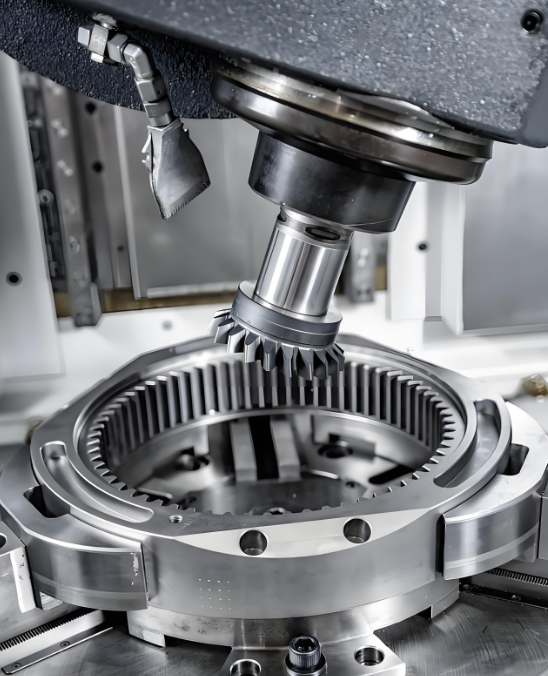
CNC boring machine processing is an important branch of CNC machining, specialising inComplex hole systems, large box-type workpieces, shaped structural partsThe machining requirements of the machine, through the boring tool rotary cutting and spindle precision feed, to achieve high-precision hole machining such as deep holes, step holes, threaded holes, as well as the milling of flat surfaces and inclined surfaces. Its core advantage lies in the fact that “it can guarantee the positional accuracy of holes while taking into account the machining uniformity of the overall structure of the workpiece”, making it an irreplaceable equipment for the machining of large equipment (such as machine tool beds and engine blocks).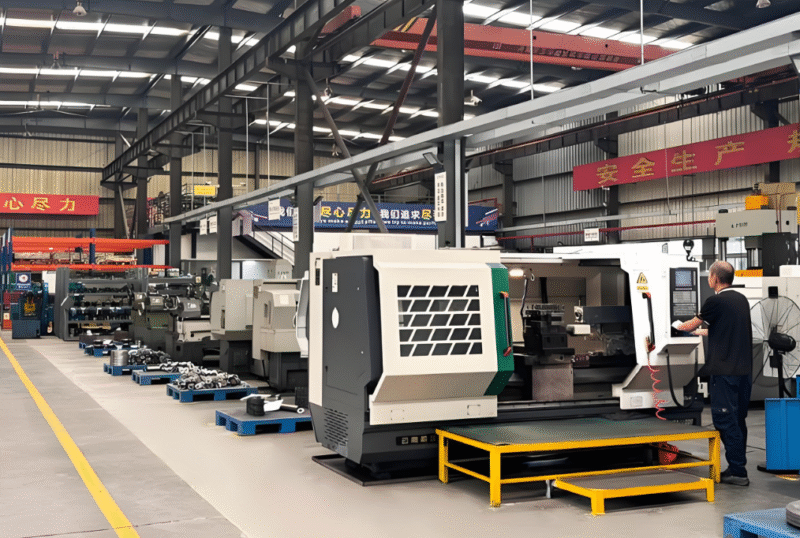
2. Key technical features of CNC boring machine processing
Leading accuracy in hole system machiningThe closed-loop servo control system is adopted, and the coaxiality and parallelism errors of the holes can be controlled within 0.005mm, solving the problem of “accumulation of deviation in multiple holes” of the traditional boring machine, and meeting the processing requirements of complex hole parts such as aero-engine magazines, hydraulic valve bodies, and so on.
High load capacity for large workpiecesCNC Boring Machines (especially floor-type CNC Boring Machines) with a table load of several tonnes can process large workpieces (e.g. chassis of construction machinery) with a length of more than 3 metres, and the workpieces do not need to be clamped frequently during the machining process, thus reducing the positioning errors.
Outstanding Composite Processing Capability: Modern CNC boring machine more integrated milling, drilling, tapping and other functions, can be a one-time completion of the workpiece “hole machining + plane milling + contour forming”, to avoid the loss of precision caused by the transit of multiple equipment, shorten the production cycle.
Intelligent function upgradeSome of the high-end CNC boring machines are equipped with probe inspection system, which can measure the workpiece processing size in real time and automatically compensate for the error; meanwhile, they support direct connection of CAD/CAM software, realising the seamless connection of “design drawings – processing procedures – production execution”.
III. CNC machining andCNC Boring Machine MachiningTypical application scenarios
The combination of the two not only covers the general machinery manufacturing, but also in the high-end field to show the irreplaceable value, the following is the core application scenario analysis:
Areas of application Core processing requirements CNC Machining Solutions Machining accuracy requirements
aerospace Complex structural parts made of difficult-to-machine materials such as titanium alloys and high-temperature alloys (e.g., aircraft landing gear, engine blade tongue and groove) CNC Boring Machine + 5-axis linkage technology for integrated machining of complex holes and spatial surfaces. Dimensional tolerance ±0.002mm, surface roughness Ra0.8μm
automobile manufacturing Batch hole machining of engine blocks and gearbox housings, and high-precision face milling of motor housings for new energy vehicles. CNC Boring Line (multiple machines) + automated loading and unloading system to meet mass production requirements. Hole coaxiality ≤ 0.01mm, flatness ≤ 0.005mm/m
medical equipment Curved surface moulding of artificial joints (made of titanium alloy), precision drilling of surgical instruments (e.g. orthopaedic drills) CNC machining (milling + drilling) + fine boring with CNC boring machine for biocompatibility and safety in use. Surface roughness Ra0.4μm, dimensional tolerance ±0.005mm
Mould Manufacturing Cavity milling and guide hole boring for large plastic moulds (e.g. car bumper moulds) CNC boring machine (large stroke table) + high speed milling function for shortening mould development cycle time Cavity size tolerance ±0.01mm, hole position accuracy ±0.005mm
Fourth, how to choose a reliable CNC machining and CNC boring machine processing service provider?
For manufacturing companies, the choice of a technically competent processing service provider is the key to guaranteeing product quality, focusing on the following four points:
Equipment and Technical Strength: Confirm whether the service provider is equipped with high-end CNC boring machines (e.g. Heidenhain from Germany, Fanuc system from Japan), five-axis machining centres and other equipment, as well as experience in machining difficult-to-machine materials (e.g. titanium alloys, stainless steel).
Quality Control System: Require quality certificates such as ISO9001, IATF16949 (automotive industry), etc., as well as knowledge of the availability of their testing equipment (e.g. CMMs, laser interferometers) to ensure that machining accuracy can be traced.
Cases and Word of MouthCheck the service provider’s past industry cases (e.g., whether it provides supporting processing for aerospace companies and automotive OEMs) and judge its service stability through customer evaluations, years of cooperation, and so on.
Customisation and responsivenessFor non-standard parts processing, you need to confirm whether the service provider has an independent programming team (which can quickly generate processing solutions based on drawings), and whether it can meet the delivery requirements of urgent orders (such as 72-hour rapid prototyping).
V. Conclusion: future trends in CNC machining technology
With the advancement of Industry 4.0CNC machiningIt is developing in the direction of “higher precision, smarter and greener” – the future CNC system will realise AI adaptive control (automatically adjusting cutting parameters according to the hardness of the material) to reduce tool loss; andCNC Boring Machine MachiningIt will further integrate digital twin technology to optimise machining paths and reduce trial and error costs through virtual simulation.
For manufacturing enterprises, mastering the core logic of CNC machining technology and choosing the appropriate machining solutions can not only enhance product competitiveness, but also take the lead in industrial upgrading. If you have CNC machining or CNC boring machine machining needs, welcome to contact us, we will provide from drawing analysis, process design to mass production of the whole process solutions to help your products to achieve “double breakthroughs in precision and efficiency”.
Blog
-
CNC Machining and CNC Boring Machine Processing: Core Technology and Application Guide for Precision Manufacturing (How to Choose a Reliable CNC Machining and CNC Boring Machine Processing Service Provider?)
-
The Complete Guide to Machining Plants and Lathes: Process, Selection and Cost Analysis (Core Concept Analysis: Machining Plants and Lathes)
machine shopA comprehensive guide to machining on lathes: Processes, options and costs.
introductory
In today’s manufacturing industry, machining plant as the core link of the industrial chain, its technology and ability is directly related to the quality and performance of various products. Among them, lathe machining, as a basic and crucial metal forming process, is a key indicator to measure the technical level of a machining plant. Whether you are a buyer looking for outsourcing services, or an engineer looking for an in-depth understanding of the industry, it is critical to understand the core capabilities of a machining plant and the details of the lathe machining process. This article will provide you with a comprehensive analysis and practical selection guide.I. Analysis of core concepts: machining plants and lathe processing
A professional machine shop usually integrates a series of capabilities such as design, programming, production and quality control, and is capable of precision machining of metals, plastics and other materials using a variety of machine tools and equipment according to the customer’s drawings or needs, to manufacture parts or products that meet the requirements.Lathe machining is one of the most common and fundamental processes in machining. It mainly refers to the process of cutting the surface of a rotating body on a lathe, using the relative motion of workpiece rotation and tool movement, so as to achieve a predetermined shape, size and surface accuracy. The modern sense of lathe machining mostly refers to CNC lathe machining, i.e., automated machining with high precision and efficiency through computer numerical control (CNC) technology.
Second, the main process flow of lathe processing
A complete lathe machining process consists of multiple precision steps, each of which directly affects the quality of the final product.Drawing review and process design: Engineers analyse in detail the 2D/3D drawings provided by the customer to determine the machining plan, tool path and cutting parameters.
Programming and simulation: CAD/CAM software is used to convert design drawings into G-code recognisable by the CNC machine and to simulate machining paths to avoid errors.
Material preparation and clamping: The suitable material (e.g. stainless steel) is prepared according to the requirements and is accurately positioned and clamped on the machine.
Roughing and Finishing: CNC lathes start with a roughing process for quick removal of allowances, followed by a precision finishing process to ensure the final dimensions and surface finish of the part.
Online Inspection and Compensation: During machining or after stage completion, online measurement may be carried out using probes and other equipment, and tool compensation is carried out based on the results to ensure accuracy.
Lower lathe post-processing: After parts are machined, subsequent processing such as deburring and cleaning may be required.
Final Quality Inspection: Use CMM, calipers, micrometers and other precision gauges to conduct full-size inspection of the finished product to ensure compliance with the drawings.
Three,Technology for lathe machiningAdvantages and areas of application
The lathe machining capabilities of a professional machine shop offer multiple significant advantages.![图片[1]-机械加工厂与车床加工全方位指南:工艺、选择与成本解析(核心概念解析:机械加工厂与车床加工)-大连富泓机械有限公司](https://cndlfh.com/wp-content/uploads/2025/06/9-800x538.png)
Core strengths
High precision and consistency: CNC lathe machining is able to achieve micron-level (≤0.005mm) repeatable positioning accuracy through programme control, which is very suitable for the production of precision parts with strict tolerance requirements.High efficiency and low cost: Compared with the traditional manual lathe, CNC lathe can run continuously and automatically for a long time once the programme is set up, which greatly improves the production efficiency and is especially suitable for batch orders, which can effectively reduce the cost of each piece.
Powerful ability to process complex shapes: through the programming of CNC system, modern lathe can easily complete the processing of ellipse, parabola and other complex surfaces, which is difficult to achieve by traditional manual lathe.
High production flexibility: when changing the machined parts, usually only need to change the machining programme can be, so that the machining plant can quickly respond to changes in market demand, to adapt to small batch diversified production.
Main application industries
Automotive industry: engine parts, drive shafts, brake system parts, etc.Aerospace: Aircraft landing gear components, engine blades, avionics equipment shells and other high-performance requirements of precision parts.
Energy equipment: wind power bearing housings, hydraulic valve bodies, pump housings, turbine blades, etc.
General mechanical equipment: various shafts, bushings, flanges, threaded fittings, etc.
Electronic communications: precision connectors, heat sinks, mould inserts, etc.
IV. A practical guide to choosing a professional machine shop
In the face of the many machining factories on the market, how to screen their professionalism and make the right choice? Please focus on the following key points:Assessment of technical equipment
Examine whether the factory has advanced CNC lathes, machining centres and other core equipment.
Find out if their equipment has a mill-turn function, which enables more complex processes to be completed in a single clamping, ensuring accuracy.
Quality Assurance System
Confirm that the factory has passed the international quality management system certification such as ISO9001.
Understand its testing capabilities, whether it is equipped with three coordinate measuring machine, optical projector, surface roughness meter and other precision measuring equipment.
Engineering team experience
Evaluate the experience of their technical team, especially programming and process engineers, which is directly related to the ability to solve complex machining challenges and optimise costs.
Check out their success stories in your industry or with similar products.
Integrated service capacity
In addition to lathe machining, excellent factories can also provide multi-process integration services such as milling machine machining and grinding machine machining, providing you with one-stop solutions.
![图片[2]-机械加工厂与车床加工全方位指南:工艺、选择与成本解析(核心概念解析:机械加工厂与车床加工)-大连富泓机械有限公司](https://cndlfh.com/wp-content/uploads/2025/05/4-3-555x800.png)
The table below summarises the core elements to look for when choosing a machine shop:
Dimensions Key Indicators Mandatory Items and Potential Problems
Technical equipment Equipment brand, degree of newness, degree of automation CNC system model, whether there is a combination of turning and milling, robotic loading and unloading
Processes and qualifications Quality management system certification, process document integrity ISO certificate, process cards, operating instructions
Quality control Inspection equipment configuration, pass rate control standards Coordinate report, the first piece of inspection records, final inspection standards for finished products
Integrated services Design support, on-time delivery, rapid response capability Provide DFM (Design for Manufacturing) analysis, production schedule visibility
V. Frequently Asked Questions (FAQ) about Machining Plants and Lathe Processing
Q1: What is the main difference between CNC lathe machining and traditional manual lathe machining?
A: The main difference lies in the method of control and the degree of automation. While traditional lathes rely on the skill and experience of the operator for manual control, CNC lathes are automatically executed through pre-programmed routines, providing significant advantages in terms of machining accuracy, efficiency consistency, and the ability to process complex parts.Q2: What factors affect the final cost of a lathe-machined part?
A: The main factors include: type and amount of material, part structure and accuracy requirements (the tighter the tolerance, the higher the cost), order batch size, surface treatment requirements, and the urgency of the machining cycle.Q3: How can I initially judge whether the quality of lathe machining of a machine shop is reliable?
A: We can make preliminary judgement by the following points: communication professionalism – whether we can understand your drawings quickly and provide reasonable suggestions; sample quality – ask for samples for size and appearance checking; factory visit – to observe whether the production site is neat and orderly and how well the equipment is maintained. -Observe whether the production site is neat and orderly, and how to maintain the equipment.Q4: Can a machine shop undertake R&D projects for small quantities and multiple varieties?
A: Absolutely. The flexible production characteristics of modern machining factories, especially those that specialise in CNC lathe machining, are ideal for taking on small-lot, multi-variety R&D sampling or trial orders. The key is to communicate clearly with the factory about your needs and understand that the cost per piece for small orders may be slightly higher than for large production runs.concluding remarks
Choosing a skilled and well-managed machine shop and taking full advantage of its lathe machining capabilities is key to ensuring the success of your project in terms of quality, cost and delivery. We hope that this guide will help you establish a clear understanding of these two core concepts and select the ideal partner for subsequent co-operation.Do you have specific lathe machining needs? Or what challenges have you encountered in previous collaborations? Feel free to share your insights and questions in the comments section and we’ll discuss it together.
-
Innovative applications of the dissolution process in welding technology: principles, advantages and future perspectives (considerations for the selection of a suitable dissolution welding process)
Dissolution processInnovative applications in welding technology: principles, advantages and future perspectives
In modern industry, the development of welding technology is evolving towards high precision and low heat impact, and the dissolution process, as an advanced joining technology, is playing an important role in this evolution.
Welding as the cornerstone of modern manufacturing, its technical level directly affects product quality and performance. Among the many welding methods, the welding technology related to the dissolution process shows significant advantages in solving the welding problems of special materials through a unique connection mechanism.
In this article, we will analyse the application of the dissolution process in the field of welding to help you fully understand the principles, characteristics and practical applications of this advanced technology.
I. Dissolution processsolderedanalysis of the core concepts of
Dissolution process welding is a general term for a class of welding methods that utilise the intermediate layer of material to form a joint by mutual dissolution and diffusion with the base material. It achieves the joining of materials through a controlled physico-chemical process rather than the traditional method of complete melting and re-solidification.
Main types of technology
![图片[1]-溶解工艺在焊接技术中的创新应用:原理、优势与未来展望(选择合适溶解焊接工艺的考量因素)-大连富泓机械有限公司](https://cndlfh.com/wp-content/uploads/2025/06/QQ20250627-201220-2-800x605.png)
Dissolution-Diffusion Welding: Steel materials are prone to hard phases and cracks under fusion welding and fast-cooling conditions, and dissolution-diffusion welding as a non-melting joining method for base materials is conducive to solving this problem-1. This process achieves interdiffusion of interfacial atoms through the process of dissolution-diffusion of a liquid film at the appropriate temperatures (e.g., 700-800°C) to form a dense joining layer-6.
Transitional liquid-phase diffusion welding: Commonly used for joining dissimilar materials, e.g. aluminium matrix composites to mild steel. The process uses copper foils, etc., as an intermediate layer, which are held at a specific temperature (e.g., 590°C) to achieve a reliable connection through liquid phase formation and isothermal solidification processes-7.
Low-temperature penetration welding: mainly for the welding of metals made of aluminium, using low-temperature welding rods made of aluminium, silver and cadmium, the welding process can be completed at a relatively low temperature of 580 ℃. The surface of this process is particularly smooth after welding, leaving no traces, and does not require mechanical treatment -5.
II. Main process of dissolution welding
A complete dissolution process welding procedure consists of several precise steps:
1. Surface pre-treatment
The weld is first decontaminated to completely remove metal oxides and oil impurities. This step is essential to ensure the effectiveness of dissolution and diffusion and has a direct impact on the quality of the weld-5.
2. Intermediate material applications
Depending on the process requirements, it may be necessary:
Flux-5 for application
Addition of nickel-based alloy transition layer-2
Laying of interlayer materials such as copper foil – 7
3. Temperature control and welding
Precise control of the spray melting temperature is a key process parameter. It has been shown that in the dissolution-diffusion welding of steel materials, the spray melting temperature (700-800°C) corresponding to the static mirror-like liquid film state can optimise the process performance and weld zone performance-1.
4. Insulation and diffusion
At this stage, interfacial atomic interdiffusion is intensified and the thickness of the interfacial diffusion bonding layer increases. As in transition liquid-phase diffusion welding, a holding time of 30 minutes to 2 hours at a specific temperature (e.g., 590°C) is required to ensure adequate diffusion and reaction-7.
5. Post-welding treatment
Cool naturally to room temperature
Checking the quality of welding
Surface treatment where necessary
III. Key advantages of dissolution welding technology
Dissolution process welding offers multiple advantages over conventional welding techniques:
Small heat-affected zone: The connection is realised at a relatively low temperature, which significantly reduces the heat-affected zone and avoids damage to the properties of the base material-4
High joint strength: the metallurgical bond formed by interdiffusion between atoms at the interface gives the joint excellent mechanical properties-1
Suitable for dissimilar materials: enables the joining of dissimilar materials that are difficult to achieve with conventional welding, e.g. aluminium matrix composites with mild steel-7
Low distortion and low residual stresses: the low-temperature process characteristics lead to a significant reduction in weld distortion and residual stresses.
Good surface quality: especially low-temperature penetration welding, smooth surface after welding, no need for mechanical reprocessing – 5
IV. Application areas of dissolution welding technology
1. Steel material connectionsDissolution Diffusion Welding TechnologyIt is particularly suitable for joining steel materials, and can effectively avoid hard phases and cracks-1. The technology has been successfully applied to weld repair of medium and large cast iron parts, through the combination of micro-alloyed cast iron wires without preheating gas welding, to achieve efficient, energy-saving, high-performance welding repair-2.
![图片[2]-溶解工艺在焊接技术中的创新应用:原理、优势与未来展望(选择合适溶解焊接工艺的考量因素)-大连富泓机械有限公司](https://cndlfh.com/wp-content/uploads/2025/10/QQ20250829-200957.png)
2. Aluminium and aluminium alloy welding
The low-temperature penetration welding process is mainly aimed at welding aluminium metal, using special low-temperature welding rods (which can be dissolved at 580°C) to make the welding process safer and more efficient -5.
3. Dissimilar material connections
Transitional liquid-phase diffusion welding shows unique value in joining aluminium matrix composites with dissimilar materials such as mild steel, where differences in physicochemical properties between materials are addressed by the design of intermediate layers-7.
4. High-end manufacturing
In high-end manufacturing areas such as semiconductors and biomedicine, autosoluble welding technology can be used to connect clean fluid piping to meet the stringent requirements of “nanoscale cleanliness” and “aseptic transport”-4.
V. Considerations for selecting a suitable dissolution welding process
The table below summarises the core elements to look at when selecting a dissolution welding process:
Consideration Dimension Key Indicators Applicable Scenarios
Material type Steel, aluminium alloys, composite materials, etc. Dissolution diffusion welding is suitable for steel materials; low-temperature penetration welding is suitable for aluminium alloys; transition liquid-phase diffusion welding is suitable for dissimilar materials.
Workpiece size Large, medium and small parts Medium and large cast iron parts can be welded with micro-alloyed wires without preheating gas welding process-2
Performance Requirements Strength, Sealability, Appearance Dissolution Diffusion Welding for high strength requirements; Low Temperature Penetration Welding for high appearance requirements.
Production conditions Equipment capacity, environmental requirements Clean environment can choose autolysis welding; general environment can choose low temperature penetration welding.
Cost budget Equipment investment, operating costs Low-temperature penetration welding requires low heat source, safe to use, lower cost-5
VI. Frequently Asked Questions (FAQ) on Dissolution Process Welding
Q1: What is the main difference between dissolution diffusion welding and conventional fusion welding?A: The main difference is the joining mechanism. Dissolution-diffusion welding joins by interfacial atomic interdiffusion without melting the base metal, whereas conventional fusion welding melts the base metal to form the weld. This difference results in a smaller heat-affected zone and better joint performance in dissolution-diffusion welding-1.
Q2: What factors affect the quality of the dissolution welding process?
A: The main factors include: quality of surface pretreatment, precision of temperature control, holding time, choice of intermediate layer material and protective atmosphere.
Q3: What are the advantages of using solution welding for aluminium parts?
A: Aluminium material is welded by low-temperature penetration welding, which has the advantages of simple process and easy operation, using low-temperature welding rods when welding, low requirements for heat source, safe to use, the biggest advantage is that the surface is particularly smooth after welding, leaving no traces, and does not require mechanical treatment -5.
Q4: Can dissolution welding technology be used to repair large components?
A: Yes. For example, medium- and large-sized cast iron parts can be repaired using a process that combines dissolved diffusion welding technology with the non-preheated gas welding of microalloyed cast iron wires to achieve highly efficient, energy-saving, high-performance weld repairs, obtaining welded patches with no white gouges or cracks, good colour consistency and excellent machinability – 2.
concluding remarks
As an important technological innovation in the field of welding, dissolution process welding, with its advantages of low heat input, high connection quality and wide material adaptability, has shown great potential in solving special material welding problems. With the continuous improvement of welding quality requirements in high-end manufacturing industry, dissolution welding technology is expected to be popularised and applied in more industrial fields.
Do you have a specific welding challenge to solve? Or have you encountered other confusion when selecting a welding process? Feel free to share your needs and insights in the comments section and we will be happy to provide you with professional advice.
-
The Ultimate Guide to Steel Processing and Fabrication: A Complete Analysis of Processes, Applications and Plant Selection (Core Concept Analysis: Steel Processing and Fabrication)
The Ultimate Guide to Structural Steel Processing and Fabrication: A Complete Analysis of Processes, Applications and Plant Selection
introductory
Structural steelworktogether withManufacture of steel structuresAs a core aspect of the modern construction and engineering sector, it supports the skeleton of everything from skyscrapers to large-scale infrastructure. With increasing demands for quality, efficiency and safety, an in-depth understanding of the steel structure process from raw material to finished product, and the selection of a professional partner, has become critical to project success. This article aims to provide you with a comprehensive industry interpretation and selection guide.
I. Core Concept Analysis: Steel Processing and Manufacturing
In a nutshell.Structural steelworkIt usually focuses on cutting, welding and drilling steel to make the required components according to the design drawings. WhereasManufacture of steel structuresIt is a more comprehensive concept, which covers a series of processes from raw material procurement, deepening design, processing and production to surface treatment, quality inspection and even pre-assembly before delivery.
A typicalManufacture of steel structuresThe process consists of the following precision segments:
-
Intensive design and detailing: Based on architectural drawings, components are deepened using specialised software such as Tekla and Xsteel to generate accurate machining drawings.
-
Raw material preparation and correction: Procurement of compliant steel (e.g. Q235B, Q345B) and straightening to ensure material flatness.
-
Pattern release and guiding: 1:1 projection of the dimensions and shapes from the design drawings onto the raw material.
-
Cutting: CNC flame/plasma cutting, laser cutting or sawing is used to process steel into the desired shape.
-
Forming and Edge Finishing: Forming of components by bending, rolling, etc., and machining of welding bevels.
-
Assembly and riveting process: Precise pre-assembly of multiple parts by tack welding, riveting or bolting.
-
soldered: Main body welding by licensed welders using submerged arc welding, gas shielded welding and other processes.
-
Orthodontics and Plastic Surgery: Elimination of deformations and stresses arising from the welding process.
-
Rust Removal and Painting: Shot blasting/sand blasting to remove rust, and spraying of anti-rust paint and fireproof paint as required.
-
Preassembly and Inspection: Factory pre-assembly of complex components and non-destructive testing using ultrasonic flaw detection and other techniques.
-
Marking and shipping: Finish final marking, package and ship to construction site.
II. Core process of steel processing
Structural steelworkbeManufacture of steel structuresIt is the core link in the process, and its accuracy directly determines the quality of the final product.
-
Cutting process: ModernStructural steelworkwidely usedCNC cuttingtechnologies such as CNC plasma cutting and CNC flame cutting, which guarantee high precision and efficiency. For higher precision and thicker plate requirements, thelaser cuttingwith waterjet cutting also being used in specific areas.
-
Connection process: Welding and bolting are the main types of connection. In welding.Submerged arc automatic weldingWidely used in long weld seams due to its high quality and efficiency, while thegas shielded weldingIt is more suitable for field installations and complex locations. For some specific applications, theRivet weldingProcesses are also employed to meet specific strength or vibration resistance needs.
-
Forming process: By means of equipment such as bending machines, plate rolling machines, etc., steel plates are processed into the required arcs or angles, which in theManufacture of steel structuresThe pipes, vessels and building surfaces are vital.
![图片[1]-钢结构加工与制造终极指南:工艺、应用与选厂全解析(核心概念解析:钢结构加工与制造)-大连富泓机械有限公司](https://cndlfh.com/wp-content/uploads/2025/09/QQ20250927-182317-800x593.png)
III. Technical Advantages and Application Fields of Steel Structure
Manufacture of steel structuresThe product of what has become the backbone of modern engineering stems from a series of irreplaceable advantages.
Core strengths
-
High strength and light weightThe high strength of steel makes the cross-section of steel structure components small, which can effectively reduce the structural deadweight and save the cost of foundation, especially suitable for large-span and high-rise buildings.
-
Good toughness and excellent seismic performance: The good plasticity and toughness of steel enable it to absorb seismic energy effectively and exhibit excellent seismic performance.
-
Short construction period: Most of the components are prefabricated in factories and only need to be installed on site, which is highly industrialised and can significantly shorten the construction period.
-
green: Steel-framed buildings have a high material recycling rate after dismantling, which is in line with the concept of green building and sustainable development.
-
Uniform quality and high reliability: The steel production process is controlled, the material is uniform and isotropic, the calculation model is in good agreement with the actual, and the structure is reliable.
Main application industries
-
Construction: Ultra-high-rise office buildings, large commercial centres, sports stadiums, airport terminals and industrial plants.
-
infrastructure: Large bridges (e.g. steel box girder bridges, steel arch bridges), power station structures, hydraulic structures, transmission pylons.
-
Special structures: Petrochemical platforms, harbour cranes, large storage racks and various mining facilities.
![图片[2]-钢结构加工与制造终极指南:工艺、应用与选厂全解析(核心概念解析:钢结构加工与制造)-大连富泓机械有限公司](https://cndlfh.com/wp-content/uploads/2025/09/QQ20250927-182050-800x518.png)
IV. Choice of specialitySteel Structure ManufacturerA Practical Guide
In the face of numerous marketStructural steelworkservice providers, it is critical to make an informed choice. Please focus on the following key points:
-
Technical equipment and capacity assessment
-
Examine whether the company has advancedCNC cutting, andset up, andsolderedrespond in singinglivery (on airline or company vehicle)Production Line.
-
Understanding Business HeavyManufacture of steel structuresCapabilities, such as the ability to handle thick plates and large cross-section members.
-
-
Quality Assurance System and Certification
-
Confirm that the company is ISO 9001 certified for quality management systems, as well as industry-specific certifications (e.g., construction steel certification).
-
Examine its quality testing capability, whether it is equipped with perfect physical and chemical laboratory and non-destructive testing equipment.
-
-
Engineering Performance and Experience
-
Ask to see past success stories, especially project experience in your industry or similar structural forms.
-
If possible, make a site visit to their production plant to understand the level of on-site management and process execution.
-
-
Design deepening and technical service capacity
-
goodManufacture of steel structuresEnterprises should have strong deepening design capabilities, and be able to provide technical support and optimise the design scheme at the pre-project stage.
-
The table below summarises the core elements to look for when choosing a steel fabricator:
survey dimension Key indicators Required Items and Potential Problems Technical equipment Equipment automation rate, processing accuracy, maximum processing specifications CNC drilling machine, gantry welding equipment, sand blasting and descaling grade Processes and qualifications Welding process evaluation, welder qualification, anti-corrosion and fire protection process Third-party inspection reports, inspection pass rates, paint brands and support systems quality control QC process integrity, lab configuration, pass rate standards Raw material retest report, process inspection records, final inspection standards for finished products Integrated services Deepen design capability, on-time delivery, on-site co-operation Design optimisation recommendations, production schedules, on-site installation guidance programmes V. Frequently Asked Questions (FAQ) about Steel Structure Processing
Q1: What are the common steel grades used in steel fabrication? How to choose?
A: In China, the most commonly used normal carbon structural steel is Q235, and the higher strength low alloy high strength structural steel is Q345.The choice needs to be based on the importance of the structure, load characteristics, connection method and working environment, etc., and in strict accordance with the design documents.
Q2: What are the main factors affecting steel fabrication quotes?
A: Key factors include:Steel grades and market prices, andStructural complexity and steel consumption, andNode connection form, andPainting Requirements, andProcessing technical difficultytooOrder Batchetc.
Q3: How can I judge whether the fabrication and welding quality of structural steel members are qualified?
A: A preliminary judgement can be made by the following points:exterior condition-The welding seam is formed evenly and beautifully, without obvious defects such as biting edges, porosity, slag entrapment, and so on;sizes–Conform to drawing tolerances. The key thing is to ask the manufacturer to provideUltrasonic inspection report issued by a third partyup toPhysical and chemical test report.
Q4: How to deal with corrosion and fire protection of steel structure?
A. anti-corrosionUsually, the composite coating system of “antirust primer + intermediate paint + top coat” is used, and the thickness and type of coating are determined according to the corrosive environment.fire protectionInstead, this is achieved primarily by spraying (or applying) fireproofing coatings to increase the fire resistance limit of steel components to the time required by the design code.
concluding remarks
Structural steelworktogether withManufacture of steel structuresIt is a technology-intensive industry with stringent quality requirements. We hope this guide will help you fully understand the value of your process and provide you with a clear direction when choosing a partner. When starting your next project, it is recommended that you have an in-depth conversation with a number of specialised vendors to obtain targeted technical solutions and detailed evaluation quotes.
Have you ever worked with a steel structure manufacturer? Or have you encountered any other confusion in moving forward with a project? Feel free to share your insights and questions in the comments section and let’s discuss together.
-
-
The Ultimate Guide to Rivet Welding Processing: A Complete Analysis of Processes, Applications and Options (What is Rivet Welding Processing?) Core Concepts Explained)
Rivet weldingThe Ultimate Guide: Processes, Applications and Options Explained
introductory
At the heart of modern industrial manufacturing, riveting and welding processes continue to play an irreplaceable role as a fundamental and vital joining technique. Whether you’re a buyer looking for reliable machining services or an engineer looking to gain a deeper understanding of the process, it’s vital that you have a good understanding of the nuts and bolts of riveting and welding. In this article, we’ll provide you with a comprehensive overview of riveting and welding processes, application scenarios, and a practical guide to choosing a supplier to help you make an informed decision.I. What is riveting and welding processing? Core concept analysis
Riveting, in essence, is a combination of two joining processes, riveting and welding. It joins two or more metal parts into a strong whole by a combination of mechanical riveting and thermal welding.The essence of the process: the use of the mechanical bite of the rivet and the metallurgical bonding of the weld to jointly bear the load.
Key features: Combined riveted and welded joints typically have higher fatigue strength and better vibration resistance than a single process.
Applicable materials: widely used in the connection of carbon steel, stainless steel, aluminium alloy and other alloy steel.
Second, riveting and welding processing of the main process flow
A complete riveting process consists of multiple precision steps, each of which directly affects the quality of the final product.Design and drawing review: Engineers determine the layout, number of riveted joints and welding parameters based on workpiece load requirements.
Material pre-treatment: The metal surfaces to be connected are cleaned, degreased and descaled to ensure the quality of the connection.
Positioning and fixing: the parts are fixed precisely to the intended position using special fixtures.
Riveting process: Pressure riveting, hammer riveting or pulling riveting are used according to the demand to complete the mechanical connection part.
Welding operations: Welding is carried out by licensed welders in accordance with the requirements of the process, commonly arc welding, gas-shielded welding, etc.
Post-welding treatment: Removal of slag, spatter and necessary orthopaedics.
Quality inspection: non-destructive flaw detection, size inspection and strength testing of finished products to ensure compliance with standards.
III. Key Advantages and Application Areas of Rivet Welding Technology
Rivet welding processing has gained favour in many industrial sectors because of its unique technological advantages.![图片[1]-铆焊加工终极指南:工艺、应用与选择全解析(铆焊加工是什么?核心概念解析)-大连富泓机械有限公司](https://cndlfh.com/wp-content/uploads/2025/08/QQ20250822-201809-800x512.png)
Core strengths
High connection strength: dual combination of mechanical and metallurgical, load bearing capacity far exceeds that of a single process.Good sealing: can form a gas-tight or liquid-tight connection, suitable for the manufacture of pressure vessels.
Excellent durability: excellent fatigue and vibration resistance to extend equipment life.
Wide applicability: can connect metal parts of different materials and thicknesses.
Main application industries
Heavy machinery and equipment: engineering machinery skeleton, mining equipment structural parts, agricultural machinery chassis.Rail transport: train bodies, bogies, buffer beams.
Architectural steel structure: trusses of large venues, bridge support structures, connection nodes of high-rise buildings.
Aerospace: aircraft ailerons, hatches, internal support structures.
Shipbuilding: hull sections, deckhouses, mast bases.
IV. A Practical Guide to Choosing Professional Rivet Welding Processing Services
Faced with numerous riveting service providers in the market, how to screen their professionalism? Please focus on the following key points:Technical capacity assessment
Check the company’s processing equipment list and pay attention to the sophistication and automation of its riveting and welding equipment.
Ask about the experience of the main technical team, especially your case studies on similar products.
Quality Assurance System
Confirm that the company is certified by a quality management system such as ISO 9001.
Understand its quality testing equipment configuration and factory inspection standards.
Typical Service Cases
Ask to see past success stories, especially projects similar to your needs.
If possible, make a site visit to their production plant and quality control process.
Comprehensive cost considerations
Compare the details of offers from different suppliers and be wary of offers that are well below market levels.
Understand the balance between “price – quality – service” and make optimal decisions.
The table below summarises the core elements to look at when choosing a riveting service provider to help you make an efficient decision:
Dimensions Key Indicators Mandatory Items
Technology Equipment Equipment automation rate, equipment accuracy, equipment processing range Welding robot, CNC riveting machine
Level of craftsmanship Diversity of welding methods, maximum thicknesses to be processed, experience with special materials Process evaluation reports, welder’s qualification certificates
Quality control Integrity of QC process, advanced testing equipment, pass rate standard Flaw detection equipment, mechanical property testing capability
Service Assurance On-time delivery, after-sales response mechanism, technical support capability Customer testimonials, emergency handling process
V. Frequently Asked Questions (FAQ) on Rivet Welding Processing
Q1: What is the main difference between riveting and just welding?
A: The main difference lies in the joining mechanism and resistance to dynamic loads. Rivet welding combines the mechanical fixation of rivets and the metallurgical bonding of welds, which results in a more uniform stress distribution when subjected to shock or vibration loads, and the fatigue resistance is usually superior to that of welding alone.Q2: What factors affect the cost of riveting and welding process?
A: The main factors include: material type and thickness, structural complexity, process requirements (e.g. whether non-destructive testing is required), order batch size and special requirements such as surface treatment.Q3: How can I tell if a riveted and welded part is of acceptable quality?
A: can be through the following preliminary judgement: appearance – weld forming uniform, no bite edge, porosity and other obvious defects; size – in line with the drawing tolerance requirements; strength – to meet the design of the Load. The most critical thing is to ask the supplier to provide a third-party test report.Q4: Can aluminium parts be riveted and welded?
A: Yes. Aluminium and aluminium alloys are common riveting materials, but due to their high thermal conductivity and easy oxidation, they require specific welding process parameters and special rivet materials, and have higher technical requirements for operators.concluding remarks
Rivet weldingAs a well-established industrial joining technology, its value has been well proven in countless practical applications. We hope this guide will help you gain a comprehensive understanding of the riveting process and provide you with a clear direction when selecting a fabrication service. If you have specific product needs, we recommend consulting with multiple specialised manufacturers for targeted process solutions and quotes.Do you have any experience with Rivet Welding Processing? Or have you encountered other confusion when choosing a service provider? Feel free to share your insights and questions in the comments section!
-
Machining foundries: the hidden champions and partners of modern manufacturing (how to select qualified machining foundries)
Machining OEM: Stealth Champions and Partners in Modern Manufacturing
Behind the core components of high-end medical devices and aerospace precision parts, machining foundries are becoming a key force in high-quality manufacturing with their cutting-edge technology.As the division of labour in the manufacturing industry becomes more and more specialised, machining foundries have become an indispensable part of the modern industrial system. These specialised factories combine precision machining technology, advanced management concepts and flexible production capabilities to provide a full range of services from sample making to mass production for customers in a variety of industries.
Whether it’s a complex part in the aerospace field or a demanding precision component in a medical device, machining foundries are able to transform design drawings into high-quality physical products with their specialised equipment and accumulated know-how.
01 Core Competencies and Differentiators for Machining Foundries
The core competitiveness of machining foundry is built on the three-dimensional basis of technical equipment, process knowledge and quality management. Unlike traditional processing enterprises, OEM factories pay more attention to flexible production and rapid response capability.High-end CNC equipment is an important indicator of a foundry’s processing capability. Leading foundries are usually equipped with five-axis linked machining centres, mill-turn machines and high-precision grinding machines. For example, Germany’s BAM Machinery has 12 machining centres, 11 of which use five-axis technology and are capable of completing precision machining of complex surfaces.
The accumulation of process technology has enabled excellent foundries to upgrade from simple implementers to manufacturing solution providers. The Customer Value Creation Application Centre established by Taichung Precision Machinery is able to provide customers with total solutions from machine selection to fixture and tool configuration, helping customers to solve complex workpiece machining problems.
Digital management platform is the operation brain of modern foundry. YESCAP Precision has increased its delivery rate from 50% to 90% through the introduction of the Express Work Order Production Management System, which realises process standardisation, lightweight information, real-time progress and easy traceability, significantly improving production efficiency.
02 How to select a qualified machining foundry
Choosing a machining foundry is a decision that requires comprehensive consideration and has a direct impact on product quality, cost and lead time.Technical capability match is the primary consideration. Evaluate whether the foundry’s processing capabilities match the product requirements, including:
Maximum machining size and accuracy range
Experience in material processing (e.g. aluminium alloys, stainless steel, special alloys)
Special process capabilities (e.g. deep hole drilling, precision boring and grinding)
Configuration of testing and quality control equipment
A quality certification system is the basis for ensuring product consistency. Qualified foundries should have an ISO 9001 quality management system certification, as well as specialised certificates for specific industries (e.g. medical or aerospace). BAM’s ability to process and deliver complex components in a short period of time is partly due to its strict quality control processes.
The ability to collaborate digitally has become a new criterion for choosing a foundry. Foundries with a high level of digitalisation enable real-time progress tracking and quality traceability. YOSKEI Precision’s system enables customers to view production progress in real time, and this transparency greatly enhances customer trust.
03 Digital transformation paths for machining foundries
Digital transformation has become the core path for machining foundries to enhance competitiveness. This transformation is not only a technological upgrade, but also a comprehensive innovation of management mode and business philosophy.Data collection and analysis is the foundation of digitalisation. Through the automatic collection of machine processing data by the machine networking system, the foundry can monitor the status of the machine and the processing progress in real time. company F obtains the processing data from the CNC controller via Ethernet through the OPC function of the machine, which provides information support for lean management.
Intelligent scheduling system significantly improves resource utilisation. Replacing traditional manual scheduling, the intelligent algorithm can take into account a variety of constraints, such as delivery date and process priority, to achieve dynamic scheduling. Practice shows that an excellent scheduling system can improve production efficiency by 20% and order delivery timeliness by 95%.
![图片[1]-机加工代工厂:现代制造业的隐形冠军与合作伙伴(如何甄选合格的机械加工代工厂)-大连富泓机械有限公司](https://cndlfh.com/wp-content/uploads/2025/09/QQ20250927-184140.png)
Process visualisation and real-time traceability create a transparent environment in the digital factory. When data is recorded and analysed for each process step, the foundry is able to make the transition from “experience-driven” to “data-driven”. This shift enables Company F to have a precise history of each part’s machining, including machining times, mould and material changeover times, and inter-process waiting times.
04 Positioning and market strategies of foundries of different sizes
Machining OEM market presents multi-level, specialised characteristics, different size factories have their own clear positioning and target market.Large foundries typically specialise in complex parts and high value-added areas. For example, Mazak provides high-end machining solutions for the aerospace, automotive, energy and medical industries, serving high-end markets with advanced equipment and technological advantages. These types of factories often invest significant resources in technology development to maintain their industry-leading position.
Small and medium-sized foundries are looking for market space through specialised positioning and flexible production. As a “factory within a factory” enterprise with only 26 employees, Chongqing Hongbubu Machinery Manufacturing Co., Ltd. focuses on casting and processing of basic equipment parts, and has achieved significant revenue growth through business model innovation (e.g., change from OEM to BS business model).
Regional clustering has become an effective strategy for small and medium-sized foundries to enhance their competitiveness. Taichung Precision helps customers reduce investment risks by establishing “5-axis foundry centres” – customers can first commission foundries when the order volume is small, and then transfer equipment and processes when the order is stable. This model is especially suitable for small and medium-sized enterprises that need to enter the high-end machining field.
05 Typical case studies of successful foundries
The German company BAM Maschinenbau shows how digitalisation is reshaping the foundry business model. The small factory, which once had only eight employees, has grown into a modern precision manufacturing plant with 170 employees through the deep integration of digitalisation and automation technologies under the leadership of Marco Bauer, who has a background in computer science.BAM’s innovation is its online automated quotation system – customers upload 3D CAD data and get a quote within 5-10 seconds, and complex components can be delivered within three days. Behind this speedy responsiveness is a highly automated process chain and the technical support of a 30-strong software team.
The efficiency improvement brought by production management digitisation is embodied in YESCAP Precision. Through the introduction of fast work order system, the company has solved the four major pain points of “chaotic production, complicated communication, confused progress and difficult to trace”.
The system solidifies the standard process route, realises the scanning code to obtain processing parameters and drawings, and saves 2,000 pieces of A4 paper per month, while making the traceability efficiency increase by more than 10 times. This transformation not only improves internal efficiency, but also makes the customer renewal rate rise 40% year-on-year.
06 Machining OEMfuture development trends
The integration of intelligence and automation will be the main direction of the development of foundries. With the advancement of artificial intelligence and machine learning technology, future machining equipment will be more adaptive, able to automatically optimise cutting parameters and adjust machining strategies in real time. Germany’s BAM has reduced automated CAM programming time by 70%-80%, significantly improving programming efficiency.Service-oriented transformation is a key path for foundries to upgrade their value chain positioning. Leading foundries are transforming from pure machining services to integrated solution providers. Taichung Precision’s “Customer Value Application Centre” no longer just sells machine tools, but provides a full range of services including process design, tool selection, and prototyping.
Sustainability will become one of the core competences of the foundry. By optimising cutting processes to reduce energy consumption, implementing tool recycling programmes and using environmentally friendly coolants, foundries will not only be able to reduce their operating costs, but will also be able to meet the growing environmental requirements of their customers worldwide.
The global manufacturing landscape is being reshaped, and machining foundries are no longer just passive executors of orders, but are becoming important partners in customer innovation. In the next five years, with the maturity of technologies such as digital twins and additive and subtractive composite machining, the foundry will establish a closer co-design relationship with its customers.
optionmachiningWhen you are looking for a foundry, you should not only look at the price factor, but also comprehensively evaluate its technical capability, quality system and innovation culture. An excellent foundry can become the extended R&D department of your enterprise, and together they can meet the technical challenges and win the first chance in the fierce market competition.
© copyright statement -
Machining (machining): core technologies and applications for modern manufacturing
Machining (machining): Core technologies and applications for modern manufacturing
Machining (referred to as machining) is a manufacturing process of cutting, forming and other processing of workpieces through mechanical equipment to obtain the desired shape, size and surface quality. As the basic process of manufacturing, machining technology directly affects product quality, performance and productivity.Main classifications and methods of machining
Conventional Cutting
Turning: workpiece rotation, tool movement, suitable for shafts, disc partsMilling: the tool rotates and the workpiece moves, suitable for flat surfaces and grooves.
Drilling: specialised in hole processing, including drilling, reaming, reaming, etc.
Grinding: for high-precision surface machining up to IT6 accuracy
Modern speciality processing
EDM: for complex profiles in high hardness materials.Laser processing: high precision, non-contact characteristics
Ultrasonic machining: precision machining for brittle materials
Water jet cutting: no heat affected zone, environmentally friendly and efficient
Application of CNC technology in machining
The popularity of numerical control (CNC) machine tools has brought machining into the digital age. Through computer programming and control, the machining process is automated and intelligent:Machining accuracy up to ±0.005mm
Increase productivity by 3-5 times
One person can operate multiple machines
Significant improvement in product quality stability
Machining key technical parameters
Three elements of cutting
Cutting speed: Selected according to material hardnessFeed: affects surface roughness
Depth of cut: determines machining efficiency
Accuracy Classification
Roughing: IT12-IT11Semi-finishing: IT10-IT9
Finishing: IT8-IT7
Superfinishing: IT6 and above
Machining quality control system
Process control points
First Article Inspection SystemProcess Inspection System
Tool life management
Periodic calibration of equipment
Means of detection
Coordinate measuring machineOptical projector
Surface Roughness Gauge
Hardness testing equipment
Application areas of the machining industry
aerospace
Engine blade processingManufacture of aerospace structural components
Accuracy requirements: 0.005-0.01mm
automobile manufacturing
Engine Block Cylinder HeadTransmission Gear
Annual production of more than one million pieces
medical equipment
Surgical Instrument FinishingImplant Manufacturing
Aseptic environment requirements
Considerations for Choosing Machining Services
Technical capacity assessment
Equipment brands and modelsMaximum processing size
Accuracy assurance capability
Experience in processing special materials
Quality System Certification
ISO9001 quality systemIATF 16949 (automotive industry)
ISO13485 (medical devices)
Service guarantee capacity
on-time delivery rateEmergency response speed
Technical Support Level
Development trend of machining
Intelligent direction
Internet of Things technology applicationsAdaptive processing systems
digital twin
green manufacturing
Dry cutting technologyTool recycling
Energy consumption monitoring
Composite processing
Turning and milling centrecombination of additive and subtractive material
On-line testing integration
concluding remarks
machiningAs the basic process of manufacturing, it plays an irreplaceable role in modern industrial production. With the continuous emergence of new technologies and materials, machining technology is developing in the direction of higher precision, higher efficiency and more intelligent. Choosing a professional machining service provider requires comprehensive consideration of its technical strength, quality system and service capabilities to ensure optimal machining solutions. -
Machining technology: a core pillar of modern manufacturing (key technical parameters and quality control of machining)
machiningTechnology: a central pillar of modern manufacturing
From tiny medical devices to giant power generators, the world’s 80% industrial products are all supported by machining technology.Machining (referred to as machining) is a manufacturing process in which workpieces are cut, shaped and other operations are performed by mechanical equipment to change their dimensions or properties. As the cornerstone of modern manufacturing, machining technology covers a wide range of fields from traditional manual operation to computer numerical control (CNC), and is a key link in realising the transformation of products from design drawings to physical objects.
With the advent of the Industry 4.0 era, machining has evolved to integrate theDigitalisation, automation, intelligences advanced manufacturing technology to provide precision component solutions for aerospace, automotive manufacturing, medical devices and other fields.
01 Basic classification and process characteristics of machining
Machining can be divided into two main categories based on the type of processing:traditional processingrespond in singingnon-traditional processing. Each type of processing method has its own unique application scenarios and technical advantages.Traditional machiningKey Inclusions:
turning: Workpiece rotation, tool linear movement, suitable for shafts, disc parts
milling: Tool rotation, workpiece fixed or moving, suitable for flat and curved surface machining
drilling: Specialised in hole machining for drilling, reaming and reaming operations.
Grinding: Finishing with abrasives for high precision and good surface quality.
non-traditional processing(Specialised processing) technologies include:
EDM: Metal erosion by electric discharge, suitable for complex shape processing of high hardness materials.
laser processing: Cutting, marking, welding with high-energy laser beams
ultrasonic processing: For precision machining of brittle materials such as glass and ceramics.
Water jet cutting: Cutting of materials with high-pressure water flow without heat-affected zone
02 CNC machine tools in modern machining applications
CNC (numerical control) technology is a revolutionary breakthrough in the field of machining. By controlling machine movements through digital programming, CNC machining achieves theHigh precision, high efficiency, high consistencyThe production model.CNC machining centreIt is the heart of a modern machine shop and typical configurations include:
Vertical machining centre: Suitable for plate and mould parts machining
Horizontal machining centres: for multi-face machining of box parts
5-axis machining centreComplex curved surfaces can be machined in a single clamping to complete multiple processes.
CNC programmingIt is a key aspect of CNC machining. Modern CAD/CAM software enables seamless conversion from 3D models to machining code, greatly improving programming efficiency and accuracy. Advanced programming techniques such asHigh speed cuttingrespond in singingadaptive processingProcessing efficiency and quality are further enhanced.
Accuracy indicators for CNC machines usually include:
Positioning accuracy: within ±0.005mm
Repeat positioning accuracy: within ±0.002mm
Surface roughness: Ra0.8μm or less (finishing)
03 Key Technical Parameters and Quality Control of Mechanical Processing
Machining accuracy is a core indicator of the level of machining. Factors affecting precision includeMachine accuracy, tool selection, cutting parametersrespond in singingprocess plan.Optimisation of cutting parametersIt is the key to improving the quality of processing:
cutting speed: Optimum range according to workpiece material and tool type
feedrate: Important factors affecting machining efficiency and surface quality
Depth of cut: Rational selection based on machine rigidity and tool strength
Quality control systemEnsure machined products meet design requirements:
process monitoring: First article inspection, inspection system to ensure production stability
final inspection: Full inspection using CMMs, optical measuring instruments, etc.
Quality Documentation: Complete inspection records and traceability system
Modern machine shops commonly useStatistical process controlMethods to achieve preventive quality control, reduce scrap rates and improve product consistency through data analysis and process monitoring.
04 Examples of machining applications in various industries
machiningAs a basic manufacturing technology, it permeates almost all industrial sectors. Different industries have specific technical requirements and quality standards for machining.AerospaceIt is a concentration of high-end machining technology:
Aircraft Engine Blades: Precision Manufacturing with 5-Axis Machining Centres
Aerostructural components: extensive use of high-strength aluminium alloys and composite materials
Extremely high precision requirements, often down to the micron level
automobile manufacturingIt is the largest application market for machining technology:
Engine block, cylinder head: Highly efficient processing with special production line
Transmission gears: High-precision grinding process required
Mould Manufacturing: Covering all stamping moulds such as automotive covers
Medical Device ManufacturingSpecial requirements for machining:
Surgical instruments: small, complex, high-precision
Implants: Finishing of biocompatible materials such as titanium alloys
Extremely stringent sterility requirements and surface quality
05 How to choose a professional machining service provider
Choosing a qualified machining supplier requires comprehensive consideration of technical ability, quality system, delivery capacity and other factors.Technical capacity assessmentKey points include:
Equipment list: machine tool brand, model, precision grade
Technical team: engineers, programmers, operators skill level
Process experience: experience and solutions for processing similar products
Quality Certification SystemIt’s basic security:
ISO9001 Quality Management System Certification
Industry-specific certifications (e.g. aerospace AS9100, medical device ISO13485)
Testing equipment configuration and metrological calibration system
Production management capacityImpact on delivery performance:
Production planning system and capacity status
Supply chain management capacity
Contingency order processing mechanism
06 Trends and Future Prospects of Machining Technology
Machining technology is moving towardsIntelligent, green and compositedirection, new technologies continue to drive change in manufacturing.smart manufacturingis the main direction of development:
IoT technology enables device interconnectivity and data collection
Artificial intelligence applied to process parameter optimisation and fault prediction
Digital Twins Build Virtual Machining Environments
green manufacturingBecome an industry consensus:
Dry cutting and micro-lubrication technology to reduce environmental pollution
Energy monitoring and optimisation to reduce energy consumption
Tool and cutting fluid recycling
Composite Processing TechnologyIncreased productivity:
Turn-mill machining centres for process concentration
Combined additive and subtractive manufacturing (3D printing + machining)
Integration of in-line measurement and processing
Machining, as the cornerstone of the manufacturing industry, is being deeply integrated with new technologies, driving industrial upgrading and change. In the future, withArtificial Intelligence, Big Data, Digital TwinsThe in-depth application of such technologies, machining will achieve a higher level of automation and intelligence, creating new value growth points for the manufacturing industry.
When choosing a professional machining service, it is important to look not only at the equipment capabilities, but also at the supplier’sTechnology accumulation, quality culturerespond in singingCreative awarenessThis is the only way to gain a lasting competitive advantage in the highly competitive marketplace.
-
Rivet shops and rivet subcontracting shops: the core production base of modern manufacturing
Rivet welding workshopWorkshops with riveting and welding substitutes: the core production base for modern manufacturing
A first-class rivet shop is the cornerstone of the manufacturing industry, and the quality of industrial products above 60% depends directly on the professionalism of its production workshop.
Rivet welding workshop is an operation place specialised in joining and manufacturing of metal structures, integrating the complete production process of material preparation, welding processing and quality inspection. The riveting and welding substitution workshop, on the other hand, pays more attention to theFlexible production capacityrespond in singingCustomised requirementsWe are able to provide professional welding services to multiple customers at the same time.
The modern riveting workshop is no longer a “welding workshop” in the traditional sense, but a combination of automated equipment, digital management system and standardised processes.Advanced Manufacturing Unit.
01 Planning and Layout of a Modern Rivet Welding Shop
A scientific and reasonable workshop layout is the basis for guaranteeing productivity.Functional area divisionis a primary consideration in the design of a rivet shop.
A typical rivet shop should contain the following core areas:
-
material storage area: For storage of raw materials such as steel plates, profiles, etc., with shelving systems and clear labelling management
-
Unloading preparation area: Setting up equipment such as shears, plasma cutters, etc. for preliminary processing of materials
-
welding area: Different workstations such as manual welding area and robot welding area according to product type.
-
Semi-finished goods turnaround area: Temporary storage areas between processes to ensure smooth flow of logistics
-
Finished product inspection area: Equipped with various testing equipment for quality verification
-
Surface treatment area: Follow-up treatments such as sandblasting, spraying, etc.
Logistics path designDirectly affects workshop efficiency. Excellent workshop layout adopts U-shape or linear material flow pattern to reduce material handling distance and frequency. Welding station spacing is usually maintained at 3-5 metres, not only to ensure that the operating space, but also to facilitate the passage of material handling equipment.
Environmental control is also an important part of workshop design.ventilation systemWelding fume emission standards must be met, and each workstation is equipped with a local exhaust device;Lighting systemsIt is necessary to ensure that the illumination of the working surface is not less than 300 lux;Power ConfigurationTo meet the demand for simultaneous use of high-power welding equipment.
02 Rivet Welding Substitute WorkshopCore equipment configurations
The level of equipment directly determines the technical capability of the foundry.Diversification of welding equipmentIt is the basis for meeting the needs of different customers.
Modern riveting and welding foundry shops are usually equipped with the following combination of equipment:
-
Robotic Welding Systems: For high volume, highly repeatable products to ensure consistency
-
Gantry automatic welding machine: for long weld seams on large structural parts
-
Portable welding equipment: meets the needs of on-site maintenance and special-position welding
-
laser welding machine: Precision welding for high precision and small deformation requirements
Auxiliary equipmentEqually important. The workshop should be equipped with metal processing equipment such as large coiler (which can handle steel plates with a thickness of more than 30mm), hydraulic bending machine (with a pressure of more than 1,000 tonnes), and a series of cranes (with a lifting capacity of 5-50 tonnes), to form a complete processing capacity.
The level of testing equipment reflects the level of quality assurance in the workshop.Three-dimensional measuring instrumentUsed to check the dimensional accuracy of large structural parts;Ultrasonic Flaw Detectorrespond in singingMagnetic particle flaw detection equipmentFor weld quality inspection;Mechanical Performance TesterUsed for sampling and testing the strength of welded joints.
03 Production process and management system of the riveting and welding shop
Standardised processes are key to ensuring consistent product quality.Production Planning ManagementIt is the starting point of workshop operation. OEM workshop needs to establish multi-project parallel management mechanism, reasonable scheduling, to ensure that each customer order is delivered on time.
The complete riveting process includes:
-
Drawing Process Review: Analyse product manufacturability and determine optimal process solutions
-
Material Preparation: Preparation of base materials and welding consumables according to process requirements
-
Bevelling: Welding bevels by mechanical or plasma machining
-
pairwise positioning: Use of special tooling to ensure assembly accuracy
-
Welding implementation: Perform welding operations in accordance with welding procedures
-
weld treatment: Grinding and cleaning of welds, cosmetic repairs
-
quality control: Perform non-destructive testing and dimensional inspection
-
Surface protection: Sandblasted and coated on request.
Site management levelIt directly affects production efficiency and safety. The implementation of 6S management (sorting, straightening, cleaning, cleanliness, quality and safety) is the basic requirement of an excellent riveting and welding workshop. The equipment is placed in a fixed position, tools are managed in a fixed position, and the area is clearly labelled to create an orderly production environment.
04 Quality control system for riveted and welded foundry shops
Quality is the lifeblood of the foundry.Total Quality ControlThe system should cover every step of the process from raw materials to finished products.
Welding consumables management is the source of quality control. Workshop needs to establish welding consumables warehouse, control the temperature and humidity of the warehouse (temperature ≥5℃, relative humidity ≤60%). Welding rods and fluxes are dried and kept warm according to the requirements, and there are complete records of issuance and recovery to prevent moisture from affecting the welding quality.
Key points for welding process control include:
-
Welder qualification management: Ensure that every operator is licensed and regularly reviewed
-
Process discipline inspections: Monitor welding parameters for compliance with process regulations
-
Process self-inspection and mutual inspection: Checks and confirms when the operator has completed each process.
-
Non-destructive testing applications: Selection of appropriate test methods and ratios according to product requirements
Quality traceability system is the core advantage of the OEM workshop. Through the implementation of the product identification system, the material batch, process parameters, operators, inspection results and other information of each workpiece are recorded, so that the whole process can be traced. When quality problems occur, the cause can be quickly located and corrective measures taken.
05 Staffing and Skill Requirements for Specialised Rivet Welding Shops
Human resources are the workshop’s most important asset.Rationalisation of team structureIt is the basis for keeping the workshop running.
A typical rivet shop should be staffed with the following professionals:
-
Welding Engineer: Responsible for process design, problem solving and technological innovation
-
Production Supervisor: Responsible for production plan implementation and site management
-
welder: Different levels of qualification: primary, secondary and tertiary.
-
quality control personnel: Responsible for raw material, process and finished product inspections
-
Equipment maintenance staff: Responsible for routine maintenance and troubleshooting of equipment
Skills training systemIt is the key to remain competitive. Excellent workshops have well-established training mechanisms, including:
-
pre-service training: New employees must receive safety and skills training and pass the test
-
On-the-job training: Regularly organise training in new technologies and techniques
-
accreditationOrganisation of welders for international certification (e.g. ISO 9606)
-
skills competition: Promoting Skill Exchange and Enhancement through Competitions
Foundry shops also need to develop their employees’Customer Service AwarenessTechnical staff need to be able to communicate effectively with customers to understand requirements and provide professional advice. Technical staff need to be able to communicate effectively with customers, understand needs and provide professional advice; production staff need to establish the concept of “the next process is the customer” to ensure that each product meets the requirements.
06 How to chooseQualified Rivet Welding Substitute Workshop
When choosing a partner, the overall capabilities of the foundry need to be assessed in a number of dimensions.on-site inspectionIt is the most intuitive way to assess.
It should be focused on when visiting the workshop:
-
device status: Equipment is in good condition and maintenance records are complete
-
On-site management: Material is arranged in an orderly manner, and aisles are clear.
-
product quality: Sampling of in-process and finished products for appearance quality
-
Employee Operation: Observe whether employees are operating in accordance with procedures and whether protection is in place
Qualificationis the basic threshold. Qualified foundry shops should have:
-
ISO9001 Quality Management System Certification
-
Industry-specific qualifications (e.g. pressure vessel manufacturing licence)
-
Welding system certifications (e.g. EN 15085 Railway Welding Certification)
-
Environmental and Occupational Health and Safety Management System Certification
Cooperation CasesIt is the best proof of ability. The workshop is required to provide successful cases of similar products, and it is better to visit the use of delivered products on the spot. At the same time, understand the workshop’s main customer groups and industry reputation, and choose partners with good reputation.
With the advent of Industry 4.0 era, intelligent riveting workshop is becoming a trend. By introducingInternet of Things (IoT) technologyThe welding parameters can be monitored in real time and the quality data can be analysed automatically.digital twinProduction processes can be optimised in a virtual environment before being put into production.
Choosing a professional riveting and welding foundry is essentially choosing aReliable external production sites. Excellent workshop can not only provide high quality welding products, but also become a strategic partner of the customer enterprise, to deal with the market challenges together, to achieve win-win development!
-
-
Rivet Welding Factory & Rivet Welding Subcontractor: Your Ideal Manufacturing Partner
Specialised riveting factory withRivet welding subcontractor: Your Ideal Manufacturing Partner
In modern manufacturing, more than 65% companies choose to outsource riveting to specialised manufacturers to reduce production costs and improve product quality.Rivet welding factories are specialised in the joining and fabrication of metal structures, with advanced welding equipment, professional technicians and strict quality management systems. And the rivet welding subcontracting factory goes a step further, providing customers withCustomised turnkey or all-inclusive production servicesWe provide one-stop solutions from design optimisation, material sourcing to finished product delivery.
By choosing a professional riveting subcontractor, companies are able to focus their resources on their core business and at the same time obtain riveting products that are more technologically advanced and of more consistent quality.
01 Core competencies and equipment configuration of a specialised riveting plant
A qualified riveting plant must be equipped with comprehensive hardware facilities and technical teams.High-end welding equipmentIt is the primary measure of the degree of professionalism of a rivet factory.Modern riveting plants often have a wide range of welding equipment to cater for different materials and processes:
Automated welding robots: for high volume, high precision repetitive welding tasks
Laser welding systems: Precision welding of thin sheet materials and stainless steel
Plasma arc welding equipment: for welding thick plates and special alloys
TIG/MIG welding machineHigh-quality welding of aluminium alloys, stainless steel and other materials.
Testing and quality control equipmentEqually indispensable. The professional riveting factory is equipped with CMM, ultrasonic flaw detector, X-ray inspection equipment, etc. to ensure that every product meets the design standards and customer requirements.
The technical team of a rivet welding plant should include welding engineers, process designers and quality control specialists. A good rivet welding plant will provide regular training to its staff to ensure that they are up-to-date with the latest welding technology and standards, such as ISO 3834 welding quality system and EN 15085 rail vehicle welding certification.
02 Rivet WeldingService model and advantages of the plant
The main difference between a rivet welding foundry and a traditional rivet welding factory is itsFlexible service modelrespond in singingCustomer orientated workflow.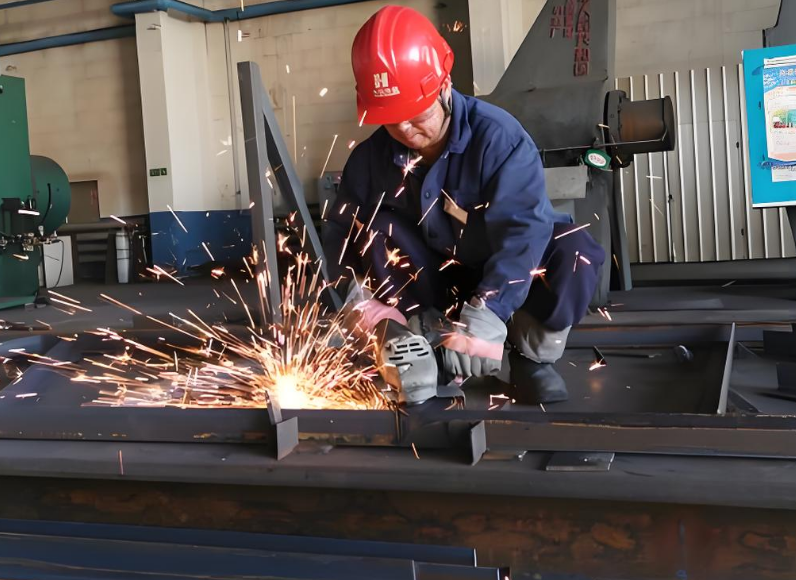
Incoming material processing modelIt is the most common form of co-operation for OEM factories. The customer provides the raw materials and design drawings, and the OEM is responsible for welding, manufacturing and surface treatment. This model is suitable for those who already have a mature product design and want to control material costs.
All-inclusive production servicesIt is more comprehensive, with the OEM taking full responsibility from the procurement of materials:
Design review and process optimisation
Raw material procurement and quality inspection
Welding fabrication and process control
Quality inspection and surface treatment
Finished product assembly and packaging for dispatch
The core advantages of choosing a rivet welding subcontractor arecost controlrespond in singingExpertiseThe company does not need to invest a lot of money to buy expensive equipment, hire professional technicians. Enterprises do not need to invest a lot of money to buy expensive equipment, hire professional and technical personnel, and do not have to worry about the risk of equipment obsolescence brought about by the renewal of the welding process.
03 How to identify quality rivet welding subcontracting plants
There are several dimensions to consider when choosing a reliable rivet welding foundry.QualificationIt is the basic threshold that an excellent OEM should have ISO9001 quality management system certification, as well as industry-specific relevant qualifications, such as pressure vessel manufacturing licences, professional contracting qualifications for steel structure works, and so on.Case experienceIt is an important basis for assessing the actual capability of the OEM factory. Powerful manufacturers usually will:
Provide success stories of similar products
Showcase of famous clients served
Provide a tour of the production plant and sample room
Technical communication skillsEqually critical. At the initial contact stage, a good OEM technical team can quickly understand the customer’s needs, make reasonable process suggestions, and point out possible welding problems in the product design.
When evaluating a foundry, you should also consider itsProduction capacity and lead times. Enquire about the number of existing customers, the number of production lines and the capacity to handle urgent orders to ensure that they can meet the demands of your production schedule.
04 Details of the co-operation process of riveting and welding substitution processing
Partnerships with riveting and welding subcontractors often follow standardised processes to ensure smooth project progress.Requirements analysis phaseIt is the starting point of co-operation. The OEM factory will understand the customer’s product use, working environment, quality requirements and budget range in detail. At this stage, the customer should provide as much detailed technical parameters as possible, such as material specifications, structural dimensions, force requirements and so on.
Technical evaluation and quotationAt this stage, the OEM’s technical team analyses the manufacturability of the product design, suggests possible optimisations and provides a detailed quotation based on material costs, processing difficulty and lead time requirements.
After the official co-operationproduction processIncluded:
Process documentation: development of detailed welding process protocols
Tooling design: Design of specialised fixtures for specific products.
Trial production and sample confirmation: small batch trial production for customer verification
Batch production and in-process inspection: production according to plan and quality control throughout the process
Final Inspection and Delivery: Shipments after full inspection and approval
05 Industry applications: which companies need riveting subcontracting services
Rivet welding subcontracting services are widely used in major industrial sectors, and different industries have specific technical requirements for subcontractors.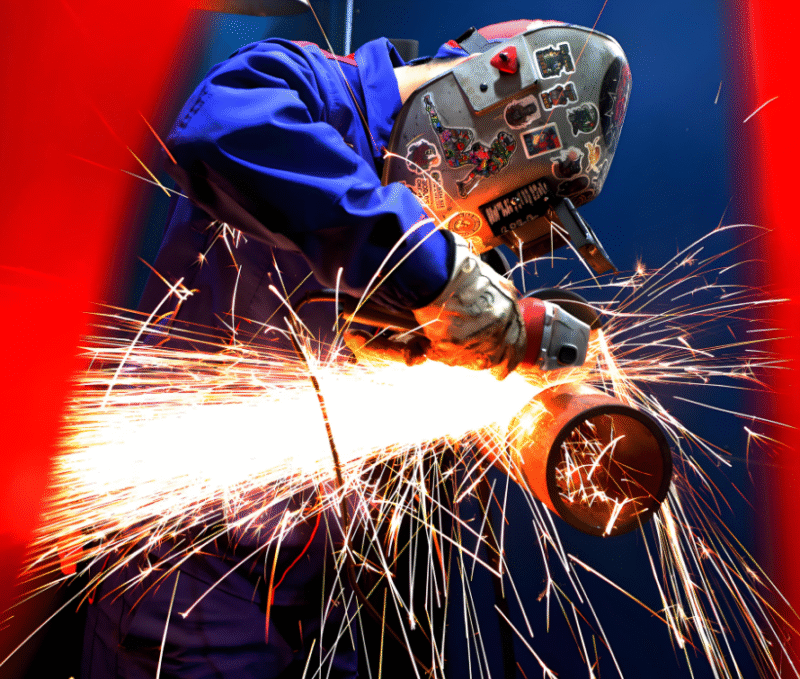
Construction Machinery IndustryIt is an important customer for rivet welding subcontracting. Large structural parts of excavators, loaders and other equipment require specialised welding processes to ensure their strength and durability. Excellent subcontractors are able to deal with welding distortion control of high-strength steels and ensure that the products meet the requirements of demanding working environments.
Manufacture of automotive parts and componentsThe field, especially commercial truck frames, chassis and other safety components, has extremely high requirements for welding quality. OEMs need to master robotic welding technology to ensure the consistency and reliability of welds.
Other important areas of application include:
Environmental protection equipment: Large steel structures such as dust collectors, desulphurisation towers, etc.
Warehouse Logistics: Racks, conveyor frames, etc.
agricultural machinery: Structural parts of agricultural equipment such as harvesters, tractors, etc.
Power equipment: Transformer housings, switchgear frames, etc.
06 Quality Control: Professional Rivet Welding Factory Quality Assurance System
Quality is the core value of the riveting and welding substitution service, and excellent manufacturers have established a multi-level quality assurance system.Welding process controlIt is the focus of quality management. Starting from welding consumables management, including drying, holding, issuing and recycling the whole process control. Welding parameters such as current, voltage and speed need to be monitored and recorded in real time to ensure process stability.
Non-destructive testing applicationsIt is the key link to ensure the quality of the weld. Professional rivet welding factory will choose the appropriate testing method according to the product requirements:
ray detection: for detecting internal defects in welded seams
ultrasonic testing: For quality assessment of thick plate welds
Magnetic particle inspection: For inspection of surface and near-surface defects
Osmosis: for surface defect detection on non-magnetic materials
Quality Tracing SystemEach product has a complete “identity card”. By recording information such as material batch, welding parameters, operators and production time, the whole process can be traced, which facilitates problem analysis and continuous improvement.
In the next five years, with the deepening of intelligent manufacturing, professional riveting and welding plants will be introduced in large numbersInternet of Things and Big Data technologies. Real-time monitoring of welding parameters, quality prediction and analysis will become standard, further enhancing the technical threshold and service value of the riveting and welding sub-processing industry.
Choosing the right rivet welding foundry is not just about finding a supplier, it’s about building aLong-term, mutually beneficial technology partnerships. Excellent OEMs are able to become the external R&D department of the customer’s organisation and work together to promote product innovation and quality improvement.