Blog

  • Innovations in rivet welding technology: from traditional processes to modern hybrid solutions (microstructure-property relationships in the rivet-welded head region)

    Rivet welding technologyInnovation: from traditional processes to modern hybrid solutions
    1 Overview and classification of riveting technology
    Riveting has been developed for centuries as a classic mechanical joining technique. Traditional riveting creates a mechanical locking at the connection site through plastic deformation to achieve the transfer of force. With technological progress, especially the emergence of new technologies such as stirring friction riveting welding, riveting welding has developed from a purely mechanical connection to a hybrid connection technology combining mechanical locking and metallurgical bonding.

    Modern riveting technology can be based on the form of riveting and rivet structure, mainly divided into self-riveting stirred friction riveting and self-pierce spinning riveting two categories. In self-riveting stirred friction riveting, no pre-made rivets are used for the connection of plates of dissimilar materials. In the lower plate prefabricated holes of the appropriate shape, with the stirring head movement, the upper material in the friction under the action of heat softening and extrusion downward flow, into the lower plate prefabricated holes to form a similar rivet structure. And the process of self-pierce spin riveting mainly includes four stages: rivet point seeking, stirring self-tapping holes, stirring deformation locking and emergency stop solid welding.

    2 Friction Stir Rivet Welding Technology Details
    2.1 Stirring Frictionrivet weldingPrinciples and Processes
    Stir friction rivet welding technology is an emerging technology to stabilise the connection of dissimilar materials, which adopts the rotational friction of rivets to generate heat, while retaining the deformation locking and solid-phase welding characteristics of rivet welding technology. Regarding friction stir riveting welding, there have been related researches in various universities at home and abroad, but the focus is on the organisation and mechanical property characterisation of friction stir riveting welded joints as well as the analysis of failure forms.

    Haris et al. studied the micro-stirred friction rivet welding technique to connect multilayer Al/Cu ultra-thin plates, and the test results showed good interlayer bonding and the existence of nanoscale diffusion layer.William studied the double-sided stirred friction self riveting welding technique, and the test in the pre-fabricated holes to form a continuous rivet-like connecting joints, joints not only to form a metallurgical combination of the material level, but also in the riveting weld joints in the lower part of the formation of an effective mechanical locking. The joint not only formed a metallurgical bond at the material level, but also formed an effective mechanical lock at the lower part of the rivet weld head.

    2.2 Joint form and bonding mechanism of stir friction rivet welding
    The joint forms of stirred friction riveting can be subdivided into four types depending on the form of riveting as well as the structure of the rivet: stirred friction blind riveting technology (FSBR), stirred spin riveting (FSPR), rotary friction drilled riveting (RFDR) and rotary friction pressure riveting (RFPR).
    Typical stir friction self riveting weld fittings differ in construction from self-pierce spin riveting stir friction riveting weld fittings. When joining aluminium alloys to steel by friction stir rivet welding technology, the aluminium plate is usually placed on top and the steel plate on the bottom. Generally, holes of a certain shape are prefabricated in the steel plate in order to form a strong rivet-like joint after riveting. According to the research results of Huang et al, in the process of welding aluminium alloy and steel by stirring and friction self riveting welding, the sequence of material filling follows the following law: firstly, the aluminium alloy deformed at the tip of the rivet, secondly, the aluminium alloy stirred in the stem of the rivet, and lastly, the aluminium alloy pressed in due to the feeding of the rivet.

    3 Relationship between microstructure and properties in the riveted welded joint region
    3.1 Microstructural characteristics of the joint area
    The study of the microstructure of the friction stir rivet welded joint region can promote a deeper understanding of the tissue-property relationship, thus further controlling the overall performance of friction stir rivet welded joints.

    According to the organisational evolution law, the stirring friction self-riveting welding head region can be divided into the stirring region (SZ) or welding block (WNZ), the thermo-mechanical influence zone (TMAZ), the plastic deformation metal flow zone (PDZ) or the self-riveting region (SRZ). Compared with the matrix organisation, the SZ region is significantly finer, with the finest grains and a microstructure of fine equiaxial crystals, while the PDZ region is significantly coarser but finer than the matrix, with coarser equiaxial crystals, and the TMAZ region is finer and the grains are significantly deformed due to the effects of mechanical stirring.

    3.2 Intermetallic compounds at the interface and their effects
    At the interface of aluminium alloy and steel friction stir riveting welding, FexAly (x<y) type intermetallic compounds are easily formed, which is harmful to the performance of the joint.Huang et al. showed that the interface of aluminium alloy and steel friction stirring riveting welding is smooth and tightly bonded, and there are no obvious cracks, holes and other defects were found.The results of the TEM inspection showed that the intermetallic compounds generated are Fe4Al13.Sun et al. detected flaky Fe2Al5 and diffusely distributed lumpy FeAl6 at the interface of 6061 aluminium alloy and low carbon steel. et al. detected flaky Fe2Al5 and diffusely distributed massive FeAl6 intermetallic compounds at the interface between 6061 aluminium alloy and mild steel stir friction rivet welding.

    Numerous studies have shown that the formation of Al-rich intermetallic compounds such as Fe2Al5 and FeAl3 negatively affects interfacial bonding as well as joint strength compared to the formation of Fe-rich intermetallic compounds such as FeAl and Fe3Al. This finding provides an important direction for optimising the rivet welding process.

    4 Rivet Welding ProcessOptimisation and Performance Improvement Strategies
    4.1 Optimisation of process parameters
    The riveting process parameters have a decisive influence on the quality of the joint. In self-pierce spin riveting, the root cut d (the radial distance from the interface of the rivet and plate bond to the tip of the rivet), the rivet depth h (the depth of the rivet into the lower plate), and the inter-plate distance between rivets close to the rivet stem are all critical parameters. In general, larger root cuts and rivet depths indicate stronger mechanical locking co-operation, whereas larger values of δ signify reduced rivet depth and weakened mechanical locking co-operation.

    Wang Xijing et al. investigated the effect of two joint forms of implanted stirred friction rivet welding on the performance, and the experimental results showed that the joint form with a nail cap on the backside had the aluminium column sheared into two parts along the interface during the stretching process, whereas the joint form without a nail cap on the backside had the aluminium column pulled out directly from the hole during the stretching process. Therefore, in order to achieve mechanical locking of the rivets, i.e. to form a nail cap structure, a suitable matching mould needs to be placed underneath the prefabricated holes, which places more stringent requirements on the placement and space of the rivets.

    4.2 Material optimisation and surface treatment
    The performance of rivet welded joints can be significantly improved through material optimisation and surface treatment. The addition of Zn or the use of galvanised steel in the friction stir rivet welding of aluminium and steel will promote the formation of Al-Zn intermetallic compounds and reduce the formation of harmful Fe-Al intermetallic compounds.

    The microstructure evolution of self-pierce spin riveted AA611 aluminium alloy and galvanised steel rivets has been observed and characterised by Min et al. The joint area can be divided into three typical regions according to the microstructure evolution, all of which are distributed in a circular arc centred on the rivet: region X (>773 μm from the edge of the rivet), region A (within the range of 363~773 μm from the edge of the rivet) and region B (within the range of 88~363 μm from the edge of the rivet). Different regions have different grain boundary characteristics and grain refinement, reflecting different thermo-mechanical histories.

    5 Prospects for the application of riveting welding technology and development trend
    5.1 Prospects for use in joining dissimilar materials
    With the increasing demand for lightweight as well as energy saving in the industrial field, the application of aluminium and magnesium alloys is in increasing demand, while aluminium and magnesium alloys alone have low strength and stiffness, and need to be used in combination with high-strength materials such as steel. Therefore, the connection of dissimilar materials, especially the connection of lightweight alloys such as aluminium alloys and magnesium alloys with steel is particularly important, focusing on the need to solve the problem of combining dissimilar materials with high strength and high precision.

    Traditional methods of joining dissimilar materials include riveting, welding and gluing, but there are many drawbacks in these methods, such as poor universality, poor strength and stability of the connection, and difficulty in controlling accuracy. Emerging technologies such as stir friction riveting and welding provide effective solutions to these challenges, especially in high-end manufacturing areas such as automotive, aerospace, etc., demonstrating broad application prospects.

    5.2 Trends in technology development
    The future development of riveting technology will pay more attention to process precision, efficiency improvement and adaptability expansion. On the one hand, the consistency of joint quality will be improved through the precise control of process parameters and the strengthening of process monitoring; on the other hand, the production efficiency will be improved and the production cost will be reduced through the innovation of equipments and the optimisation of processes.

    Digitalisation and intelligence are also important directions in the development of riveting technology. Through the integration of sensors, data analysis and control systems, real-time monitoring and adaptive control of the riveting process can be realised to ensure the stability and reliability of joint quality. At the same time, process optimisation based on digital twin technology will also become an important means to improve the quality of riveting welding

  • Dissolution control and quality management in advanced welding technology (dissolution characteristics and control methods in major welding processes)

    advanced (technology)Welding technologyDissolution control and quality management in
    1 Overview of welding technology and the role of dissolution in welding
    Welding technology, as one of the core processes of modern manufacturing, achieves permanent connections by bringing materials to an atomic or intermolecular union through various heat sources. In this process, the dissolution phenomenon is ubiquitous, from the formation of the molten pool of fusion welding to the dissolution of the base material of brazing, all directly affect the quality of the final joint. With the development of the manufacturing industry to the direction of high strength, lightweight, high efficiency, welding technology continues to innovate, the precise control of the dissolution process puts forward higher requirements.

    In high-tech fields such as aerospace and automotive manufacturing, the quality of welded joints is directly related to the safety and reliability of the entire structure. In automotive manufacturing, for example, body welding involves a wide range of materials and thicknesses, requiring control of different dissolution behaviours to ensure consistency. Similarly, in aerospace, the joining of lightweight alloys to speciality steels must precisely control interfacial reactions to avoid the formation of harmful phases. Understanding and controlling dissolution phenomena during welding is therefore an indispensable technical element of modern manufacturing.

    2 Dissolution characteristics and control methods in major welding processes
    2.1 Dissolution and erosion control in brazing
    The core process of brazing, as a process that relies on capillary action to fill the joint, is the mutual dissolution between the base material and the brazing material. In brazing of aluminium heat exchangers, dissolution and erosion are particularly evident. It has been shown that the maximum temperature and holding time during brazing, as well as the type and amount of brazing material, affect the degree of dissolution and erosion.

    By comparing three different brazing profiles (normal, heated and strongly heated), it was found that the degree of dissolution of the radiator parts during brazing varied from 181 TP3T to 681 TP3T. Under the strong heating profile, erosion in some areas of the brazed joints can even lead to the destruction of thin-walled cooling fins. This indicates that excessive dissolution can have a serious negative impact on joint performance. Therefore, the conflicting needs of joint formation and substrate preservation must be balanced during process design.

    2.2 Control of interfacial reactions in welding of dissimilar materials
    When welding dissimilar materials, complex elemental interdiffusion and chemical reactions occur at the interface to form intermetallic compound layers. In contact reaction brazing of aluminium alloys with stainless steel, the use of Cu as an intermediate layer results in the formation of a composite structure consisting of Fe2Al5, FeAl3 intermetallic compounds and Cu-Al intermetallic compounds at the interface on the stainless steel side.

    The thickness of the intermetallic compound layer at the interface increases with increasing holding time, while the width of the eutectic organisation gradually decreases. It is worth noting that the dissolution of the intermediate reaction layer Cu is very rapid, a fast process measured in seconds. This rapid dissolution behaviour puts extreme demands on the process control, requiring precise control of the heat input and action time.

    3 Welding Quality Management and Performance Assessment
    3.1 Total Quality Management System
    The establishment of a comprehensive welding quality management system is the key to ensuring stable joint performance. This system should cover design control, process verification, online monitoring and final inspection and other links. For key structural components, it is also necessary to establish a full-process traceability system from the raw material into the warehouse to the product factory.

    Quality control needs to focus on weld appearance, dimensional accuracy, mechanical properties and microstructure. For high-end manufacturing areas such as aerospace and automotive, special tests such as fatigue performance and fracture toughness are also required to assess the long-term reliability of joints under complex loads.图片[1]-先进焊接技术中的溶解控制与质量管理(主要焊接工艺中的溶解特征与控制方法)-大连富泓机械有限公司

    3.2 Non-destructive testing and performance prediction
    Modern welding quality control increasingly relies on advanced non-destructive testing techniques such as X-ray inspection, ultrasonic testing and eddy current testing. These techniques can detect internal defects and assess the quality of joints without destroying the product.

    Meanwhile, welding process simulation based on digital twin technology has become a powerful tool for predicting joint performance. By constructing a virtual model that can dynamically simulate the mechanical response of cutting, the researchers have improved the prediction accuracy by 15%, which not only reduces material waste, but also shortens processing time. A similar approach can be used to optimise and predict the welding process.

    4 Welding technology development trend and innovative application
    4.1 Intelligent and Automated Welding
    Welding technology is rapidly developing in the direction of intelligence and automation. Intelligent welding system monitors the welding process in real time through multi-sensor information fusion, automatically adjusts the parameters, and ensures the consistency of joint quality. For example, the weld tracking system based on machine vision can automatically identify the position of the weld and compensate for assembly errors.

    Robotic welding workstations and flexible welding lines have become standard in large manufacturing organisations, significantly improving productivity and stability. These systems typically integrate welding power sources, motion control, sensing monitoring and data analysis modules, enabling digital management of the welding process.

    4.2 Welding Challenges of New Materials and Structures
    With the continuous emergence of new materials, welding technology faces new challenges. Materials such as high-strength steels, aluminium alloys, magnesium alloys and composites have vastly different physico-chemical properties, requiring the development of special welding processes and filler materials.

    Emerging technologies such as stir friction rivet welding show unique advantages when it comes to joining dissimilar materials. This technology has successfully achieved high-quality joining of aluminium alloys to steel through a combination of mechanical locking and finite metallurgical bonding. Studies have shown that the formation of harmful intermetallic compounds can be reduced and joint performance improved by surface plating with Zn or the addition of Zn elements.

    4.3 Green Welding and Sustainable Development
    The environmentalisation and energy saving of welding technology is another important development trend. By optimising process parameters, reducing energy consumption and material waste, and developing welding materials with low fumes and harmful gases, the environmental impact of the welding process can be significantly reduced.

    soldredThe lightweight design of structures also makes a direct contribution to energy saving and emission reduction. For example, in automobile manufacturing, by adopting a hybrid structure of high-strength steel and aluminium alloy and combining it with advanced joining technologies, it is possible to reduce the weight of the body and fuel consumption while ensuring safety.

  • Critical role of dissolution phenomena in welding and riveting processes and control strategies (Typical dissolution processes and interfacial reactions in welding and riveting)

    dissolutionCritical role of phenomena in welding and riveting processes and control strategies
    1 Understanding the phenomenon of dissolution and its importance in joining materials
    The phenomenon of dissolution is a fundamental and critical physico-chemical process in welding and riveting. It refers to the process of melting, mutual fusion and diffusion of base metal, filler metal or brazing material at the interface under the action of a heat source. This phenomenon directly affects the formation quality, microstructure and mechanical properties of the joint. Whether it is the traditional fusion welding, brazing, or the emerging stir friction riveting welding, the control of the dissolution process is the core link to ensure the performance of the joint.

    In the case of stir friction rivet welding of aluminium alloys to steel, for example, the frictional heat generated by the rotation of the rivets during the joining process softens the aluminium alloy and produces a plastic flow that fills the prefabricated holes. During this process, a certain degree of elemental interdiffusion occurs at the interface, and even intermetallic compounds are formed. Similarly, during brazing, the rate and degree of dissolution of the base material has a decisive influence on the weld organisation and properties. Therefore, in-depth understanding and precise control of the dissolution process is of great significance for optimising the welding and riveting process, improving the reliability of the joints and prolonging the life of the components.

    2 Typical dissolution processes and interfacial reactions in welding and riveting
    2.1 Dissolution behaviour of base materials in brazing
    During the brazing process, when the liquid brazing material comes into contact with the base metal, dissolution of the base material into the liquid brazing material occurs. This dissolution process is a complex physicochemical process, the rate and extent of which is influenced by a number of factors. It has been shown that brazing temperature, holding time, and brazing material composition all significantly affect the amount of dissolution of the base metal.

    For example, in the brazing of aluminium heat exchangers, the researchers found significant dissolution and erosion. By comparing three different brazing profiles (normal, heated and strongly heated), it was found that the degree of dissolution of the radiator components during brazing ranged from 181 TP3T to 681 TP3T. Under the strong heating profile, erosion in some areas of the brazed joints can even lead to the destruction of thin-walled cooling fins. This indicates that excessive dissolution can have a serious negative impact on joint performance.

    2.2 Interfacial reactions in the joining of dissimilar materials图片[1]-溶解现象在焊接与铆焊工艺中的关键作用及控制策略(焊接与铆焊中的典型溶解过程及界面反应)-大连富泓机械有限公司
    When joining dissimilar materials, such as aluminium alloys and steel, complex chemical reactions and elemental diffusion occur at the interface, resulting in the formation of intermetallic compounds. In stir friction riveting welding of aluminium alloys to steel, the interface is prone to the formation of FexAly (x<y) type intermetallic compounds such as Fe2Al5 and FeAl3, which are aluminium-rich intermetallic compounds that are usually detrimental to the performance of the joint.

    Through TEM inspection and other means, the researchers observed intermetallic compounds such as Fe4Al13, flaky Fe2Al5, and diffusely distributed massive FeAl6 at the interface of stir friction rivet welding of aluminium alloys to steel. The type, thickness and distribution of these compounds directly determine the mechanical properties and failure behaviour of the joint.

    3 Strategies and methods for controlling the dissolution phenomenon
    3.1 Optimisation of process parameters
    The primary method of controlling the dissolution phenomenon is to optimise the joining process parameters. Critical parameters such as temperature, time and pressure need to be precisely controlled to balance the conflicting demands of the degree of dissolution and the performance of the joint.

    During TLP (Transitional Liquid Phase) joining and brazing, the degree of dissolution of the base material can be effectively managed by controlling the maximum temperature and holding time. For example, in liquid film dissolution diffusion welding of steel materials, the spray melting temperature has a significant effect on the joint organisation and mechanical properties. With the increase of spray melting temperature, the interface Ni, Fe atom mutual diffusion intensifies, and the thickness of the interface diffusion bonding layer increases. It was found that in the static mirror liquid film state of 700~800℃, excellent weld zone without white mouth and hardened organisation can be obtained.

    3.2 Material design and surface treatment
    Harmful dissolution and interfacial reactions can also be effectively controlled through rational material design and surface treatment. In the connection between aluminium alloy and steel, the formation of harmful Fe-Al intermetallic compounds can be reduced and the generation of Al-Zn intermetallic compounds can be promoted by surface plating of Zn, Zn-Al-Mg or addition of Zn elements, which can improve the performance of the joint.

    In contact reaction brazing, the use of Cu as an intermediate layer connecting 6063 aluminium alloy with 1Cr18Ni9Ti stainless steel can change the interfacial reaction path to form a composite interfacial structure consisting of Fe2Al5, FeAl3 intermetallic compounds, and Cu-Al intermetallic compounds, which improves the joint properties.

    3.3 Innovative connection technology applications
    Emerging joining technologies, such as stir friction rivet welding, naturally control the extent of harmful dissolution through clever process design. In this technology, the combination of mechanical locking and limited metallurgical bonding ensures joint strength while avoiding the formation of excess harmful intermetallic compounds.

    The joint form of stirred friction riveting welding is mainly divided into self-riveting stirred friction riveting welding and self-pierce rotary riveting. In self riveting stir friction rivet welding, the aluminium plate is generally placed on top and the steel plate is placed on the bottom, taking advantage of the lower softening temperature of the aluminium alloy and the better plastic flow, to fill the prefabricated holes in the lower steel plate under the action of frictional heat to form a rivet welded joint. This process naturally limits the degree of interfacial reaction by controlling the heat input.

    dissolutionEffects of the phenomenon on joint performance and quality assessment
    4.1 Microstructure-mechanical property correlation
    The dissolution process directly affects the microstructural characteristics of the joint, which in turn determines its mechanical properties. In stirred friction rivet welded joints, the joint area can be divided into stirred zone (SZ) or welded block (WNZ), thermo-mechanically affected zone (TMAZ), plastic deformation metal flow zone (PDZ) or self-riveted zone (SRZ) according to the law of organisational evolution.

    Compared with the matrix organisation, the SZ regional organisation is obviously refined, with the finest grains, which are fine equiaxial crystals; the PDZ regional organisation is obviously coarsened, but is still relatively small compared with the matrix; the TMAZ regional grains are refined and obviously deformed due to the influence of mechanical stirring. This gradient change in microstructure directly affects the hardness distribution and mechanical properties of the joint.

    4.2 Joint Failure Analysis
    Improper control of the dissolution process can lead to a variety of joint defects and failure modes. Over-dissolution may lead to erosion phenomena, such as the destruction of thin-walled elements seen in aluminium heat exchanger brazing, while under-dissolution may lead to incomplete bonding and reduced joint strength.

    In stir friction rivet welding of aluminium alloys to steel, the type of intermetallic compounds formed at the interface is critical. It has been shown that the formation of Al-rich intermetallics (e.g. Fe2Al5 and FeAl3) negatively affects the interfacial bonding as well as the strength of the joints compared to the formation of Fe-rich intermetallics (e.g. FeAl, Fe3Al).

    5 Future development trends and prospects
    With the continuous emergence of new materials and structures, the control of dissolution phenomena in welding and riveting faces new challenges and opportunities. The trend of lightweight drives the demand for joining lightweight materials such as aluminium-magnesium alloys and high-strength steels, which puts forward higher requirements for dissimilar material joining technology.

    In the future, through the combination of multi-scale simulation and in-situ experimental observation, the nature of the dissolution process can be understood more deeply, providing theoretical guidance for process optimisation. Meanwhile, the development of intelligent control technology will realise real-time monitoring and precise control of the dissolution phenomenon in the joining process, further improving the stability and reliability of the quality of welded and riveted joints.

  • Rivet Welding Processes and Rivet Welding Plants: the core strength of modern metal structure manufacturing (a reliable rivet welding plant should be well-equipped and quality assured)

    Rivet Welding Processing andrivet factory: the core strength of modern metal structure fabrication
    From the sturdy skeleton of heavy machinery to the complex components of precision equipment, riveting and welding processing with its unique connection technology, constructed a solid foundation for modern industrial manufacturing.

    In the field of industrial manufacturing, the reliability and precision of joining technology directly affects the integrity and service life of the entire structure. As a service provider specialising in metal joining solutions, Rivet Welding Factory provides vibration-resistant and fatigue-resistant high-performance products for various industries by integrating the robustness of riveting with the continuity of welding. With the ever-increasing structural safety requirements of the manufacturing industry, the riveting and welding process is becoming the preferred joining technology for heavy-duty equipment, vibrating machinery and special working conditions.

    Rivet welding technology analysis: the modern evolution of a traditional craft
    Rivet welding is a type of electric welding, a manufacturing process in which the metal joining parts are brought to an atomically bonded state by heat or pressure. This process combines the advantages of both riveting and welding joining methods to form a unique composite joining solution.

    Basic classification of rivet welding process
    Depending on the characteristics of the process and the degree of heating, riveting and welding processing is mainly divided into the following categories:图片[1]-铆焊加工与铆焊厂:现代金属结构制造的核心力量(可靠的铆焊厂应具备完善的设备配置和质量保障)-大连富泓机械有限公司

    Cold Rivet Welding: In cold rivet welding, the rivet post is deformed by high pressure. The cold flow causes large stresses in the area of the rivet post and is therefore only suitable for plastics with good ductility.

    Hot Rivet Welding: In hot rivet welding, the compression weld head generates heat and therefore less pressure is required to form the rivet head on the rivet post. The quality of the joint depends on the control of the process parameters: temperature, pressure and time. Typical welding cycles are 1 to 5 seconds.

    HOT AIR RIVET WELDING: In hot air rivet welding, the rivet post is heated by means of a stream of superheated air, which transfers heat through the air tubes surrounding the rivet post. The separate cold welding head then lowers and compresses the rivet post.

    Ultrasonic Rivet Welding: In ultrasonic rivet welding, ultrasonic energy supplied by the welding head is used to melt the rivet post. Typical weld cycle time is less than 2 seconds.

    Technical characteristics of rivet welding
    Rivet welding processing has a number of outstanding features: it can save metal materials, reduce the weight of the structure; to achieve a small, big, big for small, the manufacture of heavy, complex machine parts and components, simplify the casting, forging and cutting process; welded joints have good mechanical properties and sealing; but also be able to create a bimetallic structure, so that the performance of the material to make full use of.

    Core production capacity and process flow in a rivet welding plant
    Professional Rivet Welding Factory has perfect production system and quality control process to ensure to provide customers with high quality riveting processing services.

    Standard production process in a rivet welding plant
    Formal riveting plants usually follow a strict production process:

    Pre-preparation stage: making drawings according to technical requirements, making models according to drawings, dosing and modelling. This stage includes material selection and processing, selecting suitable master material and rivet material according to design requirements.

    Processing and shaping stage: Includes inspection of the appearance of the workpiece and scribing and machining. Cutting, forming and pre-treatment of metal materials by means of specialised equipment.

    Joining and integration stage: levelling and manual scraping of the workpieces are carried out. Welding and riveting operations are carried out at this stage to form a complete metal structure.

    Post-processing and inspection: including appearance treatment, painting, packaging and warehousing. Meanwhile, strict quality inspection is carried out to ensure that the products meet the standards.

    Equipment configuration of the riveting plant
    Professional riveting and welding factories are equipped with advanced production equipment to guarantee processing accuracy and efficiency. For example, some manufacturers have high-precision processing equipment such as plate levelling lines, CNC laser cutting machines, plate shears, bending machines, sheet metal drawing and bending equipment, groove planers, laser welding machines, argon arc welding machines, gas welding machines, and so on.

    Advantages and areas of application of rivet welding processing
    Outstanding advantages of rivet welding processing
    With its unique technical characteristics, rivet welding processing shows significant advantages in industrial manufacturing:

    Excellent structural reliability: the riveted part can effectively absorb and disperse vibration energy, preventing fatigue cracks in the connected parts due to long-term vibration.

    Overload Protection Mechanism: Under extreme load conditions, the riveted section acts as a “safety valve”, showing visible deformation and providing early warning signals before the structure fails.

    Wide process adaptability: able to effectively connect metal components of different materials and thicknesses, solving the problems that are difficult to be handled by traditional connection methods.

    Strong quality controllability: riveting quality can be confirmed by visual inspection, while welding quality can be verified by non-destructive testing, the dual quality assurance system improves the overall reliability of the product.

    The main areas of application of rivet welding processing
    Rivet welding processing technology has been widely used in various industrial fields:

    Automotive industry: gluing parts to doors. Riveting and welding techniques are used extensively in automotive manufacturing to join body structures and key components.

    Electronics and telecoms industry: fixing and connection of printed circuit boards.

    Medical device manufacturing: Structural connections for precision medical instruments and equipment.

    Heavy Machinery Manufacturing: Structural parts connection of heavy machinery such as engineering machinery, mining equipment, etc., such as excavator arm and mining crushing equipment.

    Aerospace: aircraft fuselage connections and spacecraft structural component connections to meet the dual requirements of lightweight and high strength.

    How to choose a professional rivet welding factory
    Facing many rivet factory suppliers, how to choose the right partner becomes the key to ensure the success of the project.图片[2]-铆焊加工与铆焊厂:现代金属结构制造的核心力量(可靠的铆焊厂应具备完善的设备配置和质量保障)-大连富泓机械有限公司

    Assessment of technical capacity and experience
    When choosing a riveting plant you should focus on its technical strength:

    Processing accuracy capability: Evaluate the accuracy level and stability of the manufacturer’s equipment, including the accuracy standard of its riveting welding plate / riveting welding platform.

    Accumulation of professional experience: Examine the vendor’s project experience and technical accumulation in the specific field, and choose a supplier with rich experience.

    Degree of process standardisation: Find out if the manufacturer follows standard processes and industry norms.

    Examining equipment and quality systems
    A reliable riveting plant should be well equipped and quality assured:

    Advanced equipment configuration: examine whether the manufacturer has CNC laser cutting machine, laser welding machine, argon arc welding machine and other high-precision processing equipment.

    Quality control system: know the manufacturer’s quality testing standards, such as the hardness standard of the working surface of the riveting welding platform (HB170-240 or between 187-255).

    Certifications and standards: Check whether the manufacturer has relevant industry certifications, which reflect its professionalism and reliability.

    Technological innovation and development trend of rivet welding manufacturing
    Automation and Intelligent Development
    Traditional riveting and welding processing is rapidly developing in the direction of automation and intelligence:

    Robot riveting and welding system: industrial robots are used to realise automated riveting and welding operations, improving production efficiency and quality consistency.

    Intelligent inspection technology: based on machine vision and sensor technology, real-time monitoring of riveting process parameters and quality indicators.

    Adaptive control system: automatically adjust the process parameters according to the material characteristics and changes in working conditions to achieve the optimal riveting effect.

    Integration of new materials and processes
    As new materials continue to emerge, riveting and welding processing technology continues to innovate:

    Composite material riveting: develop special riveting process applicable to the connection of composite materials and metals to expand the scope of application.

    Dissimilar material joining: Develop specialised riveting solutions for the joining of materials of different natures.

    Special environment riveting: development of riveting technology and materials suitable for extreme environments (high temperature, low temperature, corrosive environments).

    SEO Guide for Rivet Welding Processing
    In order to get your rivet machining website better indexed and ranked on Google, here are some key strategies:

    Keyword strategy and content optimisation
    Precise positioning of keywords: in the content of the natural integration of “riveting welding processing”, “riveting welding plant” and other core keywords, as well as “precision riveting”, ” large rivet welding processing” and other long-tail keywords.

    Optimisation of page elements: reasonable layout of keywords in title tags, URLs and Meta descriptions, e.g. “Rivet Welding Processing Services – Professional Rivet Welding Factory”.

    Create valuable content: Publish educational content such as riveting process introductions, application cases, and technical guides to demonstrate professional authority.

    Technical Optimisation and Local SEO
    Enhance the website experience: Ensure that the website has a clear, easy-to-navigate structure and improves page load speeds.

    Local Search Engine Optimisation: optimise your Google business profile with accurate services, images, and NAP (Name, Address, Phone) consistency across directories.

    Structured Data Markup: Provide richer, more structured product information to search engines through the markup language provided by Schema.org.

    With the manufacturing industry to high-end, intelligent direction, riveting and welding processing technology, the traditional metal connection process is renewed new vitality. Modern riveting and welding plant is no longer just a simple riveting and welding service provider, but the integration of materials science, structural mechanics, automatic control and other multidisciplinary knowledge of the system solution provider.

    In the future industrial development, riveting and welding processing will continue to play an irreplaceable role in heavy equipment, bridge construction, aerospace and other key areas by virtue of its unique technical advantages. For manufacturing enterprises, co-operation with riveting and welding factories with advanced riveting and welding processing technology and perfect quality system will be an important guarantee to enhance the competitiveness of products and win the high-end market.

    Attachment:Rivet weldingSEO checklist for standalone sites

    Reasonable inclusion of the keywords “rivet welding processing” and “rivet welding factory” in the title, Meta description and H1 tags.

    Creation of a page dedicated to riveting services, processes and equipment capabilities

    Publish case studies and specialised technical articles to demonstrate professional authority

    Optimise website structure and loading speed to improve user experience

    Create and optimise Google My Business listings to attract local customers

    Ensure that the website is friendly to display and operate on mobile devices

    Build quality backlinks on industry-related platforms

  • Rivet Welding and Rivet Welding Manufacturing: Reliable Solutions for Modern Industrial Connections (Rivet Welding Processes Demonstrate Excellent Adaptability to Different Materials and Working Conditions)

    Riveting andRivet Welding Manufacturing: Reliable solutions for modern industrial connectivity
    From the steel structure of cross-sea bridges to aerospace vehicles, from the skeleton of heavy machinery to the shell of precision instruments, riveting and welding manufacturing technology, with its unique structural advantages, has become an indispensable connection process in modern industry.

    In industrial manufacturing, the choice of joining technology has a direct impact on the structural strength, service life and safety of a product. Rivet welding – a composite process that combines the reliability of riveting with the efficiency of welding – is becoming the preferred joining solution for heavy-duty structures, vibrating equipment, and special operating conditions. With the ever-increasing demands for structural safety in the manufacturing industry, the technological innovation and application expansion of riveting and welding manufacturing processes are leading the way in the innovation of industrial joining technology.

    Rivet welding technology analysis: the perfect fusion of tradition and modernity
    Rivet welding is a manufacturing process that integrates the use of both riveting and welding joining methods, making full use of the vibration and fatigue resistance properties of riveting as well as the structural continuity and sealing advantages of welding to form a unique composite joining solution.

    Basic principles of the rivet welding process
    Rivet welding manufacturing is essentially the organic combination of two different metal connections:

    Welding section: A permanent connection is formed by heat or pressure that brings the metal joint to a state of atomic bonding. This method achieves continuity and integrity of the material.

    Riveted sections: two or more workpieces are joined together by means of mechanical fasteners such as rivets. This method relies on mechanical interlocking and has good resistance to loosening.

    The main types of rivet welding processes
    Rivet welding can be classified into various types according to the process sequence and combination:

    Welding before riveting: Welding operation is carried out first to determine the basic structure and then riveting is carried out to strengthen it, which is applicable to the manufacture of large structural parts.

    Rivet first and then weld: Initial positioning by riveting first, then welding operation, suitable for precision component assembly.

    Hybrid Rivet Welding: Welding and riveting processes are used at the same time at the same connection point, giving full play to the synergistic effect of the two methods.

    Advantages of riveted manufacturing: why it’s the first choice for heavy industry
    Excellent structural reliability
    The core advantage of riveted manufacturing is its unrivalled structural reliability:

    Anti-vibration performance: the riveted part can effectively absorb and disperse the vibration energy, to prevent fatigue cracks in the connection part due to long-term vibration, especially suitable for equipment manufacturing in the fields of engineering machinery, rail transport and so on.

    Overload protection: Under extreme loading conditions, riveted sections can act as “safety valves”, showing visible deformation and providing early warning signals before the structure fails, a feature that is particularly important in bridge construction and lifting equipment.

    Redundant design: Welding and riveting form a double insurance, even if one side fails, the other side can still maintain the basic structural integrity, which greatly improves the safety factor of the overall structure.

    Wide range of process adaptations图片[1]-铆焊与铆焊制造:现代工业连接的可靠解决方案(铆焊工艺对不同材料和工况表现出极佳的适应性)-大连富泓机械有限公司
    The rivet welding process shows excellent adaptability to different materials and working conditions:

    Dissimilar material connection: able to effectively connect metal components of different materials and thicknesses, solving many problems that are difficult to deal with in traditional connection methods.

    Strong quality controllability: riveting quality can be confirmed by visual inspection, while welding quality can be verified by non-destructive testing, the dual quality assurance system improves the overall reliability of the product.

    Convenient on-site adjustment: Compared with purely welded structures, riveted manufacturing makes it easier to make dimensional adjustments and corrections at the installation site, reducing assembly difficulties and costs.

    Significant economic benefits
    Rivet-welded manufacturing demonstrates significant economies when considered in terms of total life-cycle costs:

    Convenient Maintenance: Individual rivets can be replaced individually if damaged, eliminating the need for large-scale repairs and significantly reducing maintenance costs and time.

    Long Life Cycle: Properly executed riveted structures can last for decades, and many century-old riveted bridges are still in safe use today.

    Inspection is intuitive: loose or worn rivets can be detected by simple inspection and condition assessment can be carried out without the need for complex equipment.

    Rivet Welding Manufacturing ProcessProcess details
    Rivet welding manufacturing is a systematic project that includes several rigorous process aspects:

    preliminary stage
    Material Selection and Treatment: Select the appropriate parent material and rivet material according to the design requirements, and carry out the necessary surface treatment to ensure that the quality of the material meets the standard.

    Process planning: Determine the sequence, parameters and methods of riveting and welding, and develop detailed process procedures, including the selection of welding methods, riveting type determination.

    Tooling design: Design and manufacture of special jigs and moulds to ensure accurate positioning and fixing of workpieces in the riveting and welding process.

    processing stage
    Positioning and fixing: The workpiece is precisely fixed to a predetermined position by means of a temporary connection point or a special fixture to ensure assembly accuracy.

    Welding operation: carry out welding operation according to the predetermined process, control welding deformation and ensure welding quality.

    Riveting implementation: riveting in critical areas, using appropriate riveting methods to ensure the quality of riveting.图片[2]-铆焊与铆焊制造:现代工业连接的可靠解决方案(铆焊工艺对不同材料和工况表现出极佳的适应性)-大连富泓机械有限公司

    Post-processing and inspection
    Stress Relief: The elimination of residual stresses generated during the riveting and welding process by heat treatment or other methods.

    Shaping correction: Correction of work with excessive deformation to ensure that the final dimensions are in accordance with the design requirements.

    Quality inspection: Adopt appearance inspection, non-destructive testing, dimensional measurement and other methods to comprehensively assess the quality of riveting and welding.

    Rivet Welding Manufacturing Practices in Different Industries
    Heavy machinery manufacturing
    In the construction machinery, mining equipment and other heavy machinery manufacturing, riveting manufacturing plays a key role:

    Excavating motor arm: adopts box riveted structure, which ensures the strength and rigidity of the structure and provides good anti-vibration performance.

    Mining crushing equipment: riveting and welding composite connection is adopted in the parts with serious impact load, which greatly improves the service life of the equipment under bad working conditions.

    Large pressure vessel: Rivet welding structure is adopted in the connection between head and cylinder to ensure the sealing and pressure-bearing capacity of the connection part.

    Bridge construction field
    Bridge engineering is a classic area for the application of rivet welding technology:

    Steel bridge node connection: In the node parts with complex stress, riveting and welding joint connection is adopted to effectively cope with dynamic loads and temperature stresses.

    Connection of bridge deck system: The connection of bridge deck load-bearing structure and supporting structure often adopts riveting and welding method, taking into account the structural strength and seismic performance.

    Bridge reinforcement works: In the reinforcement and renovation of old bridges, riveting and welding techniques are often the preferred option for connecting old and new structures.

    Aerospace
    The aerospace industry has extremely demanding requirements for connection technology:

    Aircraft fuselage connections: special aerospace riveting technology is used in critical stress areas to ensure the reliability of the connections under severe vibration and temperature changes.

    Spacecraft structure: Using special riveting and welding process to connect structural components of different materials to meet the dual requirements of light weight and high strength.

    Engine mount: High temperature riveting and welding process is adopted to ensure the stability and durability of the connection under high temperature environment.

    Technological innovation and development trend of rivet welding manufacturing
    Automation and Intelligent Development
    Traditional riveting manufacturing is rapidly developing towards automation and intelligence:

    Robot riveting and welding system: industrial robots are used to realise automated riveting and welding operations, improving production efficiency and quality consistency.

    Intelligent inspection technology: based on machine vision and sensor technology, real-time monitoring of riveting process parameters and quality indicators.

    Adaptive control system: automatically adjust the process parameters according to the material characteristics and changes in working conditions to achieve the optimal riveting effect.

    Integration of new materials and processes
    As new materials continue to emerge, riveting technology continues to innovate:

    Composite material riveting: develop special riveting process applicable to the connection of composite materials and metals to expand the scope of application.

    Dissimilar material joining: Develop specialised riveting solutions for the joining of materials of different natures.

    Special environment riveting: development of riveting technology and materials suitable for extreme environments (high temperature, low temperature, corrosive environments).

    Green Manufacturing and Sustainable Development
    Modern rivet manufacturing is more environmentally friendly and sustainable:

    Low-energy process: develop riveting methods with concentrated energy and low heat input to reduce energy consumption.

    Environmentally friendly materials: use non-polluting or low-polluting riveting and welding materials to reduce the impact on the environment.

    Removable design: Considering the whole life cycle of the product, design the riveted structure which is easy to be disassembled and recycled.

    Quality control and testing standards for rivet welding process
    The quality of riveting and welding manufacturing is directly related to product safety, and a strict quality control system must be established:

    Process quality control
    Process evaluation: Process evaluation tests are carried out to determine the optimum range of process parameters prior to formal production.

    Personnel certification: strict training and qualification of riveting and welding operators to ensure the standardisation of operations.

    Equipment Monitoring: Regular calibration and maintenance of riveting and welding equipment to ensure it is in good condition.

    Finished product quality inspection
    Appearance inspection: Check the appearance quality of the riveted parts, including weld shaping, rivet arrangement, and so on.

    Dimensional measurement: Measure critical dimensions and form tolerances to ensure compliance with design requirements.

    Non-destructive testing: Use ultrasound, rays and other non-destructive testing methods to detect internal quality defects.

    Performance testing: Perform the necessary mechanical performance tests to verify connection strength and serviceability.

    With the manufacturing industry to high-end, intelligent direction, riveting and welding technology, the traditional connection process is renewed new vitality. Modern riveting and welding manufacturing is no longer just a simple combination of riveting and welding, but a fusion of materials science, structural mechanics, automatic control and other multidisciplinary knowledge of systems engineering technology.

    In the future industrial development, riveting manufacturing will continue to rely on its unique technical advantages, in heavy equipment, bridge construction, aerospace and other key areas to play an irreplaceable role. For manufacturing enterprises, mastering advanced riveting technology and establishing a perfect riveting manufacturing system will be an important guarantee to enhance product competitiveness and win the high-end market.

  • Welding Processes and Dissolution Technology: The Joining and Finishing Revolution in Modern Manufacturing (an in-depth look at the latest advances in welding processes and dissolution technology)

    Welding processand Dissolution Technology: The Connection and Finishing Revolution in Modern Manufacturing
    From the microscopic interlocking of material atoms to the macroscopic moulding of large structures, welding processes and dissolution technologies are reshaping the boundaries of modern manufacturing.

    In high-end manufacturing, joining and finishing are key aspects that determine the performance and longevity of products. While the traditional welding process achieves atomic-level bonding of metals through heat, the innovative dissolution technology takes advantage of the dissolution properties of materials to achieve ultra-precision machining. The synergistic development of these two technologies is driving industries such as aerospace, microelectronics and medical devices to new heights.

    Welding Process Analysis: The Science and Art of Joining Metals
    Welding is a manufacturing process and technology for joining metals or other thermoplastic materials under heat, high temperature or high pressure, with the core objective of achieving a welded joint that meets or exceeds the properties of the base material.

    The three main ways to categorise welding
    Welding methods can be divided into three main categories, depending on the degree of heating during the welding process and the characteristics of the process :

    Fusion welding: the workpiece weld local heating to a molten state, the formation of a molten pool (usually also add filler metal), after cooling and crystallisation to form a weld, the welded workpiece is combined into an inseparable whole. Common welding methods include gas welding, arc welding, electroslag welding, plasma arc welding, electron beam welding, laser welding and so on.

    Pressure welding: in the welding process, whether heated or not, need to pressurise the welding method. Common pressure welding resistance welding, friction welding, cold pressure welding, diffusion welding, explosion welding and so on.

    Brazing: The use of a brazing material (filler metal) with a melting point lower than that of the metal to be welded, after melting, to fill the gap between the joints and to diffuse with the metal to be welded to achieve the connection. The welded workpiece does not melt during the brazing process, and there is generally no plastic deformation.图片[1]-焊接工艺与溶解技术:现代制造业的连接与精加工革命(深入了解焊接工艺与溶解技术的最新进展)-大连富泓机械有限公司

    Welding technologycore strengths
    Welding production has a number of outstanding features: it can save metal materials, reduce the weight of the structure; to achieve a small, large, large for small, the manufacture of heavy, complex machine parts, to simplify the casting, forging and cutting process; welded joints have good mechanical properties and sealing; but also be able to manufacture bimetallic structure, so that the performance of the material is fully utilised.

    Dissolution Technology Explored: A Precision Revolution Beyond Conventional Machining
    Dissolution technology represents an innovative approach to materials processing in manufacturing that utilises the dissolution properties of materials in specific solvents to achieve material removal or surface modification.

    Basic principles of the dissolution method
    Dissolution method refers to the use of appropriate solvents to dissolve the specimen to make a solution, this method is relatively simple and fast. Water is one of the most important solvents for dissolving inorganic substances, and for the decomposition of inorganic substances insoluble in water, acids, bases or mixed acids are usually used as solvents.

    Ultra-precision dissolution polishing technology
    In the field of high-end manufacturing, dissolution technology has given rise to ultra-precision processing methods such as water dissolution polishing. For example, for the ultra-precision processing of KDP crystals (potassium dihydrogen phosphate single crystals), researchers have developed a CNC polishing method based on the principle of water dissolution. This method makes use of the characteristics of KDP crystals that can be dissolved in water, and selects a water-containing oil-based microemulsion as the polishing solution, through the “mechanical-water dissolution interaction synergistic effect” on the removal of materials for processing, will not produce sub-surface damage in the traditional mechanical removal process.

    Synergistic application of precision welding and dissolution technology
    A perfect match for the aerospace sector
    In the aerospace industry, precision welding processes can be used to weld small tubes with a diameter of 0.012 inches and a wall thickness of 0.001 inches, and almost all metals can be precision welded, including titanium and nickel-based alloys .

    At the same time, dissolution technology also plays an important role in the processing of aerospace precision components. For example, certain precision components may require surface treatment after welding, and dissolution technology can provide a non-destructive precision machining solution to ensure that the component meets the required surface quality and accuracy requirements.

    Technology Convergence in Microelectronic Manufacturing
    In the field of microelectronic manufacturing, the soldering process and dissolution technology show an amazing synergy:

    Precision resistance welding is widely used in microelectronic packaging, with controllable welding joints, smooth welding surfaces, and excellent performance on tiny parts.

    Laser welding is also important in the field of microelectronics, where it offers the advantages of a highly controllable weld joint, high and concentrated energy, and a strong bond.

    Water dissolution polishing technology can be applied to similar KDP crystals can be dissolved in water difficult to process materials, to solve the high-precision components in the processing of the surface of the residual small-scale ripples in the removal of the difficult problem, the principle of microelectronic components in the finishing process has broad prospects for application.

    Technology Innovation and Development Trends图片[2]-焊接工艺与溶解技术:现代制造业的连接与精加工革命(深入了解焊接工艺与溶解技术的最新进展)-大连富泓机械有限公司
    Automation and Intelligence in Welding Technology
    Welding technology in the machine tool industry is moving towards high efficiency, numerical control, automatic direction. Specific performance:

    Some of the backbone enterprises have established a complete welding management system, and absorbed and digested the welding process standards of the introduced products.

    The welding process has been perfected, so that it has developed from a single machining process into a whole set of emerging comprehensive engineering technology from raw material pre-treatment, cutting and dropping, forming, welding, post-weld testing and post-weld treatment.

    CNC precision cutting and computer-programmed nesting techniques are used.

    CO2 gas and argon-rich gas shielded welding or submerged arc welding and other advanced and efficient new techniques have been promoted and applied.

    Precision and control of dissolution technology
    Dissolution technology is likewise evolving towards greater precision and greater controllability:

    Ultra-precision machining of large-size KDP crystal elements has been achieved by computer-controlled optical surface forming technology.

    The development of a “mechanical-water dissolution interaction synergy” material removal mechanism has enabled more precise material removal control.

    Precise control of the material removal rate is achieved by adjusting the water content of the polishing solution and the process parameters.

    Process Selection Guide: Welding vs. Dissolving Techniques
    To help manufacturers choose the most appropriate process for their specific needs, the following comparison analyses the key characteristics of welding and dissolving technologies:

    Comparative dimensions Welding processes Dissolution techniques
    Nature of the process Material joining technology Material removal or surface treatment technology
    Suitable materials Metals, thermoplastics Materials soluble in specific solvents (e.g. KDP crystals)
    Accuracy level Up to micron level (precision welding) Nano level ultra-precision machining
    Thermal effects Most methods have heat affected zones Usually no thermal effects
    Main applications Structural joining, component assembly Ultra-precision surface machining, micro-nano texture removal
    Equipment costs vary by technology (resistance welding equipment is cheaper, laser welding is more expensive) Specialised CNC equipment is more expensive
    Technology trends Automation, intelligence, high efficiency Precision, controllability, multifunctionality
    Future Outlook: Co-evolution of Technology and Industry
    Future directions for welding processes
    The future of welding technology will pay more attention to the development of automation, intelligence and professional welding. With the “welding instead of casting, welding instead of forging, welding instead of cutting” has become the general trend of the manufacturing industry, welding technology in the manufacturing industry will be more widely used. At the same time, with the development of metallurgy and materials science, computer and network technology, the popularity of the application of the theory of material connection and welding manufacturing technology will continue to develop rapidly.

    Dissolution technologyInnovative perspectives
    Dissolution technology is promising in the field of special materials processing. For difficult-to-machine materials such as KDP crystals that are soluble in water, the water dissolution polishing method provides an effective solution for ultra-precision machining. With the continuous improvement of material surface quality requirements, dissolution technology is expected to replace the traditional machining methods in more areas.

    The infinite possibilities of cross-border integration
    The development of the integration of welding processes and dissolution technology will give rise to more innovative solutions. For example, after welding, precision components can be surface-finished by dissolution technology, thus ensuring both structural strength and serviceability. This combination of technologies will provide more complete product quality solutions for the manufacturing industry.

    With the manufacturing industry on the accuracy, efficiency and quality requirements continue to improve, welding process and dissolution technology are each towards a more precise, more intelligent direction, and in the field of high-end manufacturing show great synergistic potential. For manufacturing enterprises, grasp the development trend of these two technologies, according to their own product characteristics to choose the right combination of processes, will occupy the first opportunity in the new round of industrial upgrading.

    Regardless of your organisation’s focus on manufacturing, an in-depth understanding of the latest advances in welding processes and dissolution technologies will support your product quality improvement and technological innovation.

  • Cutting and Milling: Core Technologies and Innovative Applications for Modern Manufacturing (Analysis of Milling and Grinding: Fusion of Efficiency and Precision Innovation)

    machiningMilling and Grinding: Core Technologies and Innovative Applications in Modern Manufacturing
    From automotive engines to aerospace precision components, from medical devices to the core components of intelligent equipment, cutting and milling technologies have built the cornerstone of modern industrial manufacturing.

    In the wave of intelligent transformation of the global manufacturing industry, cutting processing as the most basic machining method, and milling and grinding processing technology, which combines high efficiency and precision, are jointly promoting the leapfrog improvement of product manufacturing accuracy and efficiency in various industries. Understanding the core principles, advantageous differences and integration of these two technologies has become the key to optimising production processes and enhancing market competitiveness of manufacturing enterprises.

    Fundamentals of Cutting: The Universal Language of Manufacturing
    Cutting refers to the use of a regular shape of the tool from the surface of the workpiece to remove excess material, so as to ensure that in the geometry, dimensional accuracy, surface roughness and surface layer quality are in line with the design requirements of the machining method. Any cutting process must have three basic conditions: cutting tools, workpiece and cutting motion.

    According to the way the tool moves against the workpiece and the shape of the tool, cutting can be classified into a number of different types, mainly including:

    Turning: mainly processing shafts, discs, sets and other rotary parts, is one of the most widely used processing methods in machinery manufacturing.

    Milling: The use of rotating multi-flute cutters (milling cutters) on the workpiece, can be machined flat surfaces, grooves, complex profiles, etc..

    Planing: The relative linear reciprocating motion between the tool and the workpiece to achieve the purpose of planing the surface of the workpiece, mainly used for plane and groove machining.

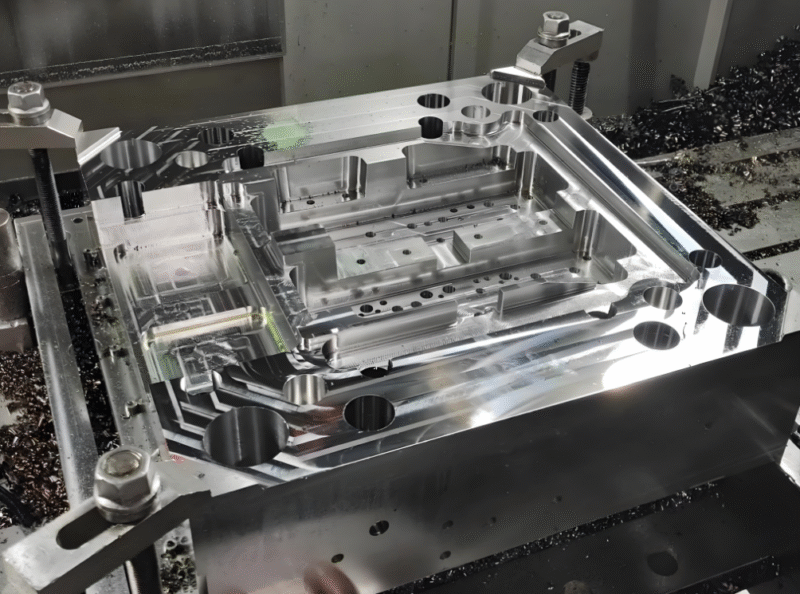
    Grinding: The use of grinding wheels and other abrasives to machine the surface of a workpiece at high linear speeds to obtain high precision and low surface roughness.图片[1]-切削加工与铣磨加工:现代制造业的核心技术与创新应用(铣磨加工解析:效率与精度的融合创新)-大连富泓机械有限公司

    Drilling, Boring: Mainly used for hole machining and finishing.

    Cutting processing can be divided into different stages according to the material removal rate and machining accuracy: roughing, semi-finishing, finishing, finishing, finishing and ultra-precision machining. With the continuous development of machine tools and cutting tools, the precision, efficiency and degree of automation of cutting processing is constantly improving, and the scope of application is also expanding.

    Milling and Grinding Analysis: Innovations for the Integration of Efficiency and Precision
    Milling and grinding represents an organic combination and innovative application of both milling and grinding processes. It encompasses both the efficient material removal capabilities of milling and the lean surface finish quality of grinding, creating a unique composite machining solution.

    Core features of milling
    Milling is a machining method that uses a rotating, multi-fluted tool to cut a workpiece. In the milling process:

    Motion: The rotary motion of the tool is the main motion, and the linear motion of the workpiece or tool in the direction perpendicular to the main motion is the feed motion.

    Cutting characteristics: Due to the use of multi-flute cutting tools, milling has the characteristics of multi-flute cutting, intermittent cutting, good cooling effect, high machining efficiency.

    Application: Milling is mainly used for machining flat surfaces, inclined surfaces, shaped surfaces and grooves, etc. It is one of the most widely used machining methods in modern manufacturing.

    GrindingTechnical Advantages
    Grinding is a method of machining the surface of a workpiece using abrasives such as grinding wheels at a high linear speed. Its significant advantages include:

    High-precision capability: The grinding is capable of high-precision and very small surface roughness, and the machining accuracy class is up to IT3-IT7.

    Hard Material Handling: The grinding machine is capable of machining harder materials such as hardened steel and carbide.

    Excellent surface quality: Grinding results in very smooth surfaces, a key requirement for many precision parts and functional surfaces.

    Synergistic benefits of combining milling and grinding
    The milling and grinding processes complement each other by organically combining the two processes:

    Process Integration: Reduces the number of workpiece clamping and machine changeover times, improving overall machining efficiency.

    Quality optimisation: milling as roughing and semi-finishing to remove material quickly; grinding as finishing to ensure final accuracy and surface quality.

    Cost control: Reduce single-piece processing costs and man-hour consumption by optimising the process.

    Full comparison of milling and grinding
    The following table compares in detail the main characteristics of the two machining methods, milling and grinding, to help you make the best choice for your specific needs:

    Comparison Dimension Milling Machining Grinding Machining
    Processing method Milling the workpiece with a milling cutter Grinding the workpiece with a high-speed rotating grinding wheel
    Machining accuracy Precision class IT6-IT12, roughness less than that of a grinder Precision class IT3-IT7, capable of high-precision and very small surface roughness grinding.
    Machining efficiency Faster machining speeds, high material removal rates Slower machining speeds, but high efficiency grinding, e.g. power grinding, possible
    Applicable materials Widely applicable to all kinds of metal materials Able to process high hardness materials, such as hardened steel, cemented carbide, etc.
    Surface quality Relatively large surface roughness Very smooth surfaces can be obtained
    Equipment costs Relatively low, widely applicable Often high, especially for high-precision grinding machines
    Typical applications Flat surfaces, grooves, complex profiles High-precision surfaces, hard material machining, precision parts
    Application scenarios for cutting and milling operations
    Aerospace
    Cutting and milling play a key role in the aerospace industry, which requires a high degree of precision, reliability and lightweighting of components:

    Engine components: Turbine blades, engine cases and other key parts are usually manufactured using a process that combines five-axis milling and precision grinding.

    Structural components: Aircraft structural components are often roughed out using high-speed milling, followed by precision grinding to ensure the accuracy of critical mating surfaces.

    Automotive Manufacturing
    The automotive manufacturing industry is one of the most widely used areas for cutting and machining technology:

    Power assembly: engine block, cylinder head, crankshaft and other key parts are heavily used in high-speed milling and precision grinding process.

    Transmission: Parts such as gearbox housings and gears rely on a combined machining strategy of milling and grinding.

    Medical Device Manufacturing
    Medical devices have extremely high requirements for biocompatibility, surface quality and precision:

    Implants: Implants such as artificial joints, bone plates, etc. are usually shaped by precision milling and then ground and polished to achieve the required surface quality.

    Surgical Instruments: The manufacture of precision surgical instruments makes extensive use of microfabrication and grinding techniques.

    Mould Manufacturing Field
    The mould and die industry is a key area for the application of milling and grinding technology:

    Cavity machining: Mould cavities are usually roughed and semi-finished by high-speed milling, and then precision ground to achieve the final size and surface requirements.

    High-gloss surfaces: For moulds that require a mirror effect, precision grinding and polishing are key processes.

    Milling and Grinding Technology Trends and Innovations
    The rise of composite processing technology
    Milling and grinding composite machining centre is the rapid development of high-end manufacturing equipment in recent years, it is integrated in a device milling and grinding functions, to achieve a clamping to complete all processing, greatly improving the machining accuracy and production efficiency.

    Intelligent Technology Enablement
    With the advancement of Industry 4.0 and smart manufacturing, milling and grinding processing technology is ushering in a new round of changes:

    Adaptive machining: Adaptive control system based on real-time sensing data that automatically adjusts machining parameters according to tool wear and material changes.

    Digital Twin: digital mapping of machining processes allows optimisation of process parameters in a virtual environment, reducing trial and error costs.

    Intelligent monitoring: Artificial Intelligence-based processing status monitoring system, real-time identification of abnormalities and automatic adjustment.

    Tool technology and material innovation
    Advances in tool technology and materials are directly contributing to the expansion of the boundaries of milling and grinding capabilities:

    Super-hard tool materials: The wide application of PCD, CBN and other super-hard tool materials makes high-speed milling of hard materials possible.

    Coating technology: New nano-coatings dramatically increase tool life and machining efficiency.

    Customised tools: dedicated tools for specific materials and processes to optimise machining results.

    How to choose the right processing strategy
    In the face of different machining needs, how to scientifically select cutting machining strategy is crucial:

    Selection based on material properties
    General steel and non-ferrous metals: priority is given to milling for high efficiency and excellent cost.

    Hardened steel and carbide: grinding or hard milling technology is required.

    Composites and difficult-to-machine materials: specialised tools and process parameters need to be selected according to specific material characteristics.

    Decision-making based on accuracy requirements
    General accuracy requirements (IT7 and above): priority can be given to precision milling.

    High precision requirements (IT5-IT7): Grinding or combined milling and grinding processes are required.

    Ultra-high precision requirements (IT3-IT5): Finishing methods such as precision grinding, lapping or polishing must be used.

    Considerations based on production lot sizes
    Small quantities of single parts: priority is given to CNC milling, with flexible programming and short preparation times.

    Medium volume: milling or grinding can be selected according to accuracy requirements.

    Large quantities: special production lines can be used to integrate milling and grinding processes and optimise overall efficiency.

    With the continuous development of new materials, new technology and intelligent technology, cutting and milling technology is evolving towards more efficient, more precise, more intelligent and more environmentally friendly. Regardless of the size of the enterprise, grasping the cutting processing technology development trend, the rational use of milling and grinding processing innovation process, will occupy the first opportunity in the new round of industrial revolution.

    For those who needmachiningThe choice of a partner with advanced milling and grinding processing equipment, rich experience and technical team will be a key decision to ensure product quality and enhance market competitiveness for the enterprises served.

  • Machining and CNC Machining: Core Technologies and Applications for Modern Manufacturing (Core Advantages of CNC Machining: Why it is the First Choice for Modern Manufacturing)

    machiningand CNC machining: core technologies and applications for modern manufacturing

    From aerospace to automotive manufacturing, from precision medical devices to everyday electronics, machining technology is the cornerstone that underpins modern industrial development.

    In today’s increasingly competitive global manufacturing environment, machining technology, especially the advancement of CNC machining, is profoundly changing the production mode and quality accuracy of products. Whether it is mass production or customised small batch processing, mastering advanced machining technology has become the key to maintain the competitive advantage of manufacturing enterprises.

    Fundamentals of machining: evolution from tradition to modernity

    Machining is a process of changing the external dimensions or properties of a workpiece using processing machinery. According to the temperature state of the workpiece being machined, it is divided into cold machining and hot machining.

    Cold working refers to processing at room temperature, and does not cause chemical or physical changes in the workpiece, can be divided into cutting and pressure processing. Hot work is common heat treatment, forging, casting and welding, usually above or below room temperature state of processing, will cause chemical or physical phase changes in the workpiece.

    Machining in a broad sense refers to any process that can be used to manufacture products by mechanical means; machining in a narrow sense refers to the process of making parts with specialised machinery and equipment such as lathes, milling machines, drilling machines, grinding machines, stamping presses, die-casting machines, and so on.

    With the development of computer technology, CNC machining technology has become the core of modern machining, through the computer programme control of automated machining methods, significantly improve the processing accuracy and efficiency.

    The core benefits of CNC machining: why it’s the modern manufacturing industry’s first choice
    1. Precise control to ensure machining accuracy

    The core of CNC machining lies in the precise control of the machine tool’s trajectory through a computer programme. The operator only needs to input the machining parameters of the parts, tool paths, etc. into the control system, and the machine can automatically complete the cutting, drilling, milling and other processes according to the preset instructions.

    This digital control completely gets rid of the traditional machining’s over-reliance on manual operation experience and avoids dimensional deviations caused by human factors. Whether it is a tiny shaft part or a complex box component, CNC machining ensures that every dimension is strictly in accordance with the design requirements.

    2. Complex structures, easily machined

    Hardware and mechanical precision parts often have complex geometries, such as curved surfaces, threads, shaped holes and so on. When facing these structures, traditional machining methods require multiple clamping and tool changes, which is not only inefficient, but also prone to cumulative errors due to multiple positioning.

    CNC machining, on the other hand, can complete multi-surface machining in a single clamping through multi-axis linkage technology. For example, a five-axis CNC machine can control the movement of a tool in five directions simultaneously, making it easy to machine complex surfaces that are difficult to achieve with traditional methods.

    3. Efficient production, guaranteeing batch manufacturing quality

    In the manufacturing industry, mass production of parts is the norm. CNC machining can quickly generate multiple machining instructions for the same parts through the program copy function to achieve standardised, large-scale production.

    Compared with traditional machining, CNC machining eliminates the need to adjust the machine tool individually for each part, greatly reducing production lead time. At the same time, because the machining process is automatically controlled by the computer, the same batch of parts is extremely high in dimensional consistency, effectively avoiding the product quality fluctuations caused by the differences in manual operation.图片[1]-机械加工与数控加工:现代制造业的核心技术与应用(数控加工的核心优势:为何成为现代制造业首选)-大连富泓机械有限公司

    The main processes and technologies of machining
    1. Basic classification of cutting processes

    machiningIt is one of the typical machining processes, mainly the use of knives to cut and grind metal. Think of a pencil sharpener and a planer for planing wood. Cutting can be broadly classified into three types of machining: lathe machining (turning), milling, and open hole machining.

    Lathe machining (turning): The workpiece is rotated at high speed and brought into contact with the tool to cut the material. Since the workpiece rotates, it is suitable for making cylindrical parts.

    Milling: In milling, a fixed workpiece is machined by bringing a high-speed rotating tool into contact with it. The use of tools such as face mills, end mills, slot mills and flat mills enables a variety of processes such as milling of surfaces and scoring of grooves.

    Hole drilling (drilling machine): Drilling machines are often thought of as “only drilling”, but in fact, depending on the tools used, they are capable of performing a variety of processes: reaming to improve hole accuracy, boring to expand the inside diameter of the hole, thread tapping, etc.

    2. Main modes of mechanical cutting

    Mechanical cutting is an important part of machining, which is a material removal process that uses physical force to separate or shape material through direct contact between the cutting tool and the workpiece. The main methods include:

    Sawing: represents one of the most common mechanical cutting methods, using a toothed blade to cut the material.

    Shear: Cutting a material by applying an opposing force that causes it to break along a predetermined line.

    Milling: The removal of material from a workpiece using a rotating multi-point cutting tool.

    Turning: Involves rotating the workpiece while using a single-point cutting tool to remove material to create a cylindrical shape.

    Drill: A rotary cutting tool called a drill is used to create round holes.

    High-speed machining technology: a revolution in efficiency and precision

    High-speed machining technology refers to the use of high-speed rotating tools for cutting workpieces to improve machining efficiency and machining quality. With the development of tool materials and machine tool technology, the application of high-speed cutting technology is becoming more and more extensive.

    The superiority of high-speed cutting goes far beyond increased productivity, it has a series of significant advantages:

    Cutting force is greatly reduced: high-speed cutting cutting force can be reduced by about 30%, for this reason, the use of this technology to process those thin-walled parts is very favourable to reduce the deformation of the parts of the cutting process.

    Small temperature rise of the workpiece: Since most of the heat generated during cutting is carried away, the temperature rise of the workpiece is very small, so it is particularly suitable for the machining of parts that are very sensitive to temperature.

    High machining surface quality: due to the improvement of the machine structure and high-speed cutting of the excitation frequency increases, so that the excitation frequency away from the intrinsic frequency of the machine tool, often appear “no vibration” cutting state, is conducive to the improvement of the machining surface quality.

    Improvement of tool durability: tool durability is improved by about 70% at high speed cutting.

    The key to high-speed machining is small cutting volume (lateral step/depth of cut is about 1/3 of conventional machining volume) and high speed (spindle speed/feed rate). The small cutting volume ensures that a high quality surface is obtained, while the high speed ensures that the total machining time does not increase too much due to the reduction of the cutting volume.

    Application areas of machining
    1. Aerospace

    The aerospace field has extremely high requirements for machining technology, which needs to be characterised by high precision, high stability and high efficiency. Machining technology in the aerospace field is mainly applied to the manufacture and processing of key components such as engines, wings and fuselages.

    Aviation industry is the main application of high-speed machining industry, some parts on the aircraft in order to improve reliability and reduce costs, the use of the overall manufacturing method, the original multiple riveted or welded parts into a whole solid material manufacturing. Many of these parts for the thin-walled, fine rib structure due to poor stiffness, can not have a large amount of tool eating, so high-speed machining to become the only choice for such parts machining process.

    2. In the field of automobile manufacturing

    Automotive manufacturing is one of the most widely used fields of machining technology. Machining technology in automotive manufacturing is mainly applied to the manufacture and processing of key components such as engines, transmissions, chassis and so on.

    The current automotive product diversification, automotive products are changing more and more quickly, product diversity, from the original single workpiece mass production into a variety of workpieces of their respective smaller batches superimposed into the mass production. Therefore, for many years in the automotive manufacturing industry dominated the combination of machine tools (special machine) production line has been unable to meet the automotive industry’s rapid renewal of the real needs.

    3. Mould industry

    In the mould and die industry, high-speed machining adopts the typical high speed, multi-speed feed, low cutting amount of processing methods, because it can replace the traditional grinding, EDM and finishing processing, both in reducing the processing preparation time, shorten the process, or shorten the cutting time to improve productivity have great advantages.

    4. Precision manufacturing

    In the manufacture of precision machinery or optical instruments, dimensional accuracy, processing stability and other requirements are often high, the use of high-speed machining excitation frequency is high, smooth work is easy to obtain high dimensional accuracy.

    Trends in machining technology
    1. Continuing advances in CNC machining technology

    CNC machining technology refers to the automation and intelligent processing through computer control and digital programming. CNC machining technology can greatly improve processing efficiency and processing quality, is an important development direction of modern machining technology.

    With the development of artificial intelligence technology, the field of CNC machining is experiencing a new round of change. the emergence of AI-CNC full-process unmanned CNC machining large model technology demonstrates the cutting-edge progress of industrial mother machine intelligence.

    2. Composite processing technology is the way forward

    Composite machining technology refers to a variety of processing methods integrated together to achieve a one-time completion of multiple processing procedures processing technology. Composite processing technology can greatly improve processing efficiency and processing quality, is another important development direction of modern machining technology.

    3. Growing importance of green manufacturing technologies

    Green manufacturing technology refers to minimising the impact on the environment and the consumption of resources under the premise of ensuring product quality and performance. With the increasing awareness of environmental protection, green manufacturing technology will become an important development direction for future machining technology.

    4. High-speed machining costs are gradually decreasing

    CNC High Speed MachiningThe popularisation and application of the technology is limited by the economic constraints High-speed cutting machine tools are expensive, with high requirements for cutting performance, precision and dynamic balance of the tools, greater investment in fixed assets and high tool costs. However, with the popularity and maturity of the technology, the cost of high-speed machining is being reduced, which will strongly promote the popularity of high-speed machining.

    With the continuous emergence of new materials, new processes and new technologies, machining technology is moving towards the direction of more high-speed, more precise, more intelligent and more environmentally friendly. Regardless of the size of the enterprise, grasp the development trend of machining technology, early layout of intelligent upgrading, will occupy the first opportunity in the new round of industrial revolution.

    For enterprises requiring machining services, choosing a partner with advanced CNC machining equipment, rich experience and technical team will be a key decision to ensure product quality and enhance market competitiveness.

  • Machining and CNC machining: analysis of core technologies in modern manufacturing (considerations for companies in choosing machining partners)

    Machining andnumerical control machining: Analysis of core technologies in modern manufacturing
    In high-precision manufacturing fields such as aerospace, automotive parts, and electronic equipment, efficiency and precision are becoming the core competitiveness of enterprises-3.

    In today’s highly competitive global manufacturing industry, machining and CNC machining technology has become the cornerstone of modern industrial production. With the in-depth promotion of Industry 4.0 and “Made in China 2025” strategy, CNC technology is profoundly changing the pattern of China’s manufacturing industry-9.

    For manufacturing companies, understanding and applying these technologies is not only the key to improving productivity, it is also an indispensable element for companies to maintain an edge in global competition.

    01 Machining Evolution and the CNC Revolution
    Traditional machining is highly dependent on the craftsmanship and experience of the mechanic, while modern CNC machining breaks through the traditional machining limitations by virtue of automation and intelligent advantages-3.

    What is CNC machining? It is an automated machining method controlled by a computer programme that enables high precision machining at the micron level, equivalent to 1/10-9 of a human hair strand.

    According to the China Machine Tool Industry Association data, in 2023 China’s CNC machine tool market size reached 256.8 billion yuan, an increase of 15.6%, of which five-axis linkage of high-end CNC machine tools, the import substitution rate has increased to 45%-9.

    This data clearly shows the rapid development and popularity of CNC technology in China’s manufacturing industry.

    02 Analysis of the core advantages of CNC machining
    CNC technology demonstrates significant advantages over conventional machining in several dimensions:

    Precision control is the core strength of CNC machining. the CNC ensures the precision of the machine movement by means of high-precision servo systems, and the real-time monitoring and feedback device automatically adjusts the parameters to avoid deviation -3.

    Automated and efficient production, the CNC is programmed to automate the entire process with “one-touch start” and can operate continuously for 24 hours. It also supports multi-process integration, reducing workpiece handling and avoiding precision loss-3.

    Flexible production. Traditional machining change production need to change fixtures, adjust the parameters, long preparation cycle; CNC only need to modify the program, change the tool, you can quickly switch production varieties, adapt from single-piece customised to the needs of mass production -3.

    03 The Big FourCNC machining processcomparative
    Different machining processes are suitable for different needs and materials. The following are the technical characteristics and application scenarios of the four mainstream CNC machining processes-9:

    Process type Machining characteristics Applicable materials Typical application scenarios Accuracy class
    Milling Multi-axis complex surface machining Metal/composite materials Aero-engine blades IT6-IT7
    Turning Efficient machining of rotary parts Bar/tube material Automotive drive shafts IT5-IT6
    Engraving Fine Pattern Text Engraving Wood/Acrylic Craft Gift Customisation IT8-IT10
    Grinding Ultra-precision surface treatment Hardened steel / ceramics Precision mould cavities IT3-IT5
    04 Application cases in CNC machining industry
    CNC machining technology has penetrated into various manufacturing fields, and the following are its typical applications:

    In the field of new energy vehicles, the battery tray milling process adopts 7075 aluminium alloy, which can achieve a weight reduction of 30%; the motor shell precision turning roundness error can be controlled at ≤0.01mm-9.

    The aerospace industry relies on high-precision equipment such as five-axis machining centres that are capable of machining complex curved engine blades and structural components-1.

    In medical device manufacturing, precision grinding of artificial joints can achieve a surface roughness of Ra0.2μm, and the diameter tolerance of microfine turning of surgical instruments can reach ±0.005mm-9.

    05 Future Trends in Manufacturing Intelligence
    With the development of artificial intelligence technology, the field of CNC machining is undergoing a new round of change.

    In the 2025 Industrial Fair, TOP CNC launched the AI-CNC full-process unmanned CNC machining large model technology, showing the cutting-edge advances in industrial mother machine intelligence-8.

    The system features three innovative breakthroughs: end-to-end intelligent programming, full-process knowledge base support, and a high-fidelity simulation environment-8.

    “Intelligence makes manufacturing simple, not to make manufacturing work less, but to make more work to be solved by artificial intelligence or machines”, said Zhu Xingming, CEO of Huichuan Technology, in an interview at the IFE-2.

    06 Considerations for enterprises in selecting processing partners
    With so many machining service providers, it is crucial to choose the right partner.

    Enterprises should assess machining accuracy capabilities, including equipment accuracy levels and stability. A good machine with a long service life, good long-term accuracy and high machining efficiency can bring sustained benefits to the enterprise-5.

    Technical expertise is as important as experience. Choosing a supplier with extensive experience in a particular field can significantly reduce project risks.

    In addition, it is important to consider the comprehensive performance of the equipment, including the degree of automation, technical support capability and after-sales service system. These are the key factors to ensure smooth long-term co-operation-5.

    CNC machining technology is developing in the direction of smarter and more precise. At the 2025 Industrial Fair, TOP CNC exhibits the AI-CNC system, which has been able to achieve high-precision simulation of micron-level machining processes through physical knowledge embedded in neural network technology-8.

    In the future, with the deep integration of artificial intelligence and manufacturing, CNC machining will no longer be just a tool to replace manual labour, but will become theDigital transformation of manufacturingThe core drivers of the

    Regardless of the size of the enterprise, grasp the development trend of CNC machining technology, early layout of intelligent upgrading, will occupy the first opportunity in the new round of industrial revolution.

  • CNC Machining and Boring: The Core Force Driving High-Precision Development in Modern Manufacturing

    numerical control machiningMachining with Boring Machines: The Core Force Driving the Development of High Precision in Modern Manufacturing

    Against the backdrop of global manufacturing transformation towards intelligence and precision, thenumerical control machiningWith its high efficiency and precision, it has become a key technology to promote industrial upgrading; andboring machineAs a CNC machining system specialising in complex holes and large workpieces in the core process, but also for high-end manufacturing areas to solve many technical problems. In this paper, we will comprehensively analyse the technical principles of CNC machining and boring machine processing, core advantages, typical application scenarios, and at the same time for enterprises to choose the processing services to provide practical guidance to help enterprises in the fierce competition in the market to seize the first opportunity.​
    I. CNC machining: reshaping manufacturing efficiency and precision “all-rounder”​
    1. Definition and technical principles of CNC machining​
    CNC Machining is a modern technology that automatically completes the machining of workpieces with the help of a computer numerical control system (CNC system), which provides precise control of the machine tool’s trajectory and cutting parameters (e.g., rotational speed, feed, and depth of cut). The core logic is to convert the design drawings into digital programs, through the program instructions to drive the relative motion of the machine tool and the workpiece, to achieve automation and standardisation of production from raw materials to finished products. Compared with traditional manual machining, CNC machining gets rid of the excessive reliance on manual operation experience, and fundamentally improves the stability and consistency of machining.​
    2. Four core advantages of CNC machining​
    Ultra-high precision for demanding needsCNC machining has a repeatable positioning accuracy of ±0.001mm, enabling the accurate machining of precision parts that meet the requirements of aerospace, medical devices and other fields. For example, in automotive engine spool machining, CNC machining can control the dimensional error within a very small range to ensure the efficient operation of the engine.​
    Efficient production and reduced time costsCNC machining equipment can be used 24 hours a day without frequent human intervention, thanks to its automated mode of operation. Compared with traditional machine tools, its productivity can be increased by 3-5 times, and at the same time, it reduces the waste of materials caused by manual operation errors, and controls the scrap rate within 5%, which significantly reduces the long-term production cost of the enterprise.​
    Flexible production to suit the needs of multiple categoriesThe same CNC machine can be quickly switched to process different types of workpieces by simply modifying the CNC programme, without the need for large-scale adjustments to the machine structure. This flexible quality is especially suitable for small batch, multi-species customised production, such as industrial moulds, special parts processing, to help enterprises quickly respond to changes in market demand.​
    Safety and stability to ensure production continuity: Modern CNC systems are equipped with perfect safety protection functions, including overload protection, emergency stop, tool collision warning, etc.. These functions can effectively avoid equipment damage and safety accidents in the machining process, reduce the pressure of safety management in the workshop, and ensure the stable operation of the production process.​
    Two,boring machine: “Masters of precision” specialising in complex hole systems.​
    1. Technical orientation and application scenarios of boring machine machining​
    Boring machine machining is an important branch of CNC machining, mainly for theComplex hole systems, large box-type workpieces, shaped structural partsCarry out machining. Its core function is to complete high-precision hole machining such as deep holes, step holes, threaded holes and other holes through the rotary cutting of the boring tool and the accurate feeding of the spindle, while taking into account the milling operation of the plane and inclined surfaces. In the field of large equipment manufacturing, such as machine tool bed, engine block, engineering machinery chassis parts processing, boring machine processing by virtue of “one-stop solution for multiple holes processing and overall structural moulding” advantage, become indispensable to the key process.
    2. Key Technical Highlights of Boring Machines​
    Excellent hole system machining accuracyThe closed-loop servo control system can control the coaxiality and parallelism of holes within 0.005mm, which perfectly solves the problem of “accumulation of deviation in multiple holes” in traditional processing. In the aero-engine magazine, hydraulic valve body and other parts that require extremely high precision of the hole system, the accuracy advantage of boring machine processing is particularly prominent.​
    High load capacity, suitable for large workpieces.The CNC boring machines are of different types, such as floor-standing and horizontal, with a table load capacity of several tonnes, capable of easily machining large workpieces with a length of more than 3 metres and a weight of several tonnes. During the machining process, the workpieces do not need to be clamped frequently, effectively reducing the errors brought about by multiple positioning and guaranteeing the machining accuracy of large workpieces.​
    Composite processing to shorten the production processModern CNC boring machines are commonly integrated with milling, drilling, tapping and other functions, which can complete the whole process of “hole machining + plane milling + contour forming” of the workpiece at one time. This composite processing capability to avoid the loss of precision caused by the workpiece in the transfer between multiple devices, while significantly shortening the production cycle and improve the overall production efficiency.​
    Intelligent upgrades for improved processing stabilityHigh-end CNC boring machines are equipped with probe inspection system, which can measure the workpiece machining dimensions in real time and automatically compensate the machining errors according to the measurement results, further improving the machining accuracy. In addition, some of the equipment supports direct connection of CAD/CAM software, realising the seamless connection of “design drawing – machining procedure – production execution”, reducing manual intervention and lowering the probability of errors.​
    Third, CNC machining and boring machine processing application scenarios comparison and synergistic​
    Although CNC machining and boring machines have their own focuses, they often work in tandem in actual production to cover the needs of machining from small precision parts to large complex components. The following table clearly shows the differences and synergies between the two in different areas of application:​

    Areas of application​
    Characteristics of processing requirements​
    CNC machining applications​
    Boring Machine Machining Applications​
    Synergy Advantage​
    aerospace​
    Special materials (titanium alloys, high-temperature alloys), complex structures (space curved surfaces, multiple holes)​
    5-axis CNC machining centre for surface forming and precision milling​
    CNC boring machine processing deep holes, step holes, to ensure the accuracy of the hole system​
    Achieve “surface + hole system” integrated machining of complex parts to meet the requirements of aerospace-grade precision.​
    automobile manufacturing​
    Large batch sizes and high degree of standardisation (engine blocks, gearbox housings)​
    CNC lathe and milling machine to complete the cylindrical and flat surface machining of batch parts​
    CNC Boring Line Completes Multi-Hole System for Cylinder Blocks and Housings​
    Formation of automated production lines, taking into account the efficiency of mass production and the accuracy of the hole system to meet the needs of mass production in the automotive industry.​
    medical equipment​
    High precision requirements, special materials (titanium artificial joints, stainless steel surgical instruments)​
    CNC machining centre completes artificial joint surface grinding, instrument contour machining​
    CNC boring machine to complete the precision hole processing of surgical instruments, to ensure the safety of use​
    Meet the dual requirements of “high precision + biocompatibility” for medical devices and enhance product reliability.​
    Mould Manufacturing​
    Large workpiece size and complex cavities (automotive bumper moulds, home appliance shell moulds)​
    High-speed CNC milling machine to complete the mould cavity roughing, semi-finishing processing​
    CNC boring machine to complete the finishing of the mould guide pillar holes, positioning holes, to ensure the accuracy of the mould assembly​
    Shorten the mould development cycle, enhance the service life of the mould and reduce the production cost of the enterprise.​

    A Practical Guide for Enterprises Choosing CNC Machining and Boring Service Providers​
    Choosing a reliable processing service provider is the key to guaranteeing product quality and controlling production costs. Enterprises can focus on the following four dimensions in the screening process:​
    Equipment and Technical StrengthPriority is given to service providers equipped with high-end equipment, such as machining equipment equipped with CNC systems of famous brands such as Siemens of Germany and Fanuc of Japan, as well as companies with five-axis machining centres and large CNC boring machines. At the same time, understand whether the service provider has experience in processing difficult-to-machine materials (such as titanium alloys and high-temperature alloys) to ensure that their technical capabilities match their needs.​
    Quality Control SystemCheck whether the service provider has passed the ISO9001 quality management system certification, and for special areas such as automotive, aerospace, etc., you also need to confirm whether it has industry certifications such as IATF16949 and AS9100. In addition, understand the service provider’s testing equipment configuration, such as coordinate measuring machine, laser interferometer, etc., to ensure that the processing accuracy can be traced and verified.​
    Project Cases and Industry Reputation: Through the service provider’s official website, industry platforms and other channels, check its past cooperation cases, especially the cooperation experience with enterprises in the same industry. At the same time, refer to customer reviews, years of cooperation and other information to judge the service stability and reputation of the service provider. If the service provider has provided processing services for well-known enterprises, its technology and service capabilities are usually more secure.​
    Customisation and responsivenessFor non-standard parts processing needs, you need to confirm whether the service provider has a professional programming team, can quickly develop processing solutions and generate processing procedures based on the design drawings. In addition, to understand the service provider’s order response speed and delivery capacity, such as whether to support the urgent order of 72 hours of rapid prototyping, whether to meet the enterprise’s production cycle requirements.​
    V. Future Trends in CNC Machining and Boring Machining​
    With the continuous penetration of Industry 4.0 technology, CNC machining and boring machines are moving towards a smarter, more efficient and greener direction:​
    Intelligent level continues to improveIn the future, the CNC system will integrate artificial intelligence (AI) technology to achieve adaptive adjustment of machining parameters – according to the hardness of the material, tool wear state automatically optimise the cutting speed and feed, reduce tool loss, improve processing efficiency. At the same time, digital twin technology will be widely used in boring machine processing, through virtual simulation to simulate the machining process, to find out the process problems in advance and reduce the cost of trial and error.​
    Green Processing Becomes New DirectionIn response to the global call for environmental protection, CNC machining equipment will adopt more energy-efficient drive systems and cooling technology to reduce energy consumption and cutting fluid waste. In addition, the development and application of new environmentally friendly cutting materials will further reduce the environmental pollution of the machining process, and promote the manufacturing industry to the direction of green and sustainable development.​
    Accelerated cross-sectoral integrationCNC machining and boring machine processing will be deeply integrated with 3D printing, industrial robotics and other technologies to form an integrated production model of “additive manufacturing + subtractive machining + automated assembly”. This integration mode can give full play to the advantages of each technology, providing more efficient and flexible solutions for the manufacture of complex parts.​
    VI. Conclusion​
    numerical control machiningtogether withboring machineAs the core technology of modern manufacturing, it is not only the key to improve product precision and production efficiency, but also an important support for enterprises to achieve industrial upgrading and participate in global competition. Whether it is the high-precision parts in the aerospace field or the batch standardised components in the automotive industry, the synergistic empowerment of these two technologies is indispensable.​
    If your company has CNC machining or boring needs, why not contact us — we have an experienced technical team, equipped with many high-end CNC equipment, can provide the whole process from drawing analysis, process design to mass production services. We will be professional technology, strict quality control and efficient response speed, help your products stand out in the market competition, and jointly promote the high-quality development of the manufacturing industry