Blog

  • Application of Dissolution Technology in Rivet Welding: Principles, Processes and Case Studies

    Application of Dissolution Technology in Rivet Welding: Principles, Processes and Case Studies
    The process boundaries of manufacturing are being redefined when dissolution ceases to be a separation and becomes a bridge to connectivity

    In the field of rivet welding and soldering, dissolution is much more than a simple material separation process. From the formation of the solder alloy to the quality control of the joints, an in-depth understanding of the dissolution behaviour has become a key factor in optimising the joining process. In this paper, we will discuss the application principles, specific processes and practical examples of dissolution technology in rivet welding.

    Solubility: a basis for material dialogue in rivet welding soldering
    Solubility is essentially the ability of one substance to dissolve into another substance-7. In rivet welding welding, this definition is reflected on two levels:

    Alloy Manufacturing Stage: The various elements that make up the solder alloy must dissolve into each other to form an alloy of the correct composition. If they do not mix/diffuse well, precipitates of individual metals are obtained in the solidified product-7.

    Stage of the soldering process: Solubility depends on the ability of the alloy to diffuse in the metallisation. The solubility/diffusion rate in the substrate is different for different solder alloys-7.

    Understanding this is essential for the optimisation of the rivet welding process. For example, in the unilateral self-punching friction rivet welding process, the friction between the rivet and the material produces heat to soften the plate to be joined, and the mutual diffusion behaviour of the materials in this thermodynamic coupling process directly affects the quality of the joint-3.

    Heat-dissolution coupling effects in rivet welding soldering图片[1]-溶解技术在铆焊焊接中的应用:原理、工艺与案例解析-大连富泓机械有限公司
    In advanced rivet welding welding process, there is a close coupling between heat input and dissolution behaviour. Taking the aluminium alloy unilateral self-punching friction rivet welding process researched by Shanghai Jiaotong University as an example, its process principle is to use high-speed rotating semi-hollow rivets to rivet into the plate to be connected, and the friction between the rivet and the material produces heat to soften the plate to be connected-3.

    In this process, the heat input changes the dissolution properties of the materials, and the mutual dissolution of the materials affects the heat transfer and joint formation. It has been shown that under some parameters, the material between the upper and lower plates of the joint forms a metallurgical connection under the action of heat-3, which is similar to the mutual dissolution of metals in conventional welding.

    Application of the dissolution process in connection pre-treatment
    Dissolution technology also plays an important role in the pre-treatment stage of joining. Taking the efficient polymer dissolution process applied in the Bohai Oilfield as an example, the process controls the polymer dry powder dissolution time to about 40 minutes by optimising the three stages of the dissolution process-4, which greatly improves the efficiency of the subsequent joining process.

    A similar principle is used in metal joining pre-treatment. By means of specific dissolution techniques, oxidised layers or contaminants can be removed from the metal surface, creating more favourable surface conditions for subsequent rivet welding.

    Practical Example: Dissolution Technology Optimised Riveting Welding
    Case 1: Automotive Lightweight Connectivity

    In automotive lightweight manufacturing, press riveting (SPR) has been widely used for aluminium-aluminium joining and aluminium-steel joining-8 In this process, the understanding of the dissolution behaviour of the coated metal directly influences the selection of joining parameters. For example, the joining of galvanised steel sheets to aluminium alloys requires full consideration of the mutual dissolution characteristics of zinc and aluminium at elevated temperatures in order to avoid the formation of brittle phases.

    Case 2: Plastic-metal composite structural connections

    Dissolution technologies have shown unique value in the joining of plastic-metal composite structures. For example, the polystyrene dissolution process uses solvent dissolution to dissolve polystyrene waste plastic and recycle polystyrene pellets by heating, degassing, extruding and pelletising.9 This type of process can be used to prepare an intermediate layer for plastics-metal joining to optimise the joining properties of dissimilar materials.

    Process optimisation: parameter selection based on dissolution behaviour
    Parameter optimisation based on material dissolution behaviour is crucial in the development of rivet welding welding process. Taking the research of unilateral self-punching friction rivet welding process in Shanghai Jiao Tong University as an example, the two-stage process was optimised by orthogonal experimental design, and the joint geometric evaluation index and mechanical properties were used as the experimental indexes, respectively, and the optimal two-stage process parameters were selected in the end-3.

    A similar approach applies to other forms of rivet welding soldering. By analysing the dissolution behaviour of the material in the coupled heat-force field, the process window can be determined more precisely, improving the quality of the joint and process stability.

    concluding remarks
    The convergence of dissolution technology with rivet welding and soldering represents a shift in manufacturing away from traditional process classification towards interdisciplinary integration based on materials science. An in-depth understanding of dissolution behaviour not only helps us to optimise existing joining processes, but also provides a scientific basis for the development of next-generation joining technologies. For manufacturing companies committed to technological innovation and process optimisation, capitalising on this convergence of technologies will be a key strategy to stay ahead of the competition.

  • Rivet Welding Welding and Dissolving Technology: The Invisible Ally of Modern Manufacturing

    Rivet Welding Welding and Dissolving Technology: The Invisible Ally of Modern Manufacturing
    Behind the seemingly indestructible metal connection is a delicate dance between materials science and fluid dynamics.

    When we talk about joining technologies in manufacturing, riveting and welding are often seen as two distinct processes. However, in today’s state-of-the-art manufacturing, they are forming an unexpected synergy with a seemingly unrelated technology: dissolution. This cross-border combination is redefining the way we approach joining and separating materials.

    Rivet Welding: The Perfect Balance of Non-Detachable and Detachable
    Rivet-weld welding, as a composite joining process, skilfully combines the strength of welding with the flexibility of riveting. In practice, it retains the advantages of high strength and air tightness of welded joints-1, while dispersing stress concentrations through riveted elements and improving the fatigue life of the joint-6.

    In aluminium alloy joining, the unilateral self-pierce friction riveting process demonstrates the advantages of this synergistic effect. The process utilises high-speed rotating semi-hollow rivets riveted into the plates to be joined, with friction heat generation softening the material to form a mechanical-solid phase composite joint-3. This thermally coupled process not only reduces plate deformation during joining, but also, in some parameters, allows the material between the upper and lower plates to form a metallurgical joint under the action of heat-3.图片[1]-铆焊焊接与溶解技术:现代制造业的隐形同盟-大连富泓机械有限公司

    Dissolution technology: an unexpected bridge from separation to connection
    The application of dissolution technology in manufacturing goes far beyond traditional materials separation or recycling. In welding, an understanding of the solubility of metals in welding is critical – it determines whether two metals can form an alloy of the correct composition-7.

    There are two ways of thinking about the solubility of solder alloys: either the two elements must dissolve into each other when the alloy is made in order to form an alloy of the correct composition, or during the soldering process, where solubility depends on the ability of the alloy to diffuse into the metallisation-7. For example, indium (In) diffuses at a different rate than tin (Sn) into copper (Cu), and some alloys such as BiPb do not diffuse into the copper metallisation at all-7. 7.

    Synergistic application of rivet welding and dissolving
    1. Polymer-metal composite connections

    Dissolution technologies show unique value when it comes to joining plastics to metals. For example, polystyrene dissolution technology uses solvents to dissolve waste plastics and recovers polystyrene pellets by heating, degassing, extruding and pelletising.9 The low reaction temperature of this type of dissolution process ensures that the quality of the recovered polymer material does not deteriorate.9

    2. Application of high-efficiency dissolution processes to joining pre-treatment

    The efficient dissolution process developed in the Bohai Oilfield controls the polymer dissolution time to around 40 minutes, setting the stage for the subsequent joining process-4. This process optimises the three phases of dissolution and significantly reduces the amount of platform space occupied by the dissolution system-4.

    Future outlook: the technological frontier of cross-border integration
    With the advancement of material science, the combination of rivet welding and dissolution technology will become closer. Especially in the field of multi-material structures (e.g. aluminium-steel hybrid joints) and heterogeneous material joints, a deeper understanding of the solubility behaviour between materials will directly determine the success of the joining process.

    Stamped riveting (SPR) has been widely used as a mechanical cold-formed joint for aluminium-aluminium and aluminium-steel joints in automotive lightweighting design.8 Understanding the solubility characteristics of different metals during the welding process is essential for avoiding joining defects and improving the reliability of the joints-7.

    concluding remarks
    The combination of riveting welding and dissolution technology represents a modern manufacturing industry that is moving from traditional process boundaries to multi-dimensional integration. This cross-border synergy not only solves the technical challenges that are difficult to deal with by a traditional single process, but also opens up new possibilities for joining and separating materials. For manufacturing companies committed to technological innovation and process optimisation, an in-depth understanding of the interaction of these two technologies will be a key strategy to maintain a leading position in the highly competitive market.

  • Seeing Machining: The Heart of Manufacturing from Drawing to Finished Product

    understand what one is reading or watchingmachining: Manufacturing core from drawing to finished product
    Machining, the cornerstone of manufacturing, is essentially a dance of materials, precision and efficiency.

    When you get a metal part with a great finish and a tight fit, have you ever wondered how it metamorphosed from a rough piece of raw material? That’s the beauty of machining. It’s not just about running the machine, it’s about a rigorous system of engineering that goes into the whole process of making a product. This article will take you in-depth “see” machining, to understand its core processes and internal logic.

    I. Core: turning, milling, boring, three basic process analysis
    There are many machining processes, but turning, milling and boring are considered to be the most basic and widely used of the three pillars.

    Turning: Imagine pottery drawing, where the raw material rotates and the tool is fixed to cut. Turning is similar, mainly for rotating parts (such as shafts, bushings, screws). The workpiece is rotated by the spindle, and the turning tool moves axially or radially to remove excess material and obtain cylindrical, conical, and other features.

    Milling: In contrast to turning, milling involves the rotation of the tool and the fixing of the workpiece. Through the high-speed rotation of the multi-flute milling cutter, it is possible to machine flat surfaces, grooves, and complex curved surfaces of the workpiece. It is extremely flexible and is the mainstay for machining box and plate parts.

    Boring: Boring comes into play when there is a need to finish a hole, especially to obtain a high degree of accuracy in the diameter, roundness and position of the hole. Boring tool in the hole has been pre-machined to rotate and feed, to achieve the “finishing” of the hole. For some large parts (such as engine block) on the precision hole system, boring is an indispensable process.

    Second, the soul: process regulations, manufacturing process “guide to action”
    If the equipment is the “muscle” of machining, then the process specification is the “brain” and “soul” of the command muscle. It is a guiding process document to ensure the quality of machining, improve productivity and control costs.图片[1]-看懂机加工:从图纸到成品的制造核心-大连富泓机械有限公司

    The development of a complete machining process protocol typically includes the following steps:

    Analysing product drawings: a thorough understanding of the function of the part, its technical requirements and its assembly relationship within the product. This is the cornerstone of all machining activities.

    Process Review: Determines whether the dimensions, views and technical requirements on the drawings are complete and reasonable, and analyses the structural workmanship of the part to ensure that it can be manufactured economically and efficiently.

    Determination of the blank: Depending on the requirements of the part, the most suitable form of blank is selected, such as a casting, a forging, a profile or a welded part. This directly affects the amount of subsequent machining, cost and part performance.

    Developing the process route: this is the heart of the matter. Need to determine which face to process first, after processing which hole; which features need roughing, which need finishing; in which link to arrange heat treatment and so on. The rationality of the route arrangement is directly related to the processing efficiency and accuracy of the parts.

    Selection of machine tools and fixtures: Assigning the right machine tools, fixtures, tools and gauges for each process.

    Determination of parameters: specification of machining allowances, process dimensions, tolerances and cutting quantities (cutting speed, feed, etc.) for each process.

    III. Evolution: CNC technology and automation, the engine of modern manufacturing
    While traditional machining is highly dependent on the experience of the operator, the introduction of CNC technology has brought about a revolutionary change.

    CNC machining: computer numerical control. The programmer writes a machining programme (G-code) based on a three-dimensional model, and the CNC system drives the machine’s axes to perform precise, complex movements automatically.

    The advantages that come with it:

    High complexity: complex surfaces and structures that are difficult to achieve manually can be easily machined.

    High Consistency: Once a programme has been validated, it can be repeated indefinitely to mass produce parts of consistent quality.

    High efficiency: human intervention is reduced, and with functions such as automatic tool change, machining efficiency is dramatically increased.

    Flexibility: When switching products, it is usually only necessary to change programmes and fixtures, making it highly adaptable.

    IV. Key: Quality control, guarantee of precision and reliability
    In machining, quality is made, not inspected. Still, inspection is the final hurdle to ensure that nothing goes wrong.

    Process capability: Ensure that the machine tool, cutting tools and process parameters work together to consistently produce a product that meets the required tolerances.

    Process inspection: operator self-inspection, quality inspector inspection, timely detection and correction of deviations.

    Final Inspection: Using high-precision gauges (e.g. CMM), the critical dimensions, form and positional tolerances and surface roughness of the completed parts are fully measured to ensure compliance with the drawings.

    V. Trends: Intelligent and sustainable development, the way forward
    Machining technology is still evolving and is currently moving towards intelligence and green sustainability.

    Smart manufacturing: AI and machine learning are being used to optimise machining parameters, predict tool life and implement predictive maintenance.

    Online services:Online CNC machining platformis on the rise, with users uploading CAD models to get instant quotes and choose materials for production, greatly simplifying the manufacturing process.

    Green Manufacturing: The industry is increasingly focusing on reducing energy consumption and the use of cutting fluids by optimising machining processes and making greater use of recyclable materials, working towards greener production.

    concluding remarks
    Understanding machining is not just about knowing a few machine tools or cutting tools, it’s about understanding the rigorous systems engineering thinking behind it. From a drawing to a precision part, it unites the wisdom of process design, the precision of CNC technology and the rigour of quality control.

    In today’s increasingly competitive manufacturing world, a deep understanding of machining means mastering the key code to turning innovative designs into quality products. Whether you are a design engineer, purchasing professional or manager, we hope this article will help you gain a deeper understanding of this core aspect of manufacturing.

  • Mastering core processes: How machining is shaping the cornerstones of modern manufacturing

    understand what one is reading or watchingmachining: Manufacturing core from drawing to finished product
    Machining, the cornerstone of manufacturing, is essentially a dance of materials, precision and efficiency.

    When you get a metal part with a great finish and a tight fit, have you ever wondered how it metamorphosed from a rough piece of raw material? That’s the beauty of machining. It’s not just about running the machine, it’s about a rigorous system of engineering that goes into the whole process of making a product. This article will take you in-depth “see” machining, to understand its core processes and internal logic.

    I. Core: turning, milling, boring, three basic process analysis
    There are many machining processes, but turning, milling and boring are considered to be the most basic and widely used of the three pillars.

    Turning: Imagine pottery drawing, where the raw material rotates and the tool is fixed to cut. Turning is similar, mainly for rotating parts (such as shafts, bushings, screws). The workpiece is rotated by the spindle, and the turning tool moves axially or radially to remove excess material and obtain cylindrical, conical, and other features.

    Milling: In contrast to turning, milling involves the rotation of the tool and the fixing of the workpiece. Through the high-speed rotation of the multi-flute milling cutter, it is possible to machine flat surfaces, grooves, and complex curved surfaces of the workpiece. It is extremely flexible and is the mainstay for machining box and plate parts.图片[1]-掌握核心工艺:机加工如何塑造现代制造业的基石-大连富泓机械有限公司

    Boring: Boring comes into play when there is a need to finish a hole, especially to obtain a high degree of accuracy in the diameter, roundness and position of the hole. Boring tool in the hole has been pre-machined to rotate and feed, to achieve the “finishing” of the hole. For some large parts (such as engine block) on the precision hole system, boring is an indispensable process.

    Second, the soul: process regulations, manufacturing process “guide to action”
    If the equipment is the “muscle” of machining, then the process specification is the “brain” and “soul” of the command muscle. It is a guiding process document to ensure the quality of machining, improve productivity and control costs.

    The development of a complete machining process protocol typically includes the following steps:

    Analysing product drawings: a thorough understanding of the function of the part, its technical requirements and its assembly relationship within the product. This is the cornerstone of all machining activities.

    Process Review: Determines whether the dimensions, views and technical requirements on the drawings are complete and reasonable, and analyses the structural workmanship of the part to ensure that it can be manufactured economically and efficiently.

    Determination of the blank: Depending on the requirements of the part, the most suitable form of blank is selected, such as a casting, a forging, a profile or a welded part. This directly affects the amount of subsequent machining, cost and part performance.

    Developing the process route: this is the heart of the matter. Need to determine which face to process first, after processing which hole; which features need roughing, which need finishing; in which link to arrange heat treatment and so on. The rationality of the route arrangement is directly related to the processing efficiency and accuracy of the parts.

    optionMachine Tools & Tooling: Assign the appropriate machine tools, fixtures, tools and gauges for each process.

    Determination of parameters: specification of machining allowances, process dimensions, tolerances and cutting quantities (cutting speed, feed, etc.) for each process.

    III. Evolution: CNC technology and automation, the engine of modern manufacturing
    While traditional machining is highly dependent on the experience of the operator, the introduction of CNC technology has brought about a revolutionary change.

    CNC machining: computer numerical control. The programmer writes a machining programme (G-code) based on a three-dimensional model, and the CNC system drives the machine’s axes to perform precise, complex movements automatically.

    The advantages that come with it:

    High complexity: complex surfaces and structures that are difficult to achieve manually can be easily machined.

    High Consistency: Once a programme has been validated, it can be repeated indefinitely to mass produce parts of consistent quality.

    High efficiency: human intervention is reduced, and with functions such as automatic tool change, machining efficiency is dramatically increased.

    Flexibility: When switching products, it is usually only necessary to change programmes and fixtures, making it highly adaptable.

    IV. Key: Quality control, guarantee of precision and reliability
    In machining, quality is made, not inspected. Still, inspection is the final hurdle to ensure that nothing goes wrong.

    Process capability: Ensure that the machine tool, cutting tools and process parameters work together to consistently produce a product that meets the required tolerances.

    Process inspection: operator self-inspection, quality inspector inspection, timely detection and correction of deviations.

    Final Inspection: Using high-precision gauges (e.g. CMM), the critical dimensions, form and positional tolerances and surface roughness of the completed parts are fully measured to ensure compliance with the drawings.

    V. Trends: Intelligent and sustainable development, the way forward
    Machining technology is still evolving and is currently moving towards intelligence and green sustainability.

    Smart manufacturing: AI and machine learning are being used to optimise machining parameters, predict tool life and implement predictive maintenance.

    Online services: Online CNC machining platforms are emerging, where users can upload CAD models to get instant quotes and select production materials, greatly simplifying the manufacturing process.

    Green Manufacturing: The industry is increasingly focusing on reducing energy consumption and the use of cutting fluids by optimising machining processes and making greater use of recyclable materials, working towards greener production.

    concluding remarks
    Understanding machining is not just about knowing a few machine tools or cutting tools, it’s about understanding the rigorous systems engineering thinking behind it. From a drawing to a precision part, it unites the wisdom of process design, the precision of CNC technology and the rigour of quality control.

    In today’s increasingly competitive manufacturing world, a deep understanding of machining means mastering the key code to turning innovative designs into quality products. Whether you are a design engineer, purchasing professional or manager, we hope this article will help you gain a deeper understanding of this core aspect of manufacturing.

  • How to choose a reliable machining service provider? Insiders look at these 6 points

    How to choose a reliableMachining Service ProviderWhat is it? Insiders look at these 6 points
    In the business of machining, choosing the right partner often means half the project is successful.

    Have you ever faced such a dilemma: the drawing design is perfect, but there are always problems in the processing link? Have you ever faced the dilemma that the drawing design is perfect, but there is always something wrong in the machining process?

    In fact, the root of these problems often lies in your choice of machining service provider. As the foundation of a successful project, a reliable machining partner can not only accurately reproduce your design, but also become the most solid link in your supply chain. Today, we’re going to talk about the key points you should look for when choosing a machining service provider from an industry perspective.

    First, don’t just focus on the price, the technical ability is the hard truth
    Price is important, but it should not be the only criterion for decision-making. The essence of machining is to accurately translate design intent into physical objects, which requires strong technical capabilities behind the scenes.

    Equipment sophistication: Find out the brand, year, number and type of CNC machine tools (e.g. lathes, milling machines, machining centres) of the supplier. For example, manufacturers with five-axis machining centres have a natural advantage when dealing with complex curved parts-3.

    Process expertise: Good processors not only know how to “turn on the machine”, they also know how to “turn on the machine”. They can review the process of your drawings, analyse whether the structural process is scientific and reasonable, and make professional suggestions on material selection, tolerance marking, etc., to avoid the quality risk of subsequent processing from the source-5.

    Technical team: an experienced engineer or technician who can solve unexpected problems in the machining process of 80% or more. It is critical to understand the background and experience of the core members of the other team.

    Second, the quality control system: stable quality of the “guardian”
    How can we trust that each batch of product will be of the same high standard? The answer is hidden in the processor’s quality control system.

    Certifications: Certifications such as ISO 9001 for quality management systems, industry-specific AS9100 (aerospace) or ISO 13485 (medical devices) are an important reflection of the standardisation of a company’s processes-6. These certifications mean that their production processes are well documented and their quality traceability can be traced.

    Inspection capability: What kind of inspection equipment is the workshop equipped with? Is it a CMM, optical projector or ordinary calipers and micrometers? Precision testing instruments are the ultimate weapon to ensure that the accuracy of parts meets the requirements of the drawing-6.

    Quality control process: from the raw materials into the factory inspection, to the processing process of the first piece of inspection, inspection, and then the final full inspection, a set of mature and strictly enforced quality control process, is the continuous output of qualified products to ensure

    III. Experiences and cases: what was once the most telling report card
    “It’s better to talk about it than to do it and see it.” –This is a maxim in the machining industry.

    Industry experience: Ask about service experience in your industry (e.g., automotive, aerospace, medical, consumer electronics) – 3. Machining a medical device implant and a heavy mechanical part require vastly different process knowledge and quality control points.

    Success stories: Look carefully at the typical machining examples they provide, especially those that are similar to your product in terms of construction, material or accuracy requirements-1. Competent manufacturers will be happy to share their success stories (desensitised, of course), and this is the most intuitive way of proving their competence.

    IV. Communication and collaboration: smooth communication is the “lubricant” of the project.”
    No matter how strong the technology is, if the communication is poor, the project will struggle to move forward.

    Responsiveness and professionalism: During the initial contact, look out for timely responses and smooth communication. Do they understand your technical requirements accurately and ask questions that hit the nail on the head?

    Transparent communication: good partners will take the initiative to report project progress, provide timely feedback on problems encountered during processing, and negotiate solutions with you. This transparent communication mechanism can greatly reduce project risks.

    V. Deliverability and punctuality: a matter of your production rhythm
    “We desperately need the parts to go live, and the processor says we have to wait two weeks ……” This is a situation that no buyer wants to encounter.

    Capacity Assessment: Based on the estimated demand for your product, assess whether the processor’s capacity can be matched. Find out how much equipment they have, how many shifts they have, and so on.

    On-time delivery record: Ask about their historical on-time delivery rate. A reliable partner should have the ability to develop and implement rigorous production schedules to ensure on-time delivery.

    VI. Sustainable development and service levels: determining how far it can go
    In addition to meeting current projects, the possibility of long-term co-operation needs to be considered.

    Follow-up service support: Is the necessary technical support provided after product delivery? If quality problems occur, is the return or rework process clear and smooth?

    Sustainability concepts: Today, more and more companies are concerned about the environment. Understanding what processors are doing to protect the environment, for example whether they are using practices such as optimising processes to minimise waste-3, can help shape the image of your green supply chain.

    concluding remarks
    Choosing a machining service provider is a comprehensive process that goes far beyond comparing numbers on a quotation. It’s more like a strategic “purchase,” and you want a partner who understands your needs, solves your problems, and grows with your business.

    Taking the time to visit sites, communicate in depth, and verify qualifications and case studies is an investment that will ultimately pay off for you through consistent product quality, smooth project collaboration, and sustained supply chain value.

  • Intelligent Precision Machining: Frontier Technology Trends and Future Prospects (The future of precision machining will be an area of deep integration of multiple technology dimensions)

    smart (phone, system, bomb etc)Precision machining: Trends in cutting-edge technologies and future perspectives
    I. Introduction: A New Era of Finishing
    We are at the beginning of a new revolution in precision machining. While traditional machining methods are gradually approaching their physical limits, the next generation of finishing technologies that integrate artificial intelligence, digitalisation and green manufacturing concepts are emerging strongly, redefining the boundaries of “precision” and injecting new momentum into high-end manufacturing.

    II. Core technology trends that are shaping the future
    Intelligent & Digital

    AI-enabled machining: On advanced grinding machines, intelligent closed-loop systems are disrupting the traditional machining paradigm. By integrating ultra-high-precision sensors with real-time AI analytics modules, the machines are able to collect tens of thousands of data (e.g., grinding forces and vibrations) per second and use deep learning to predict tool wear, correct process parameters in real time, and control machining fluctuations to a very low level (e.g., 0.2 microns), thus dramatically increasing the product qualification rate-2.

    Digital Twin and Intelligent Service: Digital twin technology provides a new tool for precision machining process optimisation by deeply integrating with atomic-level surface analysis and other technologies-2. At the same time, big-data-based physical simulation software and database systems for cutting processes are promoting the transformation of traditional machining into intelligent service, and realising the intelligent application of process basic data-8.

    Pushing the limits of precision
    On the battlefield of nano-precision, technology is still moving forward. For example, to meet the demands of top lithography optics, the latest ultra-precision grinder uses technologies such as laser interferometer closed-loop feedback and a 0.05-micron-grade air-bearing spindle to successfully converge the face accuracy of complex free-form silicon lenses to 0.15-micron PV (peak-to-valley)-2. Industry authorities predict that engineered grinding accuracy is expected to exceed the 1-nm barrier by 2030-2.图片[1]-智能精密机械加工:前沿技术趋势与未来展望(未来的精密机械加工将是一个多技术维度深度融合的领域)-大连富泓机械有限公司

    Green and sustainable manufacturing
    Finishing technology is not only pursuing higher precision, but also actively embracing green manufacturing. In the manufacture of medical implants (e.g., artificial joints), the innovative low-temperature cold-air and micro-lubrication composite technology can significantly reduce grinding fluid consumption by 92% while maintaining a surface roughness of 0.03 microns, significantly reducing the generation of chemical waste fluids-2. This demonstrates the precision machining field’s commitment to sustainable development.

    Automation and Flexibility
    For the processing of complex structural parts (such as special vehicle cases, aerospace guidance valve bodies, etc.), the combination of robotic machining systems and five-axis CNC machining technology has effectively solved the challenges of difficult-to-machine materials, such as large process deformation and difficult to control the quality, etc.-8. Finishing processes, such as deburring and polishing, are also being automated through robots, high-pressure water and other automated units to achieve high-efficiency, high-precision flexible production-10.

    III. Future prospects
    The future of precision machining will be a field of deep integration of multiple technological dimensions: deep ploughing of nanoscale machining stability in the vertical direction, horizontal expansion of composite functional modules, and green management throughout the entire lifecycle in the vertical direction-2. This technological revolution will enable precision machining to continue to play a central role in high-performance manufacturing.

    IV. Conclusion: embracing change and staying ahead
    For all participants, proactively understanding and applying smart, green, and ultra-precise manufacturing technologies is no longer about following trends, but about building future-proof core competencies.

    Call-to-Action ★
    Is your organisation ready to meet the challenges of the next generation of finishing technologies? Let us help you stay ahead of the curve. Explore our smart machining solutions or get in touch with our innovation team today to map out your future manufacturing blueprint.

  • Precision Machining and Finishing: A Cornerstone of Modern Manufacturing (Precision Machining and Finishing: A Cornerstone of Modern Manufacturing, Laying a Solid Foundation for Ensuring Reliability and Superior Performance of Final Products in a Competitive Market)

    Precision machiningand finishing: the cornerstone of modern manufacturing
    I. Introduction: how precision is reshaping manufacturing
    In today’s manufacturing world, precision machining and finishing are no longer optional options, but rather core aspects that determine the performance, reliability and longevity of products. From the highly efficient engines of automobiles to the complex components of spacecraft, the pursuit of precision is behind the products that underpin modern technology. This article takes a closer look at these key technologies and reveals how they have become an indispensable cornerstone of modern manufacturing.

    II. Core concepts: from “precision” to “ultra-precision”
    What is precision machining?
    Precision machining is a series of processes to achieve very high machining accuracy and surface quality as the goal of the general term-1, which covers a variety of methods of precision cutting (such as precision turning, wide-edge precision planing) and high-finish high-precision grinding, etc.-1. Its machining accuracy is usually between 10 ~ 0.1 micron (μm), the surface roughness Ra value can be controlled in the 0.1 μm or less-1.

    The complete process of finishing图片[1]-精密机械加工与精加工:现代制造业的基石(精密机械加工与精加工:现代制造业的基石,为确保最终产品在激烈市场竞争中的可靠性与卓越性能奠定了坚实基础)-大连富泓机械有限公司
    Finishing is not a one-step operation, but a systematic process. It usually includes:

    Roughing: The goal is to quickly remove most of the machining allowance in preparation for subsequent processes-5.

    Semi-finishing: This is carried out after roughing and is intended to leave a uniform and moderate allowance (usually 0.1-0.02 mm) for final finishing and to reduce the distortion of the workpiece due to the heat of cutting-5.

    Finishing: the final process, the goal is to make the parts to achieve the dimensional accuracy and surface finish required by the design drawings -5.

    III. The key to achieving high precision: unification of technology, equipment and environment
    Achieving stable and efficient precision machining relies on the synergy of several elements:

    Superior process technology: Precision cutting, for example, relies on high-precision machine tools and finely sharpened cutting tools to significantly improve machining accuracy and surface quality through very small cutting volumes-1, while high-finish, high-precision grinding uses finely dressed grinding wheels that utilise micro-cutting edges and friction-polishing to achieve high-precision and low-roughness surfaces-1.

    Stable and specialised equipment: Precision machining usually needs to be carried out on specialised machines in order to avoid rough machining equipment affecting accuracy due to different loads-5. At the same time, ultra-fine machining equipment such as CNC machining centres, precision grinding machines and CNC lathes have a unique advantage in the machining of small-lot, high-precision parts due to their own high-precision and high-automation characteristics-7.

    Controlled support environment: High-precision machining is extremely sensitive to the environment, and temperature control, cleanliness and vibration protection are elements that must be taken into account-3-5.

    IV. Conclusion: irreplaceable values
    Precision machining and finishing are the cornerstones of modern manufacturing-1 and provide a solid foundation for ensuring the reliability and superior performance of end products in a competitive marketplace. The mastery and application of these technologies is of irreplaceable strategic value to any company committed to manufacturing high-quality products.

    Call-to-Action ★
    Are you looking for a high-precision, high-reliability machining solution for your project? Take a look at our technical competence brochure today, or contact our team of experts for tailor-made professional advice

  • From Rough to Fine: A Detailed Explanation of the Finishing Process in Precision Machining (analysing the process of finishing and revealing the manufacturing secrets behind high-precision parts)

    From rough to fine: detailsPrecision machiningThe finishing process in the
    I. Introduction: How precision is made step by step
    Every metal part with a mirror-like finish and precise dimensions has gone through a journey of metamorphosis from rough to fine. This process, the finishing process, is the most critical stage in precision machining. This article will provide you with a step-by-step analysis of this process, revealing the manufacturing secrets behind high-precision parts.

    Roughing: laying the groundwork
    Roughing is the first step in precision machining, and the main task is to quickly and efficiently remove most of the excess material to bring the workpiece close to its final shape and to reserve a uniform machining allowance for the subsequent process.5 The use of large cutting parameters in this process inevitably leaves a deeper layer of deterioration and residual stresses on the surface of the workpiece.

    Semi-finishing: taking the lead
    Semi-finishing is the bridge between roughing and finishing. In this stage, small diameter tools are used to reduce the contact area between the workpiece and the tool, smaller machining pitches are used to machine the workpiece closer to the final size, and a small (e.g., 0.1-0.02 mm) and uniform allowance is set aside for finish machining-5 This step is critical for controlling the heat of the cut and minimising the distortion of the workpiece-5.

    Finishing: Achieving Precision
    This is the process to achieve the final dimensional accuracy and surface quality of the part. Through processes such as precision cutting or high finish, high precision grinding, etc.-1, the trace allowance left by semi-finishing machining is removed, so that the part fully meets the requirements of the drawings.图片[1]-从粗坯到精品:详解精密机械加工中的精加工工艺流程(解析精加工这一工艺流程,揭示高精度零件背后的制造秘密)-大连富泓机械有限公司

    III. Beyond the norm: special finishing techniques
    For some surfaces with special requirements, it is also necessary to apply more extreme machining methods:

    Superfinishing: This is a process that uses soft grinding wheels (e.g. WA wheels for steel and GC wheels for non-ferrous metals-5) to finely grind the surface of a workpiece at low speeds and with low pressure. It achieves a mirror finish with a surface roughness of less than 0.1 μm and significantly improves the wear resistance and service life of the part, and is widely used in key components such as engine crankshafts, camshafts and bearing raceway surfaces-5.

    Mirror Finish: Designed to produce a mirror-like lustre on metal surfaces. Depending on the final appearance required (e.g. #400, No.7, No.8), different grit sizes (e.g. No.400, No.600, No.800) will be selected for polishing, which is commonly used in areas such as medical devices, architectural decoration, and high end consumer products-5.

    IV. Conclusion: the interlocking quality chain
    Finishing is a systematic project in which precision machining processes such as roughing, semi-finishing and finishing are interlinked. Understanding and optimising each step of the process is the key to consistently producing high quality parts and reducing overall manufacturing costs.

    Call-to-Action ★
    Are you plagued by problems with surface quality or stability of your high-precision parts? We have complete process solutions from conventional to speciality finishing. Check out our success stories today to see how we’ve solved problems for our customers, or book a technical consultation!

  • Heavy Equipment Manufacturing: Behind the Scenes of a Construction Giant (The world of heavy equipment manufacturing is one where precision, strength and rigorous craftsmanship go hand in hand)

    Heavy Equipment Manufacturing: Behind the Scenes of a Construction Giant (The world of heavy equipment manufacturing is one where precision, strength and rigorous craftsmanship go hand in hand)

    I. Introduction: the journey from blueprints to steel giants

    Every awe-inspiring piece of heavy equipment, whether it’s a tracked excavator that moves mountains and fills them with dirt or a tower crane that towers above the clouds, begins with a simple idea and undergoes a remarkable journey of transformation. This behind-the-scenes look takes a deeper look at theHeavy Equipment ManufacturingThe art and science of transforming raw steel and intricate designs into functional giants, revealing the sophisticated process of-9.

    II. Core aspects of precision manufacturing

    Building a piece of heavy equipment involves a number of key stages, each of which requires the skill of engineers and technicians.

    1. Design and engineering: the birth of the digital blueprint

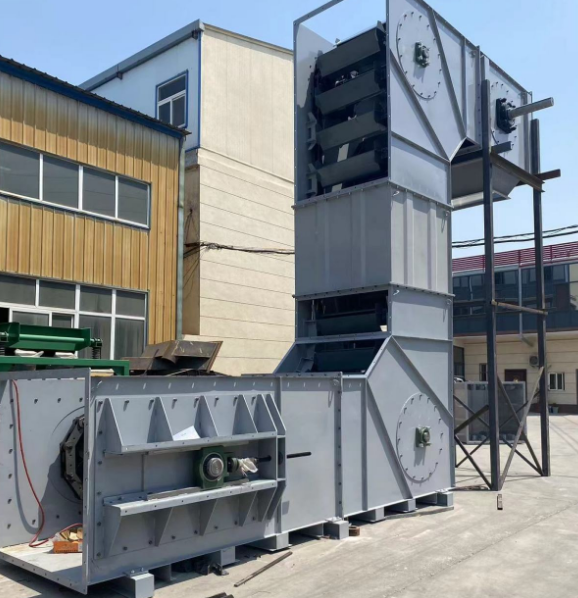
      • The process begins withCAD computer-aided designDepartment. Engineers use powerful 3D modelling software to create each component of the device. These digital models are then subjected tovirtual simulationto test its performance under pressure, heat and varying load conditions to ensure that the design is optimised before it goes into production.图片[1]-重型设备制造:建造巨头的幕后(重工装备制造的世界是一个精度、力量和严谨工艺并存的世界)-大连富泓机械有限公司

    2. Material Selection and Cutting: Creating a Strong Cornerstone

      • existHeavy equipment manufacturingThe integrity of the material is critical. Specific grades of high-strength steels and durable alloys are selected to withstand extreme operating conditions. Subsequently, bylaser cutting machine, andPlasma cutting systemsrespond in singingwater jetHigh-tech equipment, such as the cutting of these sheets of metal into the desired shapes precisely-9.

    3. Structural forming and welding: the art of assembly

      • The cut parts are bent and shaped, and then proceed to the welding stage. In modern factories, theRobotic welding cellplay an important role in ensuring the uniformity and strength of critical structural welds. Skilled welders take care of the most complex or customised parts, and their skills are integral to the overall structural integrity of the equipment.

    4. Final assembly and painting: giving life

      • On the assembly line, all components – from hydraulic lines and engines to cabs and electronic control systems – are put together one by one. Finally, the equipment undergoes multiple coating processes, including a rust-resistant primer and a durable topcoat, not only for aesthetic reasons but also to provide long-lasting protection against corrosion.

    5. Final testing and quality control: verification of commitment

      • Before leaving the factory, each unit must undergo a series of rigorous final tests. This includes start-up testing, performance calibration and safety system checks to ensure that it fully complies with design specifications and safety standards. Only equipment that passes all of these checks is approved for delivery to the customer-9.

    III. Conclusion: the relentless pursuit of excellence and durability

    Heavy Equipment ManufacturingThe world of is a world where precision, strength and rigorous craftsmanship go hand in hand. It represents a celebration of human ingenuity and engineering excellence. Understanding this process will help you gain a deeper appreciation for these modern engineering marvels and the meticulous effort that goes behind them.

    ★ Call to action ★
    Interested in our advanced manufacturing processes and high quality standards?Contact us to book a virtual factory tour, witness how we built these industrial giants, orSearch our equipment catalogueto find a solution that meets your needs.

  • How to select a reliable heavy equipment manufacturer (what are the core dimensions for evaluating potential manufacturers)

    How to choose a reliableHeavy equipmentManufacturers (what are the core dimensions for assessing potential manufacturers)

    I. Introduction: a far-reaching policy decision
    Choosing the right heavy equipment manufacturer for your project is key to ensuring that your project is completed on time, within budget and to the desired quality standards. A high-quality, reliable piece of equipment can provide years of trouble-free service, while a poor decision can lead to ongoing maintenance nightmares and costly downtime. This guide is designed to provide you with a clear framework to help you make informed choices-5.

    II. Core dimensions for assessing potential manufacturers
    When comparing different heavy equipment suppliers, it is recommended that you take an in-depth look at the following key aspects:

    Engineering capabilities and manufacturing experience

    Areas of Expertise: Check if the supplier specialises in the type of equipment you need. A manufacturer with a reputation in the field of excavation machinery may not be the best choice for mining crushing equipment.

    Investment in R&D: Ask the company how much it spends on R&D. Manufacturers committed to innovation are more likely to offer technology and high-performance equipment.

    Quality certification: Check out internationally recognised quality management system certifications (e.g. ISO 9001), which are essential proof of the standardisation and reliability of their production processes.

    Quality Assurance and Workmanship Standards

    Factory audits: If conditions permit, request a virtual or on-site factory audit. Witnessing first-hand the production process, the level of worker skills and the level of shop-floor management provides the most immediate sense of trust-5.

    Testing & QC: Learn about their entire quality inspection process from incoming raw materials to final assembly. Reliable manufacturers rigorously test every piece of equipment that leaves the factory.

    After-sales service and technical support

    Parts availability: Ensure that suppliers can deliver original spare parts quickly. Ask about their global parts distribution network and average delivery times.

    Technical Support Channels: Find out how they provide technical support (e.g., online customer service, on-site service engineers, etc.) 24/7 support is critical for mission-critical equipment.图片[2]-如何选择可靠的重型设备制造商(评估潜在制造商的核心维度有哪些)-大连富泓机械有限公司

    III. Checklist for making final decisions
    To simplify your decision-making process, here’s a quick checklist:

    Clarify your needs: what are your core technical specifications and budget range for this equipment?

    In-depth research: Have you visited the manufacturer’s official website and taken a closer look at its “About Us” and “Case Studies” pages? -The “About Us” and “Case Studies” pages?

    Request for proof: Have you asked for case studies of similar projects and clients?

    Communication Experience: Was your initial communication with the other sales or engineering team smooth, professional and timely?

    IV. Conclusion: laying the foundations for long-term success
    Selecting the rightHeavy Equipment ManufacturingPartnering is more than just completing a purchase, it is the beginning of a long-term business relationship. Investing the necessary time in due diligence will provide the strongest foundation for the long-term success and profitability of your project.

    ★ Call to action ★
    As a company with decades of experience in the heavy equipment manufacturing industry, we understand the importance of reliability and trust. Visit our Success Stories page to see how we’ve helped customers around the world solve their problems, or request a brochure with detailed technical specifications today.