

tiny meaning
The definition and industry status of micro parts processing
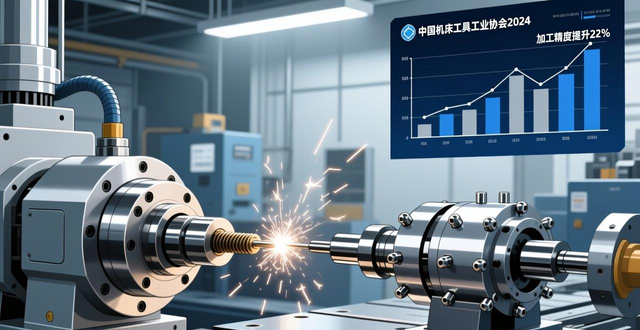
The processing of precision parts with dimensions in the millimeter or even micron level is called micro parts processing , and the processing tolerance is usually controlled within 0.01 mm. According to 2025 data from the China Machine Tool Industry Association, the domestic market size for micro parts processing has reached 120 billion yuan, with an annual growth rate of more than 15%. Such parts are widely used in medical devices, aerospace, smartphones and other fields. For example, the laser cutting accuracy of heart stents requires a precision of 5 microns, otherwise the implantation will fail. An engineer from a precision machinery factory in Dongguan, Guangdong told me that they had received orders for 500 micro valve bodies in the past three years. The diameter of each micro valve body was only 2 mm, but the unit price was as high as 800 yuan. For this type of processing, it requires the rotation speed of the equipment spindle to often exceed 100,000 rpm, and at the same time, the temperature of the coolant must be controlled at a constant 20 degrees Celsius.
However, the machining of tiny parts is not a new concept. There is a record in "Xunzi Feixiang" that "Ye Gongzi is tall, small and short", which shows that the ancients have long been aware of the existence of "tiny". However, the challenge facing modern industry is how to maintain consistency in mass production of tiny parts. In April 2026, a foundry in Suzhou scrapped 3 million yuan worth of products because the thermal deformation of machine tools caused the size of batched parts to shift. This exposes the core pain point of the industry: the processing of small parts has extremely high requirements for equipment stability, operator experience and environmental control. Any slight fluctuation will cause the yield rate to drop sharply.
Technical difficulties in processing tiny parts
The technical difficulties in processing tiny parts mainly focus on three aspects: tool wear, vibration control and material deformation. For processing titanium alloy screws with a diameter of 0.5 mm, the tool diameter is usually 0.3 mm, and the rotation speed needs to reach 150,000 rpm. However, after 40 minutes of continuous operation of the tool, the wear amount will exceed 0.005 mm, resulting in the thread depth not reaching the standard. Experiments conducted by a precision manufacturing company in Shenzhen in 2025 showed that after they used diamond-coated tools, the tool life was extended by three times, but the cost increased by 200%. Vibration control is also quite tricky. The tiny vibrations present in the machine tool itself will be transmitted to the surface of the part through the spindle, thereby producing 0.002 mm ripples. The operator needs to wait 30 minutes after turning on the machine to allow the equipment temperature to stabilize before starting processing.
Another big trouble is material deformation. During the processing of small parts , aluminum alloys and plastics are easily affected by cutting heat, which can lead to dimensional changes. For example, if the coolant temperature fluctuates by two degrees Celsius, when processing a medical micro-clamp with a thickness of 0.2 mm, the diameter of the clamp will change by 0.003 mm. This It has exceeded the design tolerance range. A laboratory in Shanghai uses a liquid nitrogen cooling system to control the temperature of the processing area at minus 50 degrees Celsius, successfully reducing the deformation rate from 8% to 1.5%. However, the energy consumption of this method is very high. Every 100 small parts processed consumes 50 kWh of electricity, which is an extremely heavy burden for small and medium-sized enterprises.

Equipment selection for micro parts processing
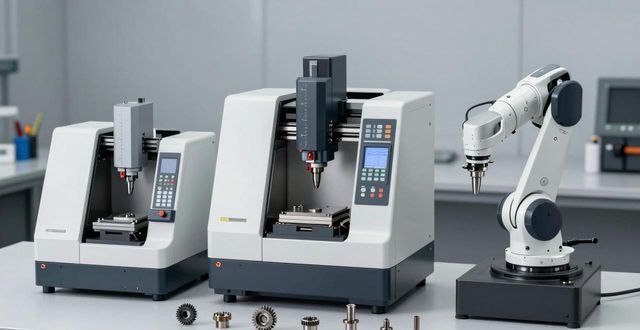
The key to successful micro parts processing lies in selecting suitable equipment. Mainstream equipment includes high-speed CNC milling machines, five-axis linkage machining centers and laser micromachining machines. High-speed CNC milling machines are suitable for parts with a diameter greater than 1 mm. The spindle speed is in the range of 20,000 to 50,000 rpm, and the price is in the range of 400,000 to 800,000 yuan. The five-axis linkage machining center can complete complex curved surface processing at one time, just like the micro frame in the mobile phone camera module. It needs to control the X, Y, Z axes and two rotation axes at the same time. A German equipment manufacturer launched a miniature five-axis machine in 2026, priced at 2.2 million yuan, but its accuracy can reach 0.002 mm.
Laser micromachining machines have significant advantages in processing non-metallic materials, such as cutting polyimide film circuit boards. The laser beam diameter can be focused to 20 microns and the heat-affected zone is less than 3 microns. There is an electronics factory in Zhejiang. In 2025, it purchased three ultraviolet laser machines for processing tiny parts . It invested a total of 6 million yuan to produce flexible circuit boards for smart watches. The yield rate increased from 82% to 96%. Equipment selection must consider the balance between production capacity and cost: the processing time of a single piece is long but the precision is high. For example, it takes 18 minutes to process a micro gear. However, multi-spindle machine tools can be used to speed up mass production. Before purchasing, it is recommended that companies spend three months testing the equipment and comparing maintenance costs, because during the processing of small parts , the cost of replacing the spindle bearings can reach 50,000 yuan at a time.
Industrial applications of micro parts processing
The strongest demand is in the field of medical devices for processing micro parts . The global medical micro parts market will reach US$34 billion in 2025, and China will account for 27% of it. Typical products include pacemaker electrodes, ophthalmic scalpels and micro screws for artificial joints. Take the example of pacemaker electrodes. The diameter is 0.4 mm and the length is 3 mm. A groove with a depth of 0.01 mm needs to be carved on its surface to fix the myocardial tissue. A medical device factory in Beijing received an order for 500,000 pieces in 2026. It uses a Japanese precision grinder for processing. The cost of each piece is 35 yuan, but the selling price can reach 120 yuan. During the operation, workers need to perform manual calibration with the assistance of microscopes. Each person can only complete 80 pieces every day, causing production capacity to become a bottleneck.
Fields that rely on the processing of tiny parts include aerospace. The processing of tiny hinges in satellite antennas is only 1 mm in diameter and has to withstand a temperature difference of minus 60 to 120 degrees Celsius. A precision factory in Chengdu will deliver 2,000 such hinges to an aerospace research institute in 2025. Titanium alloy materials are used during processing, and the cutting speed is controlled at 0.5 meters per second to ensure that the surface roughness is less than Ra0.4 microns. The smartphone industry has created a need for tiny springs, screws and connectors. There is a workshop at Foxconn in Shenzhen that produces 100,000 micro screws every day. Each screw weighs only 0.02 grams, but its tolerance requirement is plus or minus 0.005 mm. Although these parts are small in size, they are the cornerstone of product reliability. The "Book of Rites·Jingjing" says that "the bright light shines on the world without leaving out the smallest details." This is also the case in modern industry.
Quality control of micro parts processing
The quality of micro parts processing is controlled throughout the entire process. First of all, the selection of raw materials must be strict. Common metals such as stainless steel, aluminum alloys or titanium alloys must be tested for composition through a spectrum analyzer to ensure that impurities are less than 0.01%. There is a parts factory in Shandong. In 2025, because it used aluminum with an iron content exceeding the standard of 0.02%, 5,000 small valve bodies cracked after processing, directly causing a loss of 1.2 million yuan. During processing, the online measurement system will collect dimensional data every second. For example, a laser micrometer will monitor the outer diameter of the part in real time. Once the threshold exceeds 0.002 mm, it will alarm and shut down. The operator needs to use a microscope to inspect ten samples every two hours, record the dimensions, surface roughness, and burr height.
Fully automatic optical detectors are used in finished product inspection. One such device can scan 600 tiny parts per hour, and its inspection covers length, cylindricity and thread profile. However, small parts are easily contaminated by static electricity or dust, so the workshop must maintain a thousand-level cleanliness, which means that the number of particles larger than 0.5 microns per cubic meter of air does not exceed 3520. A testing agency in Beijing found that 12% of the tiny parts samples received in the first quarter of 2026 were judged to be unqualified due to impurities attached to the surface. It is recommended that companies build a traceability system, mark each batch of parts with QR codes, and record processing parameters and inspection data. In this way, after defects are discovered, they can quickly locate the root cause of the problem, such as whether it is caused by the deviation of the spindle of a certain machine tool.
Future trends in micro parts processing
The future trend of micro parts processing is intelligent, micro-nano and green. In terms of intelligence, adaptive machining systems are gradually gaining popularity. They rely on sensors to monitor cutting forces in real time and then automatically adjust the feed speed. A micro machining center launched by Japan's Fanuc in 2026 is equipped with an AI algorithm that can control the tool wear compensation amount within 0.001 mm, increasing the yield rate to 99.2%. The trend of micro-nanoization requires processing feature sizes to enter the nanometer level, just like the heat dissipation microchannels of mobile phone chips, which are only 50 nanometers wide. There is a company in Switzerland that has achieved nanoscale milling in the laboratory. However, it will take another five years to commercialize it. The reason is that the equipment costs more than 5 million yuan and is complicated to maintain.
The green aspect lies in reducing coolant and energy consumption. Currently, minimum quantity lubrication technology can reduce the amount of cutting fluid from 5 liters per minute to 0.1 liters, thereby reducing the cost of waste fluid treatment. Germany's environmental regulations promulgated in 2025 require micro parts processing companies to reduce their carbon emission intensity by 20%, otherwise they will be fined. Some factories in Jiangsu, China, have begun to use solar power and recycle cutting fluid, which can save costs of 800,000 yuan a year. However, greening also brings challenges. For example, when the tool temperature is too high during dry machining, new heat-resistant coatings need to be developed. In the future, the processing of tiny parts will increasingly rely on interdisciplinary cooperation, such as materials science, mechanical engineering and computer control technology. Faced with these changes, companies need to make arrangements in advance and invest in training and research and development, otherwise they may be eliminated by the market.
Within the scope of micro-mechanical components, precision plays a decisive role in success or failure. Has your company or industry ever suffered losses due to accuracy issues in the manufacturing of tiny parts? Welcome to share your past experiences in the comment area. Likes and forwarding can help more people in the same industry benefit from it!






暂无评论内容