

small
How small is a tiny part considered tiny?
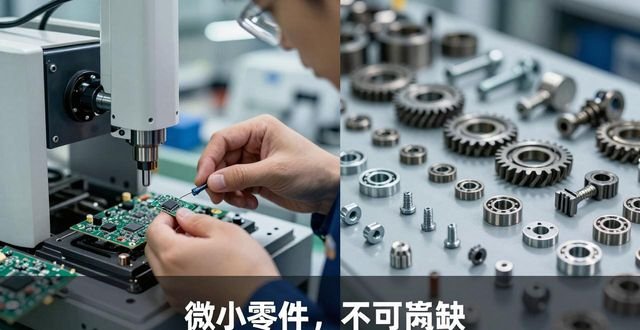
In the category of machining, micro parts generally refer to those parts with dimensions in the millimeter or even micron level. For example, the diameter of watch gears is less than 3 mm, and the length of medical implant screws is only 5 mm. When processing such parts, it is basically difficult to see the outline clearly with the naked eye, and a microscope must be used. For operation, in 2019, a precision processing factory in Shenzhen accepted an order to process bearings with a diameter of 0.8 mm. The tolerance needs to be controlled within plus or minus 0.005 mm. This value is equivalent to one-sixteenth of the thickness of a human hair. Such stringent precision requirements make ordinary lathes unable to do the job.
Definition of tiny parts is not static. In the context of the aerospace industry, tiny parts can refer to brackets that are no more than 10 millimeters in length and width. In the electronics industry, the diameter of tungsten wire in mobile phone vibration motors is only 0.03 mm. As the miniaturization trend of this type of products becomes faster, the size threshold of small parts is repeatedly lowered. In 2023, in the Yangtze River Delta area, some companies have begun to mass-produce 0.5 mm thick titanium alloy gaskets, and their customers are all medical device companies.
What are the core difficulties in processing tiny parts ?
When processing tiny parts, the contact force between the tool and the workpiece becomes extremely difficult to control. In 2022, a factory in Suzhou tried to process a 0.2 mm drill bit. However, the drill bit broke just after it hit the aluminum part. The reason was that the cutting force became too large in an instant. For processing small parts, it is necessary to use a high-speed spindle, whose rotation speed is usually more than 100,000 rpm. The speed of ordinary CNC machine tools is only 20,000 rpm. When cutting small parts, the tool has already chipped before the material is cut off.
Another difficulty lies in chip removal. The chips produced by processing small parts are thinner than a hair and can easily get wrapped around the tool. In 2021, when a factory in Dongguan was processing 0.3 mm threads, chips accumulated in the grooves, causing the workpieces to be scrapped. 60 of a batch of 300 parts were scrapped. The solution to this problem is to add high-pressure coolant to blow the chips away from the tool tip. However, this will cause thermal stress deformation problems, requiring repeated debugging of parameters.

Which industries are inseparable from the processing of tiny parts
The parts that are in rapid growth demand are those tiny parts in the medical device industry. In 2023, the number of domestic minimally invasive surgeries exceeded 8 million. The supporting micro instruments such as scissors, pliers, and suture needles all need to be precision processed. There is a company in Shanghai that specializes in making small parts with a specific diameter of 1.5 millimeters. This company ships more than 200,000 meters of vascular clamps annually. The price of each vascular clamp fluctuates around 80 yuan. These tiny parts need to be made of medical stainless steel, and their surface roughness must be less than 0.2 microns, otherwise it will cause undesirable conditions such as blood clots.
The consumer electronics field is the largest purchaser of a very small number of parts. The spring leaf at the focus motor in the mobile phone camera assembly is only 0.05 mm thick. Tiny parts are processed . In 2024, a supplier of Zhengzhou Foxconn The company manufactures 6 million pieces of such shrapnel every month, and the cost of each piece is less than 0.3 yuan. In addition, the charging contacts inside the Bluetooth headset are 4 mm in length and 1.2 mm in diameter. They must be made of beryllium copper material to ensure conductivity and elasticity.
What equipment is needed for processing tiny parts ?
Precision CNC machine tools are core equipment used to process tiny parts. Such products produced in Japan and Switzerland occupy the high-end market. For example, the positioning accuracy of Swiss Mikron machine tools can reach 0.001 mm, and the price of one machine is more than 2 million yuan. In 2023, a company in Dalian imported 5 Swiss machine tools specifically for processing aircraft engine fuel nozzles. The processing time required for a single nozzle is 40 minutes.
Domestic equipment is also catching up. It is a micro-hole processing machine tool launched by Zhejiang Haitian Precision. Its spindle speed can reach 120,000 rpm, and the price is only half of the imported machine. However, there is a gap in the stability of domestic machine tools. When processing continuous batches Compared with imported machines, the scrap rate is about 3% higher than that of imported machines. In addition, micro-parts processing requires a microscope observation system. A company located in Shenzhen has developed an auto-focus online inspection device that can measure part contours in real time.
How to calculate the cost of processing tiny parts
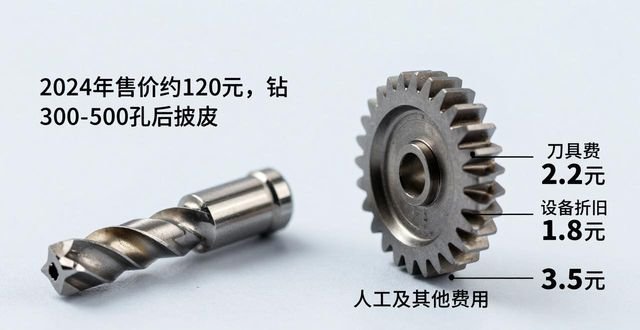
Regarding the cost of processing small parts , it is mainly reflected in the processing of small parts on equipment and tools. By 2024, there will be a carbide drill bit with a diameter of 0.5 mm. Its price is about 120 yuan, but the number of holes that can be drilled is only 300 to 300. 500 pieces will be scrapped later. Tool consumption accounts for more than 30% of the processing cost. A company in Tianjin has calculated that the comprehensive cost of processing a micro gear is 7.5 yuan, of which the tool fee accounts for 2.2 yuan, equipment depreciation accounts for 1.8 yuan, and labor and other expenses account for 3.5 yuan.
There is a huge difference in the unit price of tiny parts. The price of simple-structured micro screws is only 0.05 yuan per piece when sold in batches. However, the single processing cost of complex-shaped medical implants may be as high as 300 yuan. In Beijing in 2023 A company undertook an order to process an intracranial stent. The wall thickness of the stent is 0.08 mm. The total price of the 30-piece order is 90,000 yuan. After conversion, each piece is 3,000 yuan. Such parts require biocompatibility testing, which will also add additional costs.
What is the future trend of micro parts processing ?
The inevitable direction is the automation of tiny parts processing . In 2024, a factory in Chongqing introduced an automatic loading and unloading system. The robot can clamp 0.3 mm workpieces, and the material change time is shortened from 15 seconds manually to 3 seconds. This system cost 800,000, but it increased production efficiency by 40%, and the cost was recovered in 18 months. In the future, more companies will use robots to replace manual operations to reduce human errors.
Materials such as titanium alloys, magnesium alloys, and ceramics are used more and more frequently, and new material processing is also a new trend. In 2025, a certain research institute will try to process a ceramic spinneret with a diameter of 0.6 mm. Its hardness is at the level of HRA92 and can only be processed by laser-assisted cutting. In addition, there are degradable magnesium alloy bone nails, which have specific requirements that there will be no micro cracks on the surface after processing. These new demands will prompt the upgrading of processing technology, which also indicates that the market for micro parts processing will continue to expand.
Which products with tiny parts processing have you come into contact with? What was the biggest difficulty encountered during the processing at that time? You are welcome to share your experience in the comment area. If you find the article useful, please like it and forward it to friends in need.







暂无评论内容