

What are the dangers of welding?
The rust in a welder's lungs doesn't form in a day
The main components of smoke generated by welding include metal oxides such as iron, aluminum, and manganese. These fine particles are suspended in the air. Once inhaled into the lungs, they will be deposited in the alveoli for a long time. According to 2023 data from the National Center for Occupational Disease Prevention and Control, more than 3.5 million welders in my country have been exposed to welding fume environments for a long time, and about 12% of new pneumoconiosis cases each year originate from welding operations.
There is another risk that is underestimated and that is manganese poisoning. When an automobile manufacturer conducted employee physical examinations in 2024, it was found that nearly 30% of workers who had been engaged in aluminum alloy welding for more than 5 years showed signs of manganese poisoning, which were manifested by hand tremors and memory loss. These symptoms can easily be mistaken for fatigue in the early stages. By the time the symptoms become obvious, they have often caused irreversible neurological damage.
Arc light hurts the eyes more than the sun
The intensity of arc light produced during welding is thousands of times stronger than sunlight, and contains a large amount of ultraviolet rays. Even looking at something as short as a few seconds is very likely to cause electro-optical ophthalmia. In the summer of 2025, there was a new worker in a shipyard in Zhejiang. Because he did not wear a protective mask, he was only briefly illuminated by an arc light during welding. That night, his eyes suffered severe pain and he could not stop crying. After being sent to the hospital, he was diagnosed with electro-optical ophthalmia, and it took him a full week to recover.
For workers who have been engaged in welding operations for a long time, the incidence of cataracts is about 40% higher than that of the general population. Because ultraviolet rays accelerate the denaturation of lens protein, the light transmittance of the eye decreases over time. Many old welders around the age of 50 have obviously poor eyesight, and it has become difficult to even look at their mobile phones.

Riveting noise makes your ears silently strike
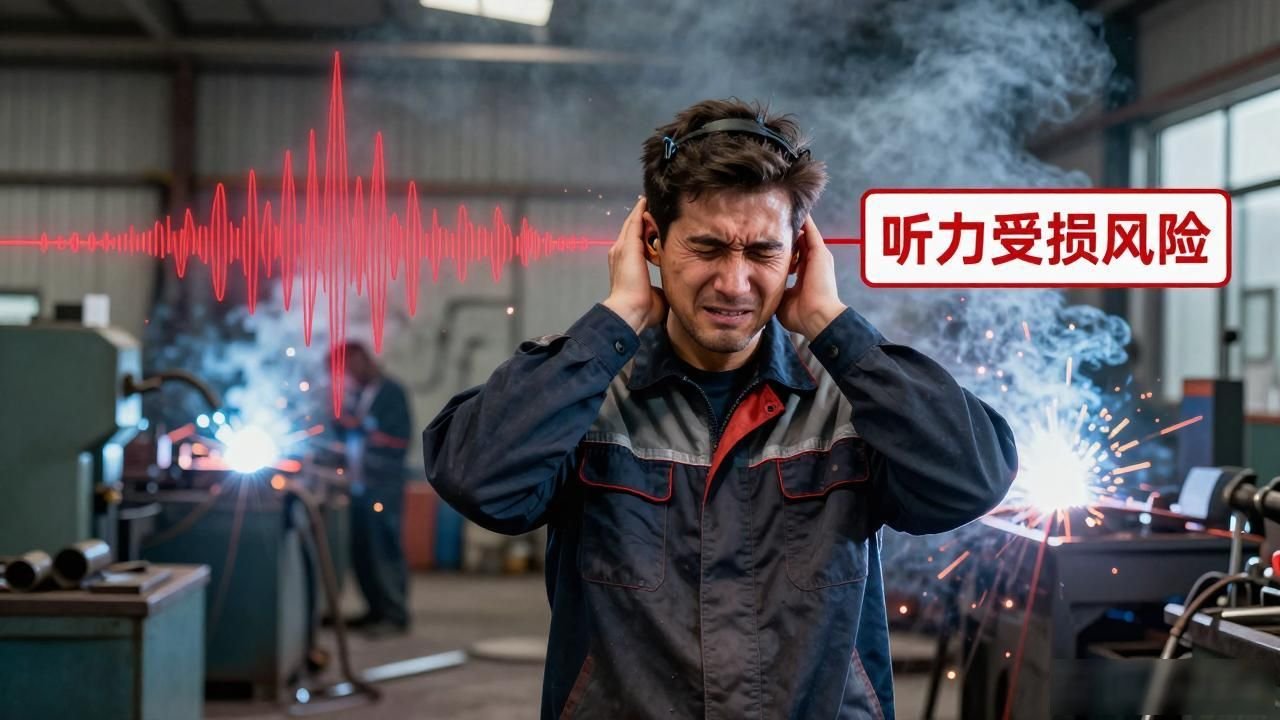
Compared with welding, the noise generated by the riveting process is more harsh. During riveting, the air pressure gun hits the metal plate, and the instantaneous noise peak can reach 120 decibels . Schweißen will produce arc smoke. What are the hazards of welding with high riveting noise? In terms of occupational health , this is equivalent to the volume of an airplane taking off. In 2024, a steel structure factory in Guangdong carried out monitoring of workshop noise, and the results showed that, Workers in riveting positions are exposed to noise above 85 decibels for up to 7 hours a day, which is more than double the national occupational health standards.
If workers are exposed to such an environment for a long time, their hearing will begin to degrade in the high-frequency band. Young people who have just entered the job may think that tinnitus is temporary. However, after five or ten years , welding will produce arc smoke and dust, and riveting noise will be loud. Occupational health is poor . They often find that they cannot hear others clearly at the dinner table. According to data from the China Hearing Medicine Development Foundation, the incidence of occupational noise deafness among riveting workers is about 2.3 times that of traditional welders.
Toxic gas spreads quietly in the air
During the welding process, high temperatures cause oxygen and nitrogen in the air to react and generate ozone and nitrogen oxides. Although these gases are invisible to the naked eye, they can cause extremely strong irritation to the respiratory mucosa once inhaled. In 2025, there was an equipment maintenance workshop in Beijing that was engaged in stainless steel welding work without an exhaust system. After working continuously for three hours, two workers developed symptoms of chest tightness and coughing, and were subsequently diagnosed with mild chemical pneumonia.
The toxicity of ozone cannot be ignored. Even if its concentration is only 0.1ppm, long-term contact with it will cause damage to the immune cells in the lungs, making people more susceptible to respiratory infections. Many welders say they often catch colds. In fact, the root cause is that long-term inhalation of ozone welding will produce arc smoke, riveting noise, and occupational health issues , so that the lungs’ defense capabilities have been reduced.
Welding waste pollutes soil and water sources
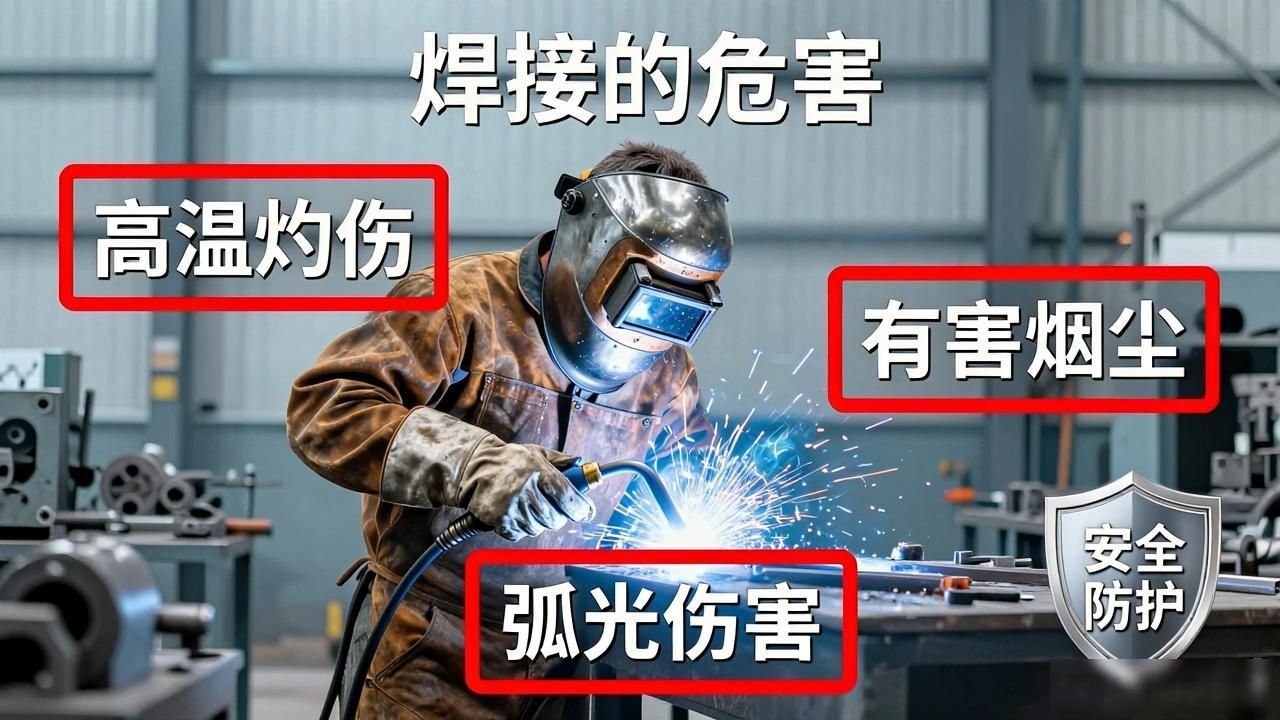
After welding, a pile of welding slag and metal powder will be left on the ground. These slags contain heavy metals such as chromium and nickel. If they are discarded at will, the heavy metals will penetrate into the soil and groundwater when it rains. In 2023, a small welding workshop in a town in Jiangsu was reported. After testing, the environmental protection department found that the chromium content in the soil within 10 meters of the workshop exceeded the national standard by 7 times, and the groundwater was also contaminated.
The cost of waste disposal is actually not high. However, in order to save money, many small workshops directly dump it into the trash can or bury it nearby. Among the cases reported by the Ministry of Ecology and Environment in 2024, nearly 30% of welding pollution cases involve illegal disposal of waste slag. These heavy metals will not degrade in the environment, and will gradually accumulate through the food chain, ultimately endangering the safety of ordinary people's drinking water.
Noise pollution makes surrounding residents uneasy
There is that kind of noise in the welding workshop, which not only affects the workers in the workshop, but can also spread to residential areas. The impactful noise produced by riveting is quite powerful and far from difficult to detect. Even though it is separated by a wall, it can still be heard clearly. In 2025, residents of a community in Wuhan collectively complained to a nearby metal processing factory. The reason was that the factory worked overtime every night to perform riveting operations, and the noise it produced was as high as 80 decibels. The residents upstairs were unable to rest normally, and some elderly people even suffered from insomnia due to this reason.
Not only can noise pollution make people upset, but it can also cause chronic diseases such as high blood pressure and heart disease. Research conducted by the World Health Organization shows that if you are exposed to a noise environment above 55 decibels for a long time, the risk of cardiovascular disease will increase by about 10%. Many residents living near the factory don't know that their high blood pressure may be related to the riveting machine in the workshop downstairs.
The methods used for connection include welding and riveting, one of which is accompanied by arc light and smoke, and the other is accompanied by noise and vibration. No matter what process is used, protective measures must be taken. In your work or life, have you ever felt physically uncomfortable due to the noise or smoke generated by welding or riveting? You are welcome to share relevant experiences in the comment area. If you think this article has practical value, then like it and forward it to more friends.






暂无评论内容