
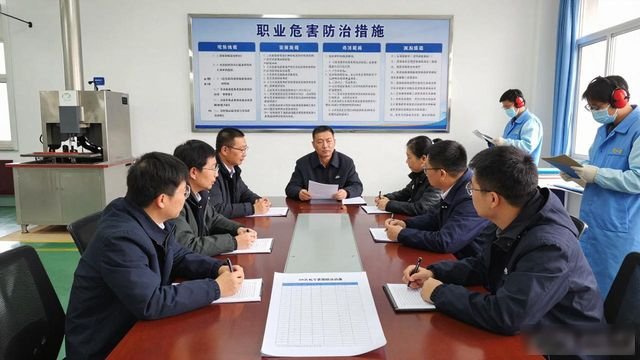
Occupational hazard prevention measures
It is urgent to prevent and control occupational hazards
In the machining industry, there are occupational hazards such as dust, noise, and chemical poisons, which have long posed a threat to workers' health. In 2012, the situation of occupational disease prevention and control in my country was in a serious state. According to the requirements of the "Occupational Disease Prevention and Control Law", enterprises must start from the aspect of organizational management and systematically promote protection work. Ignoring these hazards can not only expose employees to illness, but also lead to legal risks and reduced productivity.
Establish a dedicated leadership group
Among machining enterprises, an occupational hazard prevention and control leading group should be established with the person in charge of the enterprise as the core. For example, there is a machinery manufacturing factory. At the beginning of 2012, a special team of seven people was formed. The team leader of this special team is the factory director, and the deputy team leader is the safety director. At the same time, the division of responsibilities of each department is also clarified. The occupational hazard prevention and control leading group holds a special meeting every month to analyze testing data such as dust concentration and noise decibels in the workshop, and then formulate corrective measures and track their implementation.
Develop an annual prevention and control plan

Enterprises must formulate annual occupational hazard prevention and control work plans before January based on actual production conditions. For a company with precision machining requirements, due to excessive dust in the grinding workshop, it plans to invest 200,000 yuan to update dust removal equipment, and change the distribution standard of noise-proof earplugs and dust masks from monthly to weekly. The plan also clearly determines the inspection frequency, training time and assessment indicators for each workshop.
Implement the configuration of protective facilities
The grinding process, welding process, and spraying process in the machining industry must be equipped with effective protective equipment. In 2012, a factory responsible for the production of auto parts installed a local exhaust hood at the welding station. This reduced the concentration of smoke generated by welding from 12 mg per cubic meter to 3 mg per cubic meter, and the compliance rate increased to 95%. Moreover, an additional soundproof cover was installed in the stamping workshop, which reduced the noise from 95 decibels to 82 decibels, greatly reducing the risk of hearing damage.
Strengthen the management of personal protective equipment
It is not enough to rely solely on engineering protection. Personal protective equipment must be used in a standardized manner. There is a machining company that has established a registration system for the use of protective equipment, requiring workers to check the sealing of dust masks before each work, and to replace the filter cotton regularly. In 2012, the company organized three training sessions to demonstrate the correct method of wearing gas masks, and prohibited unqualified personnel from working.
Carry out occupational health monitoring
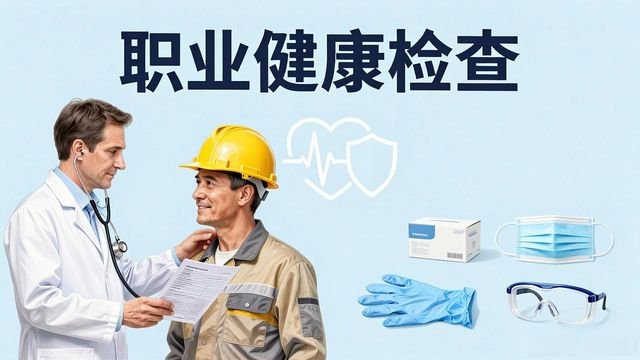
When it comes to occupational health examinations, it is the key to detecting early-stage occupational diseases. There is such a company that entrusts the local Center for Disease Control and Prevention to organize all workers who are exposed to occupational disease hazards to undergo physical examinations before starting work, during work, and after leaving work every year. In 2012, a total of 320 people were inspected, and two suspected cases of pneumoconiosis were found. Subsequently, these two people were promptly removed from their dust jobs and arranged for treatment. In doing so, it effectively prevents the condition from getting worse, and as a result, successfully reduces the compensation risks that the company may encounter.
Strengthen safety education and training
The prevention and control effect of occupational hazards is directly affected by workers' awareness of them. In 2012, a certain company held a monthly lecture on occupational disease prevention and invited experts from the Municipal Work Safety Bureau to explain the mechanism of damage to the body caused by dust and noise, and played videos of real cases. After the training, an assessment was conducted, and the pass rate increased from 70% to 92%, and the proportion of workers taking the initiative to wear protective equipment increased significantly.
After you have read this article, what do you think is the most overlooked link in occupational disease protection in machining companies? Welcome to the comment area to leave a message and start a discussion. Through likes and sharing, more peers can see practical experience.
Schreibe einen Kommentar
Du musst angemeldet sein, um einen Kommentar abzugeben.