

small
From Ye Gong to Chips: The Millennium Dilemma of Tiny Sizes
As early as the Spring and Autumn Period, Xunzi recorded Ye Gongzigao's short stature and emaciated appearance, and used the word "tiny" to accurately describe this small situation. People at that time had already noticed that when an object reaches a certain size, its behavior is completely different from that of ordinary people. Thousands of years later, what we are facing is not the problem of human body size, but that the size of parts has exceeded the limit that can be seen with the naked eye. In a precision processing factory in Longhua, Shenzhen, workers have to wear magnifying glasses to see clearly the parts being processed, and the diameter of these parts is even less than one-tenth of a hair.
The tiny parts processing clean workshop was born precisely to solve this ancient dilemma. When the size of parts shrinks to the micron level, a particle of dust in the air may become a fatal flaw. In 2025, there was a company in Suzhou Industrial Park. Because the cleanliness of the workshop did not meet the standard, a batch of chips worth 3 million yuan were all scrapped. This lesson made the entire industry realize that it is not just the parts themselves that are tiny, but also the sources of pollution that are invisible to the naked eye.
Workshop cleanliness: the life and death line from level 100,000 to level 10
In the process of processing tiny parts, the level of the clean workshop directly plays a decisive role in the product yield. The 100,000-level clean workshop that is more common in ordinary electronics factories is far from sufficient for processing parts with a diameter of less than 0.1 mm. Once dust particles fall on the surface of the part, it will affect the fitting accuracy at the least, and cause functional failure at the worst. A medical device company in Hangzhou once conducted a test and found that when the cleanliness level was increased from 10,000 to 1,000 levels, the qualification rate of its micro surgical blades jumped directly from 72% to 95%.
Currently, the most stringent and meticulous micro parts processing workshop has reached Level 10 standards, which indicates that the number of particles with a diameter greater than 0.5 microns in every cubic meter of air does not exceed 10. In a semiconductor equipment factory in Zhangjiang, Shanghai, workers need to go through three air showers before entering the workshop, put on two layers of dust-free clothing, and even have to use special filters to breathe. In such an extremely harsh environment, the result is an amazing level of parts processing accuracy of plus or minus 0.5 microns.

Temperature and Humidity: Invisible Parts Killers
Usually, the sensitivity of tiny parts to temperature changes is far beyond what ordinary people can imagine. In a standard workshop at 25 degrees Celsius, there is a 10 cm long aluminum alloy part. Every time the temperature of this part increases by 1 degree, it will expand, and the expansion amplitude is about 0.23 microns. For precision parts such as those with precise fitting gaps within 1 micron, such thermal expansion and contraction are small enough to cause assembly failure. There is a precision instrument manufacturer in Zhongguancun, Beijing. Experimental data shows that in the clean workshop for processing small parts , when the temperature fluctuation range in the workshop exceeds plus or minus 0.5 degrees, the scrap rate of the products produced by the company rises to three times.
Humidity, known as the invisible killer, has a great impact. Excessive humidity can cause metal parts to rust, while low humidity can easily generate static electricity and attract dust. There is a mobile phone camera module factory in Chang'an Town, Dongguan. Technicians here found that when the relative humidity dropped from 45% to 30%, particle pollution caused by electrostatic adsorption increased to a value of 2.7 times. As a result, they finally strictly controlled the humidity in the workshop within the range of 40% to 45%, and used ion blowers to remove static electricity, so that this quite difficult problem was solved.
Air flow: every breath of wind is carefully calculated
The air flow in workshops related to micro parts processing is not as simple as ventilation in the simple sense, but is actually the result of precise design after fluid mechanics simulation calculations. There is an optical lens processing factory in Bao'an, Shenzhen. The engineers spent three months adjusting the air flow organization inside the workshop, and finally achieved a laminar air supply state from front to back. Such a design prevents dust particles from remaining suspended in the air, but is directly carried away from the work area by the airflow.
Wind speed control is very particular. If the speed is too fast, it will raise dust on the ground. If the speed is too slow, it will not be able to effectively take away the pollution source. A precision mold company in Chengdu has locked the wind speed on the work surface at about 0.3 meters per second after repeated tests. This value can ensure cleanliness without affecting workers' operations. They also installed real-time wind speed monitors at key workstations, which will automatically sound an alarm whenever there is a deviation from the set value.
Materials and equipment: tailor-made for clean workshops
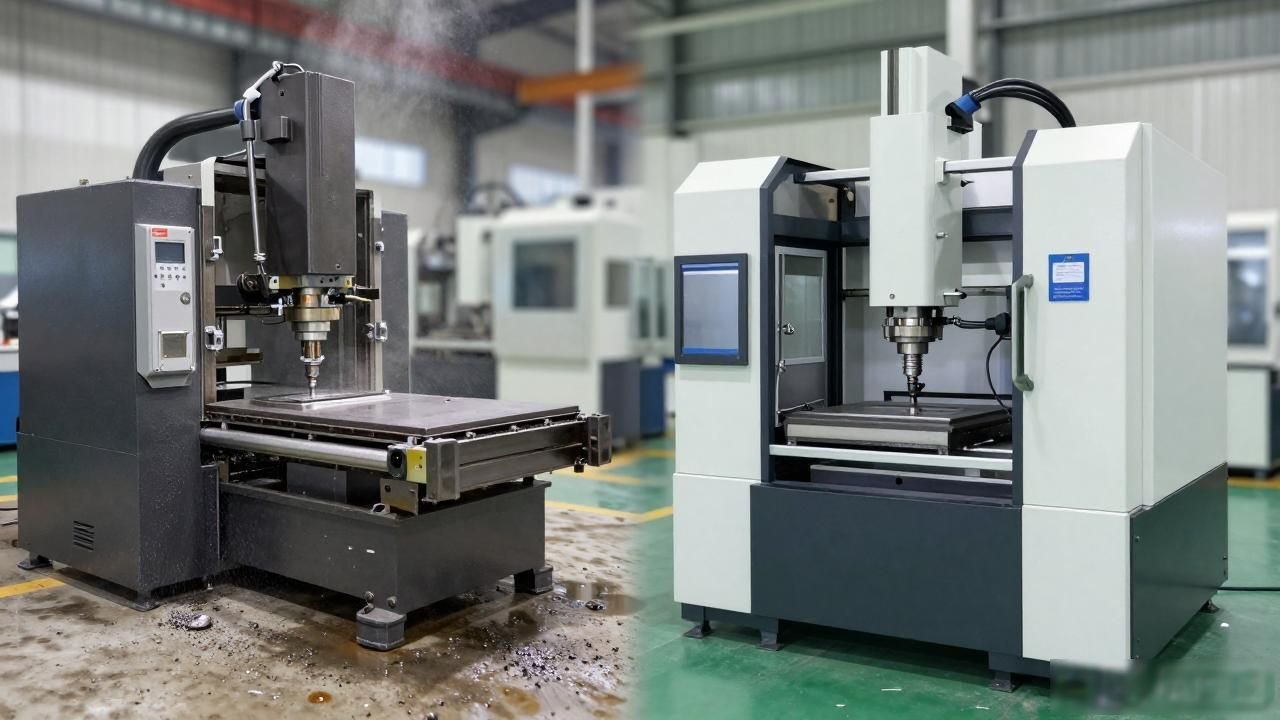
In the purification workshop, ordinary machine tools have become a source of pollution. The cast iron bed constantly produces fine dust, and the oil leaked from the hydraulic system pollutes the environment. Therefore, the small parts processing workshop must use special equipment. An automation equipment company in Suzhou specializes in the development of a fully enclosed machining center. All moving parts use ceramic bearings, and the lubrication system is replaced by a micro-spray type to keep oil consumption at a minimum.
The decorative materials in the workshop are also mentioned. There is an electronics factory in Tianjin. When the electronics factory renovated its clean workshop, it abandoned the traditional terrazzo floor and replaced it with seamless epoxy resin self-leveling. The walls are made of stainless steel plates that are not prone to static electricity, and the ceilings are equipped with high-efficiency filters. Even the lighting fixtures must be sealed to prevent glass shards from contaminating the workshop when the lamps are broken. The investment in these details has reduced the maintenance cost of the workshop by 40%.
People management: the least controllable variable
At a chip packaging factory in Optics Valley, Wuhan, workers must complete a 12-step personal cleaning procedure before entering the workshop, including washing hands, drying hands, wearing dust-free clothes, wearing gloves, etc. Each step has strict time requirements. Because no matter how sophisticated the equipment is, it requires people to operate it. However, people are the biggest source of pollution in the clean workshop. A person will shed thousands of skin cells every minute, and the breath he exhales also contains a lot of water and carbon dioxide.
A top priority is also training. A precision machinery company in Foshan has stipulated that if new employees want to enter the production area, they must undergo two weeks of clean workshop code of conduct training. The training covers how to walk correctly, how to pick up tools, and how to avoid unnecessary movements. If employees fail the assessment, they will be assigned to work in ordinary workshops. This extremely strict system has reduced the company's product defect rate from 8% to less than 1.5%.
Does the industry you are in also encounter the challenge of cleanliness when processing tiny parts? Welcome to share your experience or confusion in the comment area, and like it so that more people can see these technical details that are not known to everyone!
Schreibe einen Kommentar
Du musst angemeldet sein, um einen Kommentar abzugeben.