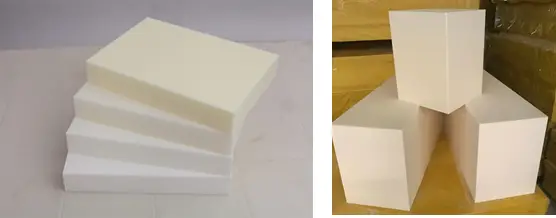


What are the advantages of using five-axis machine tools to process PMI foam products?
If you find that PMI cannot cut, the accuracy is not high enough, and the surface is poorly made, the reason is basically that the machine tool structure is not selected correctly.
PMI bubbles are no ordinary bubbles
Polymethacrylimide, this is the full name of PMI foam. The density of this material is very low, but its performance in terms of tensile, compression, and flexural strength far exceeds that of so-called conventional foam materials such as EVA and polystyrene. In practical applications in the aerospace field, people will use it as the core material of honeycomb sandwich. In this application scenario, the requirements for dimensional accuracy are very high.
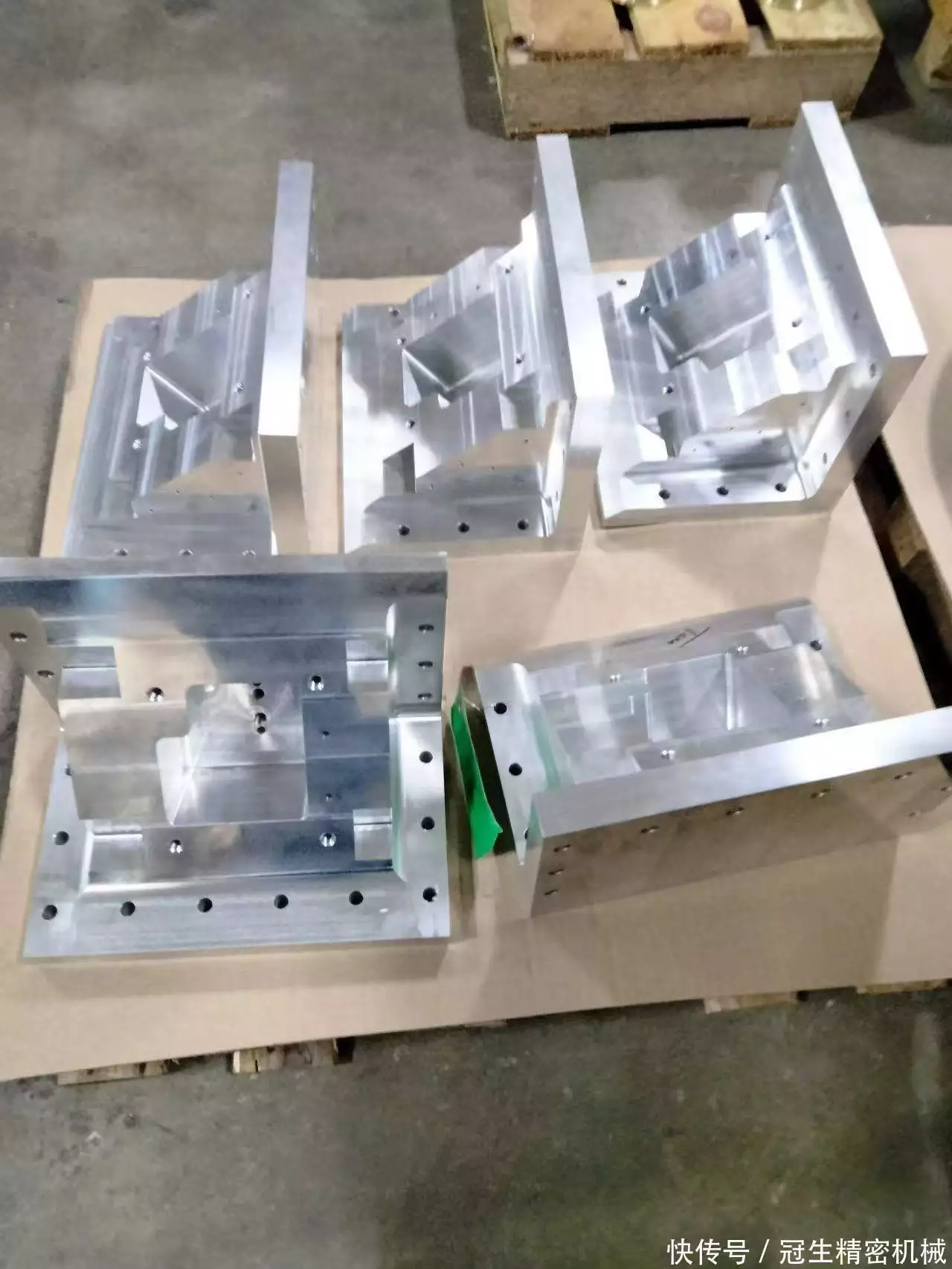
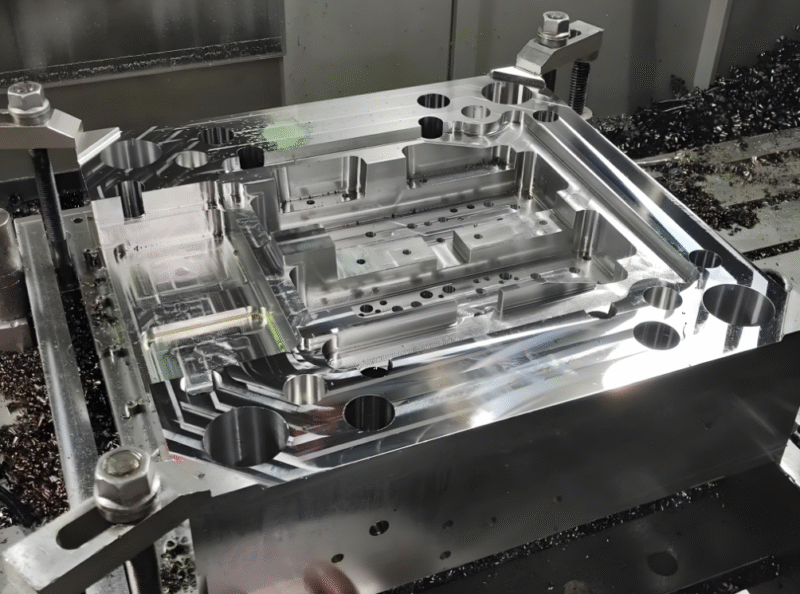
If a piece of PMI sheet wants to be turned into a satellite radome, a drone skin or a missile body structure, it must be cut and processed by a CNC five-axis machining center, or it must be milled by five-axis, and finally processed into a specific special-shaped curved surface product.
What does the mobile fixed-beam and fixed-column workbench mean?

The main axis of this type of five-axis machine tool is fixed on the crossbeam, and then the crossbeam is fixed on the column. The entire movement process mainly relies on the workbench to perform translation in the three directions of X, Y, and Z. As for the beams and columns, they are completely immobile, and the rigidity is ensured by the structure itself.
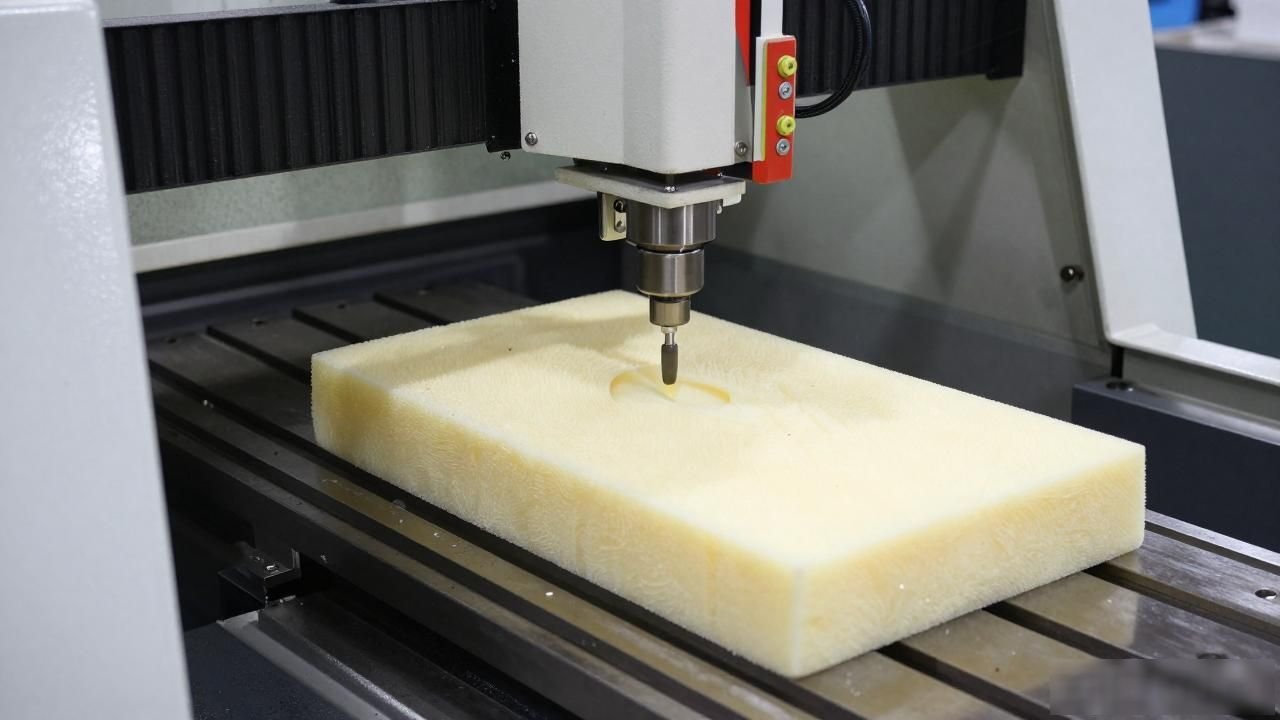
The workbench adopts a mobile design. The advantage of this design is that the load is mainly distributed on the bed, so the thermal deformation is relatively small, and dimensional drift rarely occurs during long-term processing. Most of the models produced by Xinghui CNC and other manufacturers adopt this structural arrangement, and its stability has been verified by the use of a large number of production lines.
Five-axis head swing angle solves curved surface problems
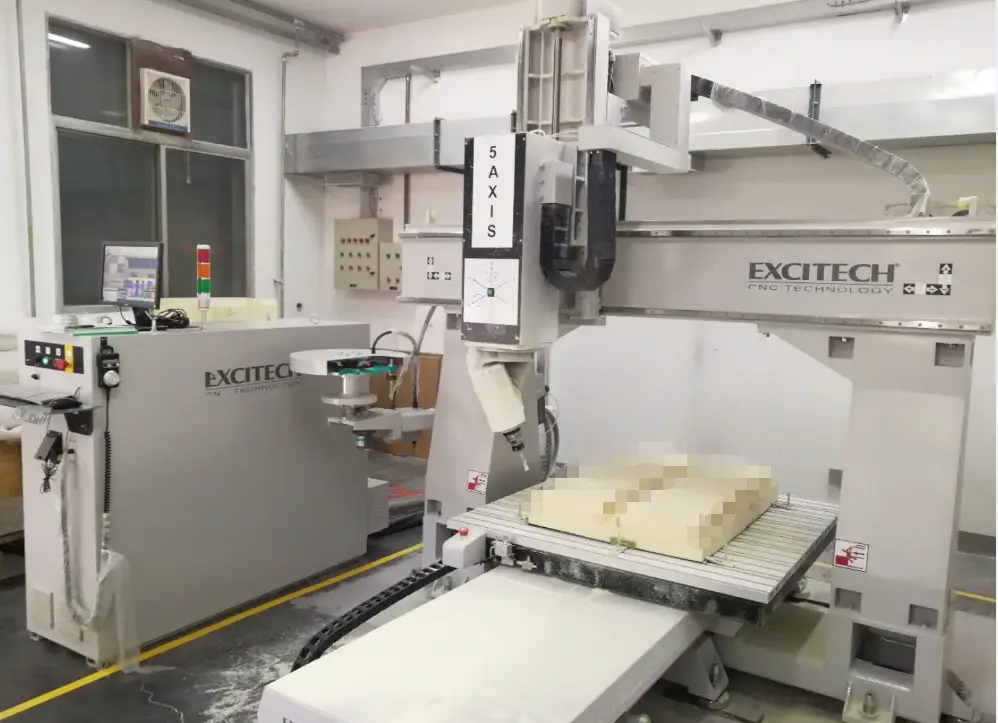
A large number of PMI products involve hyperboloids, spherical transitions and inclined walls. The three-axis machine tool tool can only cut vertically. When encountering an inclined surface, it must be milled with multiple tools multiple times, resulting in obvious joints. The A and B axes of the five-axis head can be swung to any angle.
The tool tip always feeds in the direction of the normal line of the curved surface, and the entire special-shaped surface is completed in one process without leaving any cutting marks. For low-density materials like PMI, repeated tool passes are avoided. This also reduces the appearance of edge chips and burrs.
One clamping and one forming, maximum efficiency
When processing three-axis PMI parts with complex structures, it is usually necessary to turn the workpiece over, then reposition the workpiece, and then clamp and fix it. In this way, every time the tool is set, there will be a cumulative error.
In contrast, the five-axis machine tool only needs to clamp and fix the plate in one operation, and then rely on the linkage between the spindle and the five-axis head to complete the processing of each surface at one time, thus achieving the goal of completely eliminating clamping errors.
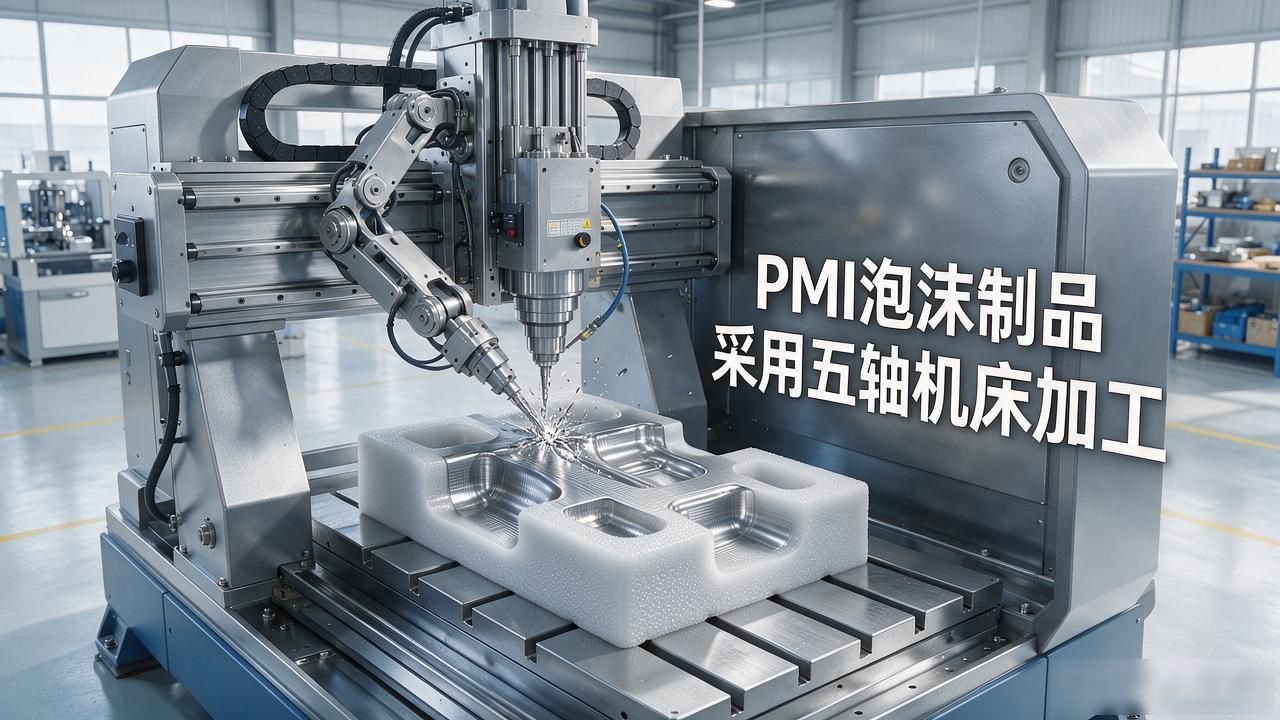
For those factories that are engaged in the mass production of drone flight control brackets or satellite structural parts, the time saved by eliminating the process of model change will be directly reflected in the final production capacity, so it is true that the working hours of a single product can be shortened by more than 30%.
High precision is not achieved by machining
PMI plastic foam itself will have a shrinkage deformation problem of about five to eight percent. During milling, the heat generated by cutting will also cause local expansion. In order to absorb such deformed pixels, the two technical indicators of the linear positioning accuracy on the machine tool equipment and the repeated positioning accuracy of the five-axis linkage must be strictly controlled within the range of two microns.
The reason why the fixed beam and fixed column structure can operate is that the number of moving parts in it is relatively small, and the entire transmission chain is also limited to a short range. This natural attribute makes it more stable than equipment that uses a gantry structure or a moving beam structure. When we use a grating ruler to achieve full closed-loop compensation, during the processing of thin-walled parts such as PMI, The change value of its contour can be stably controlled within the range of plus or minus thirty microns.
Don’t just look at the five-axis parameters when choosing a machine tool
After receiving the five-axis machine tool, many customers immediately have a perception that this equipment has the ability to process PMI. However, whether it can process smoothly requires comprehensive consideration of several key factors. It is necessary to see whether the range of the spindle speed is appropriate, whether the rapid traverse speed meets the demand, whether there is any problem with the stroke size of the five-axis linkage, and whether the machine tool is equipped with a tool magazine specifically for foam materials, because the density of PMI is relatively low. Therefore, the cutting force generated during the cutting process is very small, but the requirements for chip removal and the prevention of tool sticking are very strict.
It is recommended that you find a sample piece to try cutting first, and then observe the smoothness of the cut surface and the consistency of the size. After all, the rigidity of the structure and the degree of matching with the control system can determine the qualification rate of the final product more than the parameters written on paper.
Do you think that when producing PMI products in your factory, which accuracy issue or efficiency issue is the most troublesome to you? Please talk about it in the comment area. If you think this statement is useful, then like it and forward it to your colleagues for a look.




暂无评论内容