
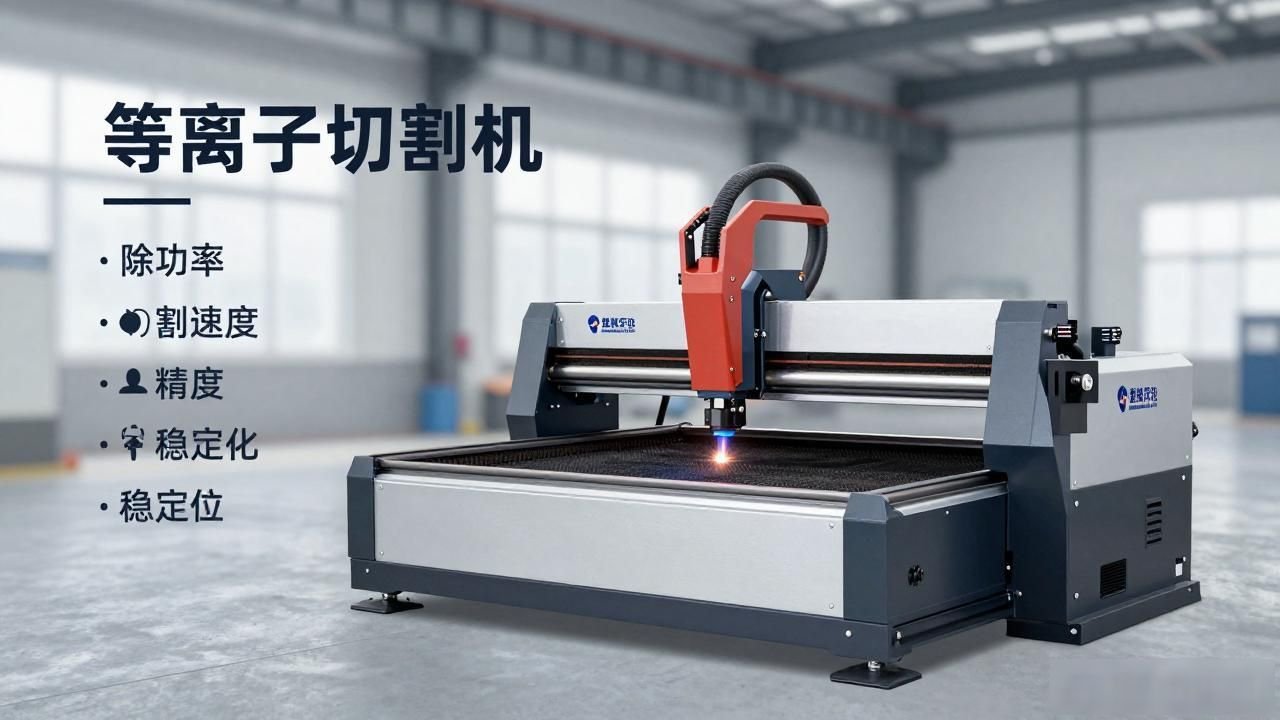
Plasma cutting machine
Thick plates are riveted after completing the cutting process. Underwater plasma cutting of medium-thick plates reduces riveting deformation . As a result, deformation and warping often occur. This results in subsequent rework that not only consumes a lot of labor costs, but also wastes materials. This phenomenon is currently the most difficult core problem for riveting manufacturers. The use of underwater plasma cutting technology can reduce the heat affected zone to a minimum. This approach has become a key measure to effectively solve the disconnect between the cutting link and the welding link.
The root cause of riveting deformation after thick plate cutting
During the dry plasma cutting process, the temperature of the arc light will reach tens of thousands of degrees. At the same time, the heat will diffuse along the steel plate in the surrounding direction, thus forming a large area of heat-affected zone on both sides of the cutting seam. As a result, the residual stress inside the plate is in a non-uniform state. When these workpieces enter the riveting and welding station and are heated, the internal residual stress will be released, causing warping and distortion of the workpiece.
This problem is especially obvious for medium and thick plates from 3 to 15mm. Because the thicker the board, the deeper the heat diffusion. If you wait a few hours after cutting before welding. Then the amount of deformation will continue to increase. Many factories can only rely on manual correction. This is very time-consuming and labor-intensive. It's not even close to the final delivery date.
Working logic of underwater plasma cutting
The cutting process is carried out under the body of water. Since water has a relatively high specific heat capacity, it can lock the high-temperature heat generated by the arc in the area near the cutting seam in an instant, so that the heat that should have been diffused will no longer spread and flow deep inside the plate and the surrounding area. In this way, the size of the area affected by the heat will be reduced from about ten millimeters when using dry air . Underwater plasma cutting of medium-thick plates reduces riveting deformation . It has been greatly reduced to about two millimeters, and at the same time, the residual stress inside the material will also be greatly reduced.
The current coverage range is from 60 amps to 100 amps. Plasma cutting can process steel plates with thicknesses from 0.5 mm to 15 mm. Iron plates, aluminum plates, galvanized plates, white stainless steel plates and titanium plates are all objects that can be cut. After cutting, the components can directly enter the riveting and welding process without waiting for the natural heat dissipation and cooling process of the plates. This operation method makes the production rhythm very fast.

Don’t just look at power when selecting core parameters
The power of this machine is 8.5KW. Its input voltage and frequency conditions are three-phase 380V, 50HZ. There are two levels of plasma current available, 60A or 100A. The cutting speed setting must be selected according to the thickness and material of the plate. If the speed is too fast, it will cause continuous cutting. If the speed is too slow, it will increase the heat input.
The power supply is American Fiat, with three levels of 40A, 120A, and 200A available. It is equipped with a high-sensitivity arc voltage height adjuster to automatically find the optimal cutting distance. The smoothness of the cut surface is very high. There is no need to polish and trim the edges before riveting, which saves one step.
Will the bed structure be accurate after three years?
The bed body is formed by overall welding of thick-walled square tubes, and has undergone complete artificial aging treatment. This treatment method can fully release the internal stress. Therefore, there will be no deformation after several years of use. Good rigidity is the basis for accuracy not to drift.
The tabletop is made of steel plates with a thickness of 10mm and is erected after fine machining. A cast iron rack cover is placed on top of the tabletop for protection. This double-layer structure prevents the steel plate from being ablated when encountering high-intensity arc light. The flatness of the entire plane is controlled within 0 to 1.5mm, and the accuracy will not shift or change even after long-term use.
Transmission and control systems cannot be omitted
The transmission part uses a Panasonic servo motor with a Taidao servo reducer, and is connected to a high-precision rack and pinion. Therefore, it has the characteristics of low noise, accurate positioning, and smooth coordinate movement, allowing the trolley to stop wherever it goes, without drifting during repeated positioning.
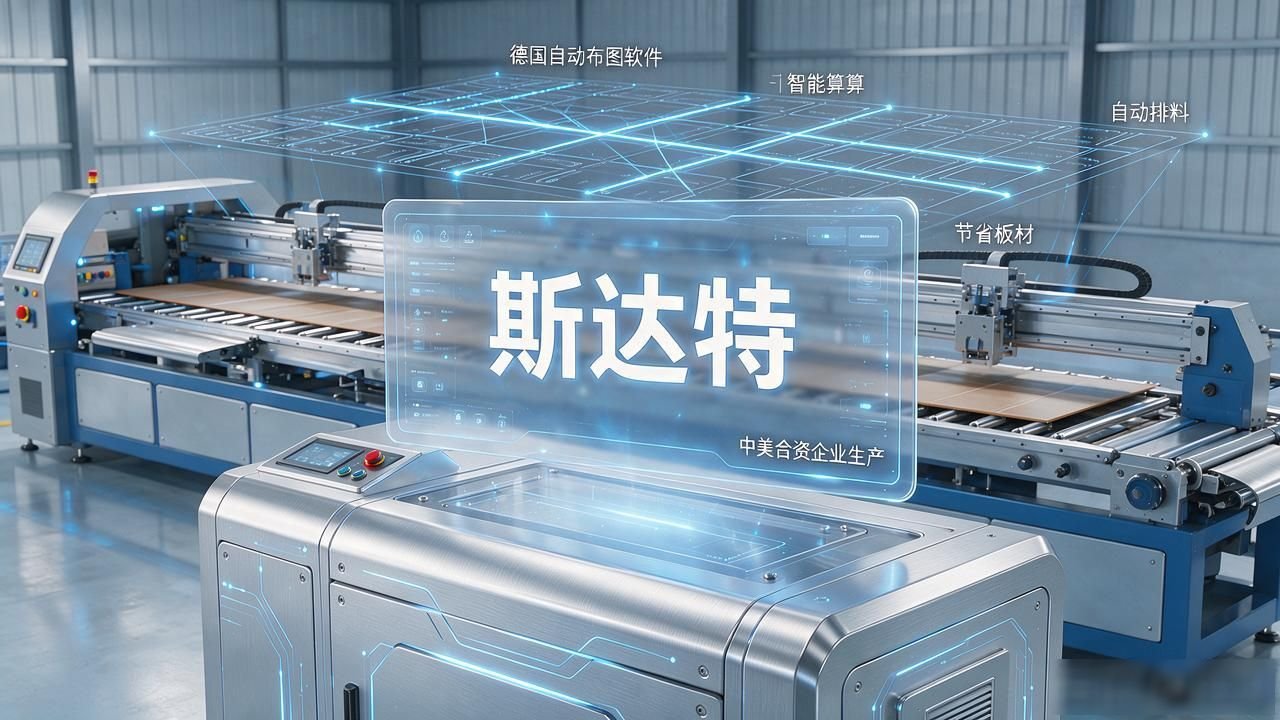
The control system is manufactured under the START brand by a Sino-US joint venture. It is equipped with automatic layout software from Germany, which can realize automatic layout, thus saving boards.
Operators can transfer files through the USB interface. Because the operation is very simple, workers can quickly get started and adapt. When cutting starts, non-contact arc ignition is used to process the starting point, which avoids burning, so the cutting accuracy of the first knife is very high.
How to connect cutting and riveting smoothly
The design of the slope leakage is to slide the cut workpieces and scraps to both sides, so that there is no need to manually pick up the materials. The table cleaning speed becomes very fast, and the processing of the next piece can be kept up with the plasma cutting machine faster. The space on both sides of the trolley is left for the loading and unloading of materials, and the production rhythm can be maintained continuously.
After cutting, the heat-affected area of the part becomes smaller, so when it reaches the riveting station, the required preheating time is correspondingly shortened, which in turn reduces the deformation during the welding process, makes the alignment more accurate, and speeds up the overall rhythm of the riveting operation. A team can process several more products every day, so there is no need to assign so many personnel to perform correction work.
After cutting, how long does your factory usually need to set aside for cooling when sending thicker steel plates to the riveting and welding station? Then how much manpower and labor costs are spent on correction work?
Everyone is now more than welcome to discuss in the comment area how to reduce riveting deformation by underwater plasma cutting of medium-thick plates . If you think this method is helpful to you, you might as well click like it and forward it to your friends in the same industry.
发表回复
要发表评论,您必须先登录。