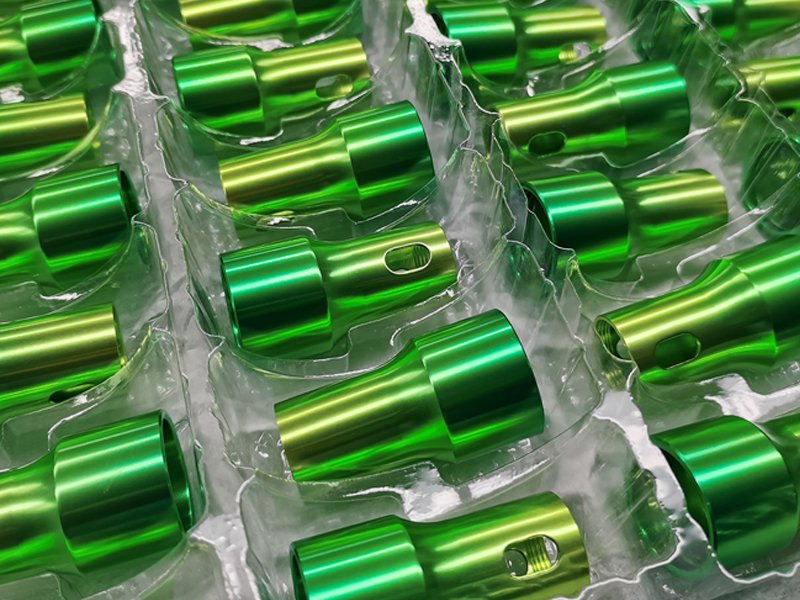


Common problems and solutions in CNC shell processing (cnc shell)
What to do if the CNC shell surface is not smooth
When many customers accepted the CNC shell, they found that the surface was rough, with knife marks or burrs, which had a direct impact on the appearance and feel of the product. As a result, a batch of high-quality casings is often labeled as substandard, resulting in a double waste of materials and time.
The main reasons for the uneven surface include excessive tool wear, improper setting of cutting parameters, and insufficient fixture fixation. The cutting edge of the tool becomes dull after long-term use. When cutting, the action of "scraping" is no longer performed but the action of "scraping" is performed, which will inevitably lead to a decline in surface quality.
To solve this problem, we must first build a tool replacement system ( FAQ for CNC machining services) , and set an appropriate and reasonable tool usage time based on the materials involved and the expected processing volume. Once it is discovered that the cutting sound is abnormal or the surface quality begins to decline, the tool needs to be changed in a timely manner. You must not wait until the tool is completely scrapped.
Secondly, the cutting parameters must be optimized. For different materials, choose a suitable rotation speed, a feed rate that matches the rotation speed, and a depth of cut that matches it. For aluminum alloy materials, the rotation speed can be reasonably increased, but for stainless steel, the rotation speed needs to be lowered to increase the stability of the feeding process. In addition, the use of cutting fluid cannot be ignored, because it can effectively reduce the temperature and take away chips.
What is also crucial is the rigidity of the fixture. During the processing process, if there is slight vibration in the shell, vibration marks will be left on the surface. Using a suitable fixture and ensuring sufficient locking force can effectively reduce surface quality problems caused by vibration.
Regularly checking the status of the tools and building a detailed and complete tool management ledger are crucial basic tasks to ensure the surface quality of the CNC housing. Only through strict control from the beginning can we produce high-end shell products that truly meet standards.
What to do if the dimensional accuracy of the CNC shell does not meet the requirements
In CNC machining, failure to meet the requirements of dimensional accuracy is one of the most troublesome aspects. When such a situation occurs, the hole diameter of the shell becomes larger, the mating surface exceeds the regulations, and the thickness is uneven. As a result, products with various problems have difficulties in assembly. When it reaches an extremely serious level, even the use process cannot be performed normally. This kind of problem is particularly obvious in the field of precision electronic equipment shell processing.
The precision error of the machine itself is one of the fundamental causes of dimensional deviations. CNC machine tool guide rails that have been used for a long time will wear out, and the spindle runout will gradually increase, which will be directly reflected in the size of the workpiece.
For cutting tools, their installation accuracy is also very critical. When clamping the tool, if there is eccentricity or inappropriate protrusion length, the tool will give way during the cutting operation, which will cause the actual cutting size to be smaller than the programmed size. Especially when processing deep holes or narrow slots, this problem will become more and more obvious.
Calibrating machine tools regularly is a necessary measure to ensure dimensional accuracy. A comprehensive inspection is carried out every six months to one year, which covers key indicators such as laser interferometer detection positioning accuracy and repeatable positioning accuracy. Once deviations are discovered, the compensation parameters are adjusted in time, so that dimensional errors can be effectively controlled.
![图片[1]-Common Problems And Solutions In CNC Shell Processing (cnc Shell)-Dalian Fuhong Machinery Co., Ltd](/wp-content/uploads/2026/08/1787083556720_0.jpg)
Reducing dimensional fluctuations also depends on selecting high-quality tools. Inferior tools are in a non-uniform material state and have considerable deviations in geometric angles. They are prone to vibration and changes in tool position during cutting, which will directly affect the machining accuracy. It is recommended that well-known brand tools be used first.
Carry out trial cutting verification operations before processing to measure the key dimensions of the first product, and only proceed to mass production after confirming that there are no errors. In this way, the risk of dimensional deviations can be reduced to a minimum, thereby ensuring that the product has a high one-time pass rate.
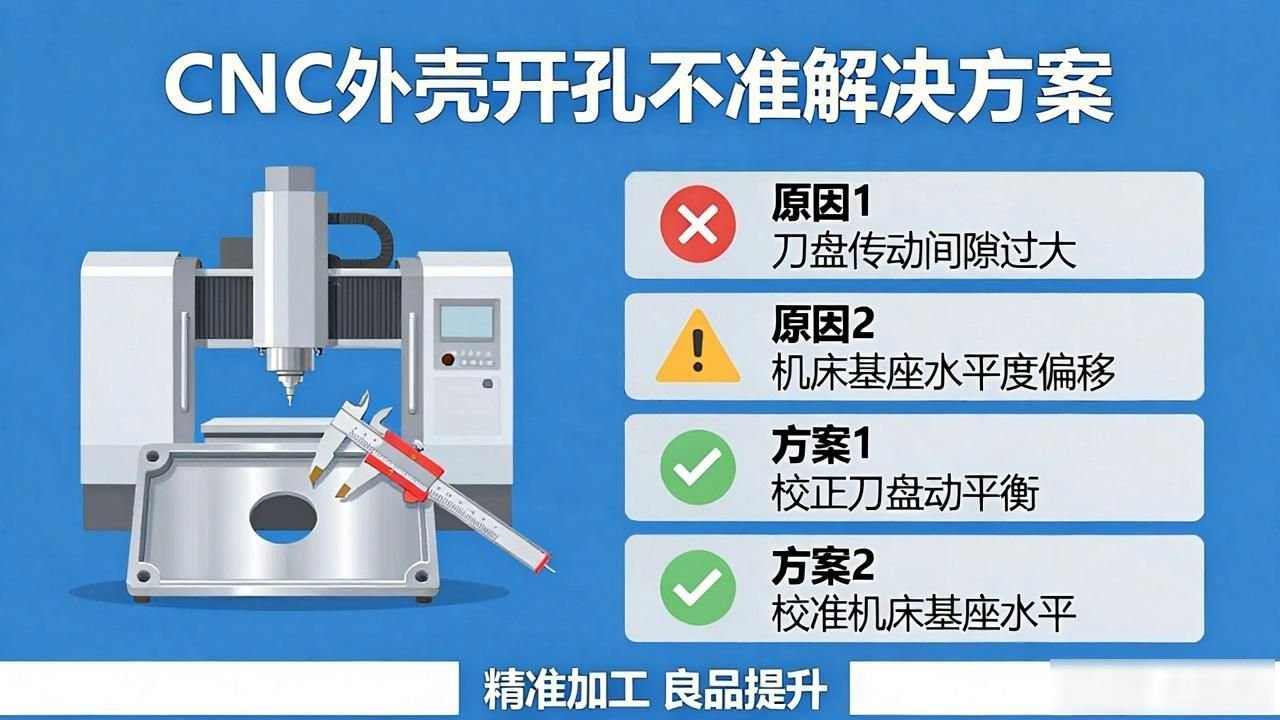
How to solve the problem of inaccurate opening position of CNC shell
Inaccurate holes are another common problem in CNC housing processing. Holes are offset during positioning, resulting in hole spacing errors, and there are also a series of problems such as through-hole deviation. Such a situation will cause the entire housing to be unable to be installed on other components, thereby causing serious quality accidents.
The causes of inaccurate hole opening are diverse, including incorrect program settings, incorrect input of tool compensation, and drift of the machine tool origin. Any deviation in any step will cause the hole position to deviate from the position determined during design.
When writing a program, you need to pay special attention. The coordinate data of the hole position must be checked repeatedly to ensure that it is completely consistent with the drawing. When using CAM software for programming, you must carefully check whether the tool path and hole position generation are correct.
The settings of tool compensation are often easily overlooked. Tool length compensation and radius compensation must be entered accurately; otherwise, the actual machining position will deviate from the theoretical position, especially the compensation update after tool wear, which must be adjusted immediately.
The origin of the machine tool has and maintains stability, which will directly affect the hole opening accuracy. Regular return-to-origin operations should be performed on the machine tool to check whether the origin switch of each axis is reliable. If precision machining is performed, it is recommended to perform origin calibration before starting processing.
The solution of processing all hole systems in one clamping can avoid positioning errors caused by multiple clampings. During the design of the machining process, the hole machining process should be concentrated as much as possible to reduce the number of tool changes and re-clamping.
For high-precision hole position requirements, you can consider using auxiliary tools such as edge finders and tool setters to improve the accuracy of positioning, thereby improving the accuracy of tool setting, and ultimately effectively controlling hole position errors.
![图片[3]-Common Problems And Solutions In CNC Shell Processing (cnc Shell)-Dalian Fuhong Machinery Co., Ltd](/wp-content/uploads/2026/08/1787083556720_2.jpg)
What are the considerations for selecting materials for CNC shell processing?
There are significant differences in the processing performance of shells made of different materials. Although aluminum alloy materials have good processability, their strength has certain limitations. Although stainless steel materials have higher strength, they are more difficult to cut. Engineering plastics must consider the issue of thermal deformation. Choosing the right material is one of the first steps for successful processing operations.
Aluminum alloys such as 6061 and 7075 series are the most commonly used shell materials. They have excellent cutting performance and high surface finish, and are suitable for mass production. However, when making a selection, the need for subsequent surface treatment needs to be considered. Different grades of materials have different anodizing effects.
Although the stainless steel shell has excellent corrosion resistance and high strength, it is quite difficult to process. When processing stainless steel, the tool wears quickly, and the cutting force is huge. Therefore, more rigid equipment and more stable fixtures are required. Therefore, it is recommended to select an appropriate tool coating to extend its life.
When processing engineering plastic materials such as PEEK and PC, you need to pay attention to the cooling status, because these materials have poor thermal conductivity, and the temperature rises very high during the cutting process, which can easily cause deformation. The use of air cooling or minimal quantity lubrication will have a better effect than using a large amount of cutting fluid.
When the material is in the heat treatment state, its processing performance will be affected. The material in the annealed state is soft and relatively easy to cut, but it may stick to the tool. The material after quenching and tempering treatment has a higher hardness and is more difficult to cut, but its size has good stability. It is necessary to select a state suitable for the current situation based on the requirements that the part is to meet.
How to maintain tools for CNC shell processing
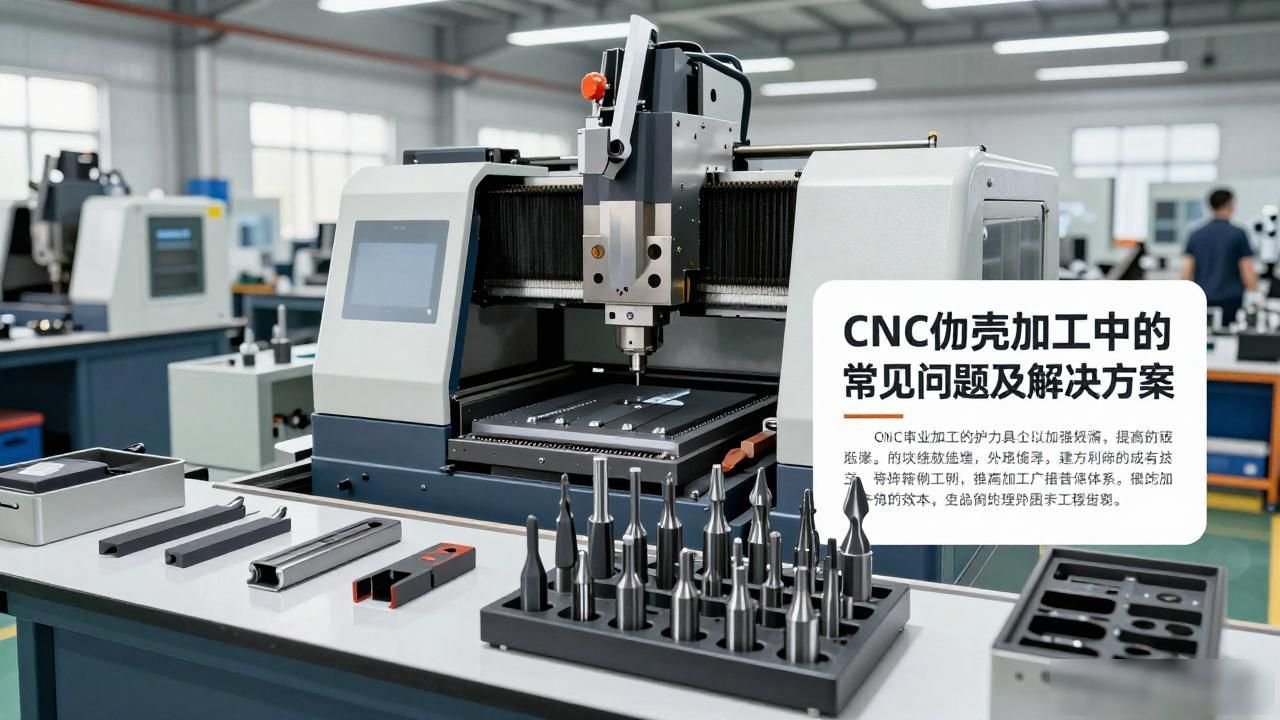
Tools used in CNC machining are core consumable items. Common problems and solutions in CNC shell processing (cnc shell). Proper maintenance can significantly reduce costs and improve processing quality. Many manufacturers just focus on use without maintenance, causing the tools to be scrapped prematurely, and the processing costs have become higher.
Check the status of the tool before use every time. This is a basic operation. Check to see if the blade is chipped, worn, or has stuck chips. For slightly worn tools, they can be restored to a usable state with the help of grinding, while for severely damaged tools, they must be replaced immediately and do not forcefully use them.
![图片[5]-Common Problems And Solutions In CNC Shell Processing (cnc Shell)-Dalian Fuhong Machinery Co., Ltd](/wp-content/uploads/2026/08/1787083556720_4.jpg)
It is extremely important to identify the position based on the sound during the cutting process. Under normal conditions, the sound produced by cutting is smooth and uniform. If unusual noise occurs, it is most likely a signal that the tool is worn or chipped. At this time, the processing should be stopped immediately, the status of the tool should be checked and adjustments should be made immediately.
The storage of knives is very particular. They cannot be stacked randomly. Special tool boxes or hangers must be used to store them properly. To prevent the knives from colliding with each other and causing gaps, the blades must be kept sharp.
Construct and build a tool usage file, and record the duration of each tool's processing, the materials processed, and the reasons for tool replacement. With the help of data analysis, we can find the pattern of tool life, and then optimize the tool replacement cycle. In this way, we can not only avoid waste, but also prevent losses caused by unexpected shutdowns.
For expensive tools like carbide tools, they must be cleaned and rust-proofed after use. The remaining chips and cutting fluid must be removed, applied with anti-rust oil and properly stored, so as to extend the service life of the tool.
How to choose the right supplier for CNC shell processing
Choose a reliable CNC processing service provider, which is directly related to the quality and delivery time of the shell. In the market, there are a large number of processing manufacturers, and their levels are uneven. To choose the right partner, you must have basic judgment capabilities.
It is very important to check the manufacturer's equipment configuration. You should check whether it has a high-precision CNC machining center and whether it has multi-axis linkage equipment. You should also pay attention to whether there are testing instruments and the like. Moreover, the advanced level of the equipment will have a direct impact on the processing capacity and accuracy guarantee.
The strength of the technical team cannot be ignored. Professional process engineers can plan reasonable processing techniques based on product needs and make suggestions for optimization, thereby avoiding the situation of not taking a straight path and deliberately taking detours. Find out if the manufacturer has a team dedicated to providing technical support.
The key consideration that reflects a person's ability is whether he or she has case experience. Check whether the manufacturer responsible for material processing has done similar material processing cases in the past, so as to know their accumulated experience in similar products. Those manufacturers with more experience are often more likely to detect and find solutions to problems that arise during the processing process.
Whether the quality system is sound or not is also critical. If there are manufacturers with complete quality inspection processes and documented records, the quality of their products will be more guaranteed. You need to know their testing methods, such as whether they are equipped with professional equipment such as three-dimensional measuring instruments and roughness meters.
Communication service capabilities are also critical. Manufacturers with quick responses and professional attitudes can better match demand changes during the collaboration process, determine delivery dates and production capacity in advance, and avoid long-term order backlogs that interfere with delivery.
What thorny problems have you encountered during CNC shell processing? Welcome to share your experience in the comment area, and let's discuss it together! If you find it useful, please like and save it, and share it with more friends in need!








暂无评论内容