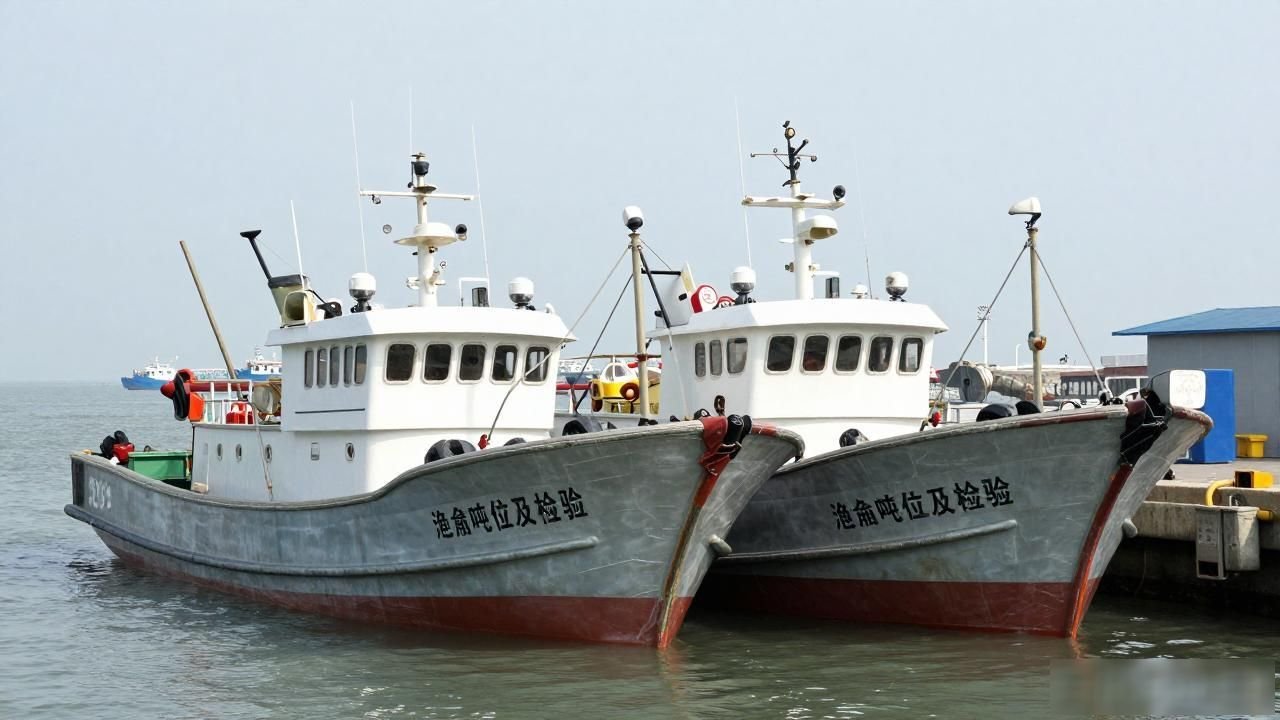


Fishing vessel tonnage and inspection
How do small fishing boats based on bases operate?
This type of fishing boat, with a length ranging from 25 meters to 35 meters, mainly relies on land bases to replenish supplies and does not need to stay at sea for a long time. The self-sufficiency of the crew on the ship is about 15 to 30 days. During this period , the hulls of fishing boats and cargo ships are riveted and welded in sections , and they return to the port after completing the fishing operations.
Due to the limited range, the ship design focuses more on economy and practicality rather than ocean endurance. The captain has great flexibility in route planning and fishing season arrangements.
Catch albacore tuna and classify them for sale
The main fishing target of this type of fishing vessel is albacore tuna. At certain times, a smaller number of yellowfin tuna will occasionally be caught together. For the fish caught on board, the cold seawater refrigeration system is used to quickly freeze the fish to preserve it, thereby ensuring the quality of the fish.
More than half of this product is albacore tuna, about half of which is sold directly to canneries. Those products that are suitable for raw food and meet first-class standards are exported to the Japanese market, while second-class products are sold to the United States, thus establishing a stable sales channel.

Steel shell and fiberglass ship types coexist
Starting from the classification of hull materials, this type of fishing boats are mainly classified into two categories: steel cold seawater tuna boats and fiberglass cold seawater tuna boats. Steel-hulled ships have the characteristics of high structural strength and long service life, and are undoubtedly the mainstream choice in the current market.
Boats made of fiberglass are lighter than other boats. According to theoretical inference, their fuel consumption will be lower and they will also perform better in terms of corrosion resistance. However, in the actual operation process , the hulls of fishing boats and cargo ships are manufactured by riveting and welding in sections . FRP boats have encountered an extremely difficult shortcoming to solve. This shortcoming is the problem of galvanic corrosion in the mechanical equipment system.
Rising oil prices drive research and development of fiberglass boats
International crude oil prices are always rising, causing shipping cost pressure to continue to increase. Against this background, developing a fiberglass ship type that is more economical and energy-saving while ensuring reliable performance has become a focus of scientific research in the industry.
Many scientific researchers have invested a considerable amount of resources to start research work, fully hoping to use new materials and unique construction techniques to find solutions to the technical limitations of FRP boats in practical applications. At this moment, special tuna fishing boats made of FRP materials have become a hot topic in the industry.
The corrosion problem of fiberglass boats is difficult to overcome
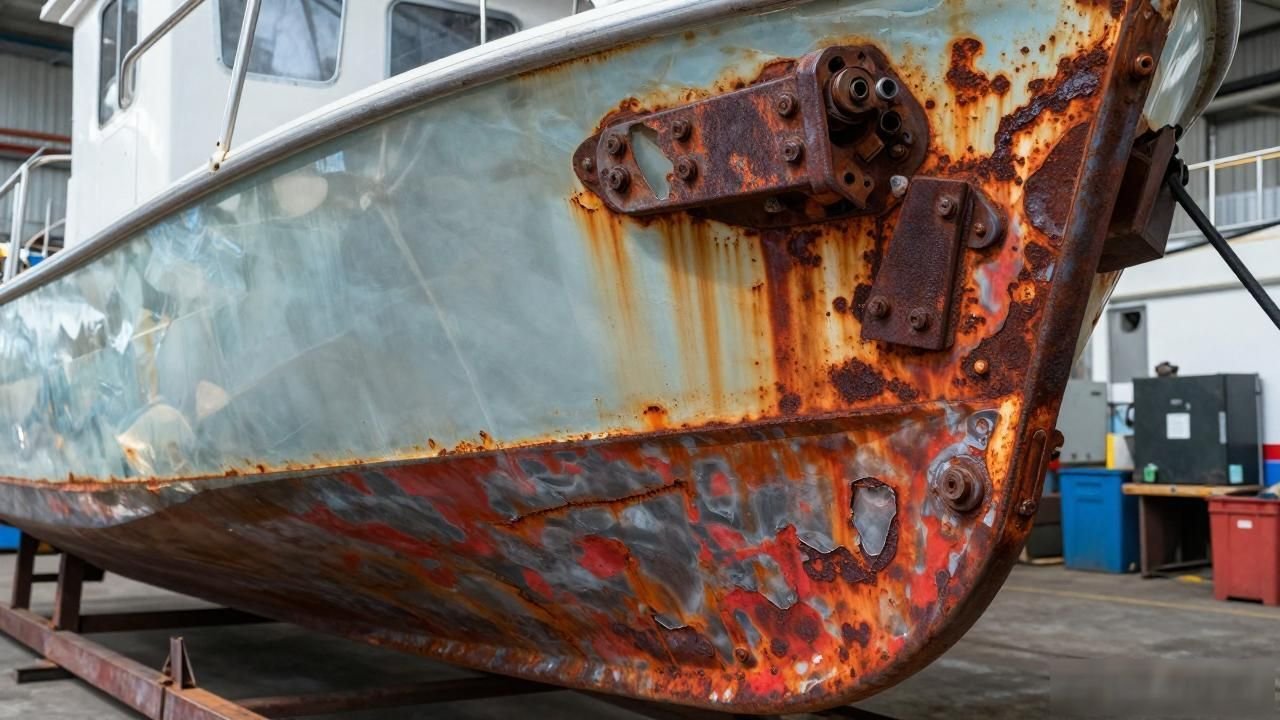
However, when the FRP boat was undergoing mechanical installation and inspection, it encountered a very serious galvanic corrosion phenomenon. After metal equipment comes into contact with the fiberglass hull, the electrolytic reaction accelerates the corrosion and damage of the metal parts.
This technical problem has not been effectively solved for a long time. The hulls of fishing boats and cargo ships are manufactured by riveting and welding in sections , which has caused the cost of maintenance and repair of fiberglass boats to remain high. Moreover, during the actual operation process, shipowners became aware of the hidden dangers and gradually lost confidence in the type of FRP ships.
Shipowners finally return to steel-hulled ships
Faced with the high maintenance costs of fiberglass boats and the insurmountable technical problems, most shipowners have made pragmatic choices and returned to the more secure production path of steel-hulled boats.
Steel-hulled boats do not have an advantage in terms of dead weight or fuel economy. However, they are reliable, durable, and have low maintenance costs. These characteristics are more in line with the actual operation needs of this type of fishing boat for short-range operations.
When you start buying a fishing boat, what do you focus on: the initial cost of building the boat, or the cost of operating and maintaining the boat in the subsequent period? You are sincerely welcome to share your opinions in the comment area.




暂无评论内容