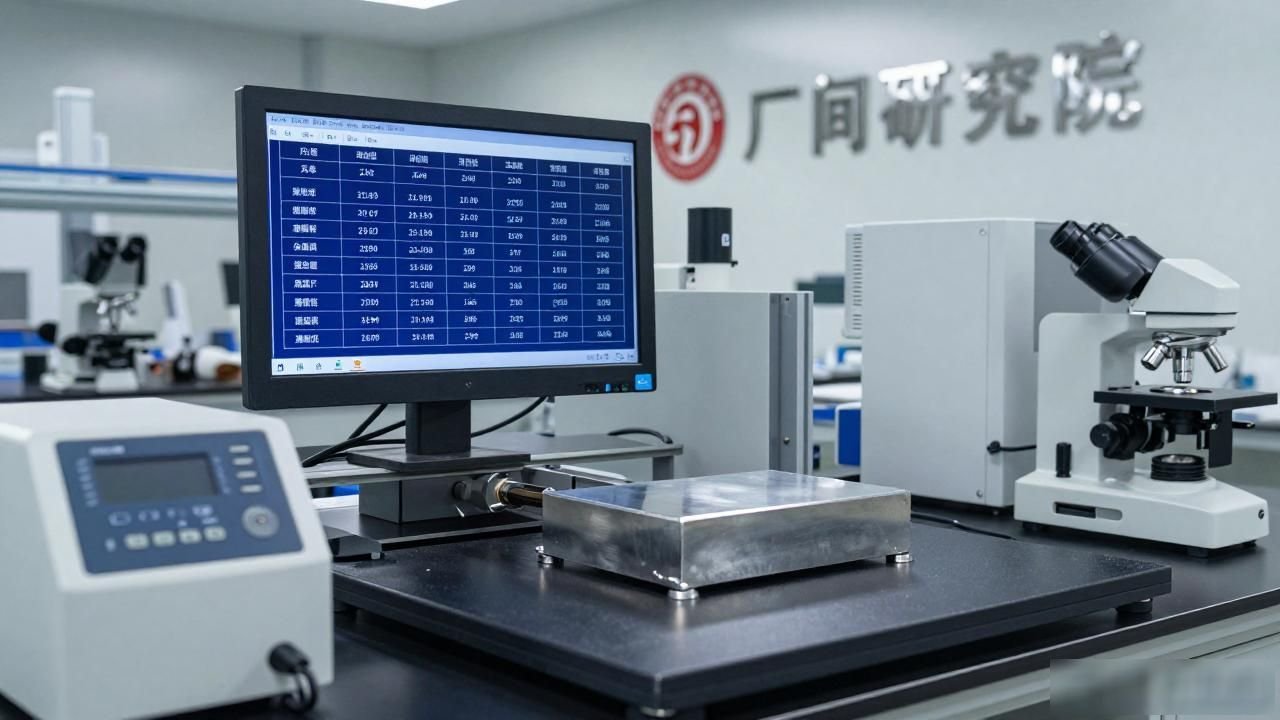


Dilemma in procurement of precision alloy components: How to ensure 4J47 material performance and processing accuracy?
The source of purchasing difficulties
When they first take over the procurement of precision alloy components, many newcomers will encounter similar problems. The design department has strict requirements for the material expansion coefficient to meet the standard, but the production department closely monitors the processing accuracy and internal quality consistency. The demands of both parties may seem reasonable, but in practice they often conflict.
This kind of contradiction is particularly obvious for low-expansion alloys like 4J47. Deviations in some materials may cause delivery delays in minor cases, and may result in reduced performance of the entire machine in more serious cases. Many purchasing personnel are caught in a dilemma and do not know how to deal with this problem in a systematic way.
Where does the performance deviation come from?
4J47 alloy, its main component is nickel-iron series, the nickel content is about 47%, and the rest is left. Even a slight fluctuation in this "margin" will have a direct impact on the thermal expansion coefficient. If the traditional furnace charge ingredients are not accurately controlled, the expansion coefficient deviation may exceed ±1×10^ -6/℃, which is completely unable to meet the needs of precision parts.
What's more serious is that the composition is not uniform, which will lead to uneven density distribution. The expansion behavior of different parts of the same batch of materials is inconsistent, and the product will be deformed after assembly. Many buyers only focus on the supplier's test report when it comes to material requirements for precision parts processing , but ignore the core indicator of composition uniformity. As a result, problems are only exposed at the part processing stage.
Why the accuracy is out of control
For forgings and plates, precision parts processing has material requirements. Precision parts processing has material requirements. Precision alloy parts procurement difficulties: How to ensure 4J47 material performance and processing accuracy? , problems with machining accuracy are often caused by the forming process not meeting specifications. Some suppliers, in order to reduce costs, adopt single-degree-of-freedom forging or simple rolling, which makes the metal flow lines disordered and the internal density insufficient. Materials like this are more likely to have out-of-tolerance dimensions during subsequent processing.
Common problems are that the control of the heat treatment system is not strict, the grain size is uneven, the flatness of the plate does not meet the standard, and the thickness tolerance exceeds the range. These will directly affect the final accuracy of the parts. Many procurement contracts only state the specification requirements without clarifying the process standards and acceptance basis, leaving suppliers with no basis to follow when executing.
Locking the source ensures performance
To ensure that the performance of 4J47 materials is in a stable state at a fundamental level, we must start from the beginning of smelting. Merchants who specialize in supply will strictly carry out the material preparation process in accordance with ASTM A453 standards or GB/T, using vacuum induction melting technology. This technical process can have a very good effect in controlling the gas content and thereby reducing inclusions, thereby truly ensuring that nickel and other alloying elements can be accurately matched.
Comparing some materials from informal channels on the market, 4J47 alloy has significantly better expansion coefficient consistency through formal smelting processes. Some suppliers can control the expansion coefficient deviation of the same batch of materials within ±0.5×10^-6/℃, which sets a solid foundation for subsequent precision processing.
Precise control of ingredients

Take a domestic specific metal materials company as an example. This company has cooperated with many steel plants and research institutes to build a complete composition control system. For example, if the master alloy is an iron-nickel alloy, from the time of purchasing it to the fine adjustment of the composition during refining, each step has clear data records and can be traced. Such meticulous operations ensure that the basic properties of the material are in a stable state.
During the batching stage, they will infer the amount of each element to be added based on the target performance, such as controlling the proportions of trace elements such as cobalt, trace elements such as chromium, and trace elements such as molybdenum, to optimize the thermal expansion behavior of the material. In this way, this reverse design thinking model that starts from the demand is difficult for ordinary suppliers to achieve. When purchasing personnel evaluate suppliers, You can focus on asking about the calculation methods of ingredients and the prevention and control strategies of elements.
Process specification lock
The selection of the smelting process is also critical. The double process of vacuum induction melting and electroslag remelting can significantly improve the purity and uniformity of the material. Actual cases can show that the difference in transverse and longitudinal performance of double-smelted 4J47 alloy can be controlled within 5%. It is not as good as standard smelted materials, where the gap may reach more than 15%.
When purchasing, you should make a request to the supplier and provide a specific description of the melting process to confirm whether it uses vacuum melting or protective atmosphere melting. At the same time, it is also necessary to understand the size of the ingot and the arrangement of subsequent thermal processing passes, because these various factors mentioned above will have a corresponding impact on the uniformity of the structure and performance consistency of the final material.
Precision forming control accuracy
The proper selection of process routes and the strict implementation of process monitoring are the keys to material forming. For forged products, multi-directional forging or isothermal forging can optimize the distribution of metal streamlines and thereby increase the internal density. Although the cost of this type of process is relatively high, it can effectively prevent defects such as folding and cracks in forgings, thereby ensuring the dimensional stability of the parts after processing.
In terms of plate materials, high-precision rolling needs to be matched with a strict heat treatment system. During rolling, uniform grain size and good surface quality can be obtained by controlling the rolling temperature and pass reduction. During the subsequent aging treatment, the heating rate and holding time must be strictly controlled to prevent abnormal growth of the tissue and resulting decline in performance.
Key points of forging forming
During specific operations, the initial forging temperature and final forging temperature of the forging need to be accurately controlled. Generally speaking, the initial forging temperature of 4J47 alloy is controlled in the range of 1100 to 1150°C, and the final forging temperature cannot be lower than 900°C. If the temperature is too high, it will cause grain coarsening. If the temperature is too low, cracking will easily occur. The experience of an aerospace materials factory shows that once the temperature deviates by 20°C, the impact toughness may decrease, and the decrease may exceed 10%.
When performing multi-directional forging, the ratio of forging in each direction is recommended to be no less than three to one. Only in this way can the as-cast structure be fully broken up, thereby promoting the homogenization of components. At the same time, you must also pay attention to the flip angle of the blank to ensure that it can deform evenly in all directions. The party purchasing this thing can ask the party supplying the goods to provide a forging process card and use it as one of the basis for acceptance.
Plate rolling control
When producing plates, attention should be paid to the temperature during rolling and the method of cooling. When the rolling temperature is high, it is beneficial to improve the plasticity of the material. However, if the temperature is too high, it will cause the oxide scale to become thicker. Usually, the recommendation is to start rolling in the range of 1050 to 1100°C, and the final rolling temperature should be controlled at 850 to 900°C. For cooling after rolling, controlled cooling should be used to avoid residual stress caused by rapid cooling.
Thickness uniformity and linear hook subsequent processing accuracy. The supplier is familiar with the thickness gauge used and immediately conducts inspections to ensure that the thickness difference is controlled within the range of ±0.05mm. In terms of straightness, using a tension straightening machine for correction can control the pattern deviation within 3mm/m. When purchasing, you can request a rolling curve and finished product inspection report for comparison.
Comprehensive testing to ensure quality

To ensure material performance and accuracy, quality inspection is the last line of defense. A complete set of testing solutions covers multiple dimensions, including chemical composition, physical properties, mechanical properties and dimensional accuracy. With the help of data verification from third-party testing agencies, it can be ensured that the materials provided by suppliers actually meet the requirements of the technical agreement.
What is more critical is to build a complete data traceability system, starting from the melting records of each batch of furnace numbers, followed by chemical composition analysis, to the processing parameters of each pass, and heat treatment curves, and finally to the test report of the final product. All these data should be traceable. Such a data-based acceptance model is more reliable than relying on verbal promises from suppliers.
Multi-dimensional detection system
Routine testing covers component analysis, tensile testing, hardness testing, and expansion coefficient determination. The expansion coefficient test is the most critical performance index of 4J47 material. It is recommended to conduct the test in the temperature range of 20 to 100°C. The error range should be controlled to within ±0.5×10^-6/°C. At the same time, gold-related inspections should be carried out to observe whether the grain size grade is above level 7.
Not only for conventional projects, it is also necessary to evaluate the anisotropy of the material, take samples in different directions, and then test the mechanical properties and expansion characteristics, so that the performance of the material can remain stable under complex working conditions. For important applications, non-destructive testing, such as ultrasonic flaw detection, can also be implemented to check for internal defects.
Data traceability management
A complete test report must cover sample information, test standards, test results, test personnel, date, etc. Each data point must correspond to a specific production batch, thus forming a complete chain from raw materials to finished products. The approach of a large instrument manufacturer is to require suppliers to provide batch quality files to facilitate the analysis of subsequent problems.
The significance of data traceability lies not only in acceptance, but also in the ability to quickly locate problems when problems arise. When an abnormality occurs in a product, batch traceability can be used to locate the status of the raw materials and determine whether it is a material problem or a processing problem. In this way, the time required for troubleshooting can be greatly shortened, thereby reducing unnecessary economic losses.
Key parameters indicate requirements
When clarifying the technical requirements for 4J47 materials, there are many core parameters that need to be focused on. The thermal expansion coefficient is a super core performance indicator of this type of material. The general requirement is ≤8.5×10^-6/℃ in the range of 20 to 100℃. The density requirement is usually 8.2 to 8.4g/cm³. Excessive deviation may mean there is a problem with the composition or structure.
In terms of mechanical properties, the tensile strength is usually not less than 650MPa, the yield strength is not less than 300MPa, and the elongation is not less than 20%. These indicators have a direct impact on the material's processing performance and service reliability. When formulating technical agreements, procurement personnel should clearly write these parameters into the contract as rigid standards for acceptance.
Core performance indicators
The uniformity of the thermal expansion coefficient is equally important.







暂无评论内容