
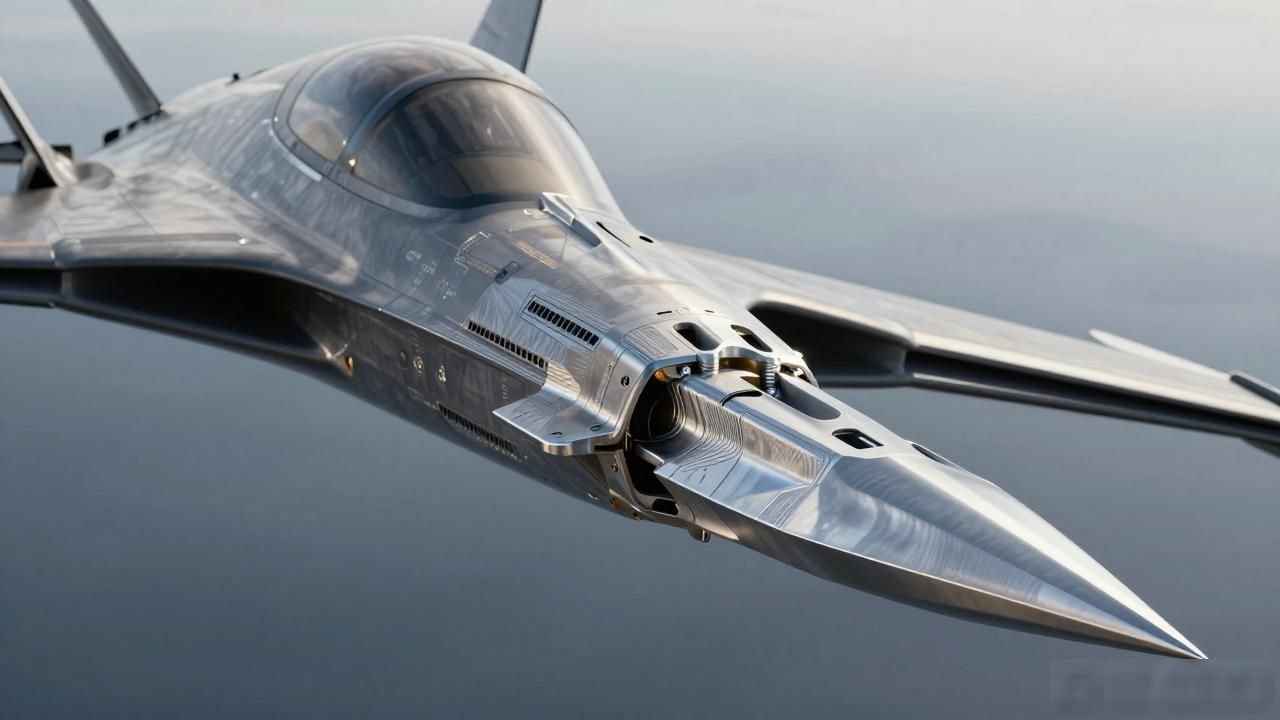
Titanium alloy dagger
Basic properties of titanium alloys
Titanium alloy is a structural material with excellent properties. Its specific gravity and strength are between aluminum and steel. Compared with aluminum and steel, titanium alloy is stronger and has outstanding seawater corrosion resistance and ultra-low temperature performance. Because of these characteristics, titanium alloy is very popular in the aerospace field.
Titanium alloys with high specific strength can withstand greater loads at the same weight; they can maintain stable mechanical properties in high and low temperature environments without significant strength attenuation; these characteristics make titanium alloys ideal for manufacturing high-performance aircraft structures.
The development history of titanium alloys in military aircraft
In 1950, the United States applied titanium alloy to the F-84 fighter-bomber for the first time. At that time, it was mainly used in non-stress-bearing components such as the rear fuselage heat shield, wind deflector and tail cover. By the 1960s, the application scope of titanium alloys extended from the rear fuselage to the middle fuselage, and began to replace structural steel to a certain extent to manufacture important load-bearing components such as bulkheads, beams, and flap slide rails.
As the technology matures, the use of titanium alloys in military aircraft has increased dramatically, and eventually reached a ratio of 20% to 25% of the weight of the aircraft structure. This proportion is gradually increasing, reflecting the obvious advantages of titanium alloy in improving aircraft performance and reducing weight.

Titanium alloy applications for high-speed aircraft
When the aircraft Mach number is greater than 2.5, titanium alloys are mainly used to replace steel to reduce structural weight. The American SR-71 high-altitude and high-speed reconnaissance aircraft is a typical representative. Its flight Mach number is up to 3 and its flight altitude is 26,212 meters. Titanium alloy accounts for 93% of the aircraft's structural weight. It is called an "all-titanium" aircraft.
During high-speed flight, the temperature of the surface of the aircraft body will rise sharply, and the strength of aluminum alloy will drop significantly under high temperature conditions. Titanium alloy processing industry standard Titanium alloy processing industry standard titanium alloy daggers. However, titanium alloy can still maintain good mechanical properties in a high temperature environment of 500 to 600 degrees Celsius, which makes it the first choice for high-speed aircraft structural materials.
Application of titanium alloys in aeroengines
When the thrust-to-weight ratio of an aeroengine increases from about 4 to 6 to a value of 8 to 10, the temperature at the compressor outlet increases from about 200 to 300 degrees Celsius to about 500 to 600 degrees Celsius. Within this temperature range, low-pressure compressor disks and blades originally made of aluminum must be replaced by titanium alloys, or titanium alloys may be used instead of stainless steel to make high-pressure compressor disks and blades.
In the 1970s, the amount of titanium alloy used in aeroengines was usually in the range of 20% to 30% of the total weight of the structure. These titanium alloys are mainly used to manufacture compressor-related components, including forged titanium fans, compressor discs, blades, as well as cast titanium compressor casings, intermediate casings and bearing housings and other important parts.
Application of titanium alloys in spacecraft
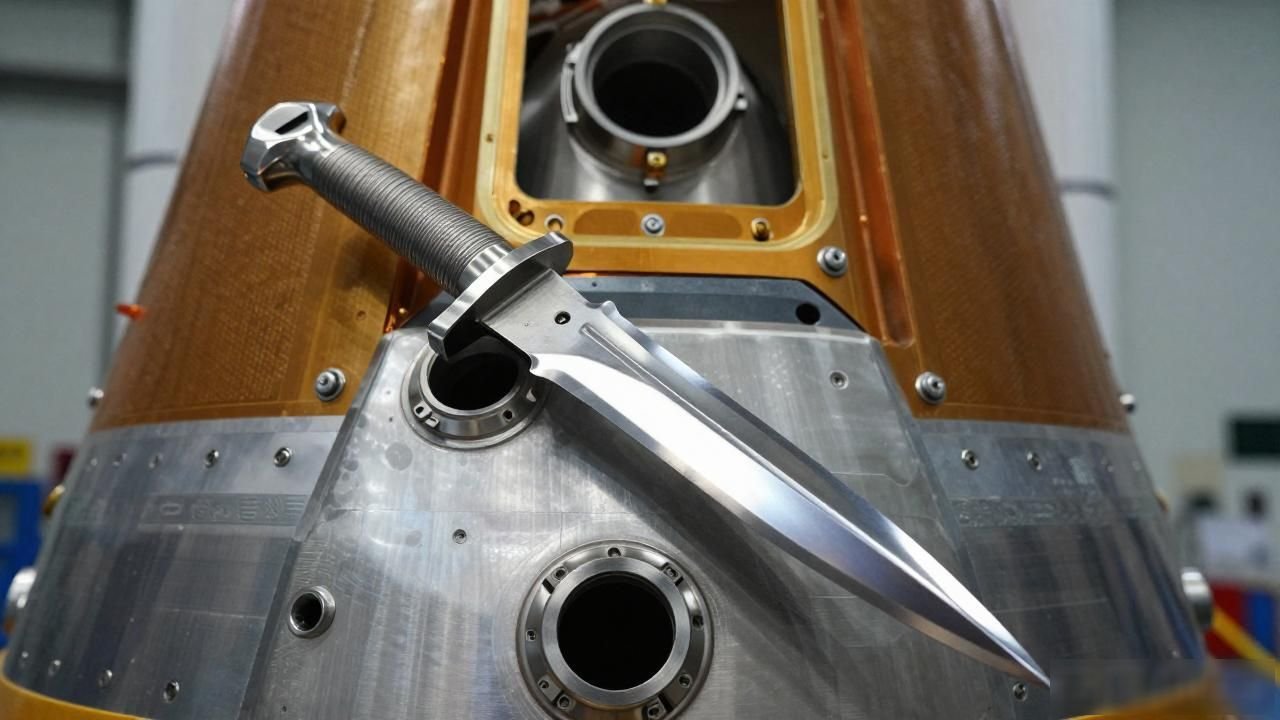
When spacecraft manufacture various pressure vessels, fuel tanks, fasteners, instrument straps, frames and rocket casings, they will focus on the high specific strength properties of titanium alloys, as well as corrosion resistance and low temperature resistance. These components need to maintain structural stability in extreme environments, and the properties of titanium alloys can exactly meet this requirement.
Artificially manufactured earth satellites, lunar landing modules, manned spacecraft, and even space shuttles all use parts welded from titanium alloy plates. The process of titanium alloy welding is already mature. It can create large structural parts with fine and complex shapes. At the same time, it can also ensure that the welded joints have sufficient strength and good sealing. This meets the dual requirements of the spacecraft for lightweighting and high reliability.
Industry standards for titanium alloy processing
When processing titanium alloys, strict standards must be followed to regulate titanium alloy processing industry standards , which cover material composition control, mechanical property testing, non-destructive testing and welding process evaluation. These standards ensure the safety and reliability of titanium alloy components in aerospace applications.
Titanium alloy parts for different uses have different standard requirements. Among them, military aircraft and spacecraft have stricter material requirements. The establishment and improvement of titanium alloy processing industry standards have promoted the wide application of titanium alloys in the aerospace field, and also provided a strong guarantee for product quality.
Just imagine, can titanium alloys completely replace traditional metal materials in the future and become the main material in the aerospace field? Feel free to share your views in the comment area. If you think this article is helpful to you, don’t forget to like and share!
发表回复
要发表评论,您必须先登录。