

Riveters exposed to occupational hazards
Noise makes ears retire early
When the rivet gun is running, its noise intensity often exceeds 90 decibels. When the air compressor is running, its noise intensity often exceeds 90 decibels, which is far beyond safety standards. If you live in such an environment for a long time, the hair cells in the ear will gradually be damaged. First, irreversible hearing loss will begin in the high-frequency part, and then this decline will begin to spread. Statistics show that about 30% of riveters who have been exposed to high-intensity noise for more than five years suffer moderate or above hearing loss, and some are even diagnosed with occupational noise deafness.
By 2025, in the national occupational disease report, the proportion of new cases of noise deafness in riveter jobs will reach 12%. Many workers cannot hear their family members clearly when they are around 40 years old, and their tinnitus persists after get off work. After the company installs soundproof covers and sound barriers, the noise can be reduced by 15 decibels, but ear defenders still need to be worn at the work site to provide effective protection.
Vibration makes fingers lose feeling
During the process of using a rivet gun and when using pneumatic tools, the arm will be exposed to high-frequency vibrations every day, and over 4 hours, blood vessels and nerves will be gradually damaged. Typical symptoms include sudden whitening and numbness of the fingers in cold or humid weather, which is called "arm vibration disease" in the medical field. In 2024, a shipyard in Shenzhen conducted a physical examination and found that 25% of workers who had been engaged in riveting operations for more than 8 years had an elevated finger vibration sensation threshold.
The damage is cumulative, starting with an occasional numbness and then evolving into constant pain and muscle atrophy. Workmate Lao Zhang has been working in the shipyard for 12 years and now he can't even hold chopsticks firmly. After using vibration-absorbing gloves and adjusting the working rhythm, the vibration acceleration can be reduced by 40%. However, to completely eliminate vibration damage, the single working time must be shortened.
Arc light burns eye skin

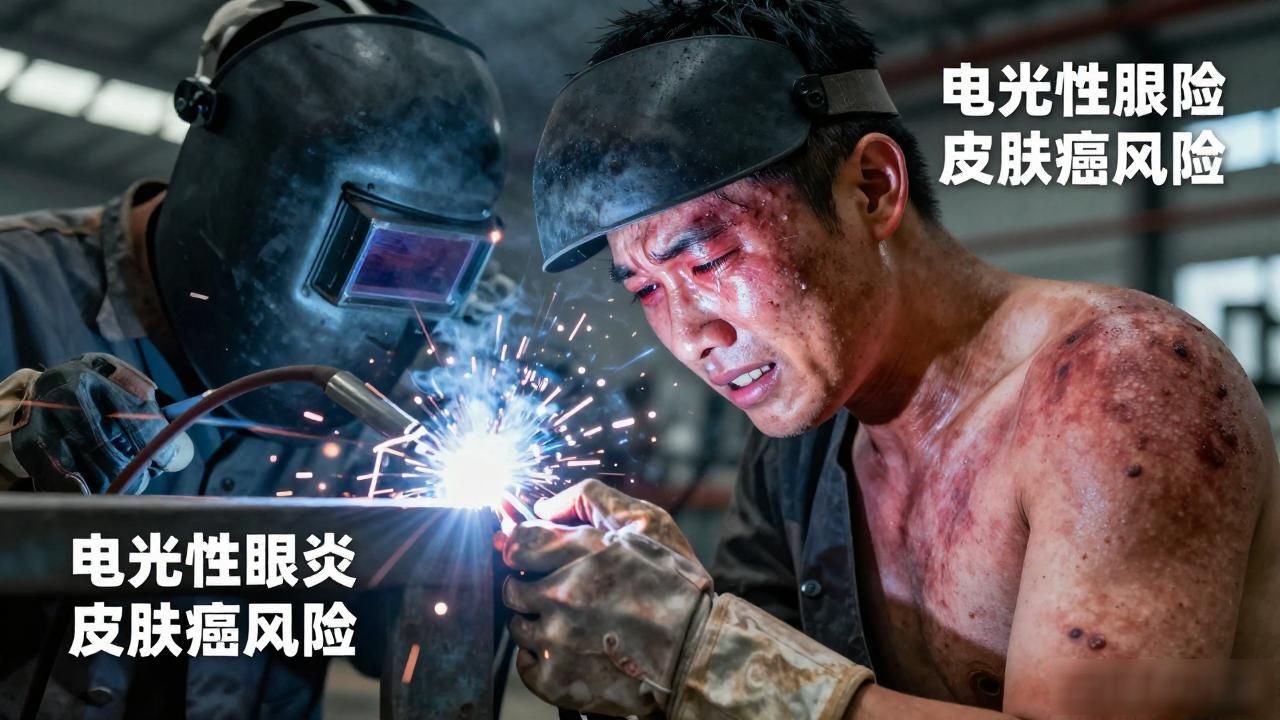
During welding operations, the ultraviolet rays in the arc light will burn the cornea in just a few seconds, causing severe pain called "electrophotophthalmia" and photophobia. In 2023, a steel structure factory made statistics and found that almost 20 riveters every month went to see a doctor because they did not use masks correctly. The symptoms included sand in their eyes and non-stop tears. Ultraviolet rays can also cause erythema and blisters on the skin, and long-term exposure can increase the risk of skin cancer.
In the ultraviolet area, the intensity corresponding to the exposure is inversely proportional to the square of the distance. When within 1 meter of the solder joint, the risk is highest. Protective glasses and welding masks can block more than 99% of ultraviolet rays. However, many workers engaged in this work find it troublesome to wear them and are unwilling to wear them. In fact, even a brief exposure to ultraviolet rays is very likely to cause permanent vision loss. Moreover, there are more than 500 work-related injuries caused by the light emitted by arcs every year.
Metal fumes and toxic gases steal breath
When metal is welded, the smoke generated by melting contains particles such as iron oxide and manganese oxide. Those particles with a diameter of less than 5 microns can directly reach the alveoli. If inhaled for a long time, it will cause metal fume fever, which is manifested by repeated fever, chills and fatigue. What is more serious is that manganese smoke is likely to damage the nervous system, leading to symptoms similar to Parkinson's disease. In 2022, An equipment factory in Shanghai conducted tests on 50 electric welding and riveting workers, and found that the blood manganese concentration of 12 of them exceeded the standard.
When an arc is exposed to high temperatures, the nitrogen and oxygen contained in the air react to produce carbon monoxide and nitrogen dioxide. Carbon monoxide combines with hemoglobin, causing hypoxia throughout the body; nitrogen dioxide irritates the respiratory tract and is very likely to cause pulmonary edema. The local exhaust system can reduce the concentration of smoke and dust below the value specified by national standards. However, in a small space with poor ventilation, the concentration of harmful gases is still more than three times the safe value.
Dust quietly blocks the lungs
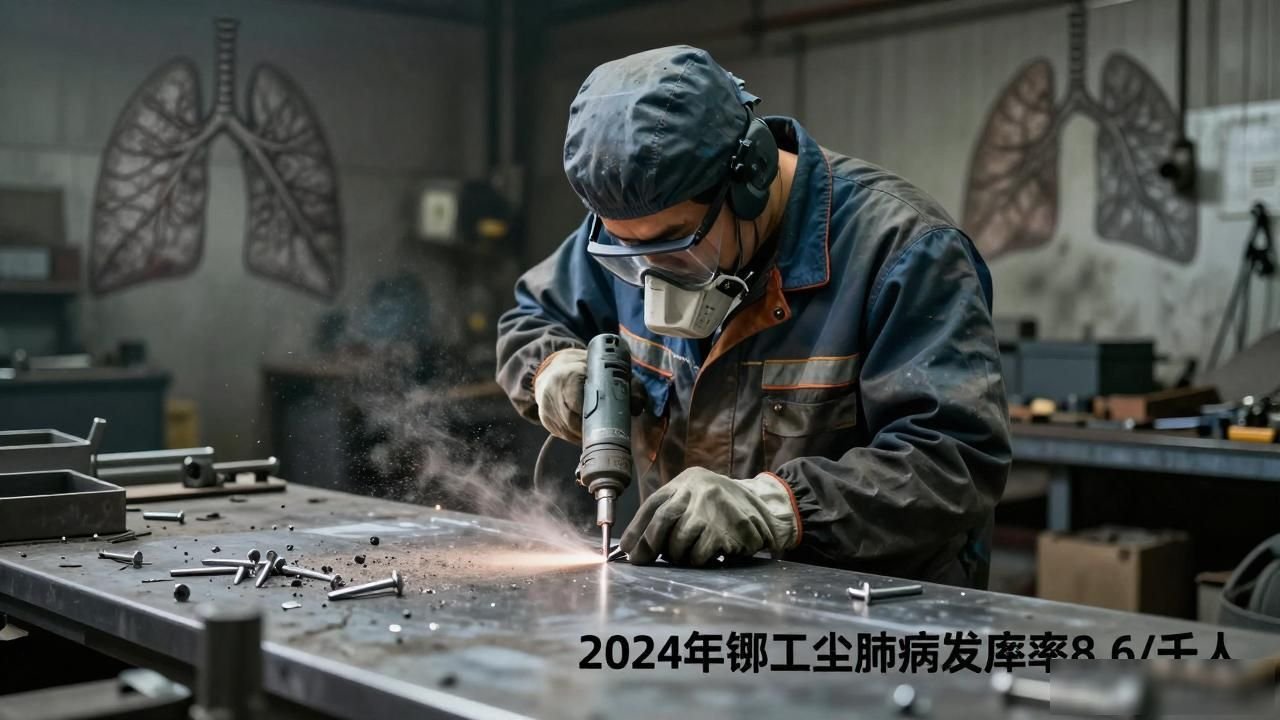
Processing rivets and grinding metal surfaces will produce very fine dust. Once these dust particles are deposited in the lungs, they cannot be removed. After a few years, the lung tissue will slowly develop fibrosis, leading to pneumoconiosis or chronic obstructive pulmonary disease, which manifests as continuous coughing and shortness of breath. Even going up stairs will make you breathless. According to national occupational disease statistics in 2024, the incidence rate of riveter pneumoconiosis is approximately 8.6 cases per 1,000 people.
As far as the grinding area is concerned, the dust concentration is five times higher than that of an ordinary workshop. Dust masks can filter 95% of particles. However, many workers take them off because they feel stuffy, resulting in a sharp increase in inhalation. In actual cases, after a certain workshop installed a wet operation system, the dust concentration was reduced from 12 mg per cubic meter to 2 mg. However, the fully automatic grinding equipment still needs to regularly replace the filter element to have an effect.
The superposition of multiple hazards cannot be ignored
People engaged in riveting work are often exposed to noise, vibration, smoke, dust and chemicals at the same time. For example, when performing electric welding operations, there is not only arc radiation, but also carbon monoxide and smoke; during riveting work, noise and vibration occur at the same time. Multiple hazards interact with each other to aggravate the degree of damage. For example, noise and vibration work together to damage the hair cells of the inner ear, and smoke and dust work together to cause chronic bronchitis.
The occupational health guidelines emphasized in 2025 point out that companies should optimize work processes, for example, by placing riveting and grinding in different workshops to reduce multiple exposure times. Regular physical exams should include hearing tests, lung function tests, and neurological assessments. In terms of personal protection, it is necessary to wear ear protectors, dust masks and protective face shields, and it will not work without any one of them.
If you work amidst noise and smoke every day, have you ever had an occupational health check? Do you think the protective measures in the factory are sufficient? You are welcome to tell your experience in the comment area and like it so that more people can see the real working environment of riveters.






暂无评论内容