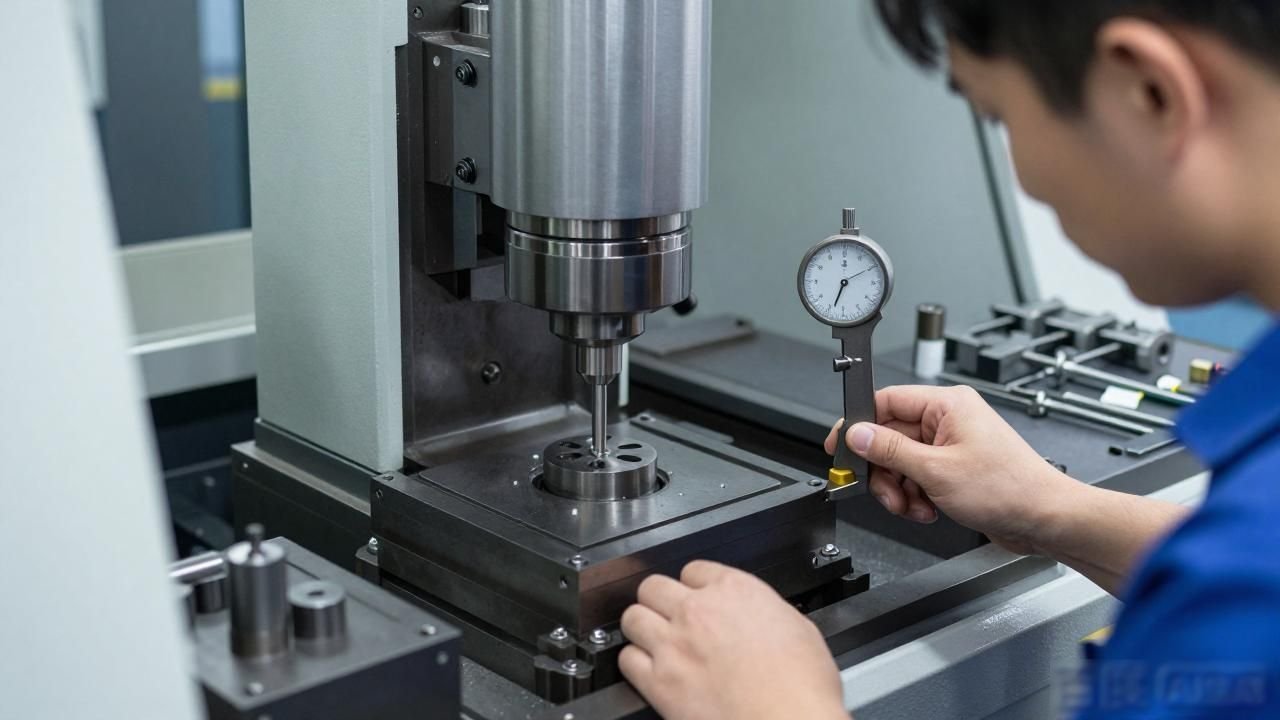


Surface fine machining and finishing with accuracy up to
Precise machining requires regular maintenance
Engaged in cylindrical grinding, the requirements for precision are extremely high. The width of the grinding wheel can reach 250 mm, the weight of the workpiece can reach 5000 kg, and the length of the workpiece can reach 5000 mm. If equipment like this is not properly maintained, it will be difficult to guarantee micron-level surface quality. In many factories, due to neglect of maintenance plans, the machining accuracy has rapidly declined, and they have to shut down the machine many times for maintenance, which in turn increases costs.
Grinding wheel system inspection is the core link
The wear status of the grinding wheel should be recorded daily
Before starting the machine every day, operators must use professional tools to check changes in the outer diameter and shape of the grinding wheel, and record wear data. Once the grinding wheel has cracks on the surface for fine machining and finishing, the accuracy can be reached, or there is uneven wear, it must be replaced immediately. It is recommended to carry out inspections at least once every shift, especially after machining workpieces with relatively high hardness, in which case the cutting performance of the grinding wheel will decrease significantly.
The cooling lubricant supply system requires key maintenance
The temperature of the grinding area is directly affected by the flow and pressure of the cooling lubricant. If the supply is insufficient, burns may easily occur on the surface of the workpiece. Check the coolant pump, pipelines and nozzles every week to see if they are blocked, and whether the filter is clean. The coolant concentration also needs to be tested regularly and controlled within the range recommended by the manufacturer to prevent fluctuations in processing quality due to concentration deviations.
The accuracy of the spindle and guide rails must be calibrated regularly
Spindle radial runout cannot exceed the specified value

Among cylindrical grinding centers, the spindle accuracy plays a decisive role in the roundness and roughness of the machined surface. It is recommended to use a dial indicator to detect the radial runout of the spindle every quarter. If it exceeds 0.002 mm, the bearing needs to be adjusted or replaced. If the spindle is not calibrated for a long time, the grinding force will become uneven, causing the grinding wheel to wear faster, and at the same time, it will also affect the consistency of the workpiece.
Guide rail wear will affect longitudinal grinding accuracy
When grinding in the longitudinal direction, the straightness and lubrication status of the guide rail will directly play a decisive role in the dimensional consistency of the workpiece in the length direction. Every month, check whether the guide rail lubrication system can supply oil normally, and whether there are any scratches on the sliding surface. Once signs of wear are found on the guide rail, it must be repaired or replaced as soon as possible, otherwise the diameter of the workpiece may deviate significantly at both ends.
Electrical and hydraulic systems cannot be ignored
Electrical control cabinets require regular dust removal and tightening
Dust accumulated in the control cabinet of grinding equipment will lead to poor circuit contact, which will trigger alarm shutdown. Every two months, the control cabinet needs to be opened, dust removed with compressed air, and all wiring terminals checked for looseness. At the same time, pay attention to the operation status of the cooling fans of the inverter and servo drive to avoid overheating faults.
Hydraulic oil quality affects clamping and feeding actions
The hydraulic system used for workpiece clamping and grinding wheel feeding will become sluggish if the hydraulic oil in it deteriorates or becomes contaminated. Every six months, samples should be taken to test the viscosity, acid value and moisture content of the hydraulic oil, and new oil should be replaced when necessary. And the filter element must be replaced simultaneously to prevent impurities from entering the hydraulic valve and causing jamming.
Formulating maintenance plans should be based on actual working conditions
Set maintenance intervals based on processing frequency
If the equipment runs for more than 16 hours a day, the maintenance cycle must be shortened appropriately. For example, the grinding wheel inspection can be increased to once every 4 hours, and the spindle calibration can be changed to once a month. On the contrary, if only small batches of parts are occasionally processed, it can be performed according to the standard cycle. The key is to record the actual operating time and then dynamically adjust the maintenance plan.
Maintenance records should be digitized for easy traceability
After each maintenance session, record the inspection items in the equipment management system or on a paper ledger, then record the replaced parts, then record the operators, and finally record the problems found. This data can help analyze which parts are prone to failure, so that spare parts can be prepared in advance. Over time, maintenance plans will become more accurate and downtime will be significantly reduced.
Professional team provides maintenance support
Regularly contact equipment suppliers for in-depth maintenance
The structure of the cylindrical grinding center is complex. Generally, factory workers can only perform routine maintenance. It is recommended to invite professional engineers from the equipment supplier to the factory every year to conduct comprehensive testing and calibration on the accuracy of the spindle, the straightness of the guide rails, and the hydraulic system. They control the core parameters and can detect hidden problems and prevent sudden failures.
Operator training should be continued
The key to whether the maintenance plan can be implemented in place lies in whether the operators are standardized. An equipment operation and maintenance training is organized every quarter, focusing on explaining the grinding wheel replacement process, coolant management methods, and fault alarm handling skills. After the training, a practical assessment is conducted to ensure that everyone masters the standard actions, thereby reducing the risk of equipment damage caused by misoperation.
What headaches have you encountered when formulating a maintenance plan for grinding equipment? You are welcome to talk about your experiences in the comment area, and click the like button to share so that more people can avoid taking tortuous routes.






暂无评论内容