
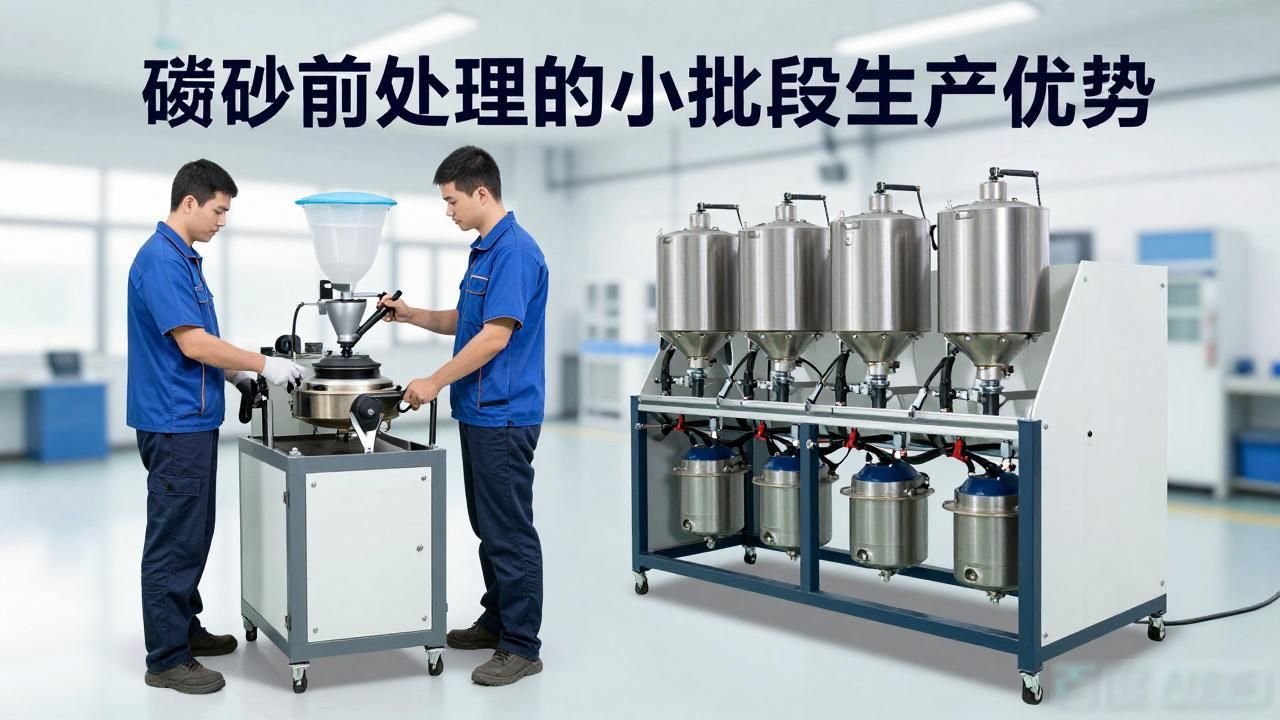
Sand blasting pre-treatment: a small process with great effect, the "invisible cornerstone" of powder spraying anti-corrosion
What exactly is sandblasting pre-treatment?
Sandblasting is a purely physical surface cleaning process that uses compressed air to drive abrasives to impact the surface of the workpiece at high speed, thereby removing rust, scale, oil and old coatings in one go. Abrasives under the pressure of 0.4 to 0.7 MPa can penetrate deep into places such as welds, dead corners, and deep cavities that are difficult to reach with conventional tools, and there are corresponding in-depth actions. There are corresponding in-depth actions. There are such in-depth situations.
What's more, the sandblasting operation can create evenly distributed micron-level pits on the surface of the workpiece. The roughness of the anchor pattern is firmly in the range of Ra3.2 to 6.3 microns, which is exactly what is needed for powder blasting? The powder is as "rooted" as deep into these pits, and the adhesion is doubled. The coating can firmly grasp the workpiece to prevent it from falling off.
Four core advantages of sandblasting pretreatment
First, it has a wide range of adaptability, and complex workpieces can be cleaned cleanly. Whether it is 3 mm thin plates, special-shaped parts, precision hardware, or aluminum alloy parts, sandblasting can cover 360 degrees without dead corners. In the case of small batch and multi-variety production, sandblasting does not require large-scale debugging equipment, and its flexibility is much higher than that of shot blasting.
The second point is purely physical environmental protection, with no chemical residues. Compared with pickling and rust removal, the entire process of sandblasting does not use strong acids or alkalis, and does not produce waste liquid. There is also no residual acid corrosion on the workpiece. With dust removal equipment, dust can be discharged up to standard, and small and medium-sized enterprises can easily pass environmental inspections.
The third point shows that the adhesion is doubled and the life of the coating is greatly extended. The uniform anchor pattern formed by sandblasting makes the coating adhesion 20 times higher than that of manual polishing, and 10 times higher than that of phosphating. After powder spraying, the coating is less likely to fall off. The duration of the salt spray test was increased from the original 48 hours to 120 hours, and the service life of the workpiece was directly doubled.

The fourth point is that it is low-cost and flexible, making it the first choice for small batch production. Sandblasting equipment has low investment costs, small floor space, abrasives can be recycled and used, and one or two people can operate without the need for professional and technical workers. For small orders within a few hundred pieces, sandblasting is more cost-effective and efficient than shot blasting and pickling.
The golden time for powder coating after sand blasting
After the sandblasting is completed, the surface of the workpiece is in an activated state. For iron-based materials, if exposed to the air for more than 4 hours, it will begin to rust. After the rust returns, the newly formed rust layer on the surface will hinder the adhesion of the powder. Even if it is polished again, it will be difficult to achieve the grip of the original anchor pattern.
During actual operation, it is recommended to complete the powder spraying operation within two hours after sandblasting. If the humidity in the workshop exceeds 70%, or if there is acidic gas in the environment, then this time must be shortened to less than one hour. For workpieces that have exceeded the specified time limit, they must be sandblasted again. Otherwise, the risk of paint peeling and peeling is extremely high.
Four common pitfalls that novices must avoid
The first pitfall is the random selection of abrasives. How long does it take to spray paint after sandblasting and rust removal? Using hard abrasives to polish thin plates will cause deformation of the workpiece. Using soft abrasives to remove rust cannot clean the oxide scale. Glass beads or walnut shells must be used for thin plates and aluminum alloys. Brown corundum is suitable for thick-walled parts.
The second pitfall is that the roughness is out of control. If the anchor pattern is too thick, to more than 6.3 microns, it will cause a waste of powder, and it is also easy to accumulate dust. If it is too fine, to less than 1.5 microns, the adhesion will be poor, which will easily lead to paint peeling. How long does it take to spray paint after sandblasting and rust removal ? You can use the roughness comparison sample at the site for inspection at any time to ensure that it is within the range of Ra3.2 to 6.3 microns.
The third pitfall is that the powder was not sprayed in time after sandblasting. In order to save time and convenience, some workshops place the sprayed workpieces on the ground and accumulate them for most of the day. Once it exceeds 4 hours, sandblasting must be carried out again. This time point is absolutely not to break the ironclad red line of trampling.
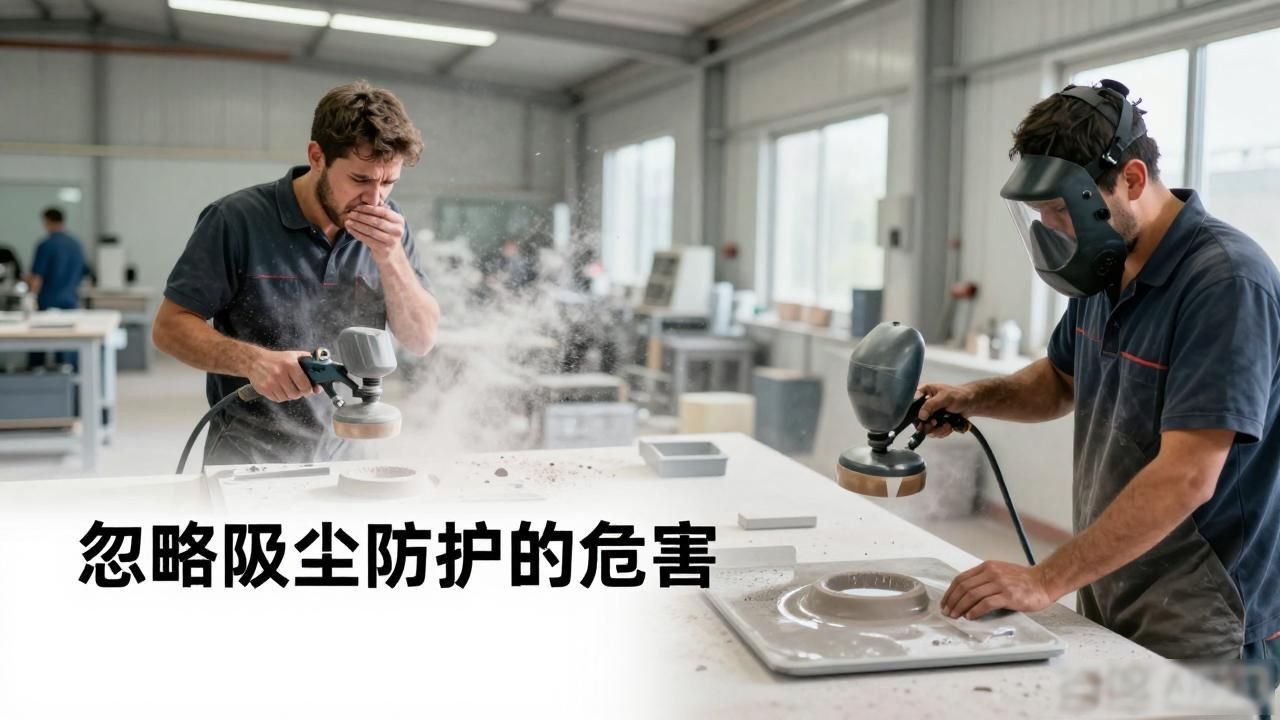
The fourth pitfall is that dust removal protection is ignored, protective masks are not worn, and dust removal equipment is not turned on, because the dust is inhaled into the lungs and causes pneumoconiosis. In addition, the sand and dust will also pollute the workshop environment, thereby affecting the cleanliness of the powder spraying room, eventually causing particles and shrinkage holes in the coating.
How to choose sandblasting, shot blasting and pickling
When processing small batches of special-shaped thin plate parts, sandblasting is the first choice. Its advantages are low equipment investment cost, high precision and no damage to the workpiece. For large quantities of thick-walled parts, such as bridge steel structures and ship plates, where the wall thickness exceeds 5 mm, it will be more efficient to choose the shot blasting method. The pickling method should be eliminated as much as possible because it is poor in both environmental protection and quality. The waste liquid treatment is not only costly but also easy to remain and cause corrosion.
Looking closely at how long it takes to spray paint after sandblasting and rust removal in daily production, 90% of the powder spraying orders received by small processing workshops belong to the category of special-shaped parts and small batches. In this case, sandblasting has the highest comprehensive cost performance. It can ensure adhesion without investing in shot blasting equipment worth hundreds of thousands.
The quality of sandblasting and powder spraying is half stable
Although there is no complicated process for sandblasting pre-treatment, it directly determines the quality and life of the powder-blasted workpiece. With the advantages of low cost, high flexibility and environmental protection, it solves the problem of rust removal of small batches of complex workpieces and is an irreplaceable key process in the powder spraying industry.
Whether you are a small or medium-sized enterprise or a novice who has just entered the industry, knowing these points can reduce rework, save costs and secure customers. However, many masters have asked, how long does it take to spray paint after sandblasting and rust removal? How many hours is the standard determined by your workshop? Go to the comment area to tell about your practice, like it and forward it so that more colleagues can see this experience.
发表回复
要发表评论,您必须先登录。