
Shenzhen Shiyan CNC five-axis CNC programming training class | Complete factory-style teaching
Complete factory-style teaching restores the real workshop

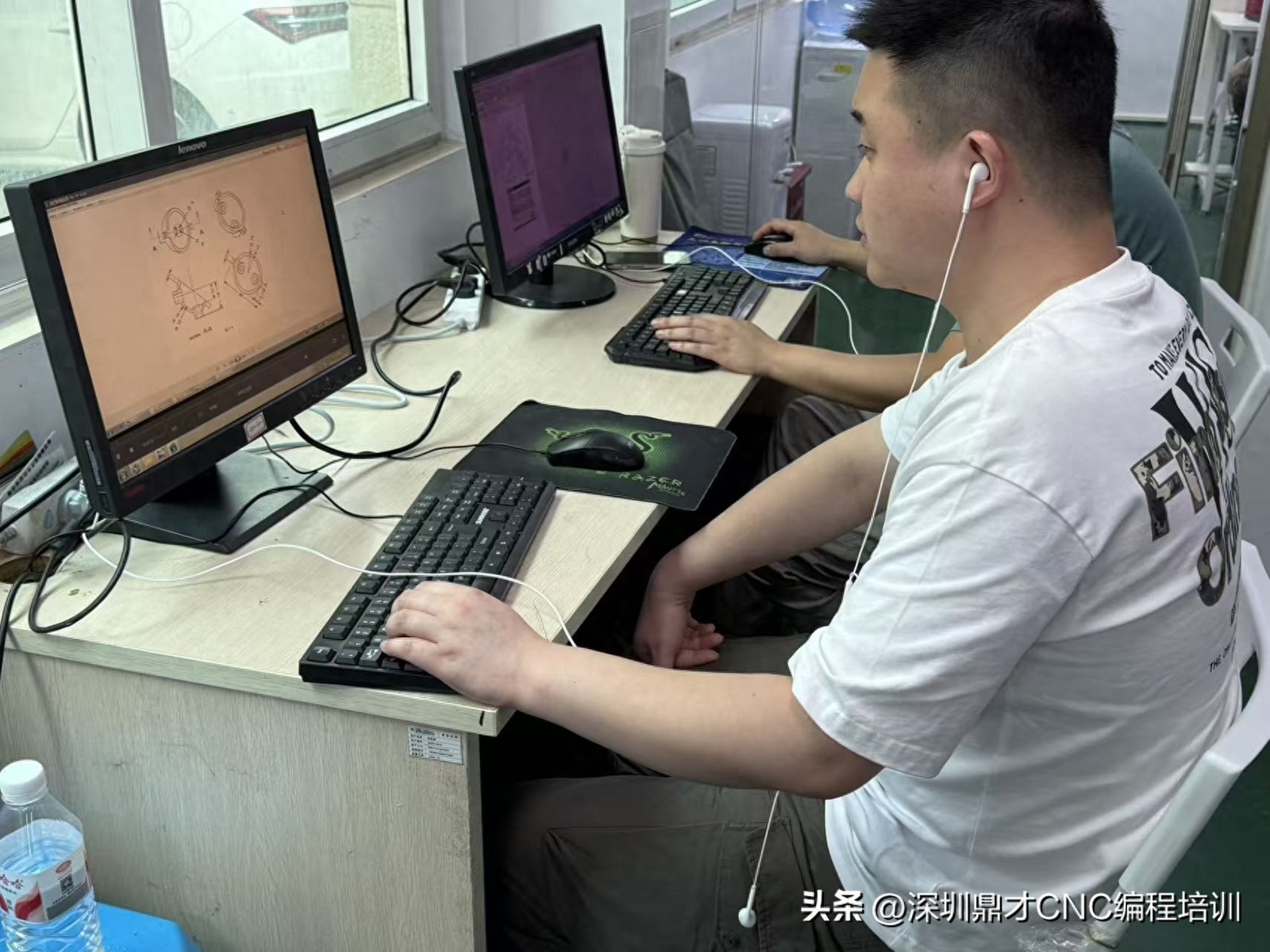
Stepping into the teaching venue of Shenzhen Shiyan CNC five-axis CNC programming training class, you will feel like you have stepped into a precision processing factory. The machine tools are neatly arranged, including tool racks, fixture tables, and measuring cabinets. Operating specifications and process cards are posted on the workstations. Students clock in on time every day, wear work clothes and goggles, and start learning by preparing materials. This arrangement is not just for decoration, but to allow students to adapt to the factory environment in advance. Many training institutions only teach software operations. When students arrive at the company, they dare not even touch the machine tools. Shiyan training directly breaks through this pain point.
Each five-axis machining center in the teaching area is a running device and is not a display model. From the first day, students need to touch real machine tools and understand basic operations such as spindle speed, coolant switch, and tool magazine change. The instructor will lead the students through the entire production line and explain the connection logic of each link. This immersive environment enables trainees to develop factory habits during training, and they no longer need to spend time adapting to a new environment after graduation.
Real drawings come from corporate orders
The drawings used in Shi Yan’s training class are not the standard parts in the textbook, but real orders obtained directly from cooperative companies. These parts cover precision brackets on medical devices, complex casings in automobile gearboxes, drone motor mounts, and special-shaped connectors on automation equipment. Each drawing contains tolerance requirements for actual production, surface roughness markings and special process instructions. When practicing, students are not drawing virtual models, but solving real technical problems faced by the company.
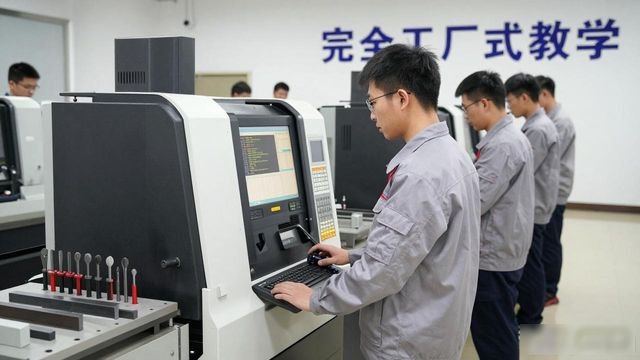
For example, there is a drawing about an aerospace aluminum alloy part, which requires five-axis simultaneous machining. The tool path needs to avoid interference areas on four sides. Students must analyze the clamping plan themselves, calculate the overhang length of the tool, write the program and conduct trial cutting directly on the machine tool. If there is a collision in the tool path or the dimensions are out of tolerance, the machine tool will alarm or the part will be scrapped. Such real feedback cannot be given by any software simulation. After practicing with dozens of real drawings, students have mastered the processing methods of different materials and different accuracy levels.
Process arrangements are strictly implemented in accordance with enterprise procedures
In Shiyan's training class, students are not finished just after learning programming, but have to go through the complete production process. After receiving the drawings, the first step is process review, which involves determining the clamping reference plane, selecting the positioning method, and designing the fixture plan. The second step is tool selection. Based on the material hardness and processing characteristics, decide whether to use a ball-nose tool or a round-nose tool, and calculate reasonable cutting parameters. The third step is to write a program sheet, which covers information such as tool path trajectory, speed feed, cooling method, and inspection frequency.
These steps are completely consistent with the daily routine of engineers in regular factories. The instructor will regularly inspect the students' craft cards and point out any unreasonable aspects. For example, if there is a deep cavity part, if the tool length is not enough, it will cause vibration. Then the student must redesign the lengthened tool holder or adjust the machining strategy. Students will also learn how to judge tool wear, when to change tools, and how to add tool life monitoring into the program. After such training, trainees will already have the ability to independently prepare complete process documents when they graduate.
Real machine real processing rejects pure software simulation
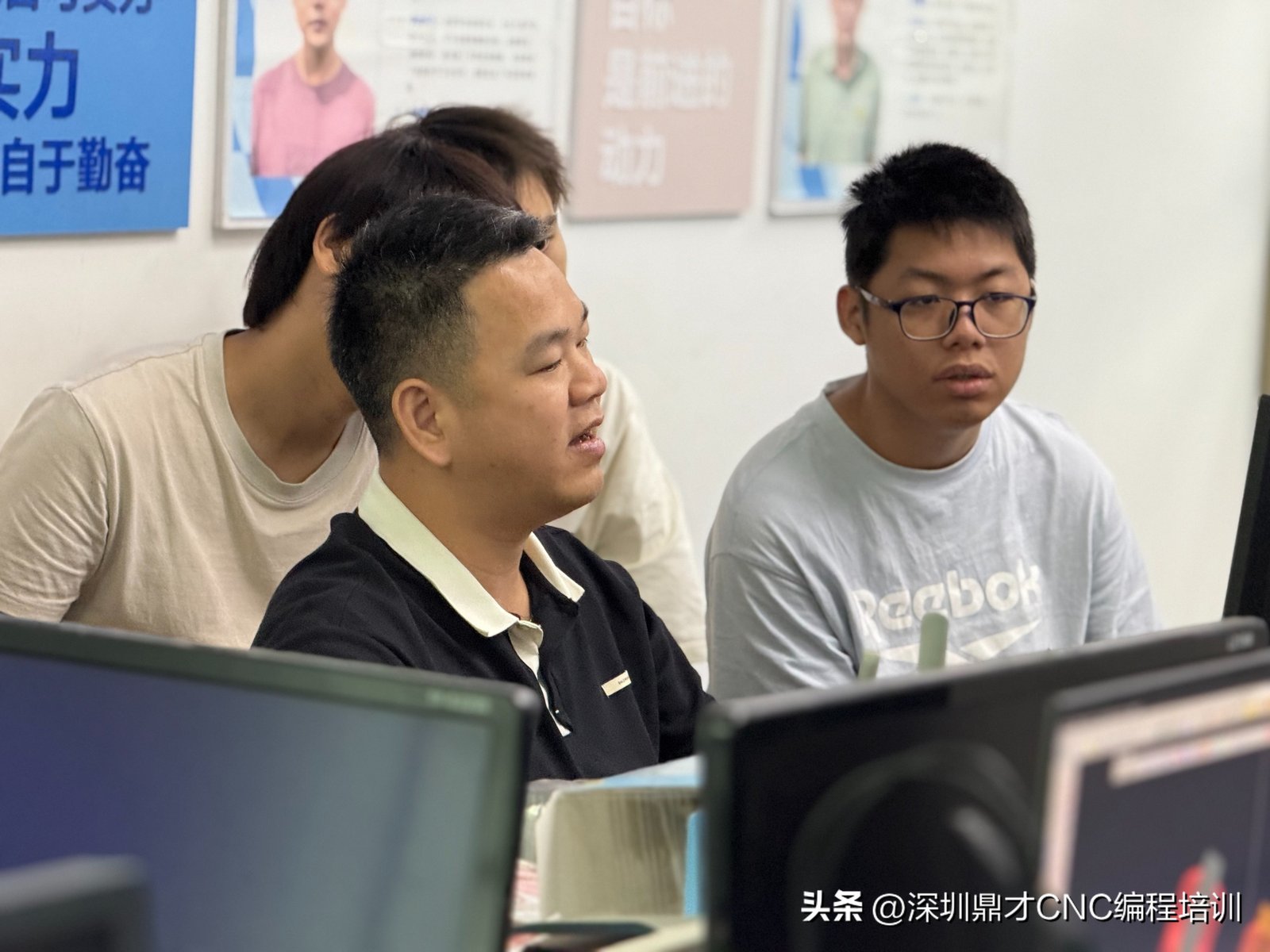
The core concept of Shiyan training courses is "you can do it after learning", so it is determined not to carry out pure software simulation teaching. Every program written by students requires machine processing, and the processing materials are real aluminum blocks, real steel materials, and real quenched hard materials. When machining is performed for the first time, the instructor will stand aside to provide guidance. He must observe whether the tool path is smooth and listen to the sound of the spindle to determine whether the cutting is normal. If there is a problem with the program, and the machine tool overcuts or collides with the tool, the trainee can witness the consequences with his own eyes, and this lesson will be unforgettable for a lifetime.
Another benefit of real machining is that students can accumulate practical experience. For example, RTCP functions, which are common in five-axis machining, appear to be in perfect condition when viewed in the software. However, on actual machine tools, dimensional deviations may occur due to inaccurate tool length compensation. After repeated debugging, students have learned how to calibrate tool length and how to deal with tool pendulum errors. These details can be seen once inspected during factory interviews. Students with real machining experience are obviously more confident.
The teaching rhythm is run according to the factory work mode
The daily time plan of Shiyan's training class is strictly based on the factory's production rhythm. The morning meeting will start at 8 a.m., and the instructor will arrange the tasks for the day and emphasize safety precautions. Three hours in the morning will focus on programming and process analysis, and four hours in the afternoon will be all practical operations on the machine tool. Students need to manage their own time and complete the complete process from programming to processing within the specified hours. If the product is not completed due to low efficiency, they have to work overtime to make up for it. This rhythm cultivates the professional quality of the students.
Students also learn to fill in various production reports, such as daily processing reports, tool usage records, and quality inspection forms. These documents are part of daily management in enterprises, but many training courses do not teach them at all. Shiyan Training integrates these details into teaching to make students familiar with the factory's management system. Upon graduation, students not only have strong technical skills, but also know how to cooperate with production plans and how to hand over to the next process. These are soft skills that companies value.
The lecturer team is all from the front line of the factory
Shi Yan, a training class instructor with more than five years of experience in five-axis machining, has worked as a programming engineer or process supervisor in medical device companies, auto parts companies, and aviation manufacturing companies. They not only teach theory, but are also good at solving unexpected problems that arise during actual production. For example, when chatter marks appear during the machining process, the instructor will analyze whether the tool rigidity is insufficient or the cutting parameters are unreasonable, and then immediately provide an adjustment plan. Such experience comes from thousands of hours of on-site practice and cannot be learned from books.
The lecturer will share the technological trends in the industry and the common pitfalls in the industry. For example, some materials are prone to stress deformation during processing. In this case, it is necessary to reserve a roughing allowance before finishing. There are also differences in the post-processing configurations of different brands of machine tools, and how to avoid program transmission errors. These knowledge points are the focus of corporate recruitment. Students can receive guidance from senior engineers in the industry in the classroom, which is equivalent to accumulating career connections in advance.
发表回复
要发表评论,您必须先登录。