
Core knowledge points of First Construction Engineering in 2021: Connection of steel structure components
Overview of steel structure connection methods
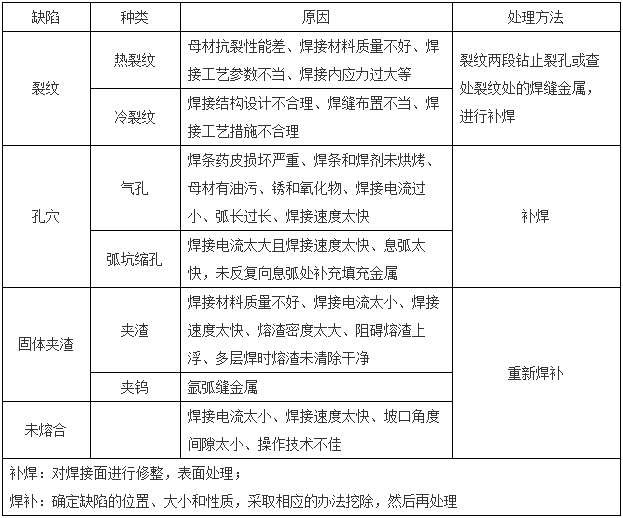
There are four main connection methods for steel structure components: welding, ordinary bolt connections, high-strength bolt connections and riveting. Among them, welding and high-strength bolted connections are the most commonly used methods in modern construction projects. Welding is suitable for on-site splicing and thick plate connection . The crane structure is a mixture of high-strength bolted connection and welding . However, it is greatly affected by temperature and operating level. High-strength bolted connection has the advantages of fast installation, controllable quality, and good seismic performance, and is especially suitable for heavy-duty structures. Riveting has been gradually replaced by the previous three methods due to its complicated process and high cost.
In large-scale steel structure projects, a variety of connection methods often need to be used in combination. For example, at the nodes of the crane's main beam and end beam, a design that combines high-strength bolt connections and welding is often used. This kind of hybrid connection can not only bring out the detachability of bolts, but also rely on the rigidity and continuity of welding. However, the construction sequence must be strictly controlled, otherwise the connection may fail.
Key points of common bolt connections
There are mainly three common bolt connection forms: flat connection, lap connection, and T-shaped connection. The bolt arrangement has two common arrangements: parallel and staggered. The side-by-side arrangement looks neat and beautiful, but the staggered arrangement can improve the efficiency of the connection and reduce the amount of bolts. In actual projects, staggered arrangement is preferred, especially in areas with high stress.
The bolts should be tightened starting from the middle of the joint and proceeding symmetrically to both sides. This can prevent stress concentration on the bolts and ensure a tight fit between the connection surfaces. During construction, the operator's feel and the appearance of the connecting joints are used as standards. For large joints, double tightening is used, that is, two tightening methods. Re-tightening can compensate for the relaxation effect after the initial tightening and ensure that each bolt in the joint is evenly stressed.

High strength bolt connection form
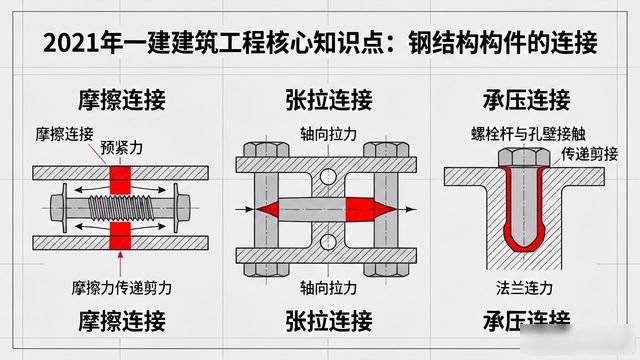
High-strength bolt connection The core knowledge point of the first construction project in 2021: The connection of steel structure components is divided into three forms: friction connection, tension connection and pressure-bearing connection according to the force mechanism. Friction connection uses the friction force generated by bolt pre-tightening force to transmit shear force. It is the basic connection form that is widely used at present. Tension connection is used to withstand axial tension, such as flange connection, which is a crane structure that mixes high-strength bolt connection and welding. Pressure-bearing connections allow the bolt rod to contact the hole wall to transfer shear forces.
What directly determines the bearing capacity is the anti-slip coefficient of the friction connection. There are a variety of friction surface treatment processes, such as sandblasting, pickling, grinding, and manual rust removal with wire brushes. When the design unit selects the anti-slip coefficient, it will be determined based on the importance of the connecting nodes and the load level. The construction unit must choose the corresponding treatment technology. Among them, the sandblasting method has the best effect, but the cost is very high; the wire brush manual rust removal method is suitable for small area repair work.
High-strength bolt installation and hole expansion rules
The high-strength bolts installed on site must be able to freely penetrate the bolt holes during installation and must not be forced into them. If the added bolt cannot pass through easily, you can use a reamer or file to trim the bolt hole, but using gas cutting to enlarge the bolt hole is completely prohibited! It should be clearly understood that gas cutting will cause the hole wall to become rougher and the size to become out of control, thereby reducing the connection strength. Before enlarging the hole, you must first obtain permission from the design unit, and the hole diameter after trimming or enlarging must not exceed 1.2 times the diameter of the bolt.
The connecting pair has two to three exposed threads, which is the standard after the high-strength bolts are finally tightened. It should neither be too tight nor too loose. For torsion-shear type high-strength bolts, the final tightening inspection qualification standard is that the plum blossom head at the tail is visually broken, which indicates that the bolt pre-tightening force has reached the design requirements. During construction, the tightening operation should be performed after the component installation accuracy has been adjusted to prevent uneven stress on the bolts due to changes in component position.
High-strength bolt tightening sequence and time requirements
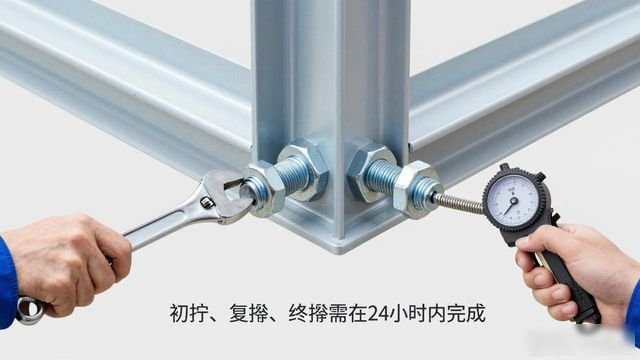
The high-strength large hexagonal head bolt connection pair can be tightened by the torque method or the angle method. The torque method relies on controlling the torque of the wrench to apply the pretightening force, and its operation is relatively simple. The angle method relies on the rotation angle of the nut to control the pretightening force, and the accuracy is relatively higher. In the same joint, the initial tightening, re-tightening, and final tightening of the high-strength bolt connection pair must be completed within 24 hours to avoid overtime and the pretightening force attenuation.
When tightening, in principle, the sequence should be from the part with greater stiffness of the joint toward the direction with less restraint, that is, tighten the bolts one by one from the center of the bolt group toward the surroundings. In this way, the contact surface can bear the pressure evenly and prevent local overload. For large nodes, the process of tightening must be strictly performed three times . For crane structures that are a mixture of high-strength bolted connections and welding , one is the initial tightening to reach 50% of the torque, the other is the re-tightening to reach 80% of the torque, and the other is the final tightening to reach 100% of the torque. Any skipping of steps will affect the quality of the connection.
Construction sequence of high-strength bolts and welded hybrid joints
At the connection nodes where high-strength bolts and welding are used together, if the design document does not provide regulations, it is appropriate to follow the construction sequence of tightening the bolts first and then welding. Tightening the bolts first can fix the position of the component to prevent the bolt holes from being dislocated due to deformation during welding. If you do not follow the steps, but first weld and then tighten the bolts, the heat effect caused by the welding will reduce the pre-tightening force of the already tightened bolts. It may even cause the bolts to become loose.
As far as key nodes such as the crane's main beam and end plate are concerned, the order of using bolts first and then welding can still ensure the quality of welding. After the bolts are tightened, the joint gaps are evenly compressed, the heat input during welding is more stable, and the weld formation is better. The construction unit should check the exposed bolt number again after the welding is completed. If there is any change, it must be re-tightened. Every process needs to be well documented to prepare for quality traceability.
Have you ever encountered problems at the construction site where the construction sequence was reversed, resulting in the connection not meeting the qualified standards? You are welcome to share relevant cases in the comment area, like and bookmark this article, so as to avoid rework later!
发表回复
要发表评论,您必须先登录。