
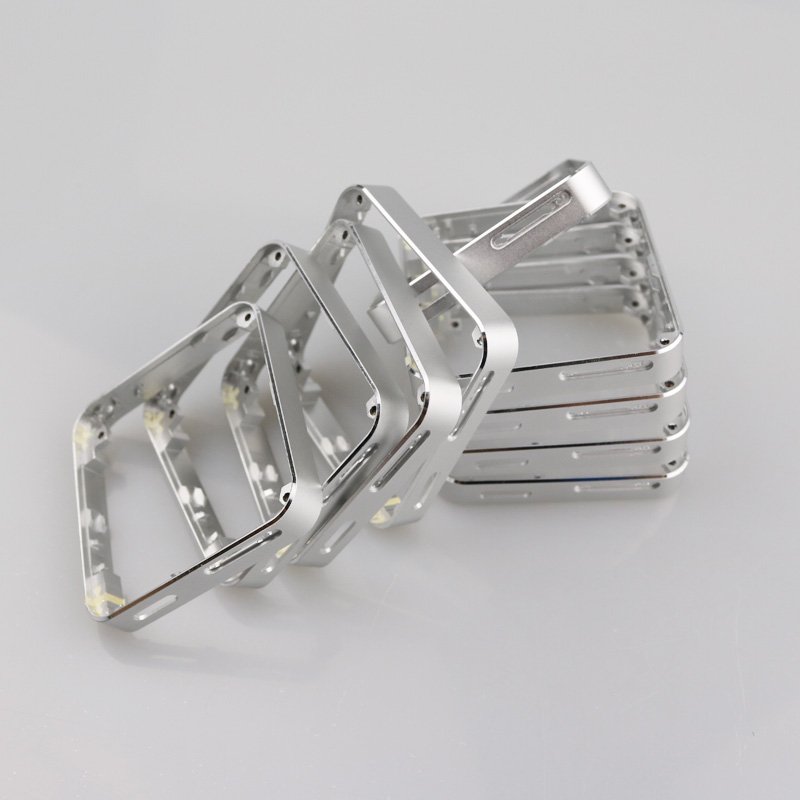
What are the stages of precision mechanical parts processing?
Core tasks in the roughing stage
For the entire processing of precision mechanical parts, the roughing stage is the initial step, and its main purpose is to quickly remove most of the machining allowance. There is a precision processing factory in Longhua, Shenzhen. According to statistical data in 2025, 70% to 80% of the total surplus of parts can be removed during the rough machining stage, and the time spent on processing mostly accounts for about 30% of the entire process cycle. At this stage, we focus on improving productivity, and at the same time, we need to process a precise reference surface for subsequent processes, just like milling a flat surface on a CNC milling machine to use as a positioning reference.

This stage does not pursue high precision, but focuses on efficiency. For example, when processing a steel shaft part with a diameter of 100 mm, the depth of cut on one side is 3 to 5 mm during rough turning. The feed rate is set to 0.3 mm per revolution, and the speed is controlled at about 800 revolutions per minute. This can remove material quickly. However, the surface roughness value after processing is usually around Ra12.5 microns, which is far from the final requirement, so the next stage must be entered.
Quality assurance in the semi-finishing stage
Let’s first look at the semi-finishing stage, which serves as a bridge between rough machining and finishing machining. Its main function is to eliminate defects that may occur during rough machining. Let’s talk about the data given by a company engaged in aerospace parts processing in Shenzhen in 2024. The semi-finishing stage can correct the deformation caused by rough machining by about 0.05 mm, and at the same time reduce the surface roughness to about Ra3.2 microns. This stage will complete the processing of some minor surfaces such as threaded holes, keyways, etc. The purpose is to prepare for finishing.
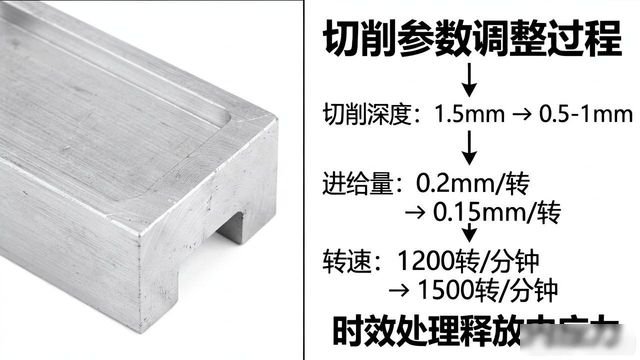
For semi-finishing, the cutting parameters need to be adjusted. Taking the processing of aluminum alloy shells as an example, during semi-finishing, the cutting depth drops to 0.5 to 1 mm, the feed rate is reduced to 0.15 mm per revolution, and the rotational speed is increased to about 1500 revolutions per minute. In this way, a certain processing accuracy can be ensured, and thermal deformation can be controlled to prevent dimensional deviations in the parts during subsequent finishing. In actual production, Shenzhen high-quality mechanical processing plants usually arrange an aging treatment after semi-finishing to release internal stress.
Technical requirements for the finishing stage
The key link that determines the final accuracy of the part is the finishing stage . Shenzhen precision machining industry chain uses large cutting speed, small feed amount and controlled cutting depth at this stage. There is a medical device parts supplier in Shenzhen that will process titanium alloy bone plates in 2025. During finishing, the cutting speed reached 120 meters per minute, the feed rate was reduced to 0.05 mm per revolution, and the cutting depth was controlled within 0.1 mm. Finally, the dimensional tolerance of the part was controlled within ±0.01 mm, and the surface roughness reached Ra0.8 micron.
This stage has extremely high requirements for equipment stability. High-precision CNC machine tools are usually used, and are matched with diamond tools or CBN tools. For example, when processing the mirror part of a precision mold, the surface roughness can be stably below Ra0.4 microns after finishing, thus meeting the high standards of the mold industry. After finishing, the parts basically meet many of the technical requirements on the drawings. However, if the surface requirements are higher, it still needs to enter the finishing stage.
Surface optimization in the finishing stage
It can be used in the finishing processing stage to reduce surface roughness or strengthen the surface. When the surface roughness requirement of the part reaches Ra≤0.32 micron, this step must be carried out. An optical parts processing factory in the Baoan area of Shenzhen will introduce ultra-precision grinding equipment in 2025, which can reduce the surface roughness of stainless steel parts from Ra0.4 microns to Ra0.05 microns. The average processing time for each part is 10 to 15 minutes.
There are finishing processing methods such as honing, polishing, and grinding. The goal is not to remove material, but to improve the surface quality. In this regard, for example, what will happen to the valve hole of the hydraulic valve core after being honed? The surface roughness will be reduced from Ra0.8 microns to Ra0.2 microns, and the cylindricity error will be controlled within 0.002 mm. When the overall finishing process is completed, the wear resistance and sealing properties of the parts will be improved and improved to a large extent. At the same time, the applicability can be defined to include applications in the aerospace and precision instrument fields.
Limit breakthrough in ultra-precision machining stage
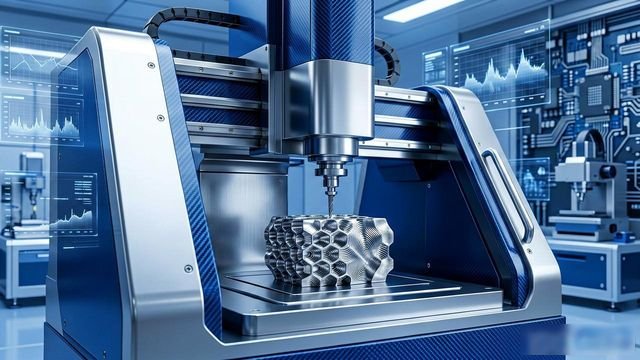
The highest level of precision machining is the ultra-precision machining stage. Its machining accuracy is between 0.1 and 0.01 microns. What are the stages of precision machining parts processing? The surface roughness Ra≤0.001 microns. There is a semiconductor equipment parts supplier in Nanshan District, Shenzhen. In 2026, it adopted an ultra-precision diamond lathe. The lathe can process aluminum alloy mirrors with a surface roughness of Ra0.005 microns. This mirror is used in laser scanning systems. This kind of processing needs to be carried out in a constant temperature and humidity environment, and temperature fluctuations must be controlled within ±0.1 degrees Celsius.
The main methods of ultra-precision machining include precision grinding, precision cutting and mirror grinding. For example, when processing optical lens molds, a single-point diamond turning tool is used. When the spindle rotates at 3,000 rpm, the cutting depth is only 0.5 microns. The final mold surface achieves a mirror effect. The cost at this stage is very high and is generally only used for core key parts. However, it is this technological breakthrough that supports the development of high-end manufacturing in Shenzhen and even the country.
The practical significance of staged processing
Precision machinery parts processing Shenzhen precision machinery processing industry chain is not a redundant process carried out in stages, but an inevitable choice to ensure quality and efficiency. According to the experience of a high-quality machining factory in Shenzhen, if you skip roughing and go directly to semi-finishing, the tool life will be shortened by 40%, and the risk of part deformation will increase by 50%. Proceeding in stages can gradually release stress and correct errors at the same time, ultimately achieving the highest accuracy at the lowest cost.
In the actual production process, the processing technology of the crankshaft of a certain automobile engine covers 6 stages, and the total process is more than 30 steps. The processing cycle from rough machining to ultra-precision machining takes 5 to 7 days. However, it is this step-by-step strategy that ensures that the parts qualification rate is above 99.5%. If you are encountering difficulties in precision parts processing right now, you might as well think about it: Have you planned the machining allowances and process requirements at each stage in your part design? Feel free to share your views in the comment area, like and bookmark this article Shenzhen Precision Machining Industry Chain , so that more peers can know the key processes of precision machining.
发表回复
要发表评论,您必须先登录。