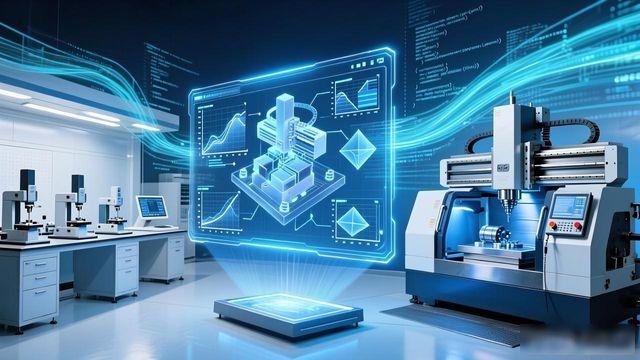


New grinding technology opens a new chapter in production and processing
Intelligent closed-loop control allows automatic adjustment of grinding parameters
In traditional grinding , the operator has to rely on experience to repeatedly adjust the grinding wheel speed, feed speed, and coolant flow rate. This is not only time-consuming, but also error-prone. The new grinding technology uses built-in sensors to monitor the processing status in real time. The system will automatically determine the current grinding situation and dynamically adjust parameters without manual intervention. This closed-loop control mechanism was tested in a precision parts factory in Jiangsu and shortened the machine adjustment time from the original 45 minutes to less than 8 minutes.
In an auto parts workshop in Guangdong, workers noticed that the equipment could automatically reduce the feed speed according to changes in the hardness of the workpiece to avoid overcutting or burns. This adaptive adjustment capability increases the dimensional consistency of each batch of products from the original ±5 microns to ±1.5 microns, and the scrap rate is reduced by more than 60%. The boss calculated an account and found that the annual material loss saved by a single production line exceeded 300,000 yuan.
Ultra-precision grinding achieves nanoscale surface finish
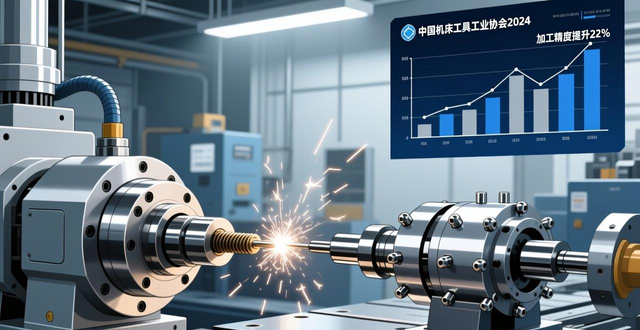
In the past, when processing aerospace gears, a surface roughness of Ra0.2 microns was considered qualified. However, the new process uses a multi-stage grinding strategy and special grinding wheels, and now the stability control is within Ra0.02 microns. This is equivalent to compressing the surface corrugation height to one-fifth of the diameter of a human hair. When the parts run at high speeds, friction heat and noise are significantly reduced. A new grinding technology for grinding at an aerospace engine repair shop in Xi'an opens a new chapter in production and processing. After the technology was introduced last year, the gear life was extended by 40%.
In the standards of medical implant devices, the surface used for contact with human tissue has extremely stringent smoothness requirements that cannot produce even the slightest wear and tear. A company that produces orthopedic implants in Zhejiang adopted a new grinding process to process titanium alloy hip stems. The final surface finish of the product reached Ra0.008 microns, and the product successfully passed the European Union CE certification. The director of quality management in the factory stated that, When each batch of products is subject to random inspection, the passing rate has jumped from 92% to 99.7%, and the general situation of customer complaints about the product has basically been cleared.

Digital simulation verifies the entire processing process in advance
It turns out that in the process of polishing new products, engineers have to make dozens of attempts to find the right parameters, and each attempt is likely to cause valuable materials to be scrapped. Nowadays, with the help of digital twin technology, a virtual machine tool is built inside the computer. When the material classification and specific appearance status of the relevant workpiece are input and the accuracy requirements are set, the software can simulate it on its own and present the entire process from rough polishing to fine polishing in detail. There is a factory in Chongqing that is engaged in mold manufacturing. During the development process of a new project, it successfully reduced the number of attempts to cut off from an average of 22 times to only three times, thus achieving a significant effect of shortening the development cycle of a set of molds by 18 days.
Digital simulation can detect chatter marks, burns or dimensional deviations that may appear during processing in advance. A high-precision simulation model jointly developed by a university in Shanghai and local companies can predict the temperature field distribution under many different coolant flow environments, helping engineers optimize the cutting fluid nozzle angle before going into production. This improvement reduces the amount of thermal deformation by 65% during actual processing, and the form and position tolerance of large-size thin-walled parts changes from 0.03 mm to 0.008 mm.
The Industrial Internet of Things makes the entire production process transparent
Each grinding machine is connected to the Industrial Internet of Things platform, and more than 20 crucial parameters such as spindle vibration, grinding wheel wear, and motor current are uploaded to the cloud every 5 seconds. Managers can see the real-time operating status of all equipment in the workshop on their mobile phones or tablets. Any machine tool with abnormal parameters will automatically pop up an early warning. After an electronic components factory in Suzhou deployed this system, unplanned downtime was reduced by 72%.
The data traceability function makes quality control easier. Once a quality problem is found in a certain part, the operator only needs to scan the QR code to immediately prepare all the grinding parameter curves showing the entire processing process of the part. Process records accurate to the second level help to quickly identify the cause of the problem. A bearing company in Shandong used this function to eliminate the long-standing grinding burn problem within three months. The annual average claim amount dropped from 800,000 yuan to less than 50,000 yuan.
Take the lead in large-scale application in high value-added fields
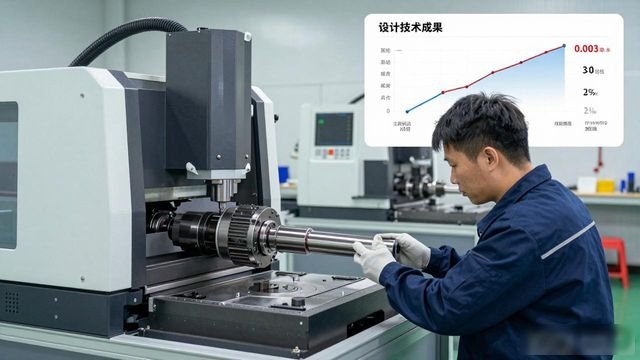
The spindle of a new energy vehicle motor has extremely high requirements for concentricity and surface hardness. It is difficult to achieve both performance with traditional grinding methods. There is a motor parts supplier in Hunan. After adopting a new grinding technology, the spindle runout has been reduced from 0.015 mm to 0.003 mm, the motor noise has been reduced by 3 decibels, and the vehicle endurance test mileage has increased by about 2%. Last year, the company won long-term orders from many leading car companies, and its annual output value increased by more than 200%.
The military supporting company located in Zhengzhou adopts a new process for aerospace precision gears, which can directly complete the integrated processing of gear tooth surface strengthening and fine grinding. This production and processing method eliminates the need for subsequent carburizing processes. Aerospace precision gears need to withstand extreme loads and temperatures. Traditional processing usually requires additional surface treatment. The new process has drastically shortened the production cycle from 14 days to 5 days. Furthermore, after this batch of gears underwent 1,000 hours of bench testing, the amount of tooth surface wear was only one-third of that of traditional products.
Green energy saving reduces comprehensive production costs
The new grinding technology, with the help of precise control of coolant consumption and the recovery and filtration system, reduces the cutting fluid consumption of each workpiece by about 40%. Statistics from a grinding tool factory in Zhejiang showed that the annual purchase cost of coolant dropped from 1.2 million yuan to 720,000 yuan, and the cost of wastewater treatment also decreased. The environmental protection manager of the factory stated that this system helped them improve the local environmental rating from C to B.
In terms of energy consumption, it also shows significant effects. The adaptive grinding power control allows the equipment to output full power only when there is demand. There is a cemented carbide tool factory in Guangdong. Comparing the data before and after the transformation, the daily power consumption of a single grinder has been reduced from the original 280 degrees to 175 degrees. Calculated based on 0.8 yuan per kilowatt hour of electricity, a production line with 20 pieces of equipment can save about 160,000 yuan in electricity bills every year. The factory's technical director said that the money saved can be used to pay for the cost of system maintenance, and it only takes three years to achieve a return on investment.
Do business owners also encounter difficulties in grinding accuracy or efficiency bottlenecks? Go to the comment area and tell us about your specific problems. We will study together whether the new grinding technology can help you solve it. If you think it is effective, then give it a like and share it with your peers.




暂无评论内容