

Core knowledge points of First Construction Engineering in 2021: Connection of steel structure components
Four methods of connecting steel structures, how many have you mastered?
Be wary of welding defects
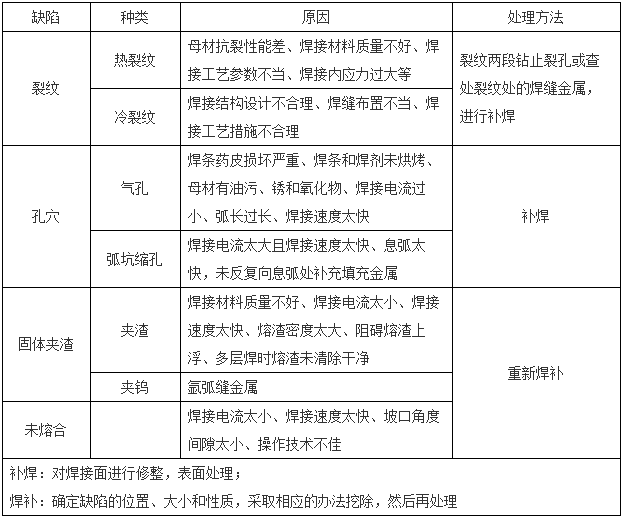
When connecting steel structures, the most commonly used method is welding. However, if the operation is incorrect, various defects will occur. Common weld defects include cracks, pores, slag inclusions, lack of fusion, and undercuts. Among them, cracks are the most dangerous defects, which will directly affect the safety of the structure and must be dealt with in time.
When performing welding operations at the construction site, relevant operators must strictly control the welding current and speed. Preheating before welding and insulating after welding can effectively reduce the occurrence of cracks. Once defects occur, they need to be repaired in time. For welding defects in important parts, non-destructive testing must be carried out to confirm.
Key points of common bolt connections
It has three connection forms, mainly flat connection, lap connection and T-shaped connection, just like ordinary bolt connection. The bolt arrangement can be either parallel or staggered. The staggered arrangement can be used to improve the connection strength. During actual construction, the appropriate arrangement must be selected based on the stress conditions.
![图片[1]-Core Knowledge Points Of First Construction Engineering In 2021: Connection Of Steel Structure Components-Dalian Fuhong Machinery Co., Ltd](/wp-content/uploads/2026/06/1780848541138_0.png)
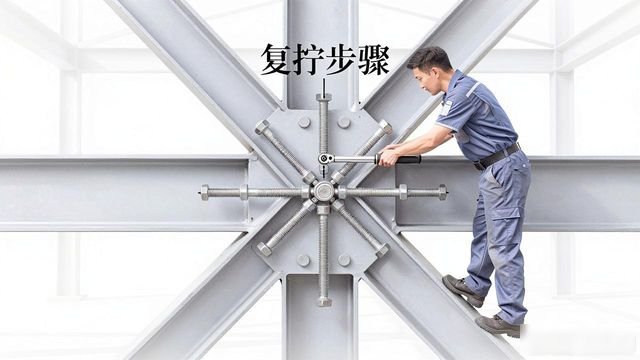
When tightening the bolts, start from the center and then move toward both sides in a symmetrical manner. This sequence can make the stress on the bolts tend to be uniform, thereby preventing stress concentration. For large joints, it is necessary to use the method of double tightening, that is, to go through two tightening operations to ensure that the force of each bolt is uniform.
High strength bolt connection form
High-strength bolted connections are divided into three types: friction connections, tension connections and pressure-bearing connections. Among these three types, friction connection is the most commonly used form today. It transfers load by means of friction. This connection method has the characteristics of good seismic resistance, and it has been widely used in large steel structure projects.
The factor that affects the quality of the connection is the treatment of the friction surface. Common treatment methods include sandblasting, pickling, grinding, and wire brush manual rust removal. The specific method to choose depends on the anti-slip coefficient required by the design, which needs to meet the design requirements.
High strength bolt installation specifications
When installing high-strength bolts on site, the bolts must be able to freely penetrate into the bolt holes and cannot be forcibly knocked in. If it cannot be penetrated, you can only use a reamer or file to trim the bolt hole. Never use gas cutting to expand the hole. The number of reamed holes must be approved by the design, and the hole diameter after trimming shall not exceed 1.2 times the diameter of the bolt.
After the final tightening of the bolt is completed, two to three threads should be exposed at the tail. For torsion-shear type high-strength bolts, the qualification standard is to visually inspect whether the torx head at the tail is twisted off. The tightening operation should be carried out after the installation accuracy of the components has been adjusted, so as to ensure the quality of the connection.
The bolt tightening sequence is particular
High-precision large hexagonal head bolt connection pairs can be tightened using the torsion torque method or the angle method. The initial tightening, re-tightening and final tightening of the same joint must be completed within 24 hours. This time limit is to ensure that the bolt connection effect is stable.
Arrange the tightening sequence to advance from the location with greater joint stiffness toward the direction of less constraint. The direction of advancement is from the center of the bolt group toward the surroundings. This sequence can make the bolt stress more even. If the joint uses high-strength bolts and welding at the same time, generally speaking, the bolts must be tightened first before welding.
Mixed connection construction sequence
In actual projects, we often encounter connection nodes where high-strength bolts and welding are used together. In this case, the construction sequence must follow the principle of tightening the bolts first and then welding. Tightening the bolts first can ensure that the connection nodes remain stable, and then welding will not affect the stress state of the bolts.
Construction workers need to pay special attention. The high temperature generated during welding is very likely to affect the pretension of the bolts that have been tightened. Therefore, the construction sequence must be reasonably planned. If necessary, the tightening status of the bolts should be checked again after the welding is completed. Only in this way can the safety and reliability of the steel structure connection be ensured.
The time for the 2021 First-Class Construction Engineer Examination is getting closer and closer. Have you made preparations for reviewing the construction engineering subjects? How do you remember the steel structure connection test points? Candidates are welcome to share their learning experiences in the comment area. Please remember to like and bookmark this article. Let's make comprehensive preparations for the exam together!






暂无评论内容