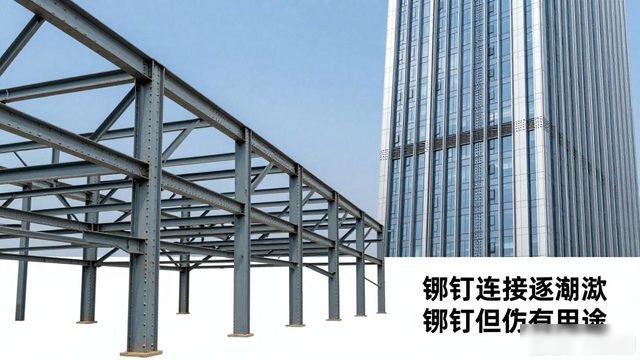


What are the connection methods of steel structures?
Welded connections are the most common but technically demanding
The most widely used method in steel structure construction is welding, which uses the high temperature of an electric arc to melt metal to achieve a permanent connection. In a super high-rise project in Shenzhen in 2025, the total number of on-site welds will exceed 80,000, and welders must hold certificates before they can work. 焊接 has a simple structure and convenient processing, and is suitable for all types of steel components. However, the construction will be greatly affected by weather and operating level.
Welding connections are sensitive to temperature and humidity. If construction is carried out in winter, preheating is required. In 2024, the construction site in Beijing Daxing once cracked welds due to low temperatures, and the loss caused by rework exceeded 2 million yuan. After welding is completed, non-destructive testing, such as ultrasonic flaw detection, needs to be carried out to ensure that the quality is up to standard.
Bolted connections are removable and quick to install
Bolt connections are divided into two categories: friction type and pressure-bearing type. The former relies on the friction between the bolt and the hole wall to achieve the transmission of shear force, while the latter relies on early pre-pressure to resist external loads. In the venues related to the Asian Games held in Hangzhou in 2023, 90% of the overall steel structure nodes were connected using high-strength bolts, which reduced the entire installation period by fifteen days.
When installing friction-type high-strength bolts, a torque wrench must be used, and the pretightening force must be strictly controlled. The pressure-bearing type is suitable for situations where it can withstand larger loads, such as the nodes of bridge structures. Bolted connections can be disassembled and replaced at any time to facilitate subsequent maintenance and modification.

Rivet connections are gradually being phased out but still have uses
Riveting is a non-detachable permanent connection method that relies on the deformation of rivets to lock components. As welding technology gradually matures, the use of riveting as a connection method in modern building steel structures has become less and less common. Statistics made in 2022 can show that among new projects, the proportion of riveting used is less than 5%.
However, within the scope of railway bridges and heavy machinery, riveting still has advantages. In this way, the service life of the vibration-producing parts of a railway bridge in a mountainous area was extended to 30 years by riveting. The rivet connection can withstand relatively large impacts and vibrations, and is suitable for occasions with harsh environments.
Sleeve grouting connections are designed for prefabricated assembly
This connection method is mainly used between precast concrete components. The steel bars are inserted into the steel sleeves and cement-based materials are poured into them to fix them. In 2025, there will be a prefabricated residential project in Shanghai that uses more than 12,000 sleeve grouting nodes, and the construction efficiency of this project has been improved by 40% compared with traditional welding.
For sleeve grouting connections, the requirements for grouting materials are very strict. The construction environment should be at least above 5°C. After grouting is completed, the fullness must be tested, otherwise it will affect the bearing capacity. This connection method is becoming more and more popular in high-rise buildings and bridge projects.
Hybrid connections take advantage of multiple methods
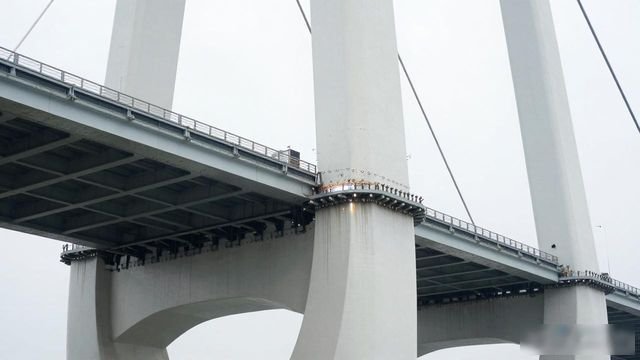
Large and complex projects often use a combination of welding and bolting to achieve both strength and disassembly. In 2024, the main tower nodes of a cross-river bridge in Chongqing used welding and friction-type high-strength bolts. With this method, the overall stiffness was ensured and it was facilitated and facilitated later.
When making hybrid connections, precise design is required for node stress distribution to avoid stress concentration. For example, during operation, the bolts are pre-tightened first and then welded, so that welding deformation can be reduced. However, the construction process of this method is relatively complex, requires high technical and coordination skills, and the cost will increase accordingly.
Actual selection requires comprehensive consideration of multiple factors
Various connection methods have their own applicable scenarios. When selecting, you need to consider the size of the load, environmental conditions, construction cycle length, and cost budget. For example, for projects with rapid construction characteristics, the bolt connection method is preferred, for projects that bear heavy loads and do not require disassembly work, the welding connection method is used, and for projects in vibration situations, the riveting connection method should be further considered.
Before drawings are produced, the design institute will carry out multiple program comparisons, such as using finite element software to simulate stress situations. New regulations formulated by the Ministry of Housing and Urban-Rural Development in 2025 require that all connection plans for steel structures in public buildings must be reviewed and approved by experts.
What do you think is the biggest difficulty in the hybrid connection of welding and bolting in actual projects? Welcome to share your views in the comment area, like and bookmark this article for future reference.






暂无评论内容