

Titanium rod|Core performance parameters + industry-wide application summary (dry information)
Lightweight and high strength is the hard power of titanium rods to crush traditional steel.
In the aerospace field, a specific aircraft factory in Shenyang began to make changes at this time in 2024. Titanium rods | Core performance parameters + industry-wide application summary (dry goods), replacing the originally used 35CrMo steel with TC4 titanium rods to make some components of the landing gear. Each single piece can reduce the weight by 37%, but the tensile strength has increased by 12%. The density of the titanium rods is only about 4.5g/cm³. Compared with stainless steel, it is almost half lighter, which means that the aircraft can increase its load capacity or reduce its fuel consumption, which is something that stainless steel and carbon steel can never achieve.
For precision machining, the ratio of strength to weight of titanium rods is extremely critical. There is an automation equipment company in Shenzhen that replaced the original No. 45 steel shaft parts with titanium rods. After that, the overall weight of the equipment dropped by 40%, resulting in a smaller motor load and an 18% reduction in energy consumption. Due to the direct economic benefits brought by lightweighting, more and more hardware processing factories have begun to list titanium rods as their preferred material.
Corrosion resistance and high temperature resistance make titanium rods everlasting under harsh working conditions.
Titanium rods can still maintain stable performance at high temperatures of 500°C, whereas ordinary carbon steel begins to soften and oxidize at 300°C. The reactor pipes of a chemical plant in Shandong were previously made of 316L stainless steel, and parts had to be replaced every August. After all were replaced with TA2 pure titanium rods in 2023, they have been running continuously for 28 months without any signs of corrosion. Although the cost of a single pipe replacement has increased by as much as three times, the overall maintenance cost has dropped by 60%.
Titanium rods have outstanding performance in the field of marine engineering. There is an offshore platform project in Guangdong that uses titanium rods as fasteners for seawater desalination equipment. In a harsh environment with a salt spray concentration of up to 50 ppm, the surface of the titanium rods only has a dense oxide film protective layer. However, the stainless steel bolts installed at the same time have been rusted and broken up to 4 times. Titanium rods have obvious advantages in terms of life cycle costs.

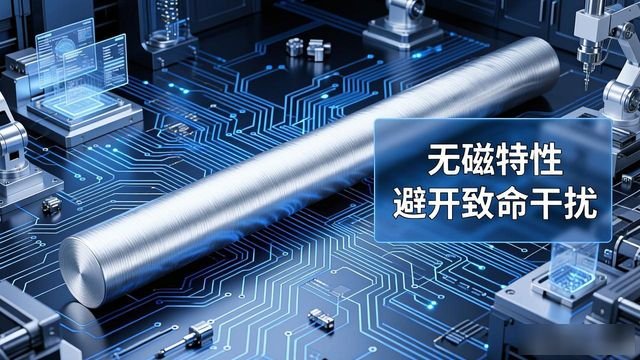
Non-magnetic properties avoid fatal interference in precision machining
When processing many hardware parts, the most feared thing is that the materials are magnetic. TC4 titanium alloy rod is a non-magnetic material with a magnetic permeability less than 1.0001, which is strictly needed in the processing of high-precision instruments and medical equipment. There is a military parts factory in Suzhou that originally used 304 stainless steel to make gyroscope parts. Due to the micromagnetic nature of the material, the calibration error reached 0.5%. After switching to titanium rods, the error was directly reduced to less than 0.02%.
For medical implants, the non-magnetic requirements are more stringent, not just general magnetic requirements. An orthopedic hospital in Beijing purchased 2,000 sets of titanium rod artificial joints in 2024, all of which successfully passed the MRI compatibility test. The situation is different for medical implants made of ordinary stainless steel. If the medical implant is made of ordinary stainless steel, patients will produce image artifacts and even heat during postoperative MRI examinations. However, medical implants made of titanium rods are not affected by the above conditions at all. Currently, non-magnetic properties are gradually becoming one of the core indicators for the selection of high-end hardware parts.
Biocompatibility opens new market for medical-grade processing
Titanium rods are among the few metal materials that can be in direct contact with human bones and will not produce any rejection reaction after contact. There is a medical device factory in Chengdu that uses TA2 high-purity titanium rods to process dental implant abutments. The products it produces have passed ISO 10993 biocompatibility certification, and its annual sales have exceeded 100,000 pieces. During the same period, similar products using cobalt-chromium alloys had an allergy complaint rate of 3.2% due to the release of nickel ions, while titanium rod products had zero complaints.
Another major application of titanium rods is orthopedic fixators. There is an orthopedic device company in Shanghai that uses TC4 titanium rods to produce bone plates. The tensile strength of this bone plate has reached 895MPa, which is 25% higher than traditional stainless steel, and its elastic modulus is closer to human bones. In 2025, the market share of the company's titanium rod products soared from 15% to 38%, directly taking away the market share of traditional stainless steel and cobalt-chromium alloys.
Excellent processing performance makes factories willing to take the initiative to change materials
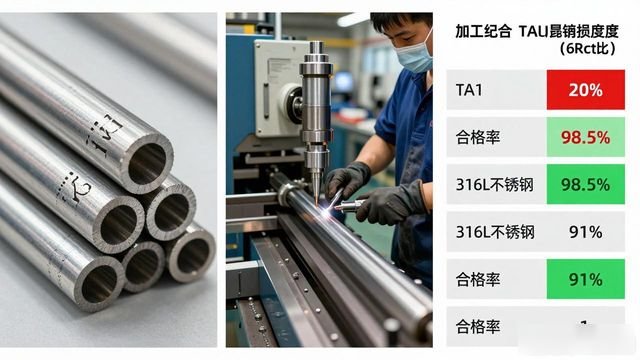
Many people mistakenly believe that titanium rods are difficult to process. In fact, the cutting performance of TA1 pure titanium rods and TA2 pure titanium rods is good. A hardware processing factory in Dongguan gave feedback that when using TA1 titanium rods to process precision shafts, the wear rate of the tool is only 20% higher than when processing aluminum alloys, but the pass rate of the finished product can reach 98.5%. When processing 316L stainless steel, the tool frequently chipped due to poor heat conduction, and the pass rate was only 91%.
Titanium rods have better welding performance than stainless steel. There is an aerospace parts factory in Xi'an that uses automatic welding technology to connect TC4 titanium rods, and the weld strength reaches 95% of the base metal. However, under the same conditions, when welding 304 stainless steel, the weld strength is only 80% of the base metal. This shows that titanium rods have more advantages when making complex structural parts, and the factory can reduce welding defects and rework costs.
New energy and outdoor sports are igniting new demand for titanium rods
New energy vehicles have a strong desire for lightweight materials, and this desire is changing the supply chain. CATL purchased 500 tons of titanium rods in 2024. These titanium rods are used for battery pack fasteners. Compared with traditional steel parts, their weight is reduced by 55%, and their anti-vibration fatigue life is also improved. Leading car companies have begun to require suppliers to include titanium rods in the standard material list, and demand is expected to triple by 2027.
There is a bicycle brand in Shenzhen. It replaced the aluminum alloy seat tube of the frame with TC4 titanium rods. Afterwards, the weight of the entire vehicle was reduced by 200 grams, and its riding comfort was also significantly improved. One obvious situation is that after this bicycle brand targeting the high-end outdoor sporting goods field used this changed product, the order volume of the brand's titanium rod components increased by 340% year-on-year in the first quarter of 2026. This is a trend caused by the development trend of lightweight and high durability of outdoor equipment. A new market worth hundreds of billions is being opened for titanium rods.
After reading this, which traditional materials do you think titanium rods can replace in the processing of hardware parts in your factory? Welcome to share your experience in material selection in the message area, like this article and save it, and forward it to friends who also pay attention to high-end materials.




暂无评论内容