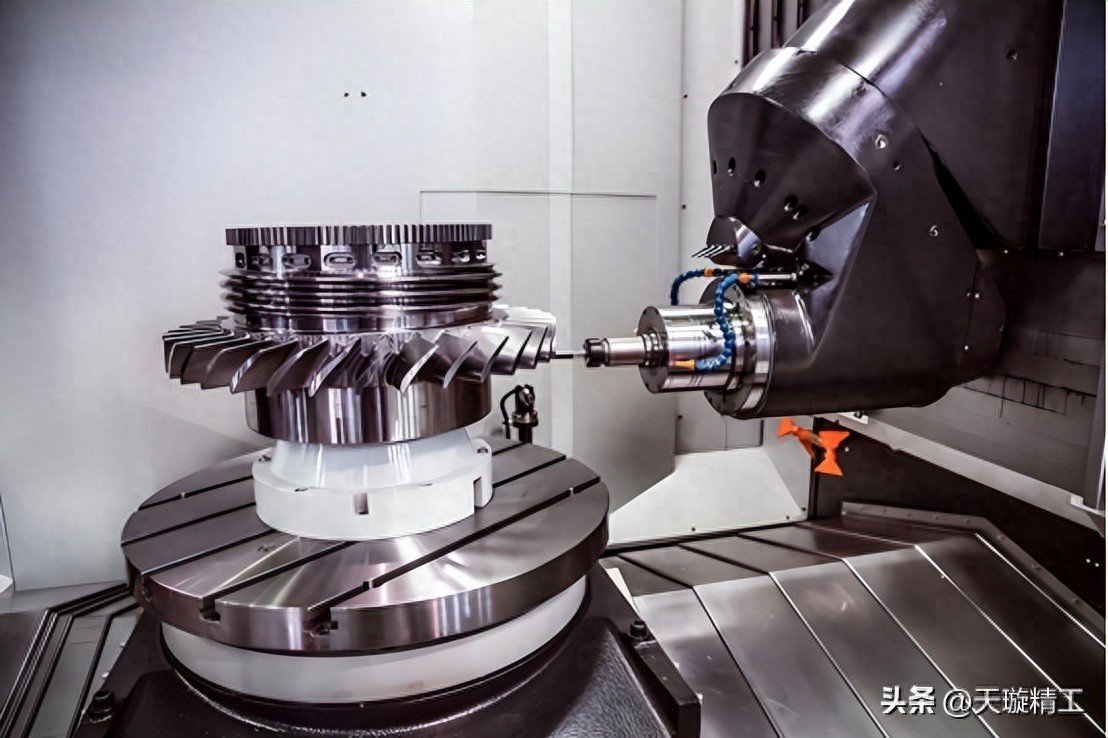


Suzhou factory practical technology: solving the problem of stainless steel CNC work hardening
Tool selection efficiency doubled

Tool wear is one of the most prominent pain points in stainless steel processing. 304 and 316 stainless steel have high hardness, and ordinary tools are prone to wear. Stainless steel processing market prospects , Tianxuan Precision chooses high-cobalt or nano-coated tools, resulting in a 20% to 30% reduction in cutting speed, while the feed rate increases by 10%. In this case, the surface hardened layer will not become too thick, thereby extending the tool life.
For parts with thin-walled features, corrugated edge end mills can reduce vibration. In 2025, a certain medical device customer in Suzhou originally used ordinary tools to process stainless steel conduit connectors, but the scrap rate of each batch was as high as 15%. Later, they switched to Tianxuan Seiko's tooling solution, and the scrap rate was reduced to less than 2%, and the cost per piece dropped by 18%.
Cool in place and the chips won’t stick
A common problem is that stainless steel chips will stick to the knife. Chips sticking to the blade will lead to out-of-tolerance dimensions. The Haas equipment owned by Tianxuan Precision is equipped with a programmable cooling nozzle, and its pressure has reached 70bar and above. The coolant under high pressure is sprayed directly towards the area where the chips are formed, taking away the heat in an instant.
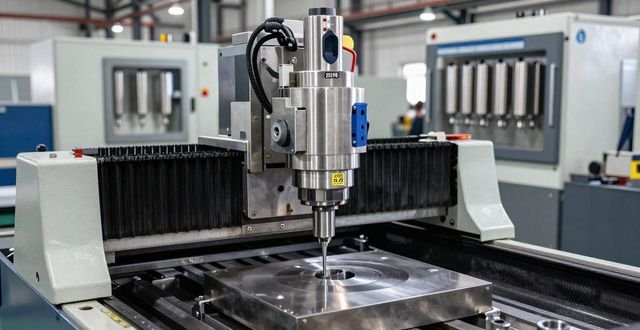
For deep holes and inner cavity features, the cooling nozzle will automatically adjust its angle. In 2024, there was a semiconductor equipment manufacturer in Suzhou Industrial Park. When processing stainless steel cleaning machine nozzles, knife sticking occurred frequently. After Tianxuan Precision made adjustments to the cooling strategy, the dimensional stability of each batch of 300 products was improved, and the tool replacement frequency was reduced from 2 times per shift to 1 time per shift.
Stress Relief Dimensionally Stable
The processed stainless steel is very easy to be thermally deformed. When it is roughed, if the stress is not relieved, the dimensions will deviate during the finishing process. For precision structural parts such as bearing seats and guide rail sliders, Tianxuan Precision will add stress relief tempering or cryogenic treatment. The temperature of cryogenic treatment can reach minus 196 degrees Celsius to release residual stress.
Showing measured data, there is a market prospect for stainless steel processing of cryogenically treated parts, and its long-term dimensional stability is increased by 40%. In 2025, there was an automation equipment factory in Wuxi. Originally, the size would change after 24 hours of processing. However, after adopting Tianxuan Seiko's solution, the size remained within 0.003mm after 72 hours of storage, and the customer could directly put it into storage without inspection.
Detection drives accurate repair
Every key dimension must be tested to ensure that consistency. For this operation of Tianxuan Seiko, the German Zeiss three-dimensional coordinate system was used to carry out a comprehensive inspection process and generate the corresponding SPC report. After the system runs itself and automatically analyzes the data, it is found that the tool has a wear trend, such as the hole diameter gradually becoming smaller. In this case, the tool change command will be triggered immediately.
With this data-driven approach, out-of-tolerance situations in batches are avoided. In 2023, a precision electronics factory in Zhejiang processed stainless steel sensor housings. This batch had a 0.005mm accuracy requirement. Tianxuan Precision used online probe detection and three-dimensional coordinate review to eliminate any rework for 12 consecutive batches. Customers call this "inspection-free" processing.
Material matching process customization
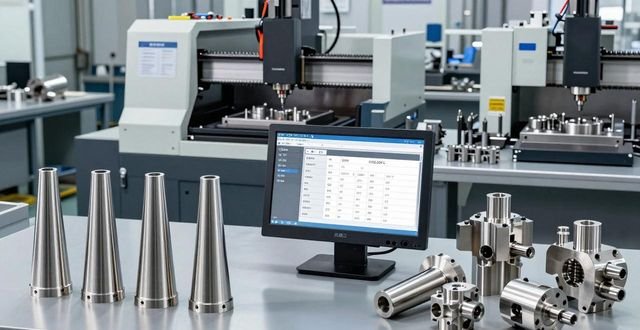
A variety of different stainless steel materials require different processes. Type 304 stainless steel is suitable for clean environments, such as the nozzles of semiconductor cleaning machines. 316 stainless steel has better corrosion resistance and is used in medical devices. Tianxuan Precision adjusts the parameters according to the characteristics of the material. Aluminum alloy 6061 is suitable for lightweight parts. When processing titanium alloy, the cutting temperature must be controlled below 300 degrees Celsius.
In 2025, there was a drone company in Suzhou that needed to process a titanium alloy motor base. Tianxuan Precision controlled the cutting temperature and cooling flow. There was no oxide layer on the surface of the part. After the assembly was completed, the motor ran in a stable state. According to customer feedback, the processing cycle was shortened by 40%, and the cost was 15% lower than its peers.
Zero threshold quick response
Tianxuan Precision has no minimum order quantity constraints and can produce even one piece. It has a constant-temperature clean workshop with two access control monitors, which is suitable for R&D projects with outstanding confidentiality. The process team gave DFM suggestions. For example, the original design of a precision structural part required wire cutting and grinding. After changing to five-axis one-time clamping, the cost was reduced by 25%.
In 2024, there was a medical device start-up company in Shanghai that urgently needed 10 stainless steel surgical instrument samples. After Tianxuan Seiko received the order, it took 72 hours to complete the processing. And the actual technology of the Suzhou factory: solving the problem of stainless steel CNC work hardening, all dimensions have reached the indicated standards. The customer then proceeds to place an order directly for mass production.
Which specific step is the most difficult to control costs when you are processing non-standard precision parts? Please share your experience in the comment area, like this article and save it, so that more people can avoid the pitfalls in the stainless steel processing process.




暂无评论内容