

What is the difference between ordinary sheet metal processing and precision sheet metal processing?
Friends in the field of machining all know that there is not much difference between sheet metal processing and precision sheet metal processing from the name alone, and the cost difference between precision machining and ordinary processing . However, the actual manufactured products are quite different in terms of accuracy, cost and delivery time. Many purchasing personnel and engineers often confuse these two concepts when looking for suppliers. As a result, they either spend money in vain and fail to meet expectations, or the products they receive do not meet the requirements. Today we will explain the core differences between the two at once.
Ordinary sheet metal relies on manual labor and traditional equipment, while accuracy relies on experience.
Ordinary sheet metal processing mainly relies on traditional punch machines, shears, bending machines and other equipment. At this time in 2026, there are still many small processing plants using these old-fashioned machines. Operators need to rely on experience to adjust the molds and angles. For example, in the hardware processing areas of Dongguan, Guangdong and Kunshan, Jiangsu, ordinary sheet metal factories still account for a large proportion of the cost difference between precision machining and ordinary processing . They are suitable for making chassis shells, electrical control cabinets and other products that do not require high precision.
The accuracy of ordinary sheet metal processing is generally in the range of plus or minus 0.5 mm to 1 mm. For products such as ventilation ducts, such accuracy can fully meet the usage requirements. However, if you want to use it to make internal structural parts of precision instruments, this level of error is unacceptable! The biggest problem in ordinary sheet metal processing is the lack of product consistency. Parts processed in the same batch will have obvious differences in size. The main reasons are errors in manual operation and mechanical gaps in the equipment itself.
CNC equipment for precision sheet metal is driven by data with high accuracy
High-end equipment and tools such as CNC punch machines, laser cutting machines, and CNC bending machines are used in precision sheet metal processing. These precision equipment, represented by Germany's TRUMPF, Japan's Amada and other brands, are controlled with the help of computer programming. As long as the operator inputs the drawing parameters, the machine will automatically complete the processing of these equipment controlled by computer programming. These precision equipment can achieve processing accuracy within the range of plus or minus 0.05 mm to 0.1 mm, which is equivalent to the thickness of a hair.

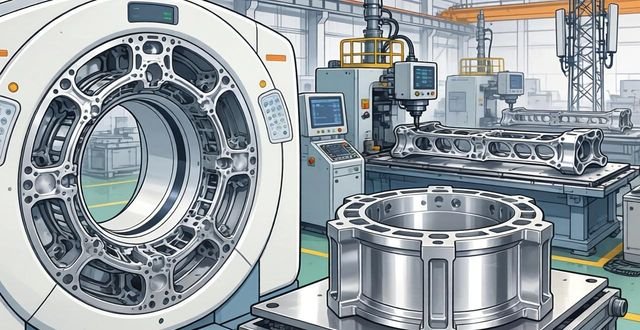
In places with prosperous manufacturing industries such as Shenzhen and Suzhou, precision sheet metal processing has become a standard component of high-end equipment manufacturing. For example, the internal skeleton of medical CT machines, the core shielding parts of communication base stations, and structural parts for aerospace all require precision sheet metal technology. These equipment are equipped with automatic detection and compensation systems that measure plate dimensions in real time during the processing process and automatically correct any deviations once they are discovered to ensure that every product closely meets the drawing requirements.
Ordinary sheet metal is suitable for large-volume products and the mold cost is spread thinly
A significant advantage of ordinary sheet metal processing is that it is suitable for mass production. Because traditional stamping requires opening molds, the mold opening cost of a set of molds ranges from a few thousand to tens of thousands of yuan. However, if the order quantity reaches tens of thousands or even hundreds of thousands of pieces, the mold cost allocated to each part will be extremely low. The hardware processing factory in Zhejiang Yongkang relies on this model to survive, and the orders they undertake are often hundreds of thousands of common parts.
However, ordinary sheet metal has an obvious shortcoming, which is that the mold change time is extremely long. When switching from one product to another, the downtime for adjustment may be between half an hour and two hours, so it is extremely uneconomical for small batch orders. For example, if only 100 parts need to be processed, the individual cost will be unimaginably high, including mold opening costs and mold change time. This is the reason why ordinary sheet metal factories are unwilling to accept many small batch custom orders.
Precision sheet metal does not require molds, small batches are cost-effective and fast
The most prominent highlight of precision sheet metal processing is that there is no need to open a mold. All cutting shapes and bending shapes are directly controlled by computer programs. From receiving drawings to processing the first finished product, it generally only takes a few minutes to half an hour of preparation time. This means that even if you only make one part, the cost will not be much higher than making a hundred parts. It is extremely suitable for proofing, small batch production and customization needs.
In Shanghai Zhangjiang High-Tech Park, many R&D start-ups use precision sheet metal processing to quickly iterate products. They send the drawings to suppliers in the morning, get physical samples in the afternoon, and can make test modifications on the same day. Such rapid response capability is difficult to achieve in ordinary sheet metal factories. The delivery cycle of precision sheet metal is generally only 3 to 5 days, but ordinary sheet metal plus mold opening time takes at least two weeks. For products in the research and development stage, time is equivalent to money.
Ordinary sheet metal is cheap but prone to scrap and has high hidden costs.
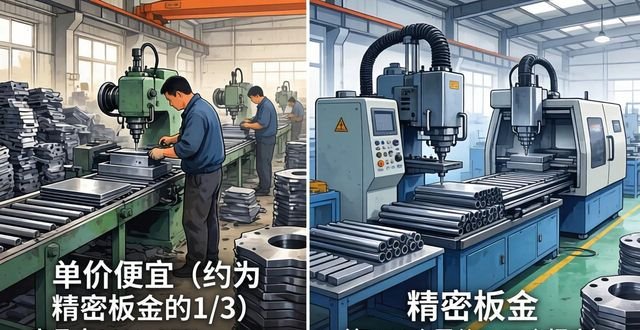
When ordinary sheet metal is processed, its unit price is indeed cheap. For each part, the cost of processing may be only one-third of that of precision sheet metal, or even lower. However, where the problem arises is that the yield is not stable enough. According to statistics from the industry, the overall yield rate of ordinary sheet metal processing is probably within the range of 90% to 95%. In other words, every time 100 parts are processed, 5 to 10 parts will need to be reworked, or directly face scrapping.
What’s more troublesome is that dimensional deviations caused by ordinary sheet metal processing are usually not discovered until the assembly stage. For example, you processed a hundred chassis panels, but when you assemble them, you realize that there is a deviation in the screw hole position. The deviation reaches 0.8 mm, making all the panels unusable. What is the difference between ordinary sheet metal processing and precision sheet metal processing? , the hidden costs caused by this kind of rework and scrapping are much higher than the saved processing costs. Therefore, for those products that require assembly and coordination, choosing precision sheet metal may seem more expensive, but in fact the total cost will be lower.
Upgrading from ordinary to precision requires changing equipment and changing management.
For many traditional sheet metal factories that are thinking of transforming into precision machining, this is by no means a problem that can be solved by simply purchasing a few new pieces of equipment. First of all, the scale of equipment investment is huge. The price of an imported CNC bending machine ranges from 500,000 to 1 million, while the price of a laser cutting machine starts from 2 million. This is a huge financial pressure for a small factory with an annual output value of only a few hundred people. In Dongguan, it is true that many processing plants have broken their capital chain due to blindly adding equipment.
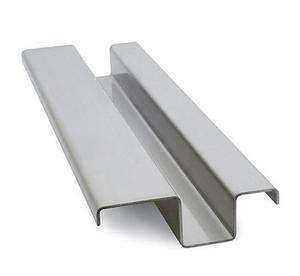
Leaving aside the equipment for the moment, the management method must also be completely changed. The management of ordinary sheet metal factories is relatively extensive. Drawings are transmitted by versions on paper, and quality inspection relies on spot checks with calipers. However, precision machining requires the construction of a complete digital management system, from the receipt of drawings to the production of processing procedures. Complete, then monitor the equipment status, until the three-dimensional coordinate measuring instrument starts the full inspection process, each step must be recorded and traceable. Operators also need to be trained again, from operating by feel to becoming skilled workers who can understand programming codes and operate CNC panels.
Having said a lot, I want to ask you a question. In your actual production, have you ever encountered a situation where the product was scrapped or delayed due to choosing the wrong sheet metal processing type? You are welcome to share your experience in the comment area, like and bookmark this article, so that more friends engaged in procurement and engineering can avoid detours.




暂无评论内容