Blog

  • How many kinds of rivet welding operation methods? Comprehensive analysis of the 5 mainstream processes and applications

    wonderrivet weldingAre there actually several ways to operate?
    This article explains in detail the hot rivets, cold rivets, pull rivets, core rivets and ring groove rivets 5 process principles, steps and applicable scenarios, an article to read and understand!

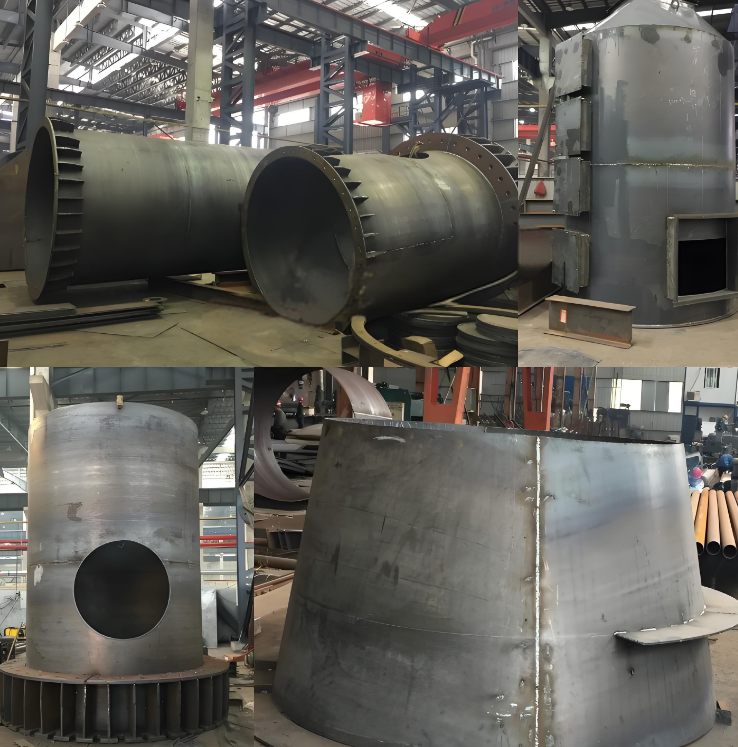
    图片[1]-铆焊的操作方法有几种?全面解析5大主流工艺与应用-大连富泓机械有限公司
    How many ways are there to operate rivet welding? Master all the mainstream processes in one article

    INTRODUCTION: Briefly describes the critical role of riveting in structural steel, marine, and aerospace, and asks the central question, “How many ways are there to operate riveting in the face of different materials and requirements?”

    I. Five major classifications of riveting and welding operation methods

    1. Hot Riveting – traditional and robust

    (Principles, steps, advantages and disadvantages, application scenarios)

    2. Cold Riveting – The choice for efficiency and convenience.

    (Principle, tools required, application)

    3. Pull Rivet (Blind Rivet / Blind Rivet) – A revolution in one-sided operation

    (Highlights, operating procedures using a rivet gun)

    4. Blind riveting – the faster riveting variant

    5. Ring-grooved riveting – a high-strength alternative to bolts

    II.How to choose the right riveting method for your project?

    (Provides selection guidelines in four dimensions: material thickness, strength requirements, accessibility, and productivity)

    III. Core safety operating guidelines (must be followed regardless of method)

    Conclusion & Call to Action (CTA): Mastering categorisation is the first step, want to know the specific details and techniques of how each method works? We’ve got you covered with detailed video tutorials (links to articles II/III).

    FAQ.

    “Which is the most common method of riveting?” (Answer: Pull riveting is currently the most widely used in maintenance and manufacturing because of its convenience.)

    “Which is stronger, hot riveting or cold riveting?” (A: Typically, hot riveted connections are slightly stronger when done correctly, but cold rivets are adequate for most scenarios.)

    “Which method should a beginner start learning?” (A: It is recommended to start with riveting using a rivet gun; the tools are easy to obtain, the operation is safe, and it is easy to build confidence.)

  • Equipment Manufacturing Industry under the Perspective of Globalisation: Industry Chain Synergy and New Pattern of Market Competition

    Analysing how globalisation is shapingModern equipment manufacturingof the industry chain. Discuss how localisation strategies, technological innovation and cooperation models can help companies find their position and win the market in the new landscape.

    After decades of deep globalisation and integration, the equipment manufacturing industry chain has spread to all corners of the world. However, global events in recent years are reshaping the landscape, prompting companies to look at their globalisation strategies from a new perspective and pay more attention to the synergy and resilience of the industry chain.

    1. Division of labour and collaboration in the global industrial chain A high-end CNC machine tool may contain a controller from Germany, precision bearings from Japan, structural parts from China and software from the United States. This deep international division of labour makes the optimal allocation of resources and reduces the cost of the final product

    2. Emerging current challenges and trends Supply chain security and resilience: Epidemics and geopolitical conflicts have exposed the vulnerability of very long supply chains. Enterprises are seeking to “localise” or “near-shore outsource” to shorten supply chains and improve response times. The rise of technological protectionism: the acquisition and protection of core technologies have become the focus of competition between countries, which has raised new issues for international technological cooperation among equipment manufacturing enterprises. Impact of regional trade agreements: The entry into force of regional FTAs, such as RCEP, is reshaping the industrial chain layout in the region.

    3. Winning Strategies in the New Landscape Building an Agile and Transparent Supply Chain: Use digital tools to achieve real-time visual monitoring of the global supply chain and establish a diversified supplier system. Deep ploughing into core technologies to create “hidden champions”: By excelling in a certain segment and mastering irreplaceable core technologies, we can have a strong voice in the global industrial chain even if we are small in scale. From “going out” to “going in”: Overseas market expansion is not only about selling products, but also about setting up local R&D centres and service centres to achieve truly localized operation, and to deeply understand and meet the needs of regional customers.

    4. The future of win-win cooperation Despite the trend of anti-globalisation, the complexity of the equipment manufacturing industry dictates that international cooperation is still the mainstream. The competition in the future will be the competition between different industrial chain ecosystems. Enterprises that can effectively integrate global high-quality resources and build a stable and efficient synergistic network will become the future industry leaders.

    Summary: Globalisation has entered a new stage, and equipment manufacturing enterprises need to have a sharper global vision and more flexible adaptability. Under the premise of guaranteeing the safety of the industrial chain, through technological innovation and in-depth synergy, continuing to find growth opportunities in the global market is the only way to cope with the current complex situation.

  • Heavy industry in the context of sustainable development: challenges, opportunities and innovative solutions

    directly facingmanufacturingThis article explores how clean technologies and policy guidance can help heavy industry move towards a sustainable future. This paper explores how clean technologies, circular models and policy guidance can help heavy industry move towards a sustainable future.

    Text: As the world’s attention is focused on climate change and environmental protection, heavy industry, as a major consumer of energy and emissions, is undoubtedly facing unprecedented pressure. However, challenges and opportunities exist side by side, and this green revolution is also giving rise to unprecedented innovation and growth in the heavy industry sector.

    1. Core challenges Large carbon footprint: Production processes in industries such as steel, cement and chemicals involve the combustion of large amounts of fossil fuels and chemical reactions, which are one of the main sources of CO2 emissions. Resource-intensive: Extremely dependent on natural resources such as ore, coal and water. Waste and Pollution Control: The treatment of waste slag, waste water and waste gas is always a difficult problem for the industry.

    2. Shifting to a circular economy model The linear economy model of “take – make – waste” is no longer sustainable. Heavy industry is actively exploring circular economy pathways: Material innovation: Research and development for the use of recyclable or bio-based materials. Industrial symbiosis: Using by-products from one factory (e.g. waste heat, blast furnace gas) as raw materials or energy for another factory, forming an eco-industrial park with shared resources. Product Life Cycle Management: Consideration of disassembly, recyclability and remanufacturing potential from the design stage.

    3. Breakthrough applications of clean technologies Hydrogen steelmaking: Using hydrogen instead of coal as a reductant, with water as a by-product, can fundamentally eliminate carbon emissions from the steelmaking process, and is the most promising disruptive technology available. Carbon Capture, Utilisation and Storage (CCUS): As mentioned earlier, CCUS technology is a viable option for deep decarbonisation of existing facilities. Electrification: Substitution of fossil fuels with electricity, accompanied by the use of renewable energy sources, where feasible.

    4. Driven by both policies and markets Carbon tax policies, green financial support and consumer preference for low-carbon products, such as “green steel”, in countries around the globe are creating a strong external impetus for the green transformation of heavy industry. Summary: The impact of sustainable development onmanufacturingIn terms of social responsibility, it has gone from being an option to being a must. It’s not just about social responsibility, it’s at the heart of a strategy for business survival and competitiveness. Those who are the first to adopt and invest in innovative green solutions will have an absolute advantage in the marketplace of the future.

  • Equipment manufacturing industry: the country’s most important tool, how to win the future market through intelligent manufacturing

    parseequipment manufacturingat the heart of the industry as an industrial mother machine. Explore how smart manufacturing, service transformation and supply chain optimisation are reshaping this industry and opening up new growth opportunities for businesses.

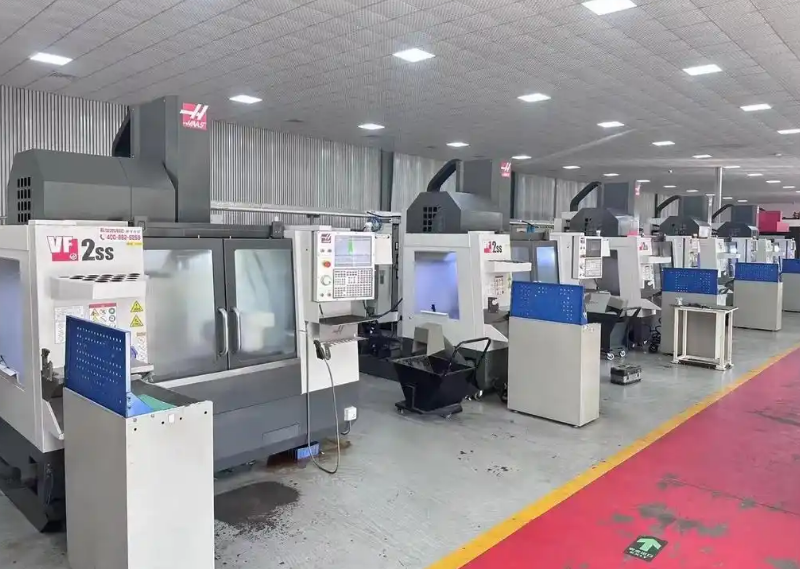
    Text: If industry is the skeleton of the modern economy, then the equipment manufacturing industry is the manufacture of the skeleton of the “mother machine”. It is responsible for the production of all walks of life required for the work of the machine, major technical equipment and automated production lines, is an important symbol of a country’s industrialisation level and comprehensive national strength.图片[1]-装备制造业:国之重器,如何通过智能制造决胜未来市场-大连富泓机械有限公司

    1. Understanding the scope and importance of the equipment manufacturing industry The equipment manufacturing industry covers a wide range of industries, including: power equipment: such as gas turbines, hydraulic turbines, nuclear power units. CNC machine tools: the “teeth” of modern manufacturing, responsible for precision machining. Engineering machinery: such as excavators, cranes, shield machine. Agricultural machinery, textile machinery, printing machinery and other special equipment. It provides a powerful technical means and material basis for the national economy and national defence construction.

    2. Intelligent manufacturing is the core driving force Under the wave of Industry 4.0, the equipment manufacturing industry itself is taking the lead in intelligent upgrading. Flexible manufacturing system: able to quickly adjust the production line to adapt to the small batch, multi-species market demand. Application of additive manufacturing: 3D printing technology is used to manufacture complex parts prototypes, and even directly produce the final product, greatly reducing the development cycle. Data-based optimisation: Data from the operation of equipment on the client side is fed back to the manufacturer to optimise the design and performance of next-generation products.图片[2]-装备制造业:国之重器,如何通过智能制造决胜未来市场-大连富泓机械有限公司

    3. Transformation from “selling products” to “selling services” Leading equipment manufacturers are no longer just selling equipment on a one-off basis, but are shifting to providing full life-cycle services. Remote operation and maintenance services: Through the Internet of Things platform, provide customers with 24/7 equipment status monitoring and remote diagnosis. Finance lease and pay-per-use: Reducing the initial investment threshold of customers and binding the interests of manufacturers and customers.

    4. Enhancing supply chain resilience Equipment manufacturing industryChains are long and the stability of the supply chain is critical. Global layout and regional backup are becoming mainstream strategies to cope with potential geopolitical risks and contingencies. Summary: The equipment manufacturing industry is at a crossroads of transformation driven by both technological revolution and business model innovation. Only by actively embracing smart manufacturing, deepening service transformation and building a tough supply chain, can enterprises be invincible in the field of “the most important weapon of the nation”.

  • Metallurgical Equipment Technology Frontier: From High-Efficiency Melting to Total Innovation with Intelligent Control

    In-depth knowledge of modernMetallurgical equipmentKey technological breakthroughs, including electric arc furnaces, continuous casting machines and automated control systems, on how to improve the efficiency, quality and environmental performance of metal smelting.

    Text: The progress of the metallurgical industry relies heavily on the continuous innovation of metallurgical equipment at its core. From ore to high-purity metal materials, every step of the way is supported by sophisticated, efficient and reliable equipment. In this article, we take you on a journey through the current technological frontiers in the field of metallurgical equipment.

    1. High-efficiency melting equipment: the heart of the metallurgical process Melting is the core of metallurgy, and the performance of its equipment directly determines the level of production efficiency and energy consumption. Ultra-high-power electric arc furnace: In modern steel production, electric arc furnaces are becoming increasingly important due to their flexibility and environmental advantages. The new generation of ultra-high-power electric arc furnace significantly shortens the smelting cycle, reduces the unit power consumption, and is the core equipment for short-process steelmaking. Flash Melting Furnace: In the smelting of non-ferrous metals (e.g. copper, nickel), the flash melting technology has the advantages of high strength, low energy consumption and high sulphur recovery rate, representing the development direction of green smelting.

    2. Continuous casting equipment: improve the quality and yield rate Continuous casting machine has basically replaced the mould casting process, which solidifies the steel directly into the desired shape of the billet. Thin Slab Continuous Casting and Rolling Technology: Continuous casting and rolling processes are seamlessly connected, which greatly saves energy, shortens the production process, and is the key to achieving high efficiency and low cost production. Intelligent mould: The mould is the “heart” of the continuous casting machine, through the built-in sensors and advanced control system, it can real-time monitor the liquid level of steel, cooling intensity, to ensure that the internal quality of billet casting is uniform and stable.

    3. Automation and intelligent control system Modern metallurgical workshop is developing in the direction of “black light factory”, behind which is a powerful control system. Process control system: real-time acquisition and optimal control of thousands of parameters such as temperature, pressure, composition, etc. to ensure that the production process is in the best state. Predictive maintenance system: Through the analysis of equipment vibration, temperature and other data, early warning of potential failures, scheduled maintenance, to avoid unplanned downtime brought about by huge losses. 4. Environmental protection and resource equipment Environmental protection pressure has driven the rapid development of related equipment, such as: sintering flue gas desulphurisation and denitrification equipment: effective removal of sulphur compounds and nitrogen oxides in the flue gas. Metallurgical slag treatment and resource utilisation equipment: process solid wastes such as blast furnace slag and steel slag into raw materials for building materials, so as to turn waste into treasure.

    Summary: HyundaiMetallurgical equipmentIt is developing rapidly in the direction of large-scale, high-efficiency, intelligent and green. Investing in advanced metallurgical equipment is not only the key to enhance the competitiveness of enterprises, but also the fundamental guarantee for the sustainable development of the metallurgical industry.

  • Modernising heavy industry: a central engine driving the global economy and sustainable development

    explorationsmanufacturingHow to modernise and transform through technological innovation and green initiatives. Understand its cornerstone role in the global economy and future trends, providing in-depth insights for your business decisions.

    Main article: In today’s fast-moving global economy, heavy industry, the cornerstone of a nation’s economic strength, is undergoing a profound modernisation. It is no longer just synonymous with steel, machinery and minerals, but an advanced field that incorporates automation, the Internet of Things and the concept of sustainability.

    1. Heavy industry: the backbone of the national economy Heavy industry encompasses such basic industries as coal, petroleum, iron and steel, non-ferrous metals and machinery manufacturing. These industries provide indispensable raw materials and production equipment for infrastructure construction, national defence and military industries, and their level of development has a direct bearing on a country’s degree of industrialisation and economic security.

    2. Technology-driven modernisation and transformation The stereotype of traditional heavy industry as energy-intensive and polluting is being broken. The core of modern heavy industry is technological innovation: automation and robotics: robots are gradually replacing human labour in production lines, welding, spraying and other high-risk or precision processes, improving efficiency and safety. Industrial Internet of Things (IoT): Real-time monitoring and predictive maintenance of equipment operating status through sensors and big data analysis to minimise downtime. Digital Twins: Creating mappings of physical entities in virtual space to simulate, test and optimise production processes, thereby solving potential problems before they are put into production.

    3. The path to green and sustainable development In the face of the challenges of global climate change, heavy industry is actively transitioning to green manufacturing. This includes: Energy efficiency improvements: adopting more efficient furnaces and motors, and recycling waste heat and pressure from the production process. Circular economy model: Promoting the recycling of scrap steel and non-ferrous metals to reduce dependence on virgin resources. Carbon Capture and Storage (CCS) technology application: Capturing carbon dioxide at the source of emissions and sequestering or reusing it is a key pathway for heavy industry to achieve carbon neutrality.

    4. Future outlook The heavy industry of the future will be smarter, more service-oriented and greener. It will not only be a “production sector”, but also a comprehensive industrial ecosystem integrating high-end manufacturing, technical services and data value. Conclusion: The modernisation of heavy industry is a necessary step for the global economy to move to a higher stage. By embracing new technologies and sustainable development concepts, this traditional industry is taking on a new lease of life and will continue to be the core engine that drives the world forward.

  • Investing in CNC machining: how SMEs can start smart manufacturing cost-effectively?

    SMEs can play toonumerical control machiningThis article provides a practical guide to getting started, from equipment selection and outsourcing strategies to talent development! This article provides a practical guide to getting started, from equipment selection and outsourcing strategies to talent development, to help you take your first steps into smart manufacturing.

    For many small and medium-sized manufacturing organisations (SMEs), investing in CNC machining may seem to imply a high cost and technology barrier. However, as the technology becomes more widespread and the market evolves, there are now multiple paths that allow SMEs to embrace this technology in a more flexible way and achieve capacity and quality upgrades.

    I. Path Choice: Owned Equipment vs. Outsourcing Co-operation Owned CNC equipment Advantages: Control of production cycle, protection of intellectual property rights, ease of iterative modification. Challenges: Large initial investment, need for operation and programming talent, risk of idle equipment. Suggestion: Start with an economical small vertical machining centre or CNC lathe. There are many cost-effective domestic CNC brands on the market today. Co-operation with CNC machining outsourcing service providers Advantages: zero investment in equipment, no need to train a professional team, you can quickly get professional capacity. Challenges: Higher communication costs, delivery schedule constraints, possible leakage of core processes. Recommendation: For prototyping, small trial production or non-core parts, this is the most cost-effective option.

    Key steps for a successful start-up Define your needs: Analyse the materials you will mainly process, the range of part sizes, the accuracy requirements and the expected output. This is the basis for all decisions. Develop core talent: Even if you choose to outsource, you should have at least one in-house employee with basic CAD/CAM knowledge and the ability to read drawings in order to communicate efficiently with your suppliers. Start with digital design: Ensure that you have a high quality 3D digital model of your product (e.g. STEP, IGES format). This is the “lingua franca” for interfacing with any CNC machining service provider. Prototype: Before choosing a long-term partner, place a small pilot order with 2-3 machining service providers to assess their quality, delivery and communication skills

    Looking ahead: cloud manufacturing and collaborative networks Today, many “cloud manufacturing” platforms have emerged. All you need to do is upload your 3D model online, and you can automatically get a quote, select materials and place an order for production. This model significantly lowers the threshold for SMEs to use high-end manufacturing services.

    Summary: Investing in CNC machining is no longer the preserve of large enterprises. Through prudent path selection, clear demand analysis and effective talent strategy, small and medium-sized enterprises can fully leverage the power of CNC technology to enhance their competitiveness and occupy a place in the wave of intelligent manufacturing.

  • Machining and materials science: how to select optimal cutting solutions for different materials?

    machiningIt is not set in stone. This article takes an in-depth look at how to select the right tools, cutting fluids and parameters to optimise results when machining aluminium alloys, stainless steel, titanium alloys and engineering plastics.

    Successful machining depends partly on equipment and processes and partly on a deep understanding of material properties. Different materials exhibit very different behaviours during machining and therefore require a “tailor-made” machining strategy.

    First, the machining characteristics of common materials and countermeasures Aluminium alloy Characteristics: soft, sticky, good thermal conductivity. Challenge: Easy to produce chip tumour, affecting the surface finish. Programmes: the use of sharp positive front angle tool, high speed, large feed, and the use of coolant to prevent the material from sticking to the knife. Stainless steel Characteristics: High strength, high toughness, poor thermal conductivity. Challenge: Severe tendency to work-hardening and rapid tool wear. Solution: Use tough carbide tools, maintain constant and appropriate feeds to avoid “grinding” the tool and ensure adequate cooling. Titanium alloy Characteristics: High strength, light weight, high chemical activity, very poor thermal conductivity.

    Challenge: Extremely high temperatures in the cutting zone, which can react chemically with the tool material and lead to rapid tool failure. Solution: Lower cutting speeds, continuous feed, use of high pressure coolant and sharp edges. Specialised titanium machining tools are often required. ENGINEERING PLASTICS Characteristics: Low modulus of elasticity, poor thermal conductivity. Challenges: Prone to deformation and springback, heat dissipation difficulties can lead to melting of the material. Solution: Use extremely sharp cutting edges, high speeds, small feeds and air or space cooling if necessary.

    General optimisation principles Tool selection: Select the correct tool material (e.g. carbide, CBN, diamond) and coating according to the material. Cutting fluids: not only for cooling, but also for lubrication and chip evacuation, which is essential for difficult-to-machine materials. Stability: Ensure that the workpiece is securely clamped and that the entire process system (machine – tool – fixture – workpiece) is sufficiently rigid.

    Incorporating materials science knowledge into machining practices is a critical step from a general operator to a process expert. Precise matching is at the heart of improving machining efficiency, part quality and economic efficiency.

  • What is CNC machining? A comprehensive explanation of the precision and efficiency revolution in modern manufacturing.

    insightnumerical control machiningTechnology. From CNC principles and G-code to machining centres, this article takes you on a journey to discover how CNC machining enables high precision, high efficiency and automated production of complex parts.

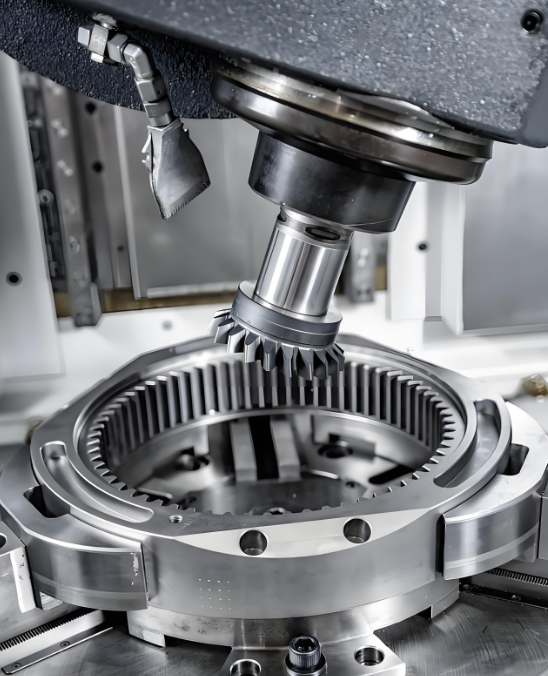
    If you’re interested in modern manufacturing, “CNC machining” is a core term that can’t be avoided. It represents a quantum leap in manufacturing technology, revolutionising the way products are developed and produced, with the ability to translate digital designs directly into precision solids.图片[1]-数控加工是什么?为您全面解读现代制造业的精度与效率革命-大连富泓机械有限公司

    First, the core principle of CNC machining CNC machining, that is, CNC machine tool processing, the core is: digital instructions: the operator or designer using CAD (computer-aided design) software to create a three-dimensional model, and then through the CAM (computer-aided manufacturing) software will be converted to a series of model instructions (known as G code and M code). Machine execution: The controller of the CNC machine reads these codes and accurately controls the relative movement of the tool and the workpiece in multiple axes to automate the cutting task.

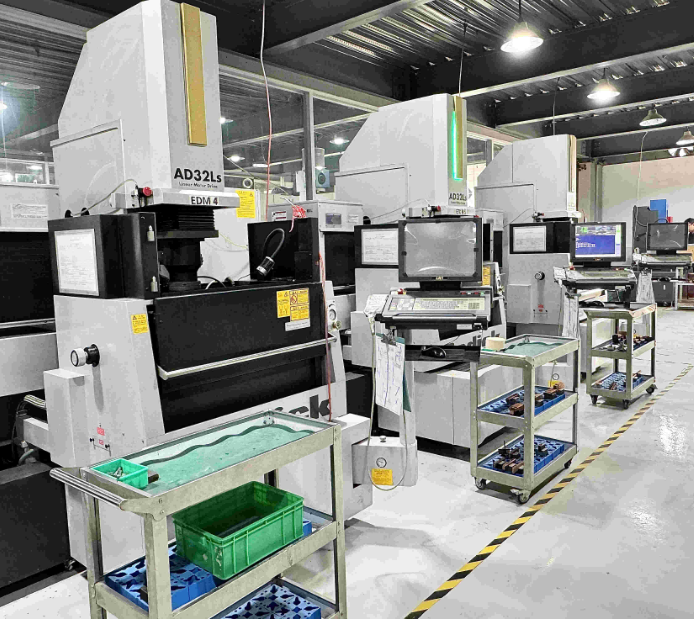
    Second, the great advantages of CNC machining Extremely high precision and repeatability: can easily reach micron-level tolerances, and can be thousands of times to produce identical parts. Powerful complex shape machining ability: able to complete the traditional machining is difficult to achieve or even impossible to complete the complex surfaces and shaped structures, is the first choice for aerospace, medical equipment field. Superior productivity: Once programmed, the process is almost completely automated, allowing unattended operation for long periods of time and dramatically reducing the cost per part. High degree of flexibility: Changing to a different part usually requires only a change of programme and tooling, making it ideal for flexible manufacturing of multiple varieties and small batches.图片[2]-数控加工是什么?为您全面解读现代制造业的精度与效率革命-大连富泓机械有限公司

    Third, the common types of CNC machining CNC milling: the most widely used form of CNC machining, typical equipment is a vertical or horizontal machining centre. CNC turning: for precision rotary parts processing, equipment for CNC lathes or turning centres. Multi-axis linkage processing: such as five-axis machining centre, a clamping to complete the complexity of the parts of the five sides of the processing, to avoid the error brought about by multiple clamping. Summary: CNC machining is the basis of intelligent manufacturing. It is not only a technical guarantee for product innovation, but also a key productivity tool for enterprises to maintain their advantages in global competition.

  • Machining Basics Explained: From Traditional Processes to Modern Applications

    explorationsmachiningof the core world. This article details the principles, characteristics and application scenarios of traditional machining processes such as turning, milling, drilling and grinding to help you choose the most appropriate machining method for your project.

    Machining, the cornerstone of manufacturing, is the process of removing excess material from a workpiece (e.g., metal, plastic, wood) by mechanical force, using a cutting tool, in order to obtain a predetermined shape, dimensions, and surface accuracy. It is the foundation of all mechanical manufacturing and maintenance

    Despite the rapid changes in modern technology, the following traditional machining methods are still the backbone of the workshop: Turning Principle: The workpiece is rotated and the cutting tool moves along a fixed path to cut. Main equipment: lathe. Application: Mainly used for machining shafts, discs, sleeves and other rotating body parts, can be external, internal holes, threads, end faces and other operations. Milling Principle: The tool rotates, the workpiece is fixed to the table and moves, and the material is removed by the rotary motion of the multi-flute tool. Main equipment: Milling machine. Application: Machining of flat surfaces, grooves, gears, complex curved surfaces, etc. It is one of the most widely used machining methods because of its high flexibility. Drilling Principle: Machining of round holes in solid material using specialised rotary tools (drills). Main equipment: Drilling machine. Application: Almost all parts requiring holes cannot be produced without drilling, which is the basic hole processing method. Grinding Principle: The use of a high-speed rotating grinding wheel (made of abrasive grains bonded together) to make minute cuts on the surface of a workpiece. Main equipment: Grinding machine. Application: Mainly used for finish machining to obtain very high dimensional accuracy and excellent surface finish, often used for hard parts after heat treatment.

    Second, how to choose the right machining process? The choice of which process depends on a number of factors: part geometry: rotary body priority turning, plane and complex contours consider milling. Material type: different materials need to match different materials and cutting parameters of the tool. Precision and finish requirements: turning and milling for general precision, and grinding for high precision. Production cost and efficiency: the batch size directly affects the process selection and fixture design.

    Summary: Understanding these basic machining processes is a prerequisite for product design, manufacturing and outsourcing. They are a critical bridge to get from the drawing board to the physical object, and their foundational position remains unshakeable even in today’s highly automated world.