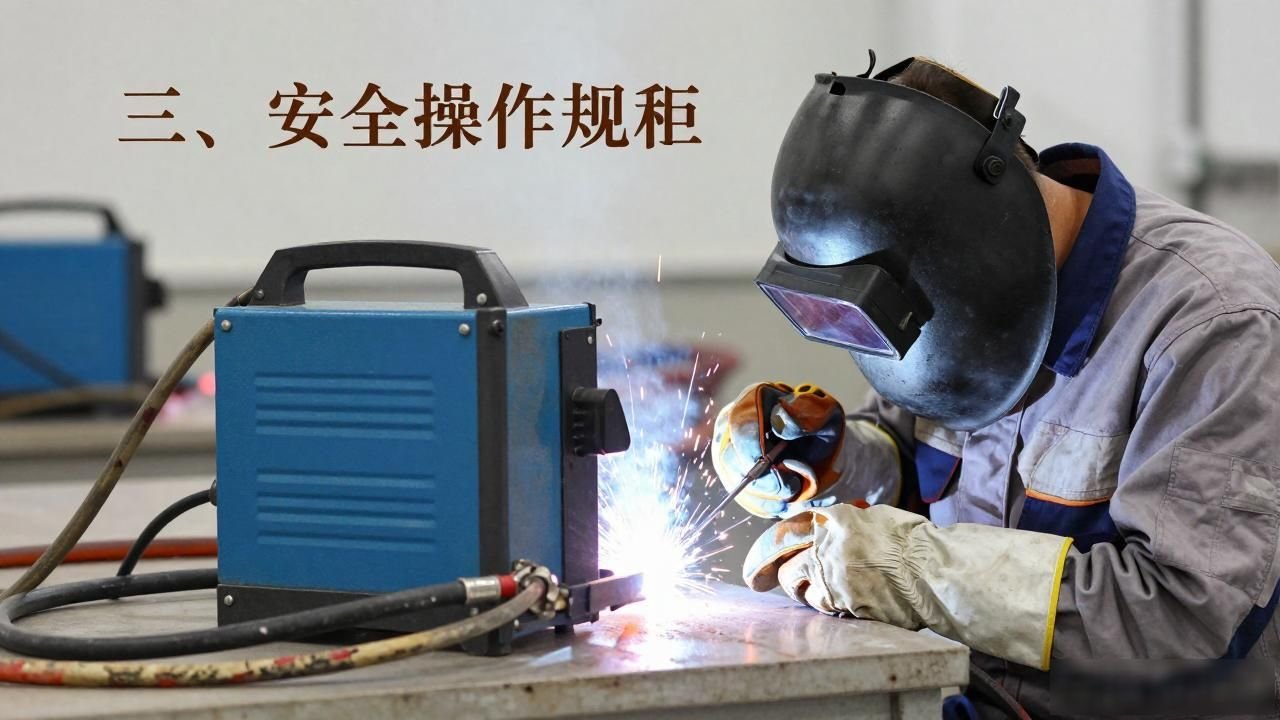


3. Safety operating procedures
Safety preparation before work
Before starting riveting and welding operations, it is necessary to conduct a comprehensive inspection of the working environment. Make sure that the ventilation conditions of the site are good, the lighting is sufficient and there are no dark corners, and the equipment and facilities are in good condition and there is no damage. This is a basic step to ensure that subsequent operations can be carried out safely and must not be taken lightly or carelessly.
Personnel involved in the operation must hold valid qualification certificates and have a clear understanding of the equipment's operating procedures and safety precautions. Personnel who have not received professional training are strictly prohibited from operating alone to prevent safety accidents caused by unfamiliarity with the equipment.
Standards for wearing labor protection products
Personnel engaged in riveting and welding operations must wear safety protective equipment that meets standards, including hard hats, flame-retardant overalls, protective gloves, goggles, and protective shoes, etc., each of which is a barrier to protect life.
Protective glasses can effectively block the damage to the eyes caused by the welding arc light, thereby preventing the corneas from being burned. As for work clothes, you should choose pure cotton or flame-retardant materials to prevent synthetic fibers from melting when encountering high temperatures and then adhering to the skin, ultimately causing secondary damage.
Safety points for welding operations

When performing welding operations, be sure to ensure that the equipment is in good grounding condition and that the cables are not damaged or aged. If you use welding equipment that is damaged or aged, it is very easy to cause an electric shock accident, so it must be replaced as soon as possible.
During welding, it is absolutely forbidden to extend your head, hands and other body parts within the range covered by the arc light. The reason is that strong arc light can cause people to suffer from electro-optical ophthalmia, and high-temperature welding slag can easily cause serious burns, so a safe distance must be maintained. Obvious and visible warning signs should be set up in the operating area to prohibit entry by persons unrelated to the operation.
Protection requirements for cutting operations
Before engaging in cutting operations, be sure to clear away flammable and explosive items in the surrounding area and equip yourself with sufficient fire extinguishing equipment. When metal is cut, a large number of sparks will fly out. Once these sparks ignite combustible materials, the consequences will be unimaginable.
When operating cutting equipment, protective tools must be used to maintain a stable distance between the equipment and the workpiece. The workpiece must be firmly fixed to prevent it from moving during the cutting process and causing accidental injury. After cutting, the slag and waste materials must be cleaned up immediately.
Implementation of environmental protection measures
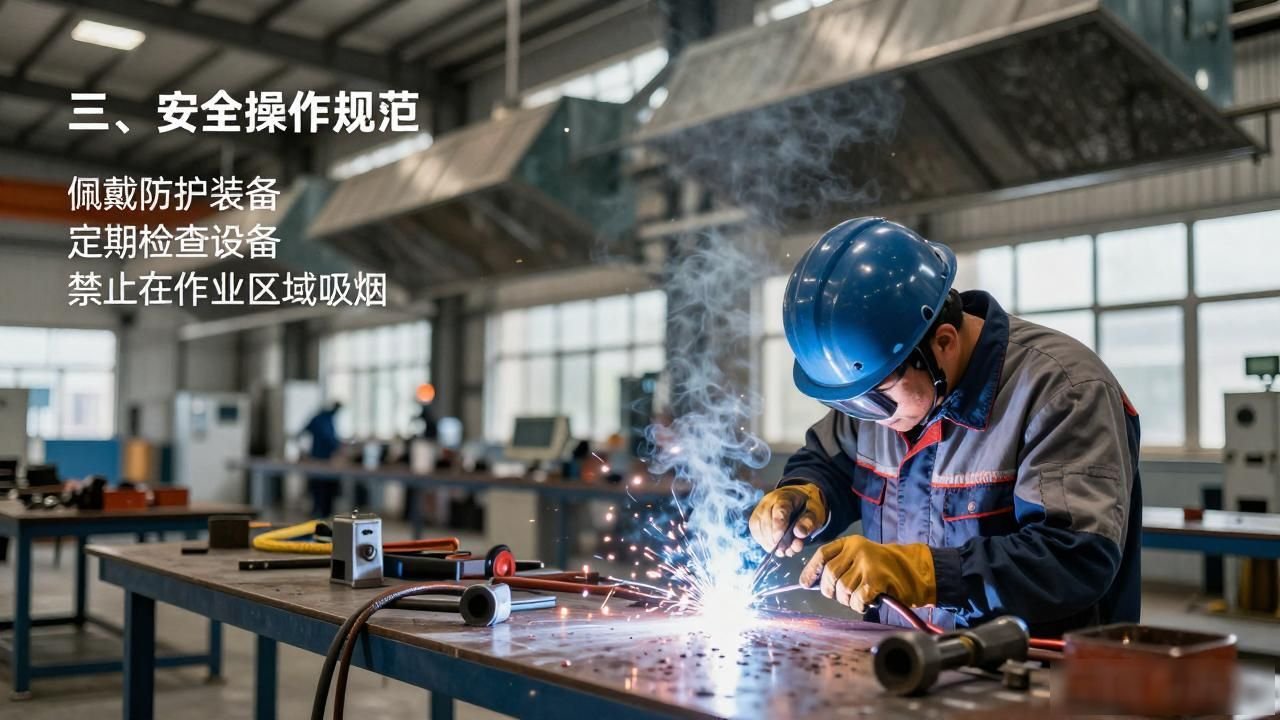
During riveting and welding operations, a large amount of smoke, dust and harmful gases will be produced, so it is necessary to ensure that the ventilation facilities in the workshop can operate normally. The smoke generated by welding contains manganese, chromium and other harmful substances to the human body. If inhaled for a long time, it will seriously affect the health of the respiratory system.
After the work is completed, the site must be cleaned immediately to eliminate fire hazards and the risk of puncture wounds. Waste welding rod heads and metal scraps should be collected in categories and cannot be discarded casually. The air quality in the workplace must be monitored regularly to protect the health of employees.
emergency response
When an electric shock accident occurs, the first thing to do is to immediately cut off the power supply and use insulating objects to remove the electric shock victim from the power supply. Immediately carry out first aid measures such as cardiopulmonary resuscitation, and at the same time make an emergency call.
On-site fire-fighting equipment should be quickly used to extinguish the initial fire. Once a fire is discovered and the fire gets out of control, personnel should be evacuated immediately. Each equipment has a corresponding emergency response process. Operators must be proficient in it and participate in emergency drills regularly.
Masters who are engaged in riveting and welding work in various places, what are the safety hazards you most often encounter during your work? You are welcome to share your experience in the comment area and like it so that more people can see this safety guide.






暂无评论内容