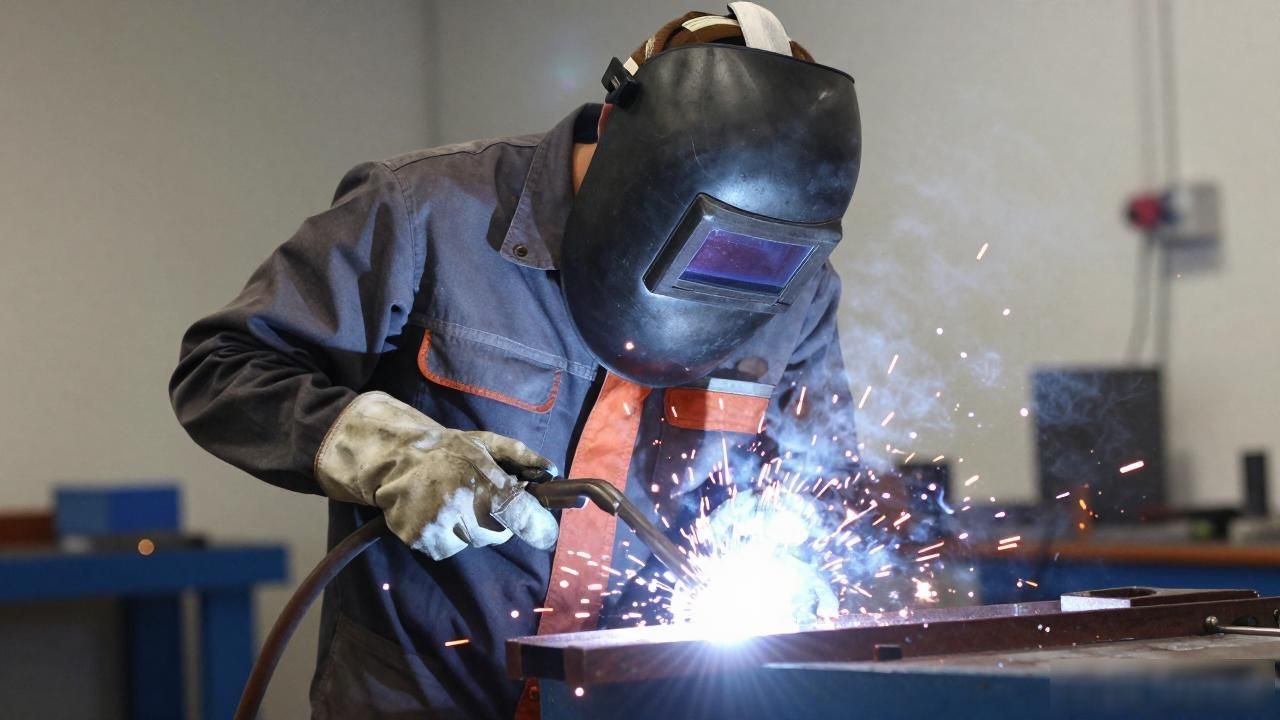


Is the gun speed of secondary welding fast or slow? Many people weld wrongly
A master with 30 years of experience in the field of dry welding said that 90% of welders are making the same mistake. They think they can weld the work well by just relying on the feel of their hands. However, the result is that not only are wages deducted for rework, but safety accidents also occur. Really good craftsmanship does not mean that the welding is fancy, but that the welding work can be 100% qualified without the need for rework, so that the more you do, the more you can earn. Today, I’m going to pour out all the pit-avoidance information from the bottom of the box, so as to save you five years of fumbling around.
Don’t believe in old experiences passed down from generation to generation
There are many veteran welders around me who have been working for five, six or even more than ten years, and even now, they still rely entirely on feeling. If the walking speed is fast, the welding will not be able to penetrate. If the walking speed is slow, the molten iron will accumulate and flow everywhere. They work hard every day to practice their skills, but the pass rate of the output work still cannot be improved. They always feel that their hands are not dexterous enough. In fact, it is not that your skills are not good at all, but that you have been misled by the wrong and outdated experience passed down from generation to generation on the construction site.
When it comes to gun speed, it is related to current parameters, and also includes the angle of the welding gun. There are many errors in the old saying that has been circulated on the construction site for decades. Words like "the more strength you have, the faster you can work" and "the higher the current, the deeper you can weld". After hearing it a lot, you will believe it to be true. But the reality is that these erroneous perceptions result in welds that are not up to standard and need to be reworked, or even cracks that cause safety accidents, and the cost is higher than you think.
Gun speed is the key, not fast speed
The first very common pitfall is to weld quickly and desperately to meet the deadline, thinking that the faster you weld, the more you will do and the more you will earn. I met an old welder at the construction site before. He welded 30 meters of welding seam in one day, and then turned around to inspect and found that all the welds had slag inclusions. It took him two full days to rework and polish. In this way, he was much slower than others, and his work points were deducted by half.

Real stable welding is neither about fast speed nor slow speed. The core is to keep an eye on the movement of the molten pool. The normal speed when welding flat is 30 to 40 centimeters per minute. When welding thin plates, it should be slightly faster to prevent burn-through. When vertical and horizontal welding of thick plates is carried out, the speed should be reduced to 25 to 30 centimeters per minute, and enough time should be given for the groove root to penetrate. Don't memorize numbers by rote. Slow down when the molten pool becomes narrower, and speed up when the molten iron accumulates and is about to fall. This feeling is more effective than any parameter.
Welding gun angle is more important than current and voltage
There is a second pitfall, which is to focus on adjusting the current and voltage, but completely ignore the angle of the welding gun. Under the same welding machine parameters, all the welds you weld will have slag inclusions and undercuts, while the data welded by the masters will show fish scales, neat and orderly. The difference lies in the angle of just a few degrees. Nine out of ten people will ignore this detail, but it is such an extremely detailed link. Determines the quality of the weld!
When welding flat butt joints, the welding gun is vertical to the base metal at 90 degrees, and then dragged back at this angle by 10 – 15 degrees, which is super stable. When making a T-shaped corner joint, the welding gun should be angled 40 – 45 degrees, and if the thickness of the two plates is different, it should be offset 5 – 10 degrees towards the thicker plate . The pass rate of the second-guaranteed welding, riveting and welding, and the flaw detection pass rate of the second-guaranteed and riveting welding . The speed of the second-guaranteed welding and riveting welding, is it fast or slow? Many people make the wrong welding mistake. When the thick plate is burned through, the thin plate will not be burned through. When welding from above, be sure not to force it. You should tilt it backwards 70-80 degrees to perform short arc operation, and rely on the arc to hold the molten iron. This will definitely prevent it from falling down at all.
High current does not mean welding deeply
The third misconception is that the greater the current, the deeper the penetration and the stronger the welding effect. There are many novices who turn the current to the maximum at the beginning of the operation, resulting in the thin plate being directly burned through. For the thick plate, the surface looks melted and bright, but the inside is not penetrated at all, and cracks appear directly after less than two months of use. If an accident occurs by that time, will you be able to bear the corresponding responsibility? Please remember that the penetration depth is never determined by the current factor alone.
Current, voltage, simultaneous wire feeding speed, and gun speed must be matched well. A smaller current stabilizes the molten pool much better than any other situation. The cracking of many welds is not caused by insufficient current, but caused by the incoordination of parameters and the imbalance of molten pool temperature. When adjusting parameters, you must have an overall thinking, and you must not just stare at the ammeter.
Low-level mistakes are still trapping people
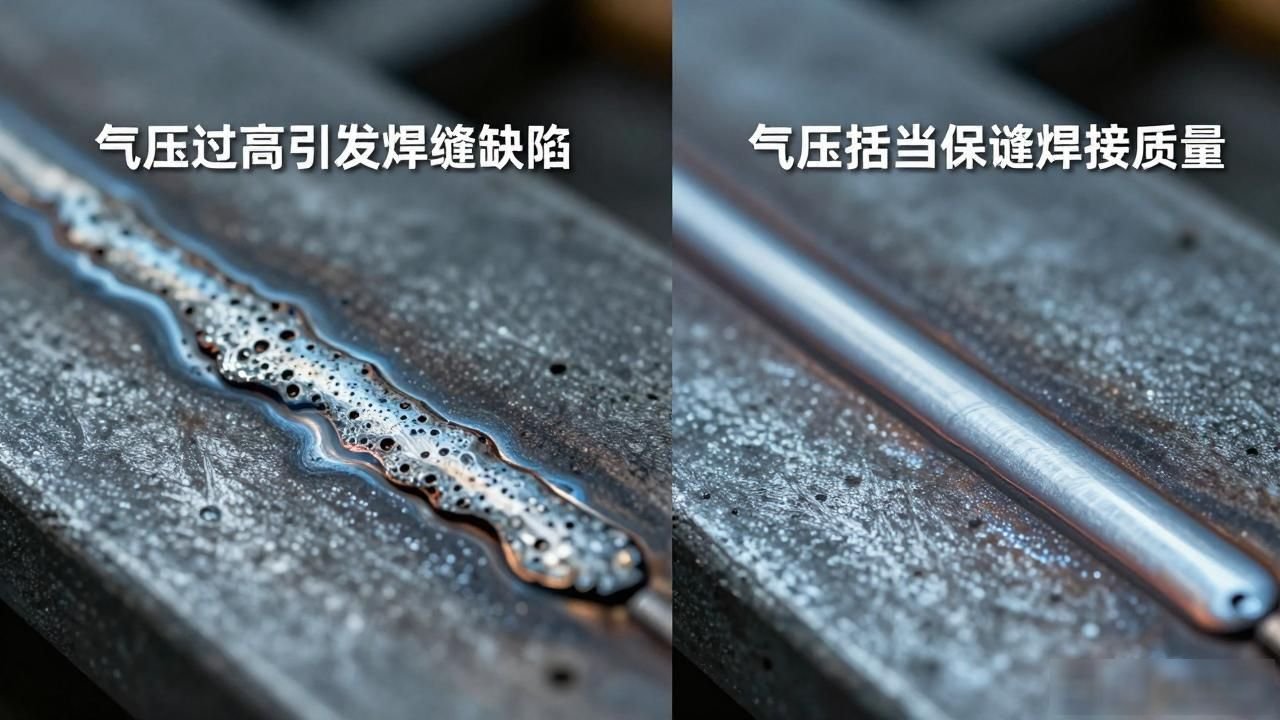
Some people have stepped on many low-level pitfalls: they think that the higher the shielding gas pressure, the better the windproof effect , but too high the air pressure will cause the air flow to be chaotic and involve the air, causing the entire weld to have pores and dense pits in all positions. The actual situation is that keeping the air pressure stable and appropriate will achieve the purpose, but too much air pressure will cause troubles. In such a situation, many people will not be able to understand the reason even throughout their lives.
I originally thought that the longer the welding wire is stretched, the smoother it will be. However, if it is stretched too far, the current will fall directly, the penetration depth is not enough, and there will be spatter everywhere. If it is extended too short, it will block the view, and the nozzle will easily be blocked by splash. I thought that the wider the swing of the gun, the fuller the filling would be. The arm was swinging very fast, and I had to use all my strength to round it. The arc was stretched extremely long, and the two sides of the groove could not be melted at all. It was completely in vain. Beginners almost always make these three mistakes, and everyone makes punctuation mistakes at least once.
Qualified weld standards and life-saving details
Finally, the rigid standards for qualified welds are explained. First, the surface of the weld should be straight, and the fish scales should be evenly distributed. Second, the excess height should not exceed 2 mm. Third, the weld should not have pores, undercuts, or weld nodules. Fourth, after the welding slag is knocked out, there should be neither slag inclusions nor unfusion. Only in this way can it be considered a high-quality welding result that can pass the flaw detection inspection. Don’t believe the ridiculous statement that the higher the reinforcement, the stronger the weld will be, because too high a reinforcement will lead to stress concentration, and cracks will appear not long after the welding is completed, which will have adverse consequences.
Before starting the arc, keep the welding wire head two to three millimeters away from the workpiece, cut off the small ball on the head, and use the backward arc starting method so that the wire will not explode. Do not lift the welding gun directly when closing the arc. If there is a closing arc function, just press it and wait for the molten pool to be filled. If there is no such function, quickly break the arc, start the arc two and three times to fill the arc crater. All rust and oil stains of about ten to twenty millimeters around the welding joint must be polished away. Do not force welding in windy weather, and do not blow the fan directly onto the welding bead.
What outrageous pitfalls have you encountered during your usual welding work? Chat in the comments section.






暂无评论内容