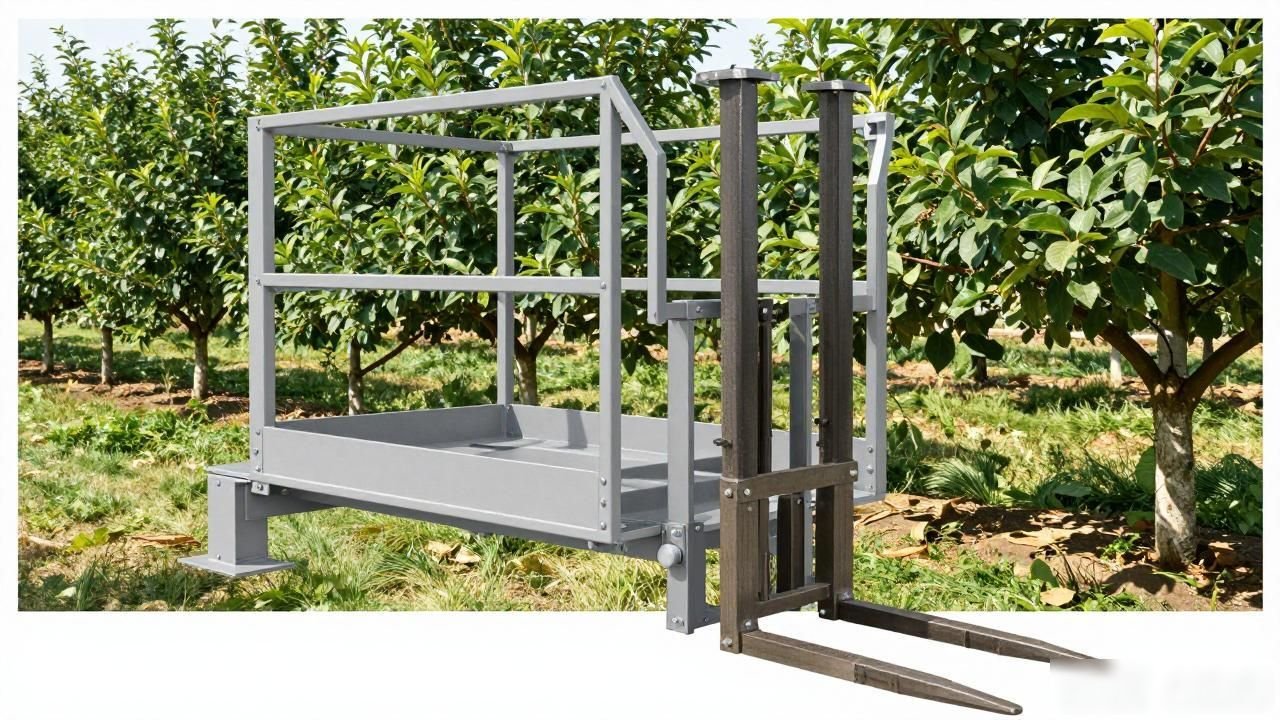


Mechanism design of orchard agricultural machinery lifting platform
How to choose the metal structure of the 45kW orchard lifting platform? Customized riveting and welding is the key
Fruit farmers are inseparable from lifting platforms when picking fruits and spraying pesticides. However, many workers are confused when selecting one. Today, I will clearly explain the power configuration of the 45-kilowatt orchard lifting platform, explain it clearly related to the metal structure, thoroughly explain the riveting and welding process, and clearly explain the size design, so as to help you reduce the occurrence of pitfalls. This is how it is done.
Power matching and power calculation
The rated power of the orchard lifting platform is 45 kilowatts. This value is not determined arbitrarily. It is calculated based on the torque and speed required when the platform is fully loaded for lifting. The output power of the motor must not only be able to cover the flow demand of the lifting hydraulic pump, but also reserve about 15% or more redundancy to cope with the situation of starting on a slope or a sudden increase in load.
When actually measuring this behavior, we must first determine the maximum lifting height that the platform can achieve, as well as its lifting speed. For example, taking a maximum stroke of 6 meters and a speed of 1.5 meters per minute as an example, for a hydraulic system, the working pressure is calculated based on 16 MPa, then the required flow rate is approximately 100 liters per minute. Based on this situation, inversely infer that the motor power is in the range of 40 to 47 kilowatts. 45 kilowatts just falls within a reasonable range. It will neither cause waste due to over-design, nor will it cause insufficient lift due to low power.
Metal structure riveting and welding process

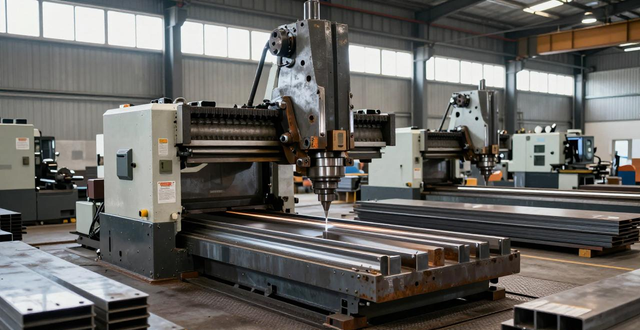
The main frame of the lifting platform adopts a riveted and welded structure. The columns are force-bearing parts and are welded and formed from steel. The beams are force-bearing parts and are welded and formed from steel. The forks are force-bearing parts and are welded and formed from steel. Key nodes are also reinforced with rivets. The riveting welding process has advantages . The metal structure of the orchard lifting platform is customized with riveting and welding orchard agricultural machinery lifting platform mechanism design. The advantage is that welding can ensure the overall rigidity, and riveting can effectively disperse stress concentration points and avoid weld cracking after long-term use.
E50 series welding rods are selected as welding materials. The weld grade must meet the secondary standard. The thickness of the plate is determined based on the stress analysis. The main beam part uses a steel plate of more than 8 mm, and the secondary bracket uses a 5 mm plate. 4.8-level high-strength bolts are selected with rivets using riveting technology. After riveting, anti-rust treatment is performed to ensure the service life in the humid environment of the orchard.
Fork and plate size design
The component in direct contact with the fruit basket is the fork, and its size design has a direct impact on the load-bearing stability. The length of the forks is calculated and determined to be 1200 mm, the width is 120 mm, and the spacing is 800 mm, which can meet the placement requirements of fruit baskets of common specifications. The fork rod section adopts a channel steel structure, and its bending resistance is stronger than that of a flat plate of the same weight.
The size of the platform is designed based on the platform's rated load capacity of 1 ton, with a length of 1800 mm, a width of 1200 mm, and a height of 200 mm. The surface of the tabletop is treated with anti-slip texture, and a 50 mm-high rib is installed on its edge to prevent the fruit basket from slipping during transportation. Bolts are used to connect the table and forks to facilitate replacement of worn parts in the future.
Material selection and strength check
Q235B carbon structural steel is selected as the main structural component. This material is abundant in the domestic supply chain, its price is moderate, and its welding performance and stamping performance are both good. For key parts that bear greater stress, such as the lifting cylinder connection seat and adapter flange, they are upgraded to Q345B low-alloy high-strength steel. The yield strength of this steel is increased by more than 25%, which can effectively reduce the cross-sectional size of the components.
The safety factor method is used to conduct strength check. The safety factor is selected as 2.5 under static load conditions and 1.8 under dynamic load conditions. The maximum bending stress in the fork span is calculated to be 120 MPa, which is far lower than the allowable stress of Q235B of 150 MPa, which meets the design requirements. Carry out local pressure bearing calculations at the four corners of the tabletop to ensure that no plastic deformation will occur after long-term heavy-load use.
Terrain adaptability design
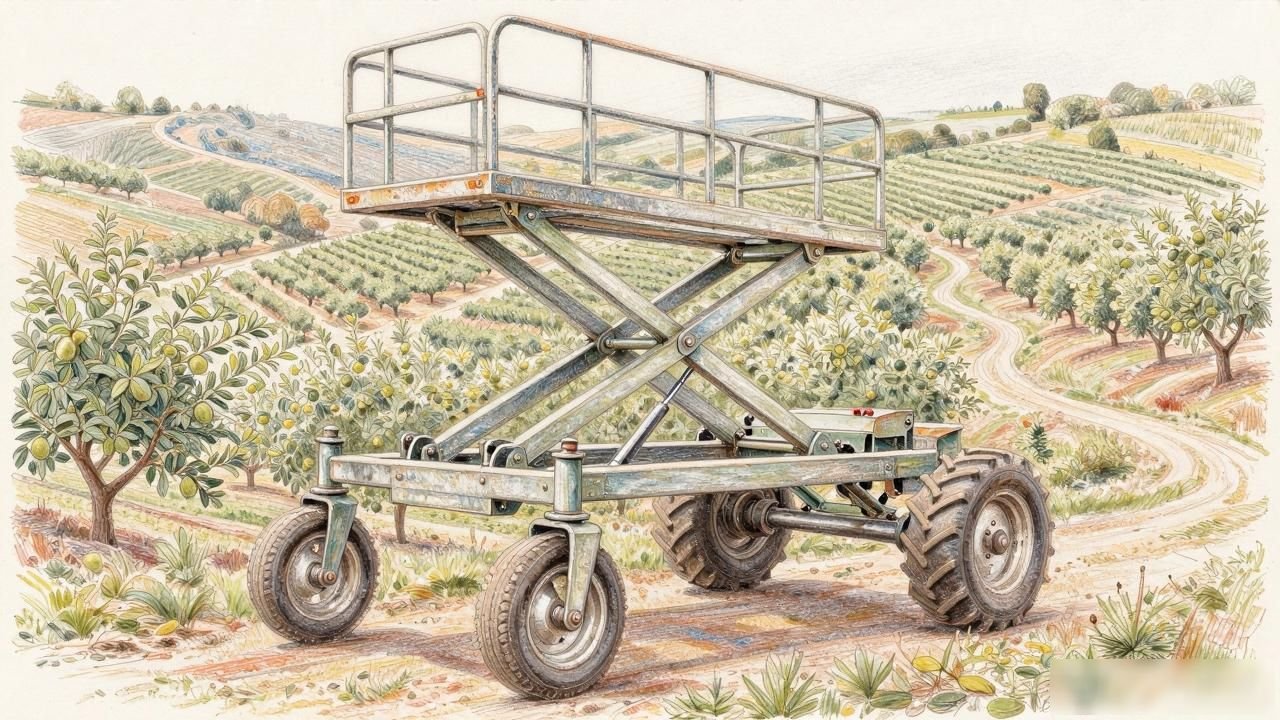
The terrain of orchards in my country is complex, with plains, hills, and mountains. In this case, the lifting platform must have good terrain adaptability. The chassis is designed with a four-wheel independent suspension structure. The front wheels are responsible for steering, while the rear wheels assume the driving function. The minimum turning radius is controlled within 2.5 meters, so that it can adapt to narrow inter-row passages.
The ground clearance is set to 280 mm, which has good passability and can cross common ridges and ravines in orchards. The center of gravity of the vehicle has been optimized and calculated. The metal structure of the orchard lifting platform is custom-made and riveted. When the vehicle is fully loaded, the roll stability angle is greater than 25 degrees. There will be no rollover when operating on a 15-degree slope. The tires are wide-width engineering machinery tires with a small ground contact pressure, which minimizes the impact on the soil compaction in the orchard.
Core component selection and reliability
The reliability of the lifting platform depends on the quality of the core components. The hydraulic system uses mature domestic brands of plunger pumps and electromagnetic reversing valves. Its working pressure range and flow-related parameters are perfectly matched with the 45-kilowatt motor. The surface of the cylinder piston rod has been treated with chrome plating and hard chromium. Its wear resistance and corrosion resistance have been significantly improved, making it suitable for the high-humidity environment of orchards.
The PLC programmable logic controller integrated into the electrical control system has overload protection function, stroke limit function, emergency stop braking and other multiple safety functions. The operation panel adopts IP65 protection level, which is dustproof and waterproof. Even if the fruit farmer wears protective gloves, he can still operate normally. Moreover, all exposed fasteners in the system are galvanized, and the hydraulic pipeline uses a dual protection method of high-pressure hoses and metal hoses to eliminate potential oil leakage.
What type of lifting equipment is used in your orchard today? Have you ever encountered problems such as insufficient power and unstable structure? If so, please share your relevant experience in the comment area.




暂无评论内容