
What materials are nickel-based alloy forgings made of? You will understand after reading this [Latest update]
Iron-based alloy forgings are key materials in medical devices. They are resistant to high temperatures, corrosion, and can withstand high strength. Many people do not know that titanium alloy processing medical device cases , surgical instruments, implants, and imaging equipment are all closely related to it. Today, we are going to explain nickel-based alloy forgings clearly and see what capabilities they have.
What exactly is a nickel-based alloy?
Nickel-based alloys, whose main component is nickel, also add elements such as chromium, molybdenum, and cobalt to form metallic materials. The melting point of nickel is as high as 1455 degrees Celsius, and it has good high temperature stability. After adding chromium, a dense chromium oxide protective layer will be formed on the alloy surface, greatly improving the corrosion resistance. The addition of molybdenum and cobalt further enhances the strength of the material at high temperatures, allowing the nickel-based alloy to maintain structural stability in extreme environments.
This alloy also has good plasticity and can be used for many processes such as forging, rolling and welding. During forging, the grains inside the metal are refined, the structure evolves to become more uniform and dense, and the mechanical properties increase accordingly. Nickel-based alloy forgings use the forging process to process alloy blanks into parts of specific shapes and sizes. They are widely used in aerospace, petrochemical, nuclear energy, medical equipment and other fields.
How complex is the forging process?
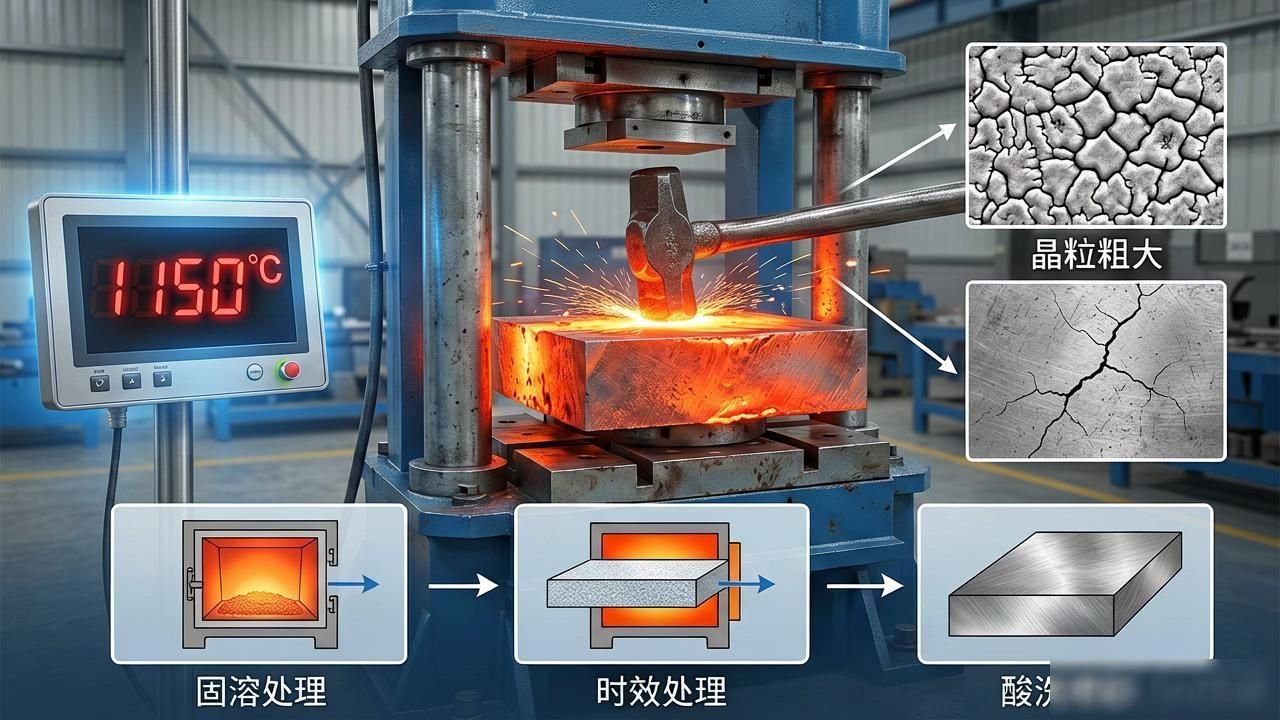
The process of manufacturing nickel-based alloy forgings is extremely rigorous. There are many steps from selecting materials to finished products. First, choose the appropriate alloy grade according to the usage environment, such as Inconel718, Hastelloy C-276, etc. Preparing the blank can be achieved by smelting and casting or powder metallurgy. Powder metallurgy can obtain a more uniform microstructure. In the future, we will delve into the forging process. The hot forging temperature is usually in the range of 1000 to 1200 degrees Celsius. Warm forging and cold forging are suitable for parts with higher precision requirements.

For the forging process, the control of temperature and pressure is crucial. If the temperature is too high, the grains will become coarse. If the temperature is too low, cracks will easily occur. After forging is completed, heat treatment must be carried out. Common ones include solid solution treatment and aging treatment. The purpose is to further optimize the mechanical properties of the material. Surface preparation must not be ignored either. Pickling, sandblasting or coating treatments can effectively improve the corrosion resistance and surface quality of forgings.
Why are the three major advantages irreplaceable?
Nickel-based alloy forgings can occupy an important position in the field of medical devices, and their core lies in three major performance advantages. First, it is resistant to high temperatures. Many medical devices need to be used repeatedly in high-temperature sterilization environments. Nickel-based alloys can still maintain strength above 600 degrees Celsius without creep deformation. Secondly, for corrosion resistance, medical devices often come into contact with human body fluids, disinfectants or chemical reagents. Nickel-based alloys perform well in strong acid and alkali environments and are not prone to pitting corrosion and stress corrosion cracking.
Third, there is high strength and high toughness. Implants in medical devices have to withstand the complex mechanical environment of the human body. Nickel-based alloy forgings can maintain the integrity of the structure under long-term alternating loads. Taking artificial joints as an example of titanium alloy processing medical devices , both titanium alloy and nickel-based alloy forgings can pass tens of millions of fatigue cycles in simulated human activity tests, but nickel-based alloys perform more stably under high-temperature conditions. These properties have made nickel-based alloy forgings the preferred material for high-end medical devices.
What are the applications in the field of medical devices?
In the field of medical devices, nickel-based alloy forgings are widely used, and surgical instruments are part of them. Tools such as bone drills, bone saws, and intramedullary nails used in orthopedic surgeries are required to remain sharp and strong after high-temperature and high-pressure sterilization. Nickel-based alloy forgings can fully meet these needs. There are also a large number of applications in the field of implants. Pacemaker shells, vascular stent connectors, dental implants and other components are all made of nickel-based alloy forgings.
Key components in imaging equipment are also indispensable. Nickel-based alloys are also indispensable. CT machines have tube brackets, which must work stably in strong magnetic fields and high temperature environments. MRI equipment has magnet structural parts. Nickel-based alloys have non-magnetic and high-temperature resistance properties, which exactly meet these needs. In addition, ventilator valves, anesthesia machine joints, extracorporeal circulation pipeline connectors and other medical equipment are widely used in nickel-based alloy forgings and titanium alloy processing medical device cases to ensure safety and reliability in human contact environments.
What are the difficulties in processing technology?
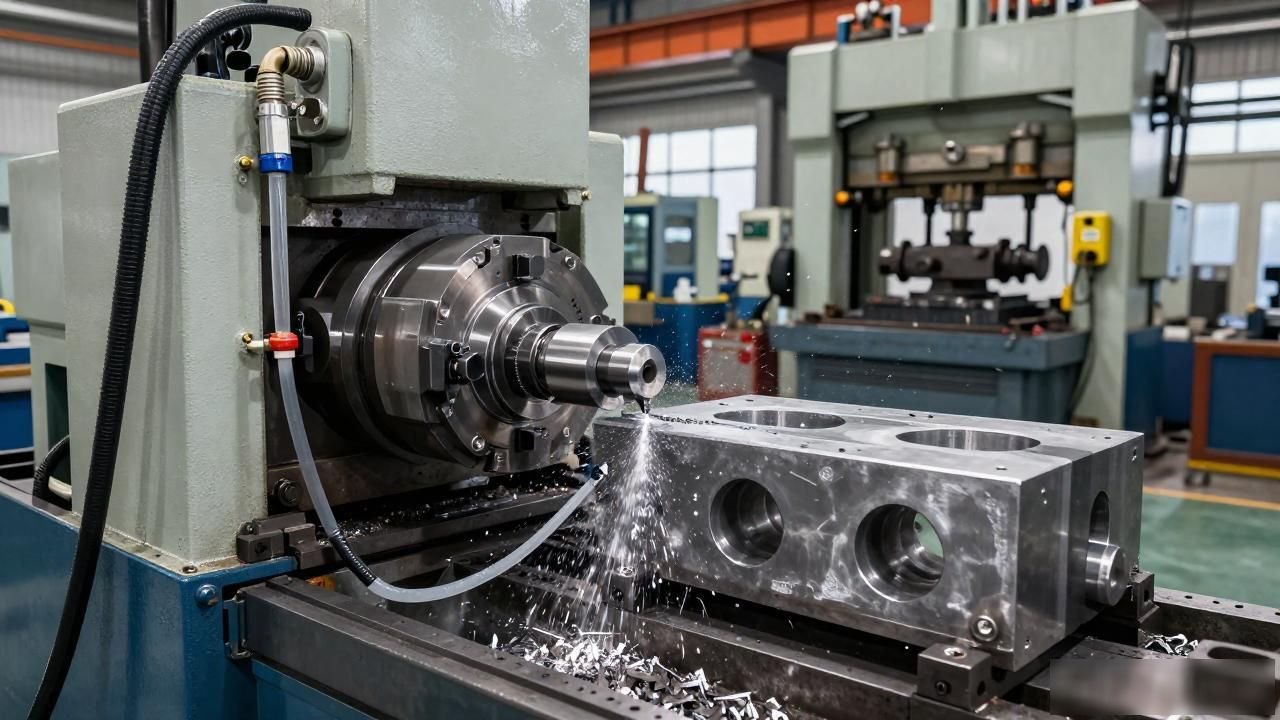
Processing nickel-based alloy forgings is not an easy task. The main difficulty lies in the characteristics of the material itself. Nickel-based alloys have high hardness and poor thermal conductivity. They are prone to high temperatures during cutting, causing rapid tool wear. Special tool materials and cooling methods must be used during processing, such as cubic boron nitride tools or cryogenic cooling technology. The deformation resistance during forging is also extremely high, and large-tonnage forging equipment is required to complete the forming.
Another technical difficulty is surface treatment. An oxide layer is easy to form on the surface of nickel-based alloys, which will interfere with subsequent processing and welding quality. During pretreatment, pickling or plasma cleaning must be used to remove the oxide layer. Improper operation will cause damage to the base material. Medical devices have extremely high requirements for surface finish and biocompatibility. Any scratches or residues may lead to the risk of infection, so the surface treatment process must be strictly controlled.
What are the future development trends?
As medical technology advances, nickel-based alloy forgings encounter new opportunities and challenges. First, the development of minimally invasive surgery and robotic surgery will put forward more sophisticated requirements for instruments, and the dimensional accuracy and surface quality of forgings will need to be further improved. Second, the rise of personalized medicine has promoted small-batch customized production and made the forging process more flexible to adapt to the needs of different patients.
The research and development of new materials has been continuously promoted, and new nickel-based alloys continue to emerge, with increasingly better properties. The application of intelligent manufacturing technology will improve production efficiency and product consistency, and also reduce production costs. At the same time, environmental protection requirements are becoming increasingly stringent, and green forging processes and the use of recyclable materials will become the direction in which the industry is developing. Nickel-based alloy forgings will play an increasingly important role in the field of medical devices.
Nickel-based alloy forgings in the category of high-performance materials are promoting the technological upgrading of the medical device industry. What other questions do you have about the application of nickel-based alloy forgings in medical devices? If you find it useful, don’t forget to like and share it. Welcome to leave a message in the comment area for exchange!
コメントを残す
コメントを投稿するにはログインしてください。