

What actions should not be taken when welding high chromium alloy wear-resistant steel plates?
The docking gap needs to be accurately controlled
When welding high-chromium alloy wear-resistant steel plates, butt joints are the most common choice. Many people easily ignore the size of the gap. In fact, it directly determines success or failure. If the gap is too large, it will be easily burned through under high temperature conditions, and the molten iron will flow in all directions, resulting in extremely poor molding.
In order to ensure that the weld quality is in good condition, the gap must be strictly controlled. Generally speaking, it is recommended to use crimped joints, which can achieve one-time penetration and reduce operating steps. For occasions with extremely high quality requirements, backing plates can be added. However, the backing plate cannot be attached too tightly, otherwise the 溶接 will not be penetrated, and the back surface will become rough and ugly.
Left welding method is better
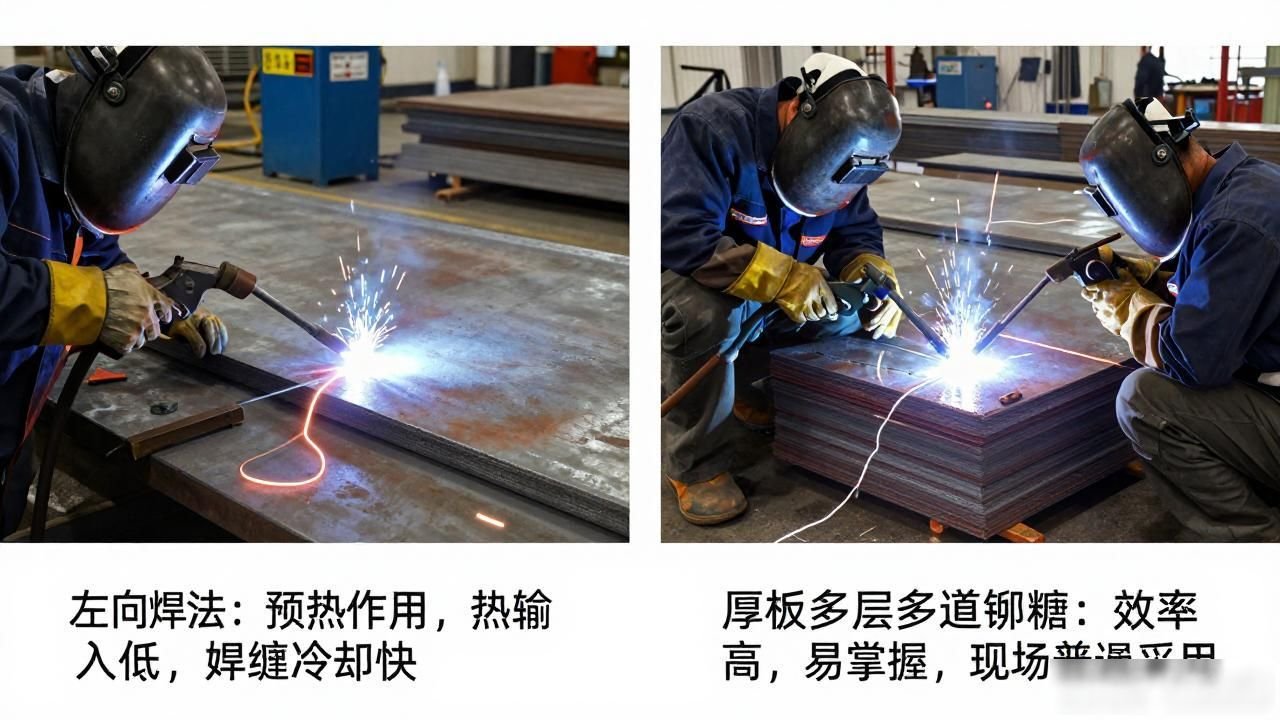
Many people are accustomed to the right-hand welding method, thinking that pointing the flame directly at the weld can increase the penetration. This method is indeed suitable for thick plates, but it is not friendly to high-chromium alloy thin plates. The heat capacity of thin plates is small, and right-hand welding can easily lead to overheating and slow cooling rate, which in turn increases the risk of deformation.

The mainstream of thin plate welding is the left-hand welding method. The welding torch moves in front of the welding wire and the flame is directed at the unwelded part. This operation has a preheating effect on the metal, but the overall heat input is low and the weld cooling speed is fast. Thick plate multi-layer multi-pass riveting technology not only has high production efficiency, but also is relatively simple to operate and easier for workers to master. It is a commonly used method on site.
There is a secret to controlling deformation
The enemy of thin plate processing is welding deformation. The basic principle is to control temperature, control heat, and control material properties. Once handled improperly, the workpiece will shrink inward after being heated, and the workpiece will expand outward after being heated, resulting in dimensional deviations. In order to combat this stress, preventive measures must be formulated in advance.
Making a specially customized prestressed type deformation fixture can be said to be a key means. The fixture is used to fix the workpiece, thereby limiting the space in which it can freely deform. When the welding heat source gradually approaches, the fixture can effectively resist the internal stress. Although such a method increases the time required for early preparation, it can greatly reduce the probability of scraps and ensure the geometric accuracy of the final product. It is indeed worth the investment.
Local cooling is critical
In addition to fixtures, it is also a good idea to install a cooling device. If the external conditions of the workpiece permit, the cooling water can be directly circulated to achieve the effect of circulating the temperature. Just like in automatic seam welding or seam welding machines, the cooling system is a core component. It can quickly remove excess heat and play a role in maintaining the stability of the board.
For ordinary arc welding, a material with good thermal conductivity such as a copper plate can be placed near the weld. The copper plate can quickly absorb the high temperature generated during welding and can be used to quickly dissipate heat after welding. This method is embodied as a local rapid cooling method, which can effectively suppress the expansion of the heat-affected zone, thereby reducing residual stress and distortion, and ultimately achieves the effect of improving the overall strength.
Key points of wear-resistant lining technology
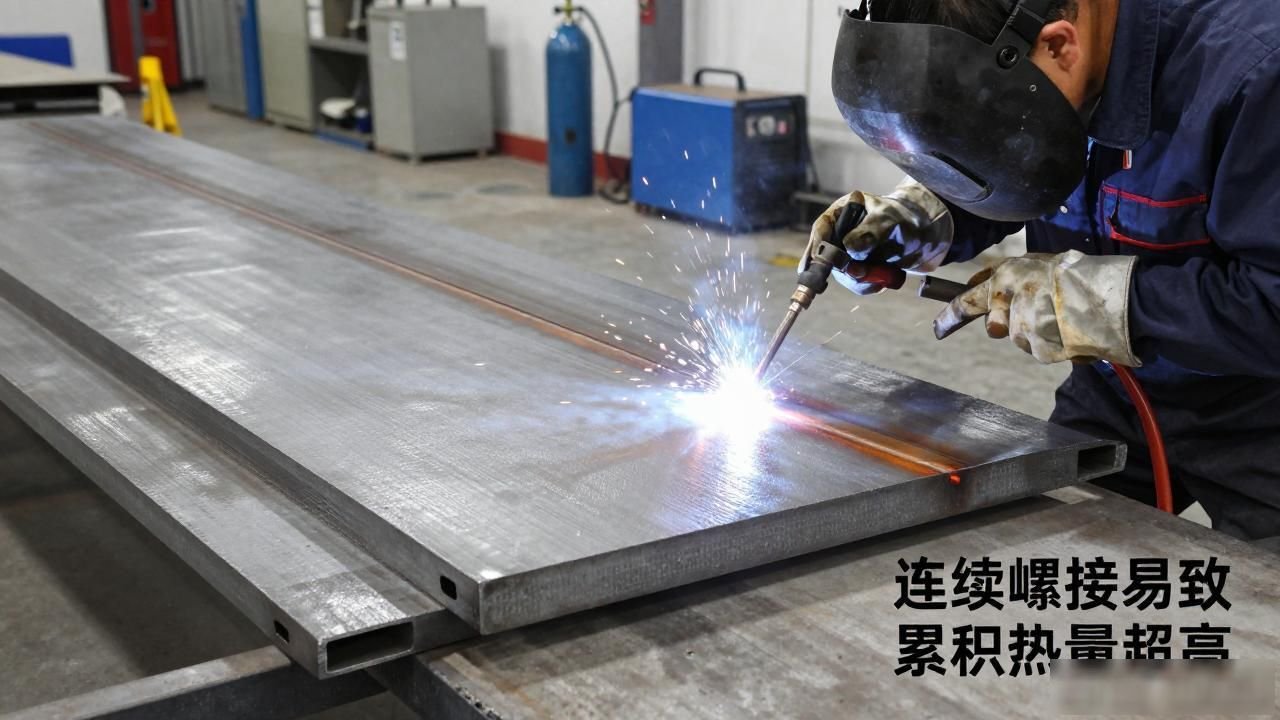
High chromium alloy wear-resistant steel plates are often used to make wear-resistant lining plates. Such parts usually have complex structures and have extremely high requirements for flatness. When splicing lining plates, in addition to the above-mentioned welding skills, you also need to pay attention to the control of interlayer temperature and multi-layer multi-pass riveting technology of thick plates to prevent excessive accumulation of heat caused by continuous welding.
What actions should not be taken when welding high chromium alloy wear-resistant steel plates after each welding is completed? Pause appropriately, or use air cooling to allow the metal to be fully cooled. This can reduce interlayer stress and prevent cracks between layers. At the same time, check whether there are pores or slag inclusions on the weld surface. High-chromium alloys have a greater tendency to be hardened, and if the process is improperly used, brittle fracture is prone to occur. Rigorous operating procedures are the basis for ensuring the life of wear-resistant linings.
Summary and interactive thinking
When welding high-chromium alloy wear-resistant steel plates, the core points are "heat control" and "prevention of deformation." Starting from the selection of the gap, followed by the left-hand welding method, and then to the fixture and cooling measures, each step is closely connected. Only by performing refined operations can we ensure the formation of the weld on the one hand, and maintain the stability of the workpiece size on the other. This not only tests technology, but also tests the accumulation of experience.
When actually welding high-chromium steel plates, what is the most difficult deformation situation that you have encountered? Is it the deformation at the corners or the kind of wavy deformation? You are welcome to share your personal experience and solutions in the comment area, and explore together how to better deal with the challenges faced during welding.





暂无评论内容