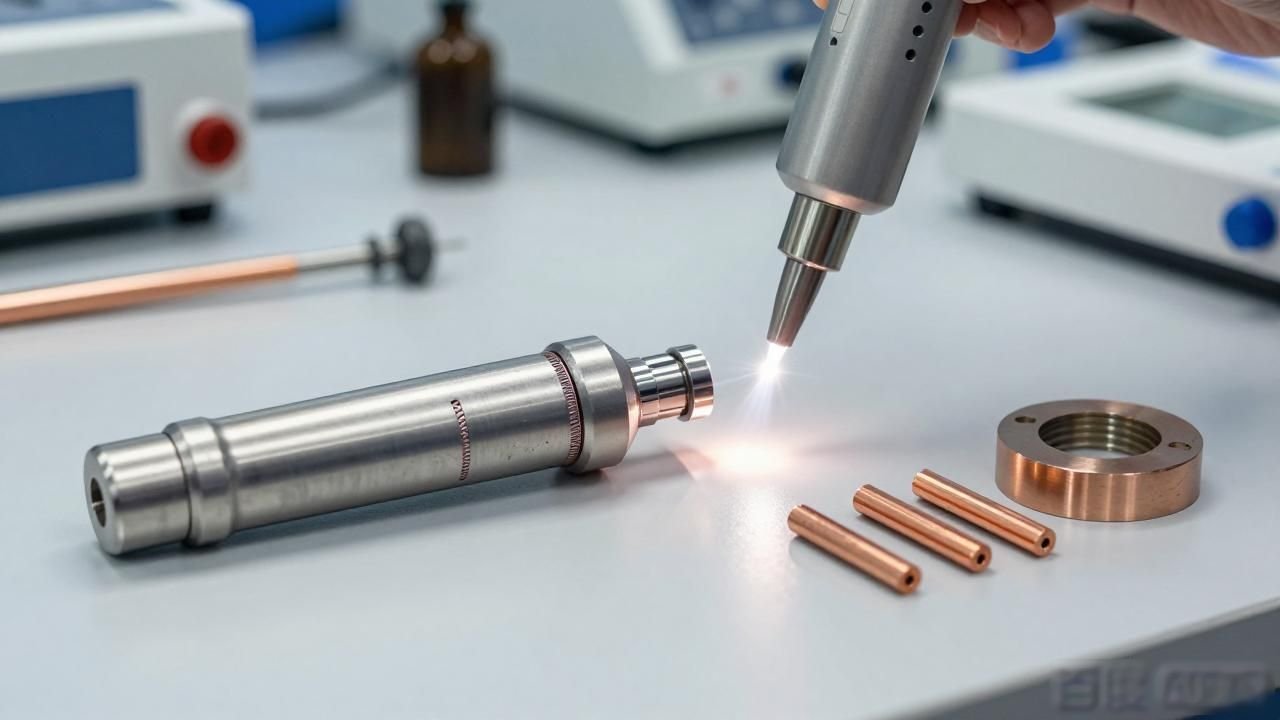


Titanium alloy endoscopic surgical instruments do not damage the welding phone
Why laser welding technology is suitable for titanium alloy surgical instruments
Titanium alloy endoscopic surgical instruments have extremely high requirements for welding. Traditional welding is particularly prone to thermal deformation or pores, which affects the accuracy and safety of the instrument. As a new process, laser welding has a small focused light spot and an extremely narrow heat-affected zone. It can achieve various forms such as spot welding, butt welding, and seal welding. Its weld depth ratio is high and its width is small. After welding, it is smooth and beautiful, and does not require complicated processing. This characteristic is particularly suitable for thin-walled titanium alloy parts with a thickness of 0.3 to 1.5 mm, which can ensure that the instrument is dimensionally stable and free of damage.
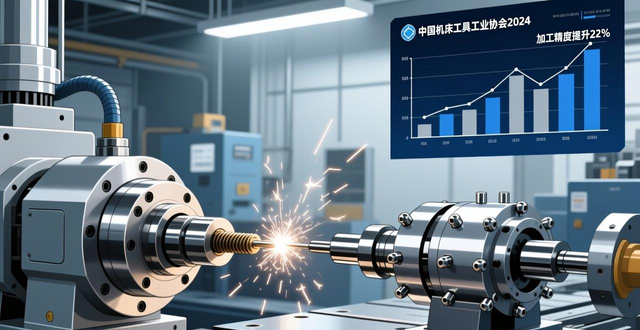
In actual production, the laser welding machine cooperates with the three-dimensional workbench and the rotating chuck to achieve welding on a plane or arc trajectory. Whether it is a capillary-shaped metal product or a syringe-shaped metal product, precise and seamless connections can be achieved. The processing plant in Beijing's Changping District is already equipped with multiple advanced laser welding machines, operated by experienced technicians, capable of accepting large quantities of orders and ensuring that the welding quality of each surgical instrument is stable and reliable.
Can weld a variety of metals to meet different needs
Not only do we process titanium alloys, but we can also weld alloy steels, stainless steels, pig irons, aluminum alloys, beryllium copper, even brass, and nickel alloys, as well as various precious metals. This shows that one piece of equipment can serve multiple industries, from medical devices to automotive connectors, from sensors to lithium battery casings, and can find suitable welding solutions. The thermal conductivity and melting point of each metal are different, and the laser welding parameters can be flexibly adjusted to ensure that the weld has no pores and has high strength.

For example, endoscopic surgical instruments are often made of titanium alloy or stainless steel. The welds are required to be smooth and free of burrs, in order to prevent damage to human tissue. The precise control of laser welding enables this to be achieved. At the same time, for precision parts such as copper electrodes, flanges, and supercapacitors, laser welding can also provide sealing or circumferential welding services. After the welding is completed, there is almost no need for secondary processing, which can greatly reduce production costs.
Welding tracks flexibly support complex parts
The laser welding machine can support a variety of trajectory programming, including points, straight lines, circles, squares, and any plane graphics drawn by the software. This means that even complex surgical instruments, such as curved capillaries or angled syringe-like parts, can be welded automatically. The matching three-dimensional workbench and rotating chuck simplify the sealing welding on the arc surface and avoid the instability of manual operation.
In the machining center in Wangzhuang Industrial Park, Changping District, Beijing, engineers will design welding paths based on the geometric characteristics of each part. For example, the ring weld of the titanium endoscope lens holder can be programmed to be a continuous ring weld, where the welding speed is uniform and the depth is consistent. Such flexibility not only improves efficiency, but also ensures dimensional consistency of batch products.
Laser welding improves product market competitiveness
After laser welding, your titanium alloy endoscopic surgical instruments will have a seamless, beautiful, and corrosion-resistant appearance, which will directly improve the technological content and market competitiveness. Compared with traditional welding, there is no need for grinding or polishing after laser welding, and the surface finish of the product will be higher. This shows that customers can intuitively feel the difference in quality when purchasing, and are willing to pay higher prices for more reliable equipment.
According to data, in the field of medical devices, the failure rate of accessories using laser welding has been reduced by about 30%, and their service life has been extended. For medical institutions, this means lower maintenance costs and higher surgical safety. Currently, many domestic tertiary hospitals and equipment manufacturers have designated laser welding parts to cope with stringent medical quality standards.
Processing services cover multiple industry application scenarios
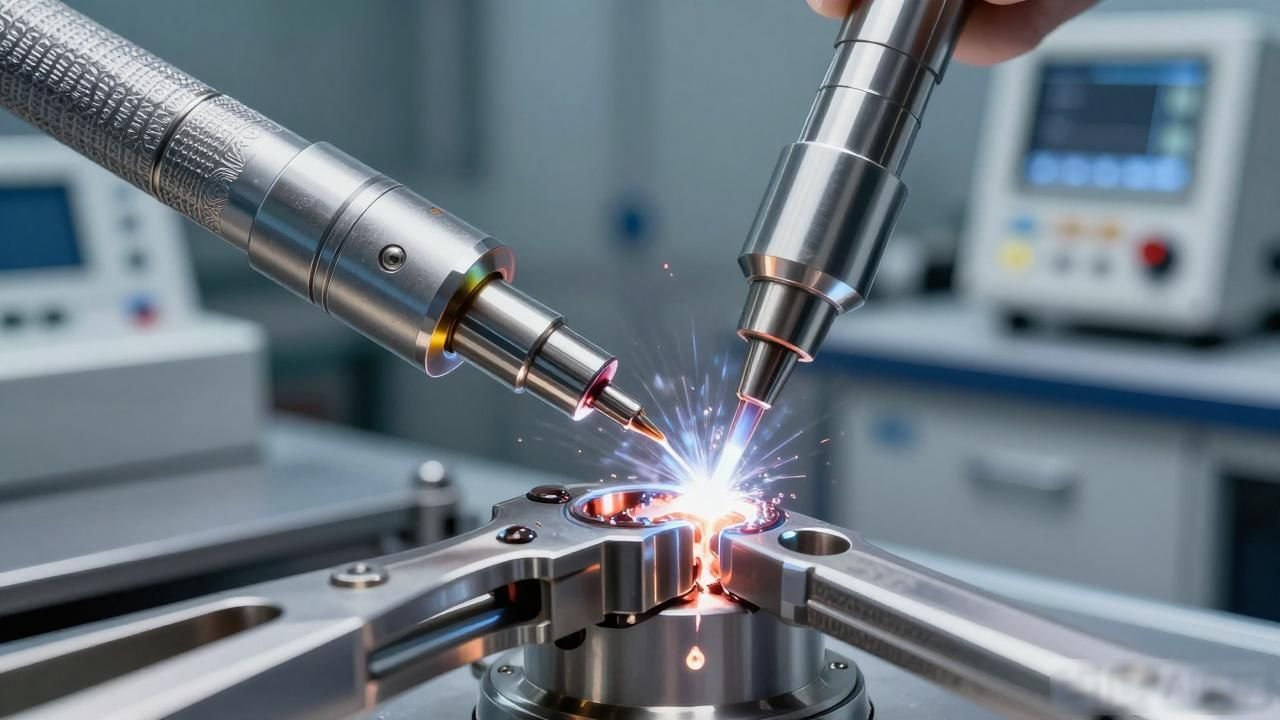
We have laser welding services, which are widely used in many fields, including machinery, electronics, instrumentation, aerospace, non-ferrous metallurgy, automobiles, ships, etc. Specific cases include mobile phone and computer accessories, medical equipment such as endoscopes and linear accelerators, fiber optic sensors and load cells, transformers and filters, micro motors, lithium battery shell sealing and welding, etc. Each industry has different requirements for welding. And we can provide customized solutions for this.
For example, the lithium battery casing must be sealed and welded to prevent leakage, and laser welding can achieve airtight packaging; automotive connectors must have high conductivity, and laser spot welding will not damage the internal structure of the metal. The technicians at the Beijing machining center have more than ten years of experience and can adjust parameters according to the characteristics of different materials to ensure that the welding quality meets industry standards. Both new and old customers can visit the factory for guidance and on-site inspection of the process effects.
Professional team ensures efficient delivery of large quantities
As the leaders of our team, we have two senior contacts, Zhang Hong and Yuan Mei, who can communicate at any time by phone and WeChat. The factory is located in Room 6188, inside the bus station of Wangzhuang Industrial Park, Changping District, Beijing, with very convenient transportation. There are multiple laser welding equipment that can support simultaneous production of large-volume orders, and the delivery time can be controlled. Whether it is trial production samples or mass production, we can provide timely response.
In an environment where smart manufacturing is the mainstream trend, the steel industry and the lock industry are both in the process of pursuing automation. However, precision welding also requires technical upgrades. We use laser welding to replace traditional processes, which reduces the dependence on workers' skills and improves work efficiency. For example, the welding of titanium alloy spring sheets used inside smart locks originally had to be performed one by one by skilled workers. Nowadays, it is automatically completed by laser machines, and the daily production quantity can reach thousands. You are sincerely welcome to call us for consultation and obtain free sample testing services.
Are you also troubled by the deformation or pore problems that occur when welding thin-walled metal parts? Welcome to share your process difficulties in the comment area, like this article and forward it, so that more people in the same industry will realize the advantages of laser welding!





暂无评论内容