
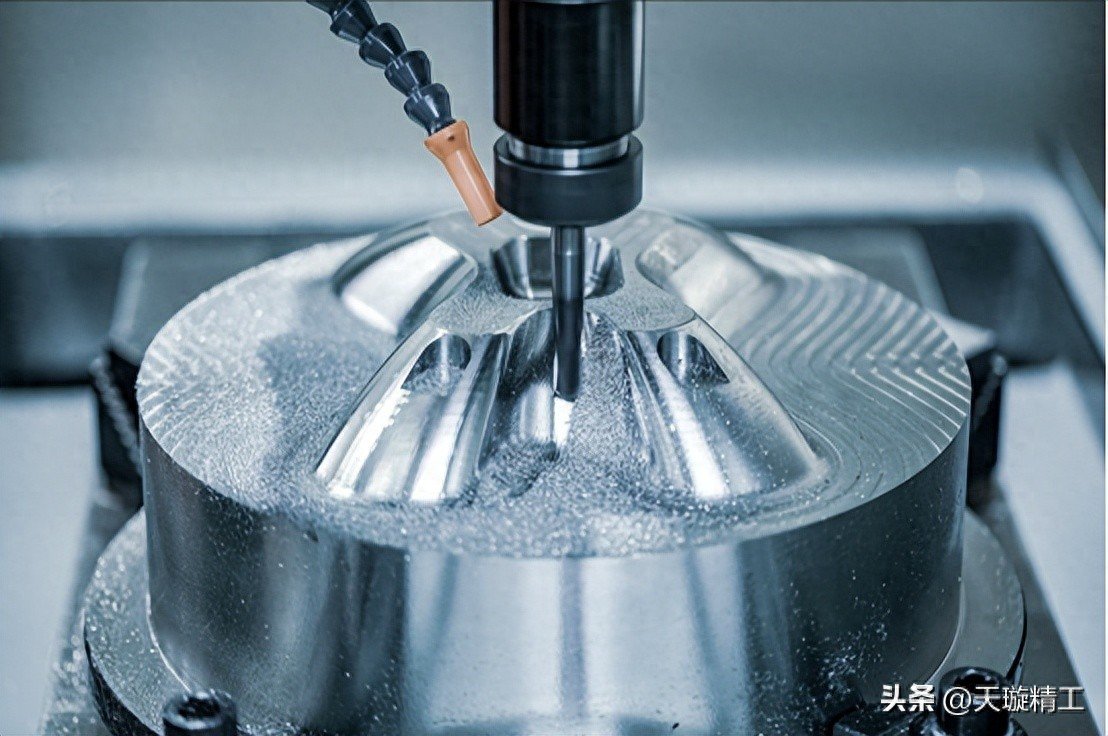
CNC machining of medical implants, ISO13485 tolerance control guide
For medical implants, such as orthopedic bone plates and acetabular cup trial molds, the dimensional tolerance is required to be plus or minus 0.005 mm, the surface roughness Ra must be less than or equal to 0.4 microns, and there must be no burrs or cutting residues, because any deviation may lead to surgical failure or complications for the patient, which is a core pain point in the industry. In response to such a high threshold, we have formulated a "three-step, six-control" processing specification, which requires full control from the beginning of materials to testing to ensure the stability and compliance of batch processing.

Special constraints on CNC machining of medical implants
The materials used for medical implants must be medical grade titanium alloy TC4 ELI, cobalt chromium molybdenum or stainless steel 316L VM. Material certification must be given for each batch to ensure that the source of the material can be traced. During processing, IT5 level tolerance must be achieved, and some positioning cylinders even require IT4 level, which is ten times stricter than ordinary mechanical parts.
Equally critical is surface integrity, which does not allow for oxidative discoloration, microcracks or cutting-directional textures to prevent fatigue fracture due to stress concentration. Each implant must be laser-engraved with a UDI code, which is bound to processing parameters and testing data to achieve full life cycle traceability, which is a rigid requirement for FDA and QMS audits.
Key points of five-axis linkage CNC machining programming
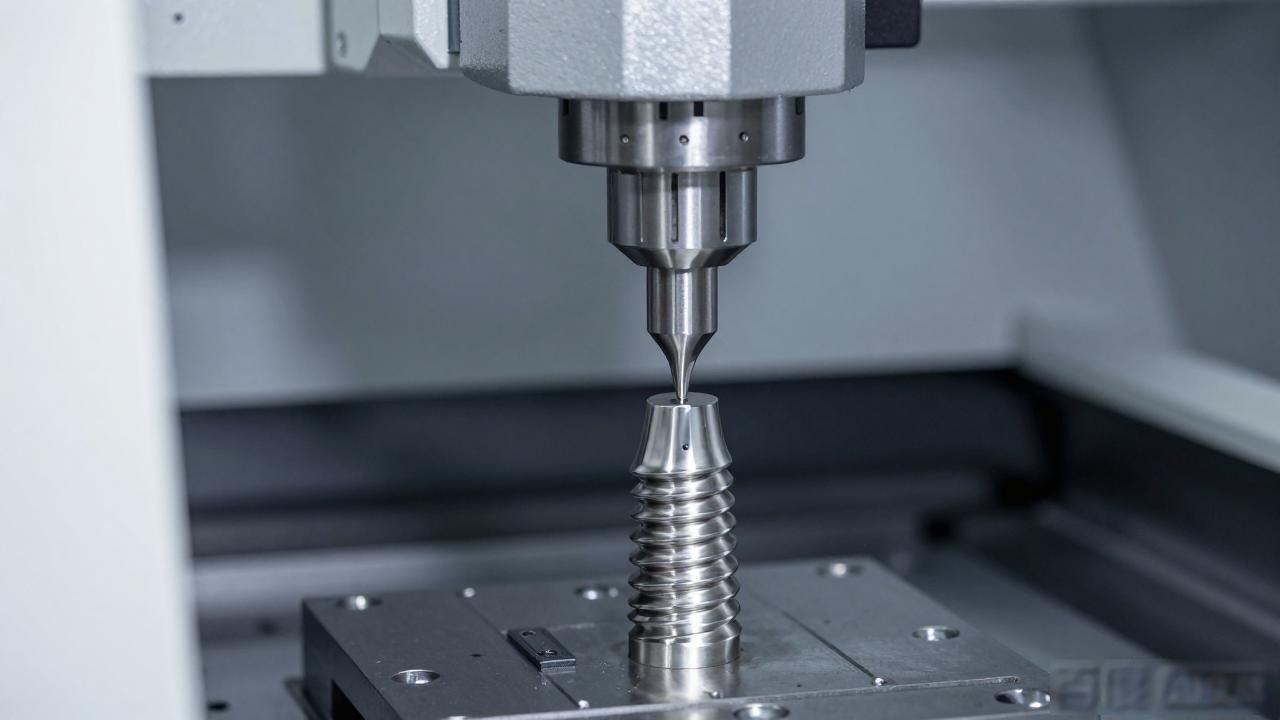
In order to reduce the number of clampings and prevent secondary positioning errors, we use a five-axis linkage method to achieve all features in one clamping. The control of the cutter axis adopts a strategy of "orientation point" to keep the ball-nose cutter perpendicular to the processing surface, thereby avoiding scratches on the side edges and causing surface defects.
If the finishing step is set to less than or equal to 0.05 mm, the theoretical roughness Ra can reach 0.2 microns, which greatly exceeds the level required by the standard. Limit the swing angle to the A-axis to no more than plus or minus 85 degrees to prevent interference between the tool holder and the workpiece. In an actual case, there is a knee tibial support trial mold with such a situation. Traditional three-axis processing requires 4 clampings, and the cumulative error reaches 0.015 mm; after switching to five-axis one-time molding, the positioning accuracy is stable at 0.006 mm, and the yield rate is significantly improved.
Key details of micron tolerance CNC machining solutions
Temperature control is the key to micron-level processing. Medical components must be processed in a workshop with a constant temperature, that is, an environment with a fluctuation of 0.5°C above and below 20°C. This is because titanium alloy will expand by about 0.006mm/m every 3°C rise, which will have a direct impact on dimensional accuracy. Every time we process 15 transplanted parts, we will use a laser tool setter to measure the wear of the tool diameter. If the wear exceeds 0.005mm, the call of the wear compensation value will be automatically enabled.
When cleaning and deburring, first use ultrasonic waves with a frequency of 40kHz and add alkaline cleaning agent to clean, and then use compressed air to dry it. The allowable amount of burrs should be controlled within a range of less than or equal to 0.01mm. The burrs should be removed by polishing with a wool wheel and diamond abrasive paste to ensure that there will be no residue. Suzhou Tianxuan Precision has documented this entire process, which covers process flow diagrams, FMEA, control plans and first article inspection records, which can facilitate customers to conduct audits at any time.
High-precision parts inspection methods and standards
In addition to conventional three-dimensional coordinate measurement, medical implants also need to perform a number of professional tests. Three pieces of roughness and contrasting blocks must be selected and inspected from each batch. The Ra pass rate must reach 100%. The instrument used for image measurement is used to detect the tiny rounding angle R0.1mm and the contour of the cutting edge to ensure geometric accuracy.
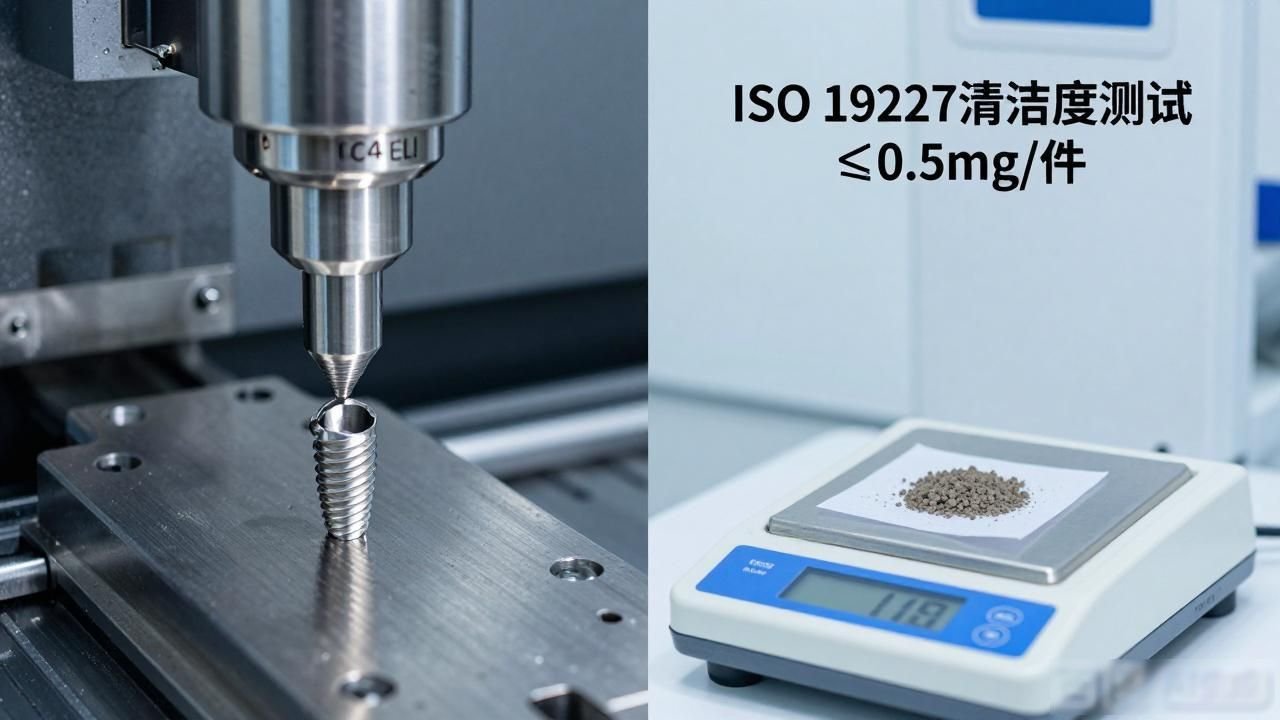
Use the ISO 19227 standard for cleanliness testing, extract the residual particles, and then weigh them. The requirement is that they should be less than or equal to 0.5mg/piece. When processing titanium alloy TC4 ELI implants in batches, the key mating surface dimension Cp must be greater than or equal to 1.33. Each piece needs to provide a Zeiss three-dimensional full-size report and a 20x microscope image record to ensure the integrity of the data link.
Industry Application and Quality Assurance Cases
This specification has been applied to samples and batch manufacturing of implanted horizontal parts such as spinal fusion cages and dental abutments, with an on-time delivery rate of 100%. For example, the bone plate processed for an orthopedic equipment company has a batch quantity of 500 pieces, the size out-of-tolerance rate is zero, and the surface roughness is stable at Ra0.3μm.
Many orthopedic device companies have received compliance service support. Suzhou Tianxuan Precision provides compliance processing services. From material batch tracing to final testing, the entire process is traceable. We have a complete inspection data chain and an engineering process team to help you achieve rapid transformation from drawings to compliant batches.
Take action now to improve processing compliance
There are extremely strict quality traceability requirements for medical implants. Have you ever encountered a situation where the dimensions are out of the tolerance range or the surface quality cannot meet the standards during processing? Welcome to leave a comment to share the challenges you face. Like and share this article so that more colleagues can benefit from it. Contact us now to get an analysis of the feasibility of implant processing to help you quickly pass the FDA audit.
コメントを残す
コメントを投稿するにはログインしてください。