


Optimization of photovoltaic silicon wafer cutting fluid additives Optimization of photovoltaic silicon wafer cutting fluid additives to improve cutting stability, improve cutting stability
New cutting fluid challenges brought about by thin cutting
First, the thickness of the silicon wafer, which originally had 180 microns, decreased until it became 130 microns. At the same time, the particle size of the diamond abrasive also became refined, reaching the micron level. As for ultra-fine powder, it faces two major problems in the cutting fluid. First, the powder agglomerates, causing deviations in the cutting thickness. Second, the foam produced affects the heat dissipation and cleaning effects.
Industry-related data presented in 2025 show that due to the poor system stability of the cutting fluid, silicon wafer cracks and wire breakage losses account for more than 12% of the overall production line losses. When the storage period is extended to 6 months, the problem of formula stratification becomes more and more prominent, which has a direct impact on the yield of silicon wafers.
How dispersing aids solve powder agglomeration
Dispersion additives are adsorbed on the surface of diamond powder to reduce the interaction between particles, thereby preventing the ultrafine powder from re-aggregating during storage. Tests show that after adding 0.5% polycarboxylic acid dispersant, the powder settling speed is reduced by 70%.
When the storage conditions were as high as 40°C and for 30 days, the cutting fluid without dispersant showed significant stratification, and the thickness of the abrasive deposit at the bottom reached 3 mm. After adding dispersing additives, the system maintained a uniform suspension state, and the initial viscosity only increased by 5%, which met the requirements for production continuity.

Thixotropic additives control foam and flow
Thixotropic additives adjust the viscosity characteristics of cutting fluids under different shear conditions. When left standing, it can increase the viscosity to prevent the abrasive from settling. When pumped and sheared, it will reduce the viscosity to ensure fluidity. According to actual measurements by a photovoltaic company, after adding 0.3% modified polyurea thixotropic agent, the amount of foam was reduced by 80%.
During the machining process, the cutting fluid is sprayed through the nozzle at high speed. The thixotropic additive causes the liquid to quickly spread on the surface of the cutting line. The cooling efficiency is improved by 25%. When the machine is restarted after 12 hours of shutdown, the thickness of the abrasive deposit is only 0.1 mm, and no additional stirring is required.
Selection of additives for three types of cutting fluids
The most suitable choice for non-ionic dispersants and alkali-swellable thixotropic agents is water-based cutting fluids to ensure compatibility with water. When making a semi-synthetic system, it is necessary to match the dispersing aid with a lipophilic-hydrophilic balance value in the range of 8 to 12 to avoid separation of components.
For fully synthetic cutting fluids that have high requirements for transparency, silicone defoaming agents and polyacrylic acid rheological agents should be used. In a test conducted in March 2026, a cutting fluid manufacturer used three additives to achieve a system with zero stratification in the temperature range of -10°C to 50°C.
Key test indicators for small test verification
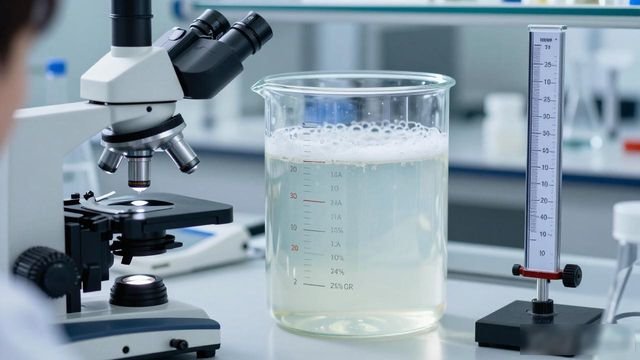
When formulating and debugging, it is necessary to focus on screening three indicators. First, the fineness achieved by powder dispersion must be less than 5 microns. Second, after letting it stand for 30 days, the height of the stratification should not exceed 2% of the total liquid level. Third, the height of foaming generated during processing must be controlled within 10 mm.
The cycle test of high temperature and low temperature simulates the environment of high temperature in summer and low temperature in winter. A twelve-week test showed that after optimizing the formula, the defect rate in cutting textures dropped from 3.2% to 0.8%, the number of wire breaks was reduced by 60%, and the silicon wafer yield increased to 98.5%.
Long-term storage and environmental protection control requirements
There are requirements for environmental protection supervision, that is, cutting fluid wastewater must have biochemical treatment properties, and the ratio of BOD to COD must be above 0.3. There is a new type of additive that does not contain nonylphenol and heavy metals, which can avoid the pressure of subsequent wastewater treatment. In addition, in 2026, a certain park in Jiangsu has made a requirement for all cutting fluid suppliers to submit environmental component testing reports.
After the storage period is extended to 12 months, the formula needs to pass freeze-thaw cycle testing. A leading photovoltaic company in the industry adopted an optimized formula, extending the replacement cycle of cutting fluid storage tanks from 3 months to 8 months and reducing warehousing and labor costs by 30%.
Have you ever encountered disconnection caused by cutting fluid stratification or foaming during production? Welcome to share your debugging experience in the comment area. Like and bookmark this article to get more cutting fluid formula optimization tips.






暂无评论内容