
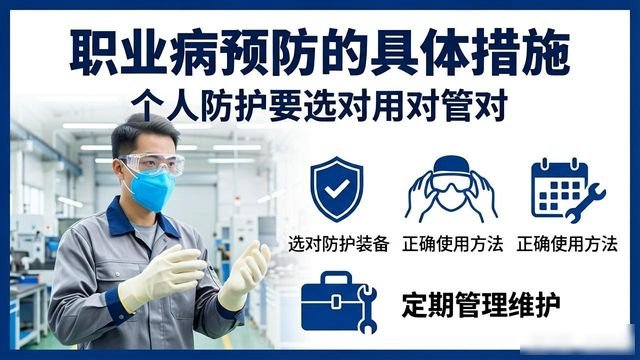
Specific measures to prevent occupational diseases
Hazard identification must be accurate for every position
In the machining workshop, occupational disease hazard factors present a complex and diverse situation, and the risks faced by different positions are obviously different, and the two are completely different. Take lathe operators as an example. They are mainly exposed to noise and cutting fluid mist, while grinders are faced with dust and vibration. As for heat treatment positions, they need to deal with high temperatures and chemical gases. In 2025, a survey conducted in the Yangtze River Delta region showed that more than 60% of companies only conducted general hazard detection and did not refine it to specific work stations. The correct approach should be to identify the hazards piece by piece of equipment and process by process, make a corresponding list, and clearly point out which factors exceed the standards. Only in this way can we provide accurate directions for subsequent protection.
Hazard identification cannot only be carried out once. After the process is changed, it needs to be re-evaluated. After the equipment is updated, it must be considered again. After the raw materials are replaced, it must be reviewed again. For example, some companies have replaced traditional cutting fluids with microemulsions. Although the oil mist concentration has decreased, the risk of bacterial growth has increased. As a result, the focus of protection needs to be adjusted in a timely manner. We conduct on-site inspections at least once every quarter and record emerging hazard factors. Only in this way can we achieve a clear understanding of the situation.
Engineering control should cut off hazards from the source
The most effective occupational disease prevention measure is engineering control, which means reducing or eliminating the source of hazards in terms of equipment and processes. Common practices in the field of machining include installing soundproof covers for equipment that emit high noise, such as punch machines and sawing machines. After actual measurements, the noise value can be reduced from 95 decibels to less than 75 decibels. In addition, a local exhaust system is installed at the grinding and polishing working position to directly extract dust and metal particles to prevent them from spreading inside the workshop. An example of the renovation of a mold manufacturing plant in Guangdong in 2024 showed that after adding a dust collection device, the dust concentration at the work site was reduced by 85%.
Regarding chemical hazards, consider using low-toxic or non-toxic items to replace highly toxic substances, such as using environmentally friendly cleaning agents to replace trichlorethylene and n-hexane in the cleaning step. Select low-volatility formula items for cutting fluids. At the same time, the process should be optimized, such as using automated feeding and robot operations to reduce workers’ direct contact with harmful factors. Once engineering control is implemented well, 70% to 80% of the problems can often be solved.

Personal protection should be chosen correctly, used correctly and managed correctly
The last line of defense is personal protective equipment. However, the protective equipment purchased by many companies does not meet the qualified standards or does not match the job requirements. Machining operators should be equipped with anti-noise earplugs or earmuffs. They must choose products with a noise reduction value NRR of more than 25 decibels, and employees must be taught the correct way to wear them. Some workers plug their earplugs too shallowly, and the actual noise reduction effect is less than half of the nominal value. In terms of protective gloves, if you come into contact with cutting fluid, you must choose oil-resistant rubber gloves instead of ordinary cotton gloves.
After the distribution of protective equipment, we cannot just ignore it. We must establish a system for receipt, replacement, and inspection. Take dust masks as an example. In grinding posts with relatively high dust concentration, they need to be replaced every day; noise-proof earplugs need to be replaced once a week. Safety officers in the workshop should carry out regular inspections to check whether employees are wearing protective equipment properly or whether they have pulled their masks down to their chins because they feel stuffy. Statistics conducted by a machinery factory in Shandong in 2023 showed that just by distributing protective equipment, the rate of correct wearing was less than 40%. However, after training and supervision, it increased to 85% in half a year.
Health monitoring requires the establishment of dynamic files
Occupational health examination is by no means a formality, but to actually detect problems. Physical examinations must be done before taking up the job, during the on-the-job stage and when leaving the job. The items of the physical examination need to be determined based on the actual hazards to which they are exposed. For example, workers exposed to noise must undergo pure tone hearing threshold tests, workers exposed to dust must undergo high-kilovolt chest X-ray examinations, and workers exposed to lead smoke must undergo blood lead testing. Data provided by the National Health Commission in 2025 show that new cases of noise deafness in the machining industry account for 12% of all occupational diseases, and hearing loss can be significantly delayed when detected early and transferred from noisy positions.
The files used for physical examinations need to be digitally managed, and each worker's contact history, physical examination results, and job transfer records must be related to each other. If abnormal indicators are found, a review must be arranged promptly. Once a professional contraindication is diagnosed, the employee must be transferred from the original position. Some companies lock the medical examination reports in cabinets, and the workers themselves are not aware of the results. This behavior is irresponsible. Regularly interpret the physical examination data to workers, using this method to enable them to understand their own health status, so that positive interactions can be formed.
Training and education must be practical and normalized
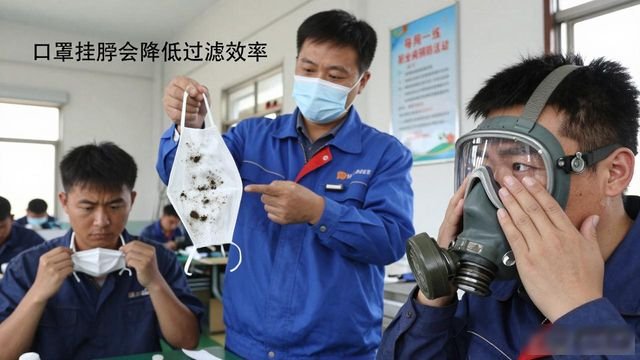
Occupational disease prevention training cannot be conducted solely by showing videos and handing out manuals, but must be taught in conjunction with actual workplace scenarios. For example, you need to tell the polisher why you cannot hang the mask around your neck. The reason is that this will cause the inside of the filter cotton to be contaminated with sweat and dust, which will greatly reduce the filtration efficiency. It is also possible to set up a practical session to allow workers to demonstrate on-site how to wear a gas mask correctly and determine whether there is air leakage during the air tightness test. In 2024, a hardware factory in Zhejiang launched a "weekly practice" activity, setting aside 15 minutes each time to practice on a type of protective equipment, and the employee skill mastery rate increased from 55% to 92%.
Different levels of training should be carried out separately. For managers, the focus is on laws, regulations and risk management and control knowledge. For front-line workers, the focus is on operating standards and emergency response. When new employees join the company, they must complete 8 hours of occupational health training. Only those who pass the assessment can successfully take up the job. During each quarter, at least one special training must be organized. The theme of the training can be "How to identify signs of deterioration of cutting fluid" or "Proper steps to use noise protection earplugs." The more specific the training content, the more practical it will be.
Emergency response should be drilled so that people know it well
Emergency situations related to occupational diseases include chemical leaks, poisoning, heat stroke, acute hearing loss, etc. The machine shop needs to develop an on-site treatment plan for each situation. For example, when a cutting fluid pipe ruptures, whether workers should close the valve first or evacuate first, and what kind of material should be used to absorb the leaked liquid, these must be clarified. In 2022, a large amount of cutting fluid leaked into a machinery factory in Jiangsu. Workers did not know how to deal with it, which led to slips and falls. The lessons learned are extremely profound.
Emergency response drills should be conducted at least once every six months. Safety officers should not just be allowed to perform the drills, but every worker must be involved. After the drill, a summary evaluation should be done to see what links were slow and what process steps went wrong, and then revise the plan. Just like during the heat stroke first aid drill, many workers did not know that they should first move the patient to a cool and ventilated place, then untie the collar and wipe it with cold water instead of calling 120 directly. Only through repeated practice can emergency response become instinctive.
After reading this article, are the occupational disease protection measures in place in the workshop you are in? Are there some links that are easily overlooked? You are welcome to share your experience or confusion in the comment area, like and save it so that more peers can see it, and jointly promote the improvement of occupational health standards in the machining industry.
コメントを残す
コメントを投稿するにはログインしてください。