
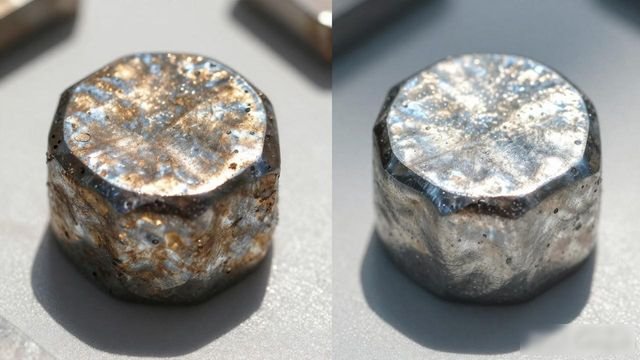
Titanium materials are used in the chemical and petrochemical industries, including
The stability of titanium is not absolute
Many people think that titanium metal is inherently stable and does not require special care. However, in fact, this idea is too simplistic. In high-precision applications such as aerospace, the storage environment of titanium alloys will have a direct impact on the quality of the final product. In 2025, testing data provided by an aerospace materials research institute showed that irregular storage methods caused the thickness of the oxide layer on the surface of titanium alloys to exceed the standard by as much as 12%.
In the daily environment, titanium, which seems to be stable, will produce irreversible chemical reactions when encountering certain conditions. For example, in a humid environment, when titanium comes into contact with certain metals, an electrochemical reaction will occur, resulting in localized corrosion points. However, these defects will become stress concentration areas during subsequent processing.
Humidity control is key
Keeping titanium alloys moist is an important step when storing them. In actual operations, it is necessary to use no less than 25% moisture for wetting and passivation. An aviation parts factory in Shenzhen clearly stipulates that the relative humidity of titanium storage areas must be controlled below 50%, and an automatic monitoring system must be equipped.
A more precise approach is to use a constant temperature and humidity warehouse to strictly control the temperature at no more than 35°C. In 2024, a titanium material supplier in Chengdu neglected humidity control, resulting in water stains on the surface of a batch of titanium plates worth 8 million yuan, and had to be downgraded.
Sun protection and UV protection are essential

When exposed to sunlight or ultraviolet rays for a long time, titanium metal will undergo an oxidation reaction, causing the surface color to become dull and lose its original luster. An aerospace materials laboratory in Beijing conducted comparative experiments. After being placed outdoors for 30 days, the thickness of the surface oxide film on titanium samples without light-shielding treatment increased by 0.3 microns.
Even though this oxidation process may seem subtle, it is already unbearable for precision titanium alloy parts used in the aerospace field. Therefore, the storage area must be equipped with blackout curtains and use opaque packaging materials to prevent any form of direct light exposure.
Isolated storage to prevent electrochemical reactions
For titanium alloys, when it comes into contact with other metals, it is easy to cause electrochemical corrosion, and the situation will become more serious in humid environments. There is an aircraft parts processing factory in Shanghai. This factory has specially set up independent shelves to store titanium materials separately from copper, stainless steel and other metals, with a distance of no less than 50 centimeters.
Some isolation measures use plastic or rubber gaskets as barriers to prevent direct contact. At the same time, the contact surface should be checked regularly for signs of corrosion. Once discoloration or pitting is found, isolation treatment must be carried out immediately and the cause must be found.
Fire and explosion protection and partitioned storage
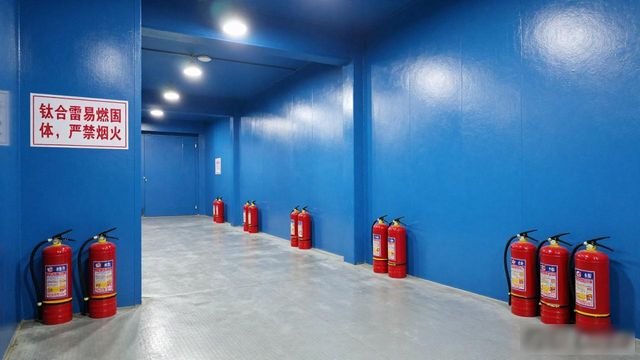
Titanium alloys are classified as flammable solids and must be kept away from fire and heat sources. Fireworks are strictly prohibited in storage areas. There is a titanium alloy processing company in Tianjin. Its safety regulations clearly require that the warehouse must be equipped with dry powder fire extinguishers, sand and other fire-fighting equipment, and at the same time, explosion-proof lighting equipment must be installed.
What is more critical is that hazardous chemicals such as oxidants, acids, halogens, etc. must be strictly separated during storage, and mixed storage is prohibited. There is a materials warehouse in Hangzhou. Titanium powder and hydrogen peroxide were stored in the same room, which caused a violent reaction. Fortunately, the fire protection system was activated in time, so it did not cause a catastrophe.
Don’t be careless with regular inspections
As a basic skill to ensure quality, the appearance changes of titanium metal are regularly checked. An aviation titanium material supplier in Xi'an has stipulated that comprehensive inspections must be conducted at least twice a month, focusing on observing whether there is discoloration, corrosion spots, or surface abnormalities. Inspection records must be kept for at least two years in order to trace the source of problems.
When something unusual is noticed, do not simply dispose of it. You must take photos, keep records, and take samples for analysis. For example, if a white powdery substance appears on the surface of an object. Titanium is used in the chemical and petrochemical industries, it may indicate an acceleration of the oxidation reaction. In this case, the storage environment must be adjusted immediately. At the same time, materials for containing leaks, such as sand or special adsorbents, should be properly prepared to prevent accidental leaks from spreading outward.
What other titanium alloy storage details do you think are easily overlooked in actual production? Welcome to share your experience in the comment area, like this article and save it so that more peers can see these key points.
コメントを残す
コメントを投稿するにはログインしてください。