
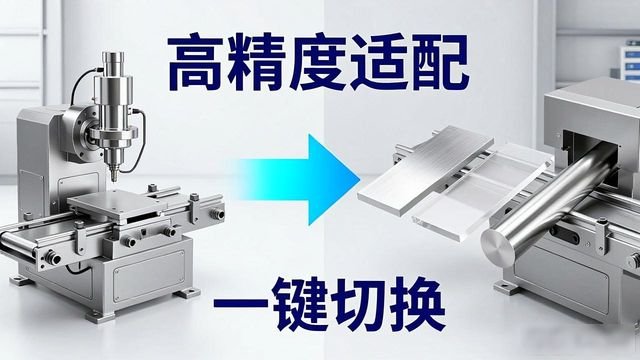
How does a fully automatic beveling machine achieve high-precision and automated adaptation of edge processing of precision workpieces?
How to lock in micron-level errors
The fully automatic chamfering machine relies on a rigid body structure and a frequency conversion speed-adjustable spindle to control the chamfering size error within ±0.02mm. This level of accuracy shows that when grinding and processing automated loading and unloading of 1,000 workpieces, the dimensional deviation will not exceed one-third of a hair. In 2025, after a semiconductor substrate factory in Suzhou introduced this equipment, the edge consistency of the product increased from 85% during manual operation to 99.6%.
The built-in servo feed mechanism in the equipment can perform position fine-tuning 200 times per second, thereby compensating for tool wear during the grinding process in real time. Data from a ceramic component factory in Shenzhen shows that after using this equipment, the scrap rate of R-angle rounding processing dropped directly from 4.7% to 0.3%, reducing material losses by more than 800,000 yuan per year.
How does the entire process of unmanned closed loop work?
The equipment integrates the five links of automatic loading, positioning processing, cooling and chip removal, good product sorting and blanking. Automatic loading and unloading of grinding processing. How does the fully automatic chamfering machine achieve high-precision and automatic adaptation of edge processing of precision workpieces? , thus forming a complete unmanned production line. This is the situation in a hardware accessories processing factory located in Wenzhou, Zhejiang. Six fully automatic beveling machines are running at the same time. Each shift only requires one inspection personnel. However, in the past, 12 skilled workers were needed to achieve the same production capacity.
The automatic loading system uses a vibrating plate and a pneumatic gripper to place sixty workpieces per minute with high precision. In this aspect of cooling and chip removal, a high-pressure atomizing injection device is used to ensure that the oil temperature in the grinding area is always below 40 degrees Celsius, thereby preventing thermal deformation from interfering with accuracy.

How to switch between multi-material workpieces with one click
The equipment relies on the touch-screen interface of the PLC CNC system to store processing parameters for more than 200 types of workpieces. The operator only needs to select the workpiece type, and the system will automatically select the corresponding spindle speed, feed speed and chamfering angle. There is an auto parts supplier in Dongguan. When switching between processing aluminum alloy and titanium alloy workpieces, the production change time was reduced from 45 minutes manually adjusted to 3 minutes.
For brittle materials such as ceramics and semiconductor substrates, the equipment has a soft start program and a segmented feeding strategy to reduce impact force. After an optical ceramics company in Shanghai used this equipment, the edge chipping rate dropped from 8% during manual processing to 0.5%, and the surface roughness was stabilized within Ra0.4μm.
How to adapt round rod, pipe, plate and special-shaped parts
The equipment is equipped with a four-axis linkage clamping system, which can clamp round rods and pipes with diameters ranging from 2mm to 120mm. For plates and wafers with special shapes, the pneumatic positioning mechanism will automatically adjust the clamping force according to the contour of the workpiece. The clamping force is steplessly adjusted from 0.5N to 50N to avoid clamping deformation.
In a precision machinery factory in Wuxi, this kind of equipment can simultaneously perform C-angle chamfering operations on the end face of round rods, and can also perform R-angle chamfering operations on the inner holes of pipes. The time required for single-piece processing has been shortened by 40%. The equipment adopts a fixture design that can be quickly replaced, so that the overall replacement time does not exceed 10 minutes. This situation greatly improves the flexibility of multi-variety and small batch production.
How the semiconductor industry benefits
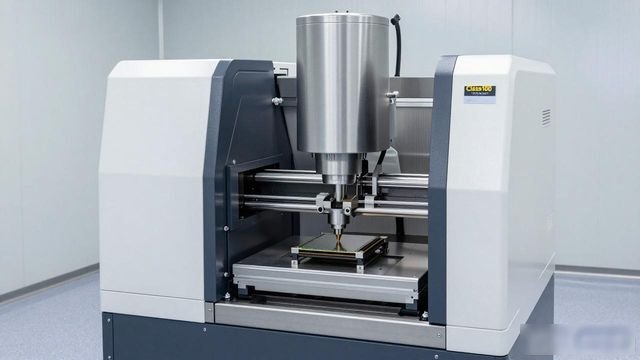
For semiconductor substrates, there are extremely strict and precise cleanliness requirements for edge processing, and traditional manual operations can easily lead to particle contamination and scratches. The fully automatic beveling machine uses a closed operation mode in the processing cavity, and is also equipped with a negative pressure vacuuming system. With the help of such conditions, the particle concentration in the processing area can be successfully controlled within the scope of Class100 cleanliness.
A chip packaging company in Chengdu introduced this equipment to automate the loading and unloading of grinding processes . The edge chipping rate at the edge of the substrate was reduced from 3% to 0.1%, and the scratch defects on the surface completely disappeared. The equipment can continuously process 2,000 8-inch wafers every day. Its efficiency is four times that of manual processing, and the processing cost of each wafer has dropped by 62%.
How to reduce costs in auto parts processing
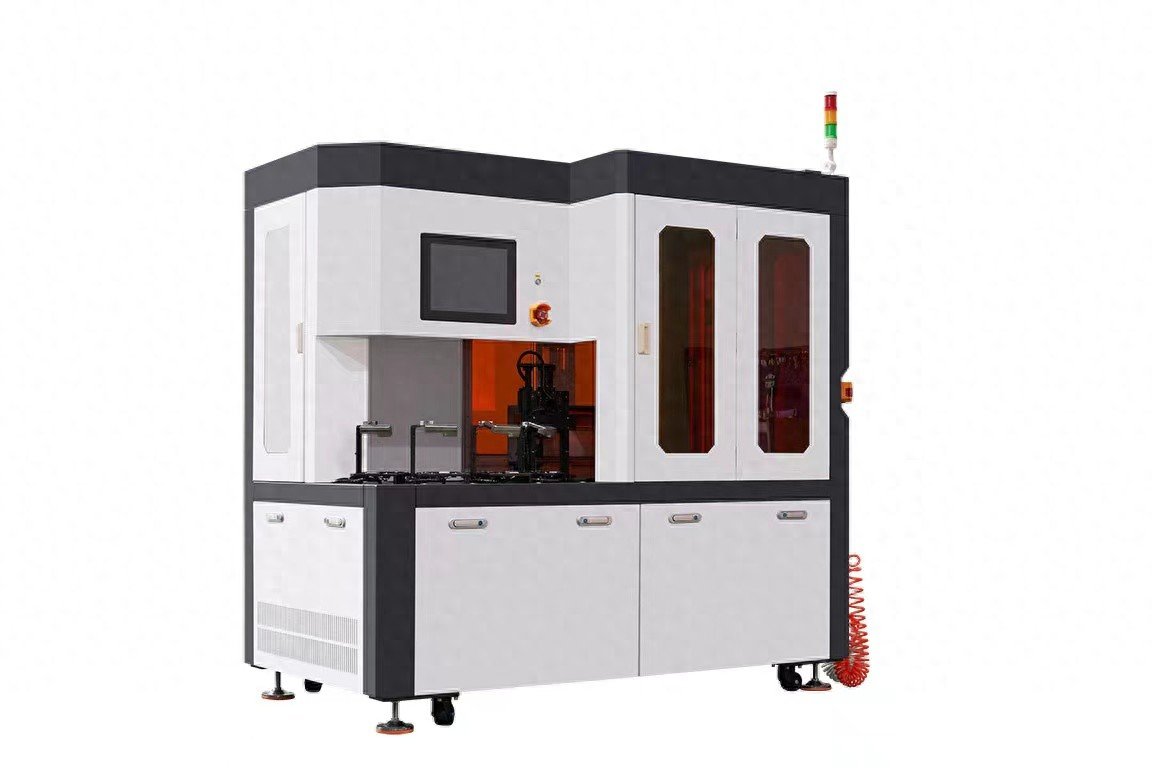
A large number of aluminum alloy and cast iron parts are used in automobile parts, and the chamfering process requires dimensional stability and no burrs on the surface. In an auto parts factory located in Hangzhou, a fully automatic beveling machine has achieved the deburring process of brake discs with an annual output of 500,000 pieces, and the yield rate has increased from 92% to 99.8% by manual work.
The cooling system specially equipped for the equipment can recycle the cutting fluid, which can save the purchase cost of coolant every year, which is about 150,000 yuan. At the same time, institutions with automatic sorting functions will eliminate unqualified products in real time, avoiding the need for rework of the entire batch, reducing the comprehensive processing cost of a single product by 35%.
Come on, let me ask the last thing. The accuracy of the beveling process is always unstable, and the labor cost is extremely high, which makes your factory depressed. If a fully automatic beveling machine is introduced, which situation do you estimate is most likely to encounter in the first week? Is it a troublesome problem in equipment debugging or a problem in operational training? Hurry up to the comment area and share your experience. Remember to like and bookmark this. Let more peers see the real effects of automated upgrades.
コメントを残す
コメントを投稿するにはログインしてください。